
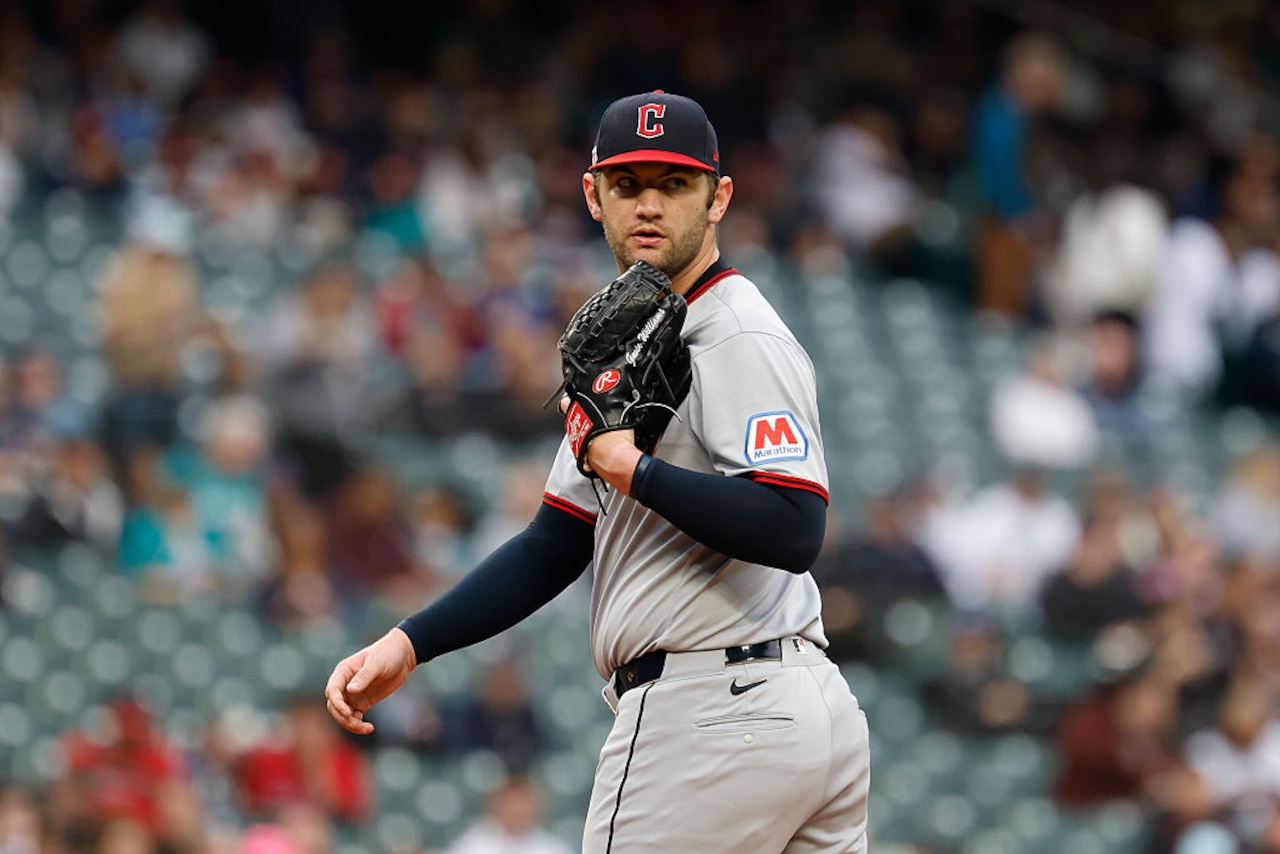
CLEVELAND, Ohio — The story on Thursday wasn’t the 2-1 loss to the San Francisco Giants — it was the dominance Gavin Williams displayed on the mound, giving Guardians fans a glimpse of what could be their next pitching ace.
The young right-hander’s performance was the highlight of an otherwise disappointing game, and it revealed something even more exciting: the rapid evolution of a pitcher adding new weapons to his arsenal midseason.
“Six scoreless innings, just really a dominant performance,” explained Paul Hoynes on the latest Cleveland Baseball Talk Podcast. “He overcame a 22-pitch first inning and really kind of kicked it in gear. He was talking about the cut fastball that he used, the sinker that he used, and he’s incorporated both pitches this year on the fly, so to speak. And he really made progress with both of them.”
This in-season adjustment is no small feat. While many pitchers spend entire offseasons developing a single new pitch, Williams has successfully integrated two — a cutter and a sinker — into his repertoire while competing at the highest level. The results speak for themselves.
The opposition is hitting a measly .128 against Williams’ cutter, according to Statcast data discussed on the podcast. That’s elite-level effectiveness for a pitch he’s only recently added to his arsenal. Combine that with a .143 batting average against his curveball and .200 against his slider, and you have the makings of a devastating pitch mix.
What makes Williams’ development particularly intriguing is how the new cutter enhances his primary weapon. By establishing the cutting action that moves in on left-handed batters and away from righties, he creates doubt in hitters’ minds that makes his 95-97 mph four-seam fastball even more effective.
“The cutter sets up the fastball and the sinker,” Hoynes explained, highlighting the strategic advantage this gives Williams on the mound. “He really dominated yesterday by setting up that fastball, which is 95 to 97 with the cutter, and really played off those pitches well.”
This evolution is happening at the perfect time for both Williams and the Guardians. Over his last several starts, the righty has compiled an impressive 3-1 record with a sub-3.00 ERA, suggesting this isn’t a one-game wonder but rather a legitimate breakthrough.
“We might see him emerging right now,” Hoynes noted with enthusiasm.
What makes this development particularly valuable for Cleveland is that opponents are still catching up to the changes. As Noga pointed out during the podcast, “At the beginning of the year, the book on Gavin Williams wasn’t necessarily, ‘Hey, look out for the cutter.’ Now they sort of have to bring in that information midway through the season as opposed to knowing what they knew going into the season about him. It makes him almost like a completely different pitcher.”
According to Statcast, Williams is only throwing the cutter about 14% of the time currently, giving him substantial room to increase its usage as he becomes more comfortable with the pitch. This suggests we may only be seeing the beginning of his transformation.
For a Guardians team always seeking to develop homegrown pitching talent, Williams’ emergence represents exactly the kind of internal improvement that could power a playoff push. His ability to dominate a solid Giants lineup with an expanding arsenal of pitches hints at a ceiling that continues to rise.
Want to hear the complete breakdown of Williams’ dominant performance and how his new pitches are changing his trajectory? Listen to the full episode of the Cleveland Baseball Talk Podcast where Hoynes and Noga analyze his development and what it means for the Guardians’ rotation going forward.
Note: Artificial intelligence was used to help generate this story from the Cleveland Baseball Talk Podcast by cleveland.com. Visitors to cleveland.com have asked for more text stories based on website podcast discussions.
Podcast transcript
Joe Noga: Welcome back to the Cleveland Baseball Talk Podcast. I’m Joe Noga, joined by Paul Hoynes from Sacramento where he’s getting ready to cover the Guardians taking on the Athletics. But first, let’s recap Thursday’s Cleveland loss to San Francisco. Final game in the series there. Gavin Williams pitched his heart out, but the Guardian couldn’t score enough runs to get him a win. They fall to the Giants 2 to 1. Hoynsie, what’d you see in the last game of the series against San Francisco?
Paul Hoynes: Yeah, Joe, they had a chance to sweep this thing. Took an early one nothing lead, but you can’t, you’re not going to win a whole lot of games by scoring one run on seven hits. And the Giants weren’t much better. But the story of the game to me was Gavin Williams, six scoreless innings, just really a dominant performance. He overcame a 22 pitch first inning and, and really kind of kicked it in gear. And Joe, he was talking about the cut fastball that he used, the sinker that he used, and he’s, he’s incorporated both pitches this year on the fly, so to speak. And he really made progress with both of them. It’s just unfortunate he didn’t get the win because he left with the one nothing lead. And then the Giants rallied for two runs late for the win.
Joe Noga: Yeah, Wilmer Flores with the, the pinch hit two right double.
Paul Hoynes: Wilmer Flores had the pinch hit two run double off Nick Enright.
Joe Noga: Yeah, the, the bullpen, which had been so, so good and so strong in the first two games of the, of the series, you know, kind of faltered not a lot. There were a couple of guys down that they couldn’t go too late in that situation where normally Stephen Vogt might have used a Cade Smith or a Hunter Gaddis, but unable to do that after they had pitched in back to back days and the Guardians wind up losing. You mentioned Gavin Williams in that cut fastball. It really does seem to set up his, his four seamer enforcing fastball that much more effective when he’s using that cut fastball and getting the movement on that, that, that he has been able to get when he’s using it.
Paul Hoynes: Yeah, the opposition is hitting.128 against the cutter, this huge 143 against his curveball, 1, 200 against the slider. And like you said, the cutter sets up the fastball and the sinker and the opposition is hitting.303 against the fastball. But he really dominated yesterday by setting up that fastball which is 95 to 97 with the cutter and really played off those pitches well. That was really an encouraging performance by, by Gavin and you know, he’s really kind of, he’s coming on the last six, seven, eight starts. He’s three and one with a under three. You know, we might see him emerging right now.
Joe Noga: Yeah. And that’s, that’s a really good thing. And like you said, being able to sort of incorporate that, that cutter makes it even more effective because it doesn’t maybe show up on the scout as much right now because, you know, at the beginning of the year, teams, the book on Gavin Williams wasn’t necessarily, hey, look out for the cutter. Now they sort of have to, to bring in that information midway through the season as opposed to knowing what they knew going into the season about him. Makes him almost like a completely different pitcher.
Paul Hoynes: Yeah, he’s only thrown it like according to Statcast, about 14% of the time. So, you know, I’m, I’m sure that’s going to increase as the season goes along.
Joe Noga: Yeah. As he gets more comfortable with it, for sure. All right, today’s edition of the Cleveland Baseball Talk podcast, a special. Hey, Hoynsie edition. We’ve got some reader and listener submissions to the podcast and we’re going to read through some of these questions, answer as many of them as we can and you know, let’s, let’s get into it, Hoynsie, and see what the, what the readers have to, you know, ask us about. This one comes from Bruce Tate in Shreve, Ohio. He wants to know how are Pedro Avila’s numbers looking this year in Japan? I hated to see him go. Thought he was a good low cost option in the bullpen. What are your thoughts on why they didn’t bring Pedro Avila back?
Paul Hoynes: Yeah, I really like Pedro. What he did, you know, we saw this guy grow from, you know, kind of a, you know, a blowout pitcher either when they were up 10 and or down 10 into, you know, really kind of a pitcher that was pitching and leverage innings as the season went along, especially down the stretch and, and did a nice job for him in the ALCS too, Joe. So I thought he was really a valuable part of the bullpen. He wasn’t. He went to Japan. They didn’t keep him. And he’s struggling a little bit with the occult swallows in Japan. He’s 1 in 5 with a 3.07 er. He’s pitched in both. I don’t know if this, if you can pitch him. If the swallows had teams in both Japan divisions, I couldn’t exactly tell. Overall, 1 and 5.307, 3.07 E. Ira 10 games, 21 strikeouts, 12 walks, 28⅓ innings.
Joe Noga: Yeah, the one thing I will remember about Pedro Avila, and not just the value that he brought in so many different situations last year, but he wasn’t on the roster for the Division Series. They kept him off the roster for the Division Series, and he was still with the team in Detroit. And I remember the first guy out of the dugout to greet David Frye when he hit that go ahead home run in, what was it, Game four of the Division Series when the Guardians were facing elimination. Paid. Andrew Avila was a hype man. He was out jumping around. That. That, to me, just showed. He sort of bought in and he. He got what the Guardians were all about last season. And yeah, it’s one of those decisions where maybe you thought you had better, better veteran options. Guys like, you know, you signed Paul Sewald, you signed Jacob Junis to maybe sort of take over that role. And, you know, because there were relationships with Stephen Vogt or somebody else in the organization, maybe that had something to do with it. And Pedro was the odd man out there, but, you know, it’s hard to argue with the guy that. That did what you were looking for there in that. In that situation. So, yeah, tough to see him go. Unfortunate. Maybe he’s not performing the way that he had hoped to in Japan, but maybe you’ll get another shot at the big leagues and maybe you’ll come over here and. And we’ll get to see him pitch against the Guardians at some point.
Paul Hoynes: That’s. That’s how it usually works, Joe. I think probably money played a big role in this. You know, the Japanese teams have money to spare with American players and maybe got a better payday than he was going to get in the big leagues here.
Joe Noga: Yeah. All right, next question on the list comes from Andy Meese in Sandusky. He wants to talk about Stephen Kwan. A lot of people want to talk about Stephen Kwan, especially this week with the games being in the. The Bay Area. Stephen Kwan, a Bay Area kid, and the big homecoming for the week. No question. Stephen Kwan is a Gold Glove left fielder. The question is, could he be in the running to win the platinum glove in 2025, and has he been under consideration in past years for the Platinum Glove Award? This is from Andy Mees in Sandusky. The Platinum Glove obviously, is the overall best defender in each league. I think the Guardians have had one Platinum Glove winner. That was Francisco Lindor back in 2015. Yes, I’m forgetting about the obvious Andres Jimenez, two Platinum Glove winners, the. The Statcast, and that baseball information solutions that sort of compiles all of the things that go into the fielding Bible awards and the Gold Glove metrics that they sort of use that are one of the opponents to it. They really love Stephen Kwan, not just because of, you know, making the outstanding catches, not just because of making the outstanding throws, but because of the. The little things that we saw in Game 1 of the San Francisco series where he was in position and the anticipation and the footwork and the, you know, the throws always being on time and where they need to be. There’s a lot that goes into making a guy a Gold Glove defender, and Stephen Kwan’s been able to demonstrate that for. For the better part of three years now.
Paul Hoynes: Yeah, I’m sure he’s been in up for consideration for the, you know, the Platinum Glove. If you win three straight Gold Gloves, you know, really starting out right his first three years in the big leagues, you’re a Gold Glove winner each year. You’ve got to be under consideration. You know, my concern would be, Joe, you know, the infielders usually win the Platinum Glove. It seems like they handle so many more chances, but I would think Quan would definitely be up for consideration. I don’t know if this is his best year, Joe. I mean, that rookie year, when he had that rookie year with the Catch in Seattle going into the stands, and maybe it was just because we hadn’t seen him before and he spoiled us. He might, he might have had his first two years, might be better than. Than this year right now, or I guess the first three years.
Joe Noga: Well, yeah, his first two years definitely were better than his third year, and he still won the Gold Glove in his third year. And it’s not like it used to be with the Gold Gloves, where you. You won mostly based on reputation. I mean, Greg Maddox, for, for as wonderful as he was, he won, what, 12 Gold Gloves as a pitcher. That was on reputation. After the first, you know, half dozen or so, the rest of them, he’s going to win those Gold Gloves, but it’s not that way anymore. There’s a voting component from coaches within the leagues, the guys that see you play every day, assistant coaches and players. There’s a, like I said, there’s that stat cast metric that they, that they sort of feel in. It’s the runs, defensive runs saved, which Quan is always among the league leaders at his position for. And now that Statcast is also incorporating some of these, our metrics, you know, release and, you know, the miles per hour on the throws and accuracy. With those, everything can be measured. Every. Every movement and every play that you make on the field can be measured. And, and Stephen Kwan’s movements and measurables are always so high that you add in the reputation. I remember, like you said, his rookie year, Dusty Baker, you know, was raving about Stephen Kwan and the way that Quan played balls that hit the wall in left field. You know, he would, he would get them back into the infield so quickly that the runners couldn’t advance, or if they did, he was. He was throwing them out at second base. You know, that reputation gets around. And you add that in with the, the Statcast metrics. And that’s why Stephen Kwan has three goal gloves.
Paul Hoynes: Yeah, he is. He’s a delight to watch day in and day out. Joe. And, you know, yesterday contributed three hits. You know, he’s been struggling with that wrist a little bit, so hopefully he’s turned a corner offensively as well.
Joe Noga: Yeah. Good to see Stephen Kwan back on the. On the plus side, hitting. All right, let’s go to our next question. Bruce Moore from West Palm Beach, Florida, he wants to know, in light of his continued poor performance at the training complex, should Tristan McKenzie finally get his long overdue arm surgery at this point, what does he have to lose? In retrospect, did you think, did the team do this young man a disservice by not making sure he had the surgery years ago?
Paul Hoynes: Joe, you can’t make a guy have surgery if he doesn’t want to have surgery. I mean, he went to the second opinion. They felt he could rehab the injury, whatever the cause. You can’t, you know, say you got to have surgery. So, you know, Tristan made the decision. I think he’s past that. I really do. Joe, from all reports, you know, he’s healthy. The shoulder is healthy, the elbow is healthy. Whatever’s going on, you know, is. I don’t know if it’s. Obviously, it’s internal. There’s, you know, there’s. I’m sure, is, you know, he’s. He’s in his head about it and he’s, you know, this is a decision he’s got to make. You know, I don’t know if he would. Would ever reconsider having surgery. I’m not sure. But he’s, you know, he’s really struggling in the Arizona Complex League. He’s a free agent at the end of this season. I think ideally, what the guardians would like to do Joe is. They would like to see him show some improvement in the desert, in the. In the complex league, get him out to a full season minor league team, have him make 3, 4, 5 starts, just to make a full evaluation of him and give him some confidence going forward.
Joe Noga: Yeah, the confidence, I think, is a big key. And really, Bruce, I think your question and the idea of making sure a guy had the surgery, they can strongly recommend the surgery, but ultimately it’s up to the player and up to the player’s family and those kinds of things. Things. And there’s never a sure thing when you. You have that surgery that you’re going to have a career afterwards. So it’s a big decision. And there’s a difference between being physically sound and being healthy. And I think right now that Tristan might be in that sort of the difference between that. You know, his arm might not be hurting him, his. His elbow might not be giving him the. The pain or whatever. He might be throwing freely. But are you fully healthy if in the back of your mind, every time you take the mound, you’re considering that the next pitch you throw could be the last one that you throw? So I think there’s a difference between being physically whole and being healthy, both with your elbow and with your mind.
Paul Hoynes: Joe, they. They believe that the old Tristan is still in there. That, you know, they saw the velocity, they saw the intensity from Tristan early in camp this spring, but it. They. He didn’t hold it. He didn’t keep that. Keep that going. But the Guardians believe he’s. He can still pitch at the big leagues, but now it’s, you know, kind of an internal battle with this guy. He’s. He’s got to take the step forward himself right now, and, you know, who knows what’s going to happen at the end of the season when he becomes a free agent.
Joe Noga: Yeah, that’s, you know, who knows what. Whether that future is with the Guardians or not. Maybe there’s a team that’s willing to take a chance on him as well and give him that confidence sort of externally, in addition to that. All right, our next question from Arthur Flicker in Albuquerque. Albert or Arthur says Albert. Arthur says Lane Thomas is really struggling. Assume he can’t be optioned. What can the Guardians do? And Hoynsie, you know, this is a matter of maybe just getting enough at bats to see what. What’s going on with Lane Thomas?
Paul Hoynes: Yeah, I mean, you know, I think it’s unfair to, you know, really judge this guy right now. He’s been on the IL twice this season, I think he’s only played 25, 30 games and we’ve. We saw last year how streaky he is. He came up right after the trade from the Nationals. He. He kind of went into a long funk. Then he came out of it, and you couldn’t get the guy out in September and, and in the al. ALDS against Detroit. So he’s a streaky hitter. He’s a guy that doesn’t. Hasn’t had a lot of at bats. I think you really got to play it out here and see where he’s at in July and August as, as the season unfolds. Now is. But he’s still. Obviously he’s a trade candidate as well. I would think at the deadline. He has a track record. Teams know what he can do. He’s, you know, he showed in the postseason. He’s. That he can have some success. So, you know, interesting guy right now as a trade deadline approaches and as the guardians kind of, you know, around.500.
Joe Noga: Yeah. And we can identify the contending teams right now who might want a fourth outfielder who they can bring off the bench and who can steal a bag. And that’s certainly something that Lane Thomas can do late in a playoff game. So I start thinking in that sort of mode, and the, the options for, you know, what he could bring in return might be pretty good. So I definitely keep an eye on Lane Thomas, but again, expect him to get some regular playing time now that he’s healthy and back. And, you know, they’re. They sort of have to figure out what they’ve got. A next question from John Kyle in Westfield Center, Ohio. He wants to. He throws out a nice hypothetical. Who would you take between the 2024 infield duo of Brian Rocchio and Andres Jimenez or the 2025 duo of Gabriel Arias and Daniel Schneemann? Hoynsie, who you picking?
Paul Hoynes: That’s a tough one. That’s a good question. You know, I just. For flash. For the flash, the flash factor and for the joy of seeing Jimenez play every day. I’m going with Rocchio and Andres Jimenez, but I like the grinding. I like the, the balance that. That Gabriel Arias and Schneemann give you. You know, they give you good defense, solid defense, and they’re giving you that offensive component as well.
Joe Noga: Yeah, I think I would agree with that. I might actually go with Arius and Schneemann personally as my pick because we’ve seen flashes out of Gabriel Arias with that. I really like seeing Gabriel Arias uncorked that arm when, when he gets a flip at second base to, to try and turn a 4, 6, 3. That arm comes out and you see that’s a. You. The comment that I make in the, in the press box is that’s a big league shortstop arm. That’s a, that’s a cannon. And, and Schneemann’s turning himself into a pretty decent defender at second base. Nowhere near the level of Andres Jimenez for sure at second base, but, you know, he’s ranged into the outfield, made some sliding stops, made some really nice plays, and he gives you great at bats and he’s giving you a little bit of pop and, you know, he grinds out some, some good at bats. And that was, you know, towards the end there, Andres Jimenez was, was not really giving you good at bats at the plate. I think offensively you’re going to get more out of Schneemann and Arias than you did out of Rocchio and Jimenez. But, you know, Hemi, Hemi was such a good guy. He was so, so nice and so much fun to, to be around and, and definitely watching him was like, it brought back shades of watching Roberto Alomar at second base.
Paul Hoynes: Yeah, that was, that was a lot of fun. But yeah, I think, you know, it’s, you know, when you, when you think of Rocco and Jimenez, you think of middle, the middle of the infield or middle infielders, you know, like, you know, that’s what they were meant to play, you know, areas and Schneemann have moved around so much. You know, their versatility kind of plays into this. So it’s good to see them, I think, settle into one spot, you know, areas, like you said, dynamite arm. You know, you’re out when you’re hit. You, when you hit the ball to him and Schneemann, you know, it’s not going to hurt you at second base. You know, he’s going to, he’s going to make all the plays he should make. He’s going to turn the double play. So that’s a great question. And there’s pros and cons to both of it. I’m, I feel strongly both ways, Joe.
Joe Noga: That’s very good. All right, our last question. This is a, this is a whopper, a Greg Benedetto from Cottonwood, Arizona. He checks in. Something that always bothers me is the framing. The best catchers can do potentially to fool umpires watching it on tv. It can be so obvious how this practice changes the ball, strike count. It’s essentially accepted cheating. This wouldn’t be an issue with abs. Maybe I’m just too old school. What do you say? And I think, you know, Greg, maybe this is an issue that’s going to resolve itself pretty shortly. Maybe within the next year we could see the ABS system in play here. But Hoynsie, what are your thoughts on the old school? The guys are good at framing pitches.
Paul Hoynes: I think, you know, that’s why, you know, the players, the players have pushed for the challenge system. The ABS challenge system where you can challenge. You get so many challenges per game because that, that does not devalue the catcher and the catcher’s ability to frame. I mean, that’s, that’s a lot. You know, you look at Bo Naylor Hedges, you know, that’s why they’re in the big leagues. That’s why they were in there in Cleveland. Because, you know, they, they’re good defensive catchers, but they also frame very well. They steal strikes and, you know, that’s part of the game right now with total, you know, the robot umpires, you know, that’s not a factor anymore and, you know, the catcher loses its value. So, you know, I think if to keep, to keep, you know, the catchers, the value of the catcher, I think the abs, you know, has to be in the system, but it has to have the challenged component as well.
Joe Noga: Yeah, I think in my mind the whole problem is going to be are there going to be enough challenges allowed? I think the idea that you’re only, you only get two per game might be a little low. I think maybe adding a third once you get to the eighth inning might help if you use your first two early in the game. I mean, we’ve, since we saw in spring training, you know, young guys with the double ear flaps come up and, you know, they’re, they’re challenging strikes or challenging in situations where it’s a 10 run game or whatever, that’s not the best use of it. I want to go back to Greg’s question though and ask you what your thoughts are. Hoynsie, is, is pitch framing, is that cheating? Greg’s, you know, first question is he thinks that that’s, that’s sort of a way to, to legally cheat, you know, and I guess that’s the best way to put it because catchers have been doing it for years.
Paul Hoynes: Yeah, you know, I think it’s part of the catcher’s skill. You know, obviously, you know, you look at the catchers around the league, they’re not there because of offense. Most, you know, the majority of them aren’t there because, you know, the way they’re swinging their bat, it’s not like they’re all Yogi Berra anymore. These guys are there, you know, because they can frame, because they can, you know, work a pitching staff. They can get a strike in a difficult situation. And if it’s cheating, you know, it’s, you know, it’s up to the umpires to, to, to, you know, to kind of, you know, to enforce that and, you know, to make that. If they, if it’s, if it’s egregious, you know, you can call it a ball. You know, you don’t. You can, you can. You can see the pictures of the catcher’s mitt move, I’m sure. But, you know, but right now, it’s part of a catcher’s toolkit.
Joe Noga: Yeah. And these guys drill this and they work this. And, you know, I’ve seen video of Austin Hedges talking about while he’s in Goodyear, you know, the first couple of days of camp, talking about how he’s going to work on, you know, working from down in the strike zone, up and, and bringing pitches that are low up and bringing pitches that are up, down and that kind of thing. And he’s. He’s the best at it right now. He’s one of the best at it. And you’ve seen Bo Naylor’s progress that he’s made in that area over the last year and a half or so. So, yeah, these guys need to keep their livelihood. They need to keep their. Their jobs in. And that’s. That’s one of the ways they can do this is I, I agree that the challenge component needs to be a part of it in order to sort of completely eliminate unskilled catchers being what. What everybody goes to. Then, you know, it just guys that can hit the ball out of the park and, you know, if they can’t frame pitches, who cares, because it’s not a big deal. All right, Hoynsie, that’s going to wrap up today’s edition of the Cleveland Baseball Talk podcast, a hey, Hoynsie edition. We will be back on Monday. I want to talk on Monday about the, the minor league ballpark that you’re going to be watching a Major League baseball game in tonight and over the weekend. I want to get your thoughts after experiencing that. And was it Sutter Home. Sutter. Sutter Home field or Sutter Health? Sutter Health. Sutter Health Field. So you give us a full review.
Paul Hoynes: And they’re sharing it with the minor league team. Yeah, yeah. AAA team.
Joe Noga: All right. God bless. Hoynsie have fun out there, and we’ll. We’ll check in with you on the weekend, all right, Joe?