
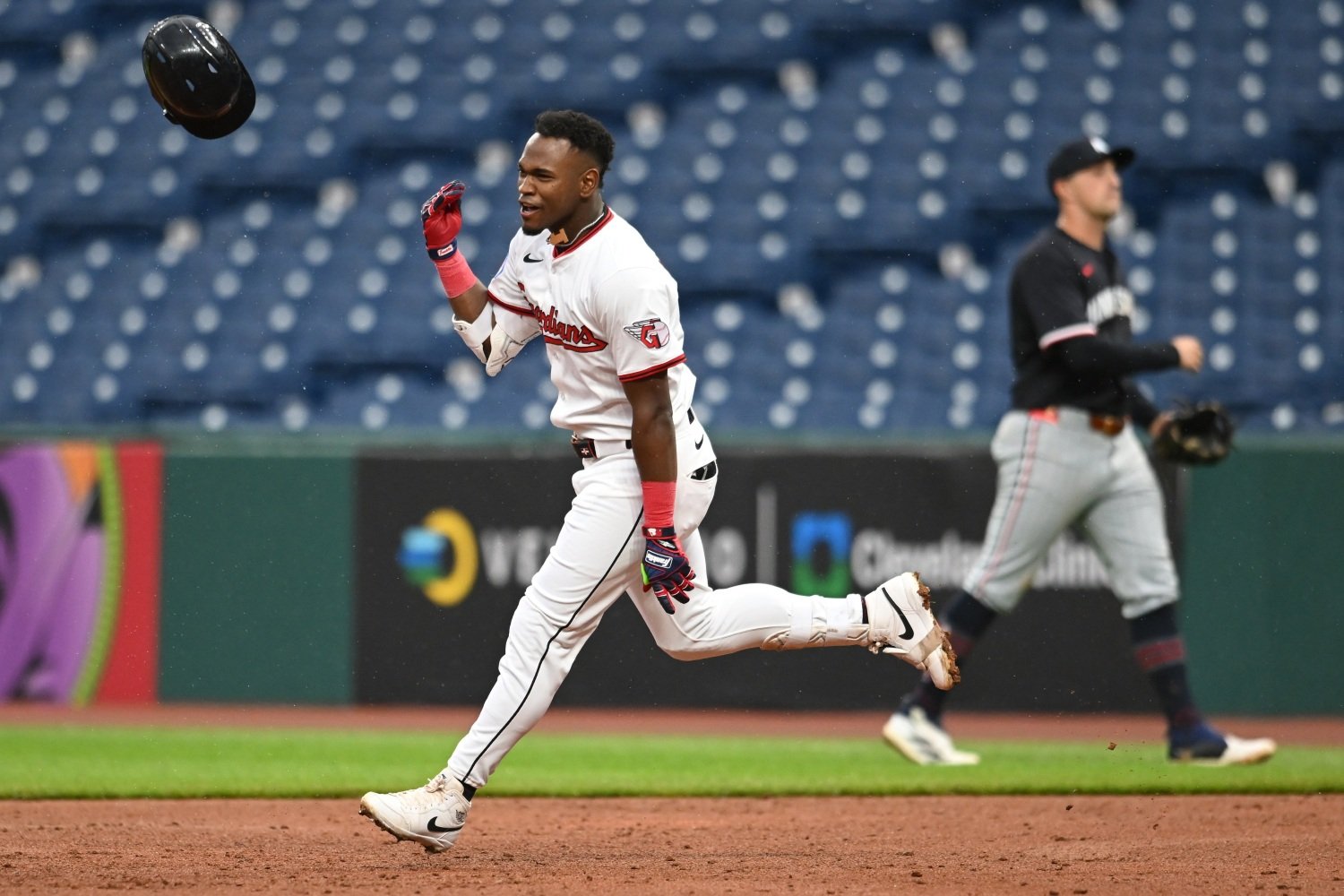
After two more walkoff losses to the Cleveland Guardians last week, the Minnesota Twins are 59-76 against their divisional foe since Derek Falvey joined the organization ahead of the 2017 season. In the last two years alone, the Twins are 4-13 with five walkoff losses (and seven others by two runs or less) against Cleveland. Despite the lopsided win-loss record, these matchups are traditionally close and low scoring, with an average score of 3.6-3.2 in favor of the Guardians. It should be no surprise that Falvey, the former architect of the Guardians’ pitching pipeline, has built a similarly strong pitching prospect group for the Twins. On the other hand, like the Guardians’, the Twins’ offense has been mediocre for much of Falvey’s tenure, frequently coming up short to support strong pitching performances.
While the Guardians have been competitive for the last decade, it’s resulted in just one American League pennant. That, paired with the Twins’ inability to beat them, raises the question: is this really the blueprint the organization should be following? In one sense, the answer is clearly “yes.” While winning the World Series is always the goal, creating a sustainable product that can compete each year is a solid secondary objective. After all, the 1987 and 1991 Twins are examples of the premise that if you can get into the playoffs, anything can happen.
However, as the 2000s Twins learned, continually making it to October and coming up short comes with (arguably) more frustration from fans than the times when the club hasn’t been competitive. Moreover, expectations of improvement or taking the figurative “next step” come with the territory of being a consistently competitive team. That’s something that the Guardians haven’t been able to accomplish in their decade-long run, much as the Twins have struggled to.
What makes it worse, though, is that the Twins seem to be the lite version of the Guardians—or, as John Bonnes said on the Common Man Dan Cole’s KFAN radio show on Friday, “the Twins aren’t as good at being Cleveland as Cleveland is.” Not only did the pitching pipeline take a while to develop, but the Twins don’t appear to have the hitting to convert all that pitching into wins. More specifically, they don’t have the timely hitting required to consistently win. Unlike Cleveland, the Twins’ OPS with runners in scoring position is in the bottom half of the league since the start of last season. Over the same timeframe, the Twins have a sub-.500 record in one-run games, and in extra-inning games.
This has all culminated in a team that is 15-20 this season. This has all culminated in a team that has one of the best rotations and bullpens in baseball, yet can’t consistently win baseball games. This has all culminated in a team that looks lifeless at the plate and in the field.
While the Guardians model has led to a sustainable product, it hasn’t been enough to get over the hump. Whether it’s a good model for the Twins to follow is surely up for debate. One thing that isn’t up for debate is that the Twins are the lite version of the Guardians right now.