
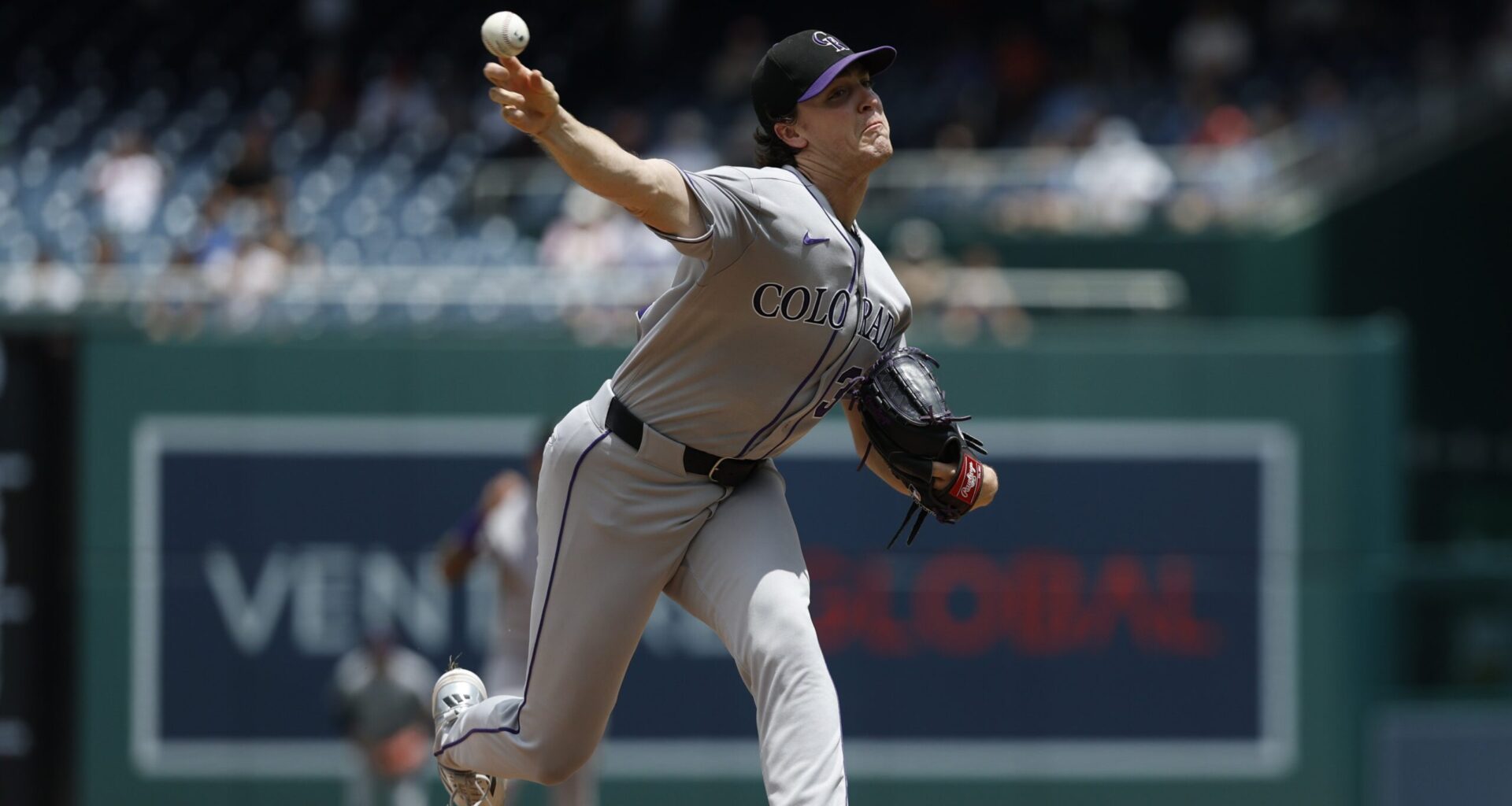
The Coors Field Challenge
Nestled among the majestic Rockies, Coors Field presents a unique set of challenges that have uniformly tested the mettle of the Colorado Rockies’ pitching staff. At high altitude, the combination of thinner air and the expansive outfield transforms what might be a solid pitching lineup into a formidable battleground. Baseballs, buoyed by the atmospheric conditions, often fly further than anticipated, resulting in ballooning ERAs and an uphill struggle for pitchers.
Chase Dollander’s Journey
In light of these daunting realities, the Rockies have centered their aspirations on Chase Dollander, their first-round selection in the 2023 MLB Draft. With a pedigree rich in promise, Dollander now stands at a crossroads, tasked with the challenging transition to this altitude, which has historically proven difficult for newcomers. While his journey has been peppered with early career obstacles, the glimpses of brilliance he showcased in college continue to illuminate the path forward for both him and the organization.
Dollander’s ascent has been characterized by resilience and a steadfast commitment to his craft. Throughout his collegiate career, he exhibited a diverse pitch repertoire that garnered attention and accolades. Nevertheless, the leap to the professional arena has revealed new hurdles, particularly in mastering the unique dynamics present at Coors Field. Past pitchers have often found the stadium’s environment to be a significant barrier, emphasizing the importance of adaptability in the face of adversity.
Adapting to Altitude
Successfully pitching at Coors Field entails more than sheer talent; it requires a profound understanding of how to recalibrate one’s game to the distinctive playing conditions. The thin air not only affects ball dynamics but also poses challenges for pitchers in terms of physical stamina. This is where Dollander’s mental strength will be critically assessed. He is tasked with leveraging his considerable skills while navigating the complexities of a ballpark that tends to favor offensive prowess.
As Dollander encounters these early challenges, his capacity to adapt will be crucial. The support from his coaches and teammates is unwavering, as they recognize that his growth will be integral to both his personal development and the team’s success. They remain committed to coaching him through these early phases of acclimatization.
The Broader Implications for the Rockies
Dollander’s evolution transcends his individual progress; it mirrors a larger narrative for the Rockies franchise. Historically, the organization has grappled with assembling a pitching staff that can complement its offensive firepower. If Dollander can elevate his performance and evolve into the dependable ace the Rockies have envisioned, it could herald a transformative chapter for the team, potentially alleviating long-standing pitching woes.
Looking Ahead
As Chase Dollander embarks on the intricate task of mastering the demands of Coors Field, the excitement surrounding his potential is palpable. The Rockies are closely invested in his development, pinning hopes on his ability to revitalize not only their pitching corps but also their competitive standing in major league baseball. While the challenges posed by altitude are real and significant, they also present an invaluable opportunity for Dollander to forge his legacy within the fraternal embrace of Colorado’s storied landscape.
In the intricate tapestry of baseball, where each pitch can shift the momentum of a game, Dollander’s journey exemplifies the resilience required to face challenges head-on. The Rockies, alongside their loyal fanbase, remain optimistic that, with dedication and experience, Dollander will emerge as a crucial figure in their pursuit of sustained success.
Related