
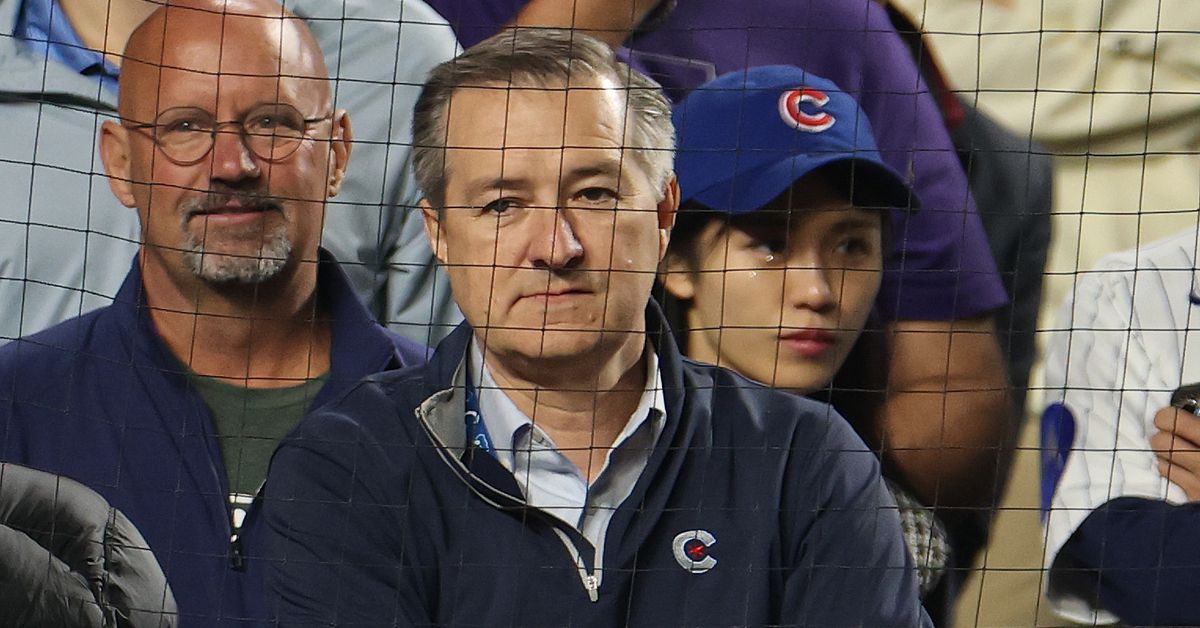
Cubs Chairman Tom Ricketts is one of the drivers of the upcoming management versus labor conflict in Major League Baseball. I’ve long thought so, just extrapolating from his actions and the tone of his public comments rather than the substance, since his remarks generally don’t contain any more telltales than Jed Hoyer’s.
There are more factions and overlaps in that very complex narrative, but buried in an excellent Jon Greenberg Athletic feature {$} is this little bit that tends to confirm my suspicions:
I don’t know if I share Egeland’s optimism about the Cubs signing Tucker, but I think “win-now mode” is here for the next five years and if chairman Tom Ricketts gets his way in the upcoming labor battle with the players, we might see even more restrictions on top spenders like the Dodgers, Mets and Yankees, thus evening the field for the less-profligate Cubs owners.
Hrm. Let’s not forget these comments either:
The owners really want a salary cap, the winds say. But that’s a huge problem, says Jeff Passan:
Rob Manfred sounds like he’s on Ricketts’ side, judging by these comments.
“I am really cognizant of it, and I’m sympathetic to fans in smaller markets who go into the season feeling like they don’t have a chance in the world to win. … When you sit in a small market, you watch the big-market guys signing guys all winter long, and your guys are doing nothing, that hurts the business,” Manfred stated via Tess DeMeyer of NYTimes.com
Manfred understands that just because payrolls are high, it doesn’t mean success is assured.
“Massive disparity problem that we need to address,” he added.
There are definitely rumors of tension between the owners. A salient point, brought up here many times, is this:
Of the four major professional sports in America, local television deals provide MLB franchises with the highest percentage of their overall revenue on an annual basis (approximately 25%).
And that’s going to crater, and soon. Some teams do have lucrative deals, though.
In an interview on Sirius XM’s MLB Network Radio, Manfred implored that “it’s important to recognize that our clubs should and do act in their economic self-interest.” “If you want to make a change, you’ve got to demonstrate to people that what you’re offering to them is better for them” Manfred continued. “I do think there are a combination of things that for even the very biggest teams, we can demonstrate that for the good of the game over the long haul, it’s better for everybody and better for them.”
Then they have to sell it to the players and their representatives.
…conventional wisdom suggests that Steve Cohen, Mark Walter, or Tom Ricketts won’t be too eager to give up the financial windfall that comes from their respective TV deals.
Because, while things seem complex, the reality is that it’s really simple — The owners want the biggest slices. The Commissioner’s Office wants the pie. Dessert will be served before the players even sit down, if they have their way.
It’s “intelligent spending.” Or is it? You make the call. Operators are standing by.