
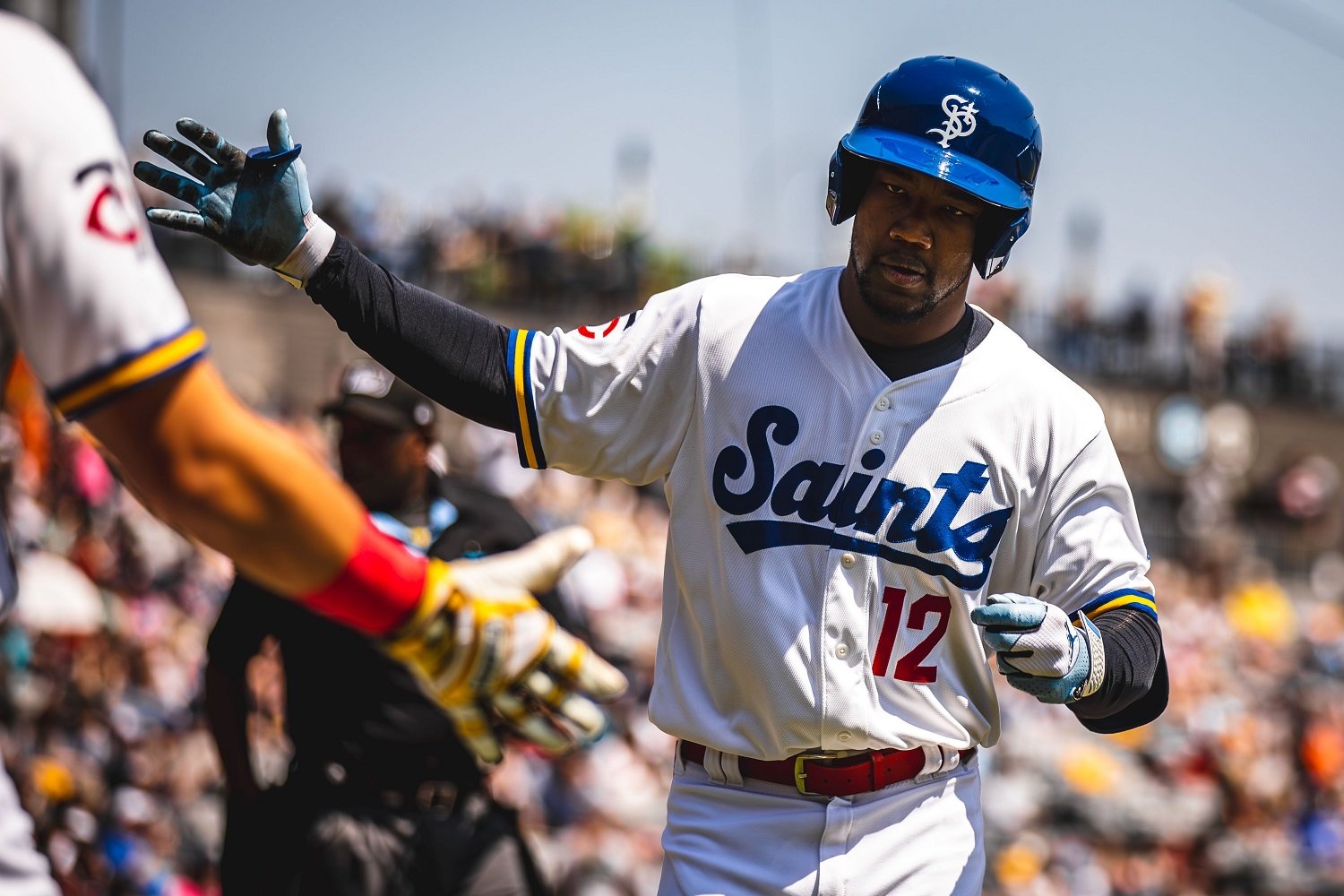
Not every top prospect’s story ends with big moments and standing ovations at Target Field. Earlier this week, the Minnesota Twins officially released infielder Yunior Severino, a once-promising slugger who led the minor leagues in home runs two years ago. His seemingly abrupt release serves as a sobering reminder of just how steep and unforgiving the climb to the big leagues can be, even for players who show legitimate flashes of big-league potential.
From Power Breakout to 40-Man Roster
It wasn’t long ago that Severino looked like one of the most exciting bats in the Twins’ pipeline. In 2023, the then-23-year-old slugged his way to the organizational spotlight, launching a minor league-leading 35 home runs across 120 games between Double-A Wichita and Triple-A St. Paul. His .272/.352/.546 slash line placed him among the most productive hitters in the farm system, and his ability to tap into raw power forced the Twins’ hand. They added him to the 40-man roster that offseason to shield him from the Rule 5 Draft.
Baseball America named him the 2023 Twins Minor League Player of the Year. He was also the Twins Daily Minor League Hitter of the Year, beating out other players like Brooks Lee and Emmanuel Rodriguez. The Twins organization named Lee the 2023 Sherry Robertson Award winner as their minor-league player of the year. Severino was at the peak of his prospect standing, but there were flaws to his game.
Despite the power surge, there were always red flags, most notably his high strikeout rate, which sat just shy of 33%. But in a farm system short on impact corner bats, Severino looked like someone who could offer value as a switch-hitting slugger. He was young for Triple-A; flashed legitimate power to all fields; and offered some positional versatility, at least on paper. Yet, the transition from a breakout season to sustainable success proved to be a hurdle he couldn’t clear.
A Disappearing Bat
The Twins carried Severino on the 40-man roster for the entirety of 2024, but never gave him a serious look for a call-up. That, in itself, was telling. With injuries and underperformance impacting the major-league roster at times, Severino remained in St. Paul, trying to regain the form that had vaulted him up prospect rankings. That form never returned.
Severino’s OPS fell by 123 points in 2024. His isolated power (ISO), a key metric for evaluating raw pop, plummeted from .274 to .180. That’s a steep drop, especially in the hitter-friendly confines of CHS Field and across the power-inflated International League. His strikeout rate did improve slightly, dropping to 27.8%, but it came at the cost of his biggest weapon: the long ball.
Pitchers at the Triple-A level began exploiting his approach. Severino showed a persistent tendency to chase pitches outside the zone and often looked off-balance at the plate. Without the loud contact to compensate for the swing-and-miss, the Twins were left with a player whose offensive ceiling suddenly looked far more limited.
In 2025, his numbers cratered in St. Paul. The now-25-year-old hit .196/.344/.324, with two home runs and seven doubles in 33 games. His strikeout rate jumped back up over 35% and his wRC+ was below 85 for the first time in his career. The upper minors can be a challenging environment for power-swinging sluggers, and Severino was never able to put it all together.
A Man Without a Position
Even when the bat was booming, defensive questions trailed Severino. Originally signed as a middle infielder, he’s moved down the defensive spectrum as he’s filled out physically. By 2025, he was primarily limited to first base, where he was considered a below-average defender. He lacked the athleticism to cover ground and didn’t show the soft hands or footwork typically required at the position.
He’s also a below-average runner, which further limits his value as a bench piece or utility player. Without a strong defensive position and with a bat that no longer looked major league-ready, Severino found himself in the unenviable position of being a power-first prospect with no clear role.
Development Isn’t Linear
There’s no question that Severino has legitimate raw power. Players who can hit 30-plus home runs in a minor-league season don’t grow on trees. However, his story highlights the often brutal nature of prospect development. Not every toolsy breakout can carry over to the highest level of competition in the world. Even with gaudy home run totals and a spot on the 40-man roster, Severino couldn’t bridge the gap between upper-minors standout and big-league contributor.
Now 25, he’ll look for another opportunity elsewhere, likely with a club intrigued by his power potential and hoping a new environment can unlock a more consistent version of his swing. And for the Twins, the decision to release him reflects the crowded nature of the roster and the importance of finding players who can offer value both at the plate and in the field.
Severino’s fall from top prospect to organizational depth to release was swift and disappointing. It’s a tough break for the player and a harsh reality for a front office constantly trying to forecast which players will pan out in the ultra-competitive world of MLB development.
Do you think the Twins gave up on Severino too soon? Or was the writing already on the wall? Join the conversation in the comments below.
Interested in learning more about the Minnesota Twins’ top prospects? Check out our comprehensive top prospects list that includes up-to-date stats, articles and videos about every prospect, scouting reports, and more!