


How the MLB Draft slot system works and impacts who gets taken
The Milwaukee Brewers have the MLB draft slot system down to a science. Here’s how it dramatically impacts each draft.
The 2025 Major League Baseball draft begins Sunday, and the Milwaukee Brewers will be busy on Day 1, with five picks before the remainder of their class gets selected Monday.
Here’s what to know about the draft.
When is the 2025 MLB Draft?
The draft begins Sunday, July 13, at 5 p.m. CT and runs for three rounds. The draft continues July 14 at 10:30 a.m. until conclusion of 20 rounds.
Where can you watch the MLB Draft?
The first day (July 13) airs on MLB Network, MLB.com and on ESPN and features Rounds 1-3.
The remaining rounds (4-20) will finish Monday, July 14, available at MLB.com.
When do the Brewers make their selections?
The Brewers have five picks on the first day, followed by one pick per round on the second day.
No. 20 (first round) — their normal first-round selectionNo. 32 (first round) — free-agent compensation for losing Willy AdamesNo. 59 (second round) — their normal second-round selectionNo. 68 (second round) — compensation for not signing 2024 second-round pick Chris LevonasNo. 84 (third round) — their normal third-round selection
The Brewers also had a “competitive balance” pick in the first round, No. 33, but traded it to Boston in the deal that brought Quinn Priester to Milwaukee. All teams that have either one of the 10 smallest markets or 10 smallest revenue pools receive an additional pick at the end of the first or second round, and that’s where this pick initially came from for the Brewers. The groups of teams alternate between the two rounds each year.
Who are some of the players that have been connected to the Brewers in mock drafts?
Looking at first-round selections:
ESPN: Marek Houston, shortstop, Wake Forest and Kayson Cunningham, shortstop, Johnson High School in TexasCBS Sports: Wehiwa Aloy, shortstop, Arkansas (did not list a selection at No. 32)MLB Pipeline: Gage Wood, right-handed pitcher, Arkansas and Ethan Conrad, outfield, Wake ForestBaseball America: Caden Bodine, catcher, Coastal Carolina and Sean Gamble, outfield/second base, IMG Academy in FloridaUSA Today: Andrew Fischer, infielder, Tennessee (did not list a selection at No. 32)
Aloy won the Golden Spikes Award given to the top amateur baseball player in the country (an award previously won by Brewers associate manager Rickie Weeks and current first baseman Andrew Vaughn). Wood threw a no-hitter in the College World Series, the first no-no at the Omaha showcase since 1960.
Which players from Wisconsin are likely to get drafted?
The biggest name to know is Tennessee second baseman Gavin Kilen, who had an All-American season and is likely to hear his name called in the first round. Kilen is a former high-school star at Milton.
Other big-time prospects who appeared at the MLB Draft Combine include:
Mitch Voit, second baseman, Michigan (Whitefish Bay High School alumnus)Nate Snead, right-handed pitcher, Tennessee (South Milwaukee)Rory Fox, right-handed pitcher, Notre Dame (Catholic Memorial)Peter Kussow, right-handed pitcher (Arrowhead High School)
Names that appear in the MLB.com Draft Tracker from Wisconsin high schools include pitchers Auden Pankonin (River Falls), Cooper Jesperson (Eau Claire Memorial), Ethan Bauerschmidt (Kenosa Tremper), Logan Schulfer (Stevens Point, University of Wisconsin-Milwaukee), Ryan Brennecke (Oconomowoc), Tyler Deleskiewicz (Lake Geneva Badger, UW-Milwaukee), third baseman Carter Kutz (Hartford) and outfielder Q Phillips (Brookfield East, UW-Milwaukee)
Here’s how the ‘bonus pool’ impacts everything
The Brewers have been allotted $13,138,100 in their “bonus pool” for this year’s draft, the result of a slot system that assigns dollar values for every pick in the first 10 rounds. This is a critical number.
Here’s how the system works:
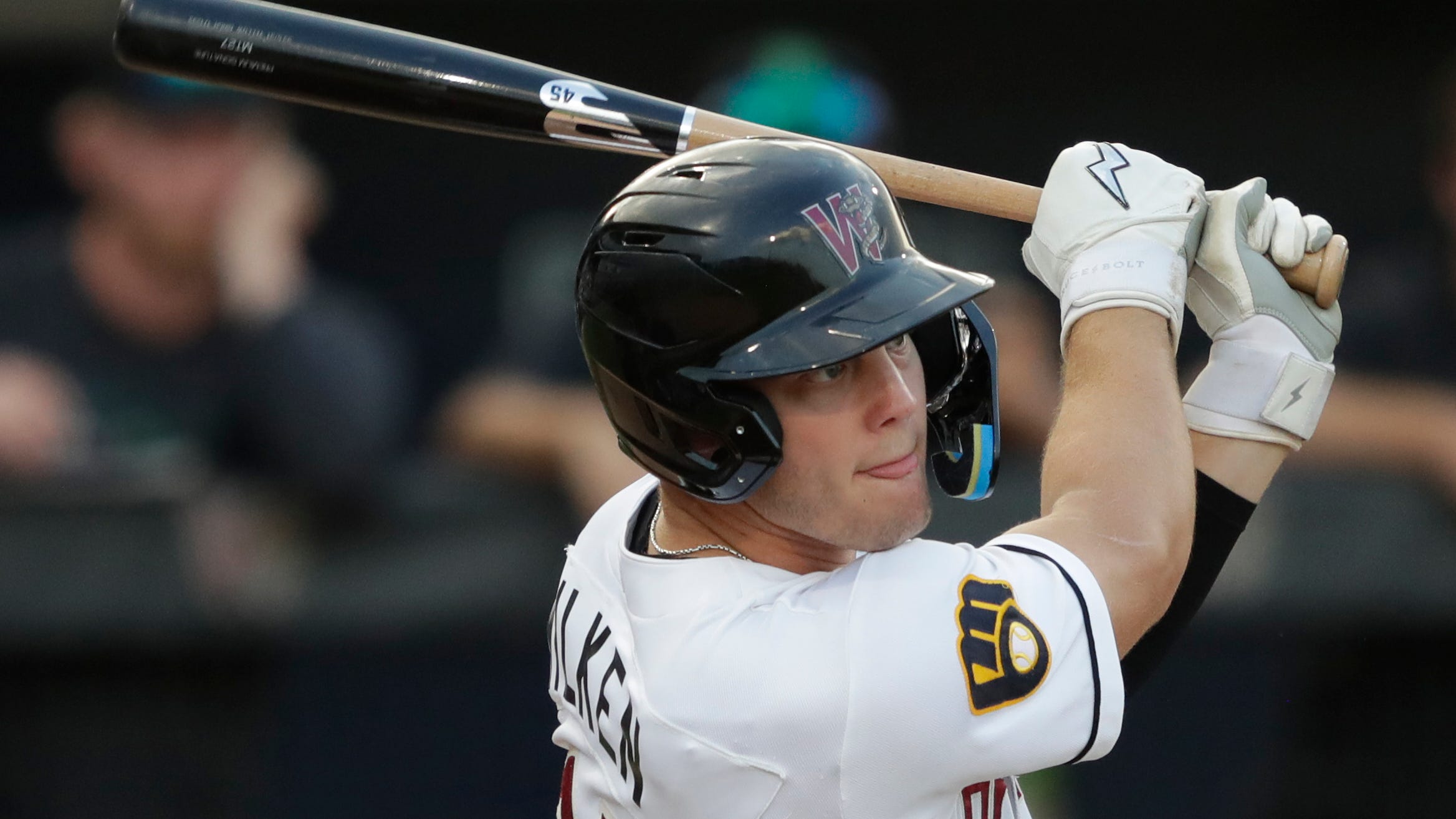
The “slot” values of every draft pick a team possesses in the first 10 rounds are added up to make the bonus pool. Naturally, the biggest values start high in the draft (the No. 20 pick is worth $4.27 million to Milwaukee’s bonus pool) and get much smaller by the 10th round (the No. 305 pick in the 10th round is worth $189,000 to Milwaukee’s bonus pool). Add the values from all the Brewers’ picks in Rounds 1-10, and this year you have $13.14 million.Every pick in Rounds 11 or later has a slot value of $150,000, but that doesn’t count into the bonus pool. It still matters, though; if the Brewers sign players in Rounds 11 or later to more than $150,000, that overage does count in the bonus pool figure.Another example: In 2023, saving on first-rounders Brock Wilken (signed for $3.15 million, slot was $4.02 million) and Josh Knoth (signed for $2 million, slot was $2.54 million) was a big reason why the team could afford third-rounder Eric Bitonti (signed for $1.75 million, slot was $796,200) and sixth-rounder Cooper Pratt (signed for $1.35 million, slot was $309,900). The Brewers’ strategy enabled the team to land an elite overall draft class.If the Brewers sign a player “above slot,” that means they have to make up savings elsewhere in the first 10 rounds and sign players “under slot” so they don’t go over their bonus pool.Why can’t they exceed the bonus pool, you wonder? If they go over that allotment by a dollar, they’ll wind up paying some penalties. If they go over by 5%, they’ll wind up losing next year’s first-round draft pick. They can lose more draft picks if they go up even more beyond the pool. No team has ever gone over 5% since the system was implemented.For example, the Brewers paid well over slot to sign second-rounder Jacob Misiorowski in 2022, a deal of $2.35 million when the slot was only $1,131,500). They saved money on several other players in the top 10 rounds to account for the overage, including first-rounder Eric Brown (signed to $2.05 million when slot was $2.7 million) and other second-rounder Robert Moore (signed for $800,000 when slot was $915,300).Yes, that often means players selected later in the draft get higher signing bonuses than players selected earlier, like the Misiorowski and Brown example. The Brewers often employ the strategy of taking bigger reaches early in the draft, maximize bonus-pool savings and land harder-to-sign players with later picks.There’s a catch. If a player doesn’t sign with a team in the first 10 rounds, his slot money is lost from the bonus pool. In other words, you can’t just draft a player, not sign him, and use his bonus assignment to beef up the offer for a different player. Levonas not signing last year threw a wrench into Milwaukee’s bonus pool (even if it gave the team a compensation pick the following year).The 11th round is particularly interesting, the first round in which the slot value isn’t tied to the bonus pool. There’s no “penalty” for not signing a player in the 11th round or later. So that’s where a team like the Brewers might take a flyer on a high-level guy, knowing if he doesn’t sign, it doesn’t count as a loss to the bonus pool. But if there is money left from the pool, that money could get kicked to picks in Rounds 11-20, like 11th rounder Bishop Letson in 2023 ($482,000, well over the $150,000 allotment). The team drafted Luke Adams ($282,000) in the 12th round in 2022.How do the Brewers typically use their draft picks?
As mentioned above, you can expect the Brewers to chase early after what we might think of as “reaches,” because the biggest savings in slot value can be made with the top picks. But keep an eye on the later picks on Day 1 — that’s often where the Brewers strike with higher-upside players like elite high schoolers who can command big bonuses to lure them away from college commitments.
The Brewers have taken college hitters high in the draft every year since 2020, but it was a surprise when they took a high-school hitter like Braylon Payne with their first pick last year.
Here’s where the Brewers can really shine. They saved bonus-pool money on Payne and fellow first-round pick Blake Burke out of Tennessee, combining for $1.7 million below slot. And those players are both having excellent first seasons in the system. Just because the Brewers are saving money doesn’t mean you should expect those early picks to flame out.
Recent first picks by the Brewers in the draft2024 (No. 17): Braylon Payne, outfielder, high school2023 (No. 18): Brock Wilken, third baseman, Wake Forest2022 (No. 27): Eric Brown, shortstop, Coastal Carolina2021 (No. 15): Sal Frelick, outfield, Boston College2020 (No. 20): Garrett Mitchell, outfield, UCLA2019 (No. 28): Ethan Small, pitcher, Mississippi State2018 (No. 21): Brice Turang, shortstop, high school2017 (No. 9): Keston Hiura, second base, Cal Irvine2016 (No. 5): Corey Ray, outfield, Louisville2015 (No. 15): Trent Grisham, outfield, high school