
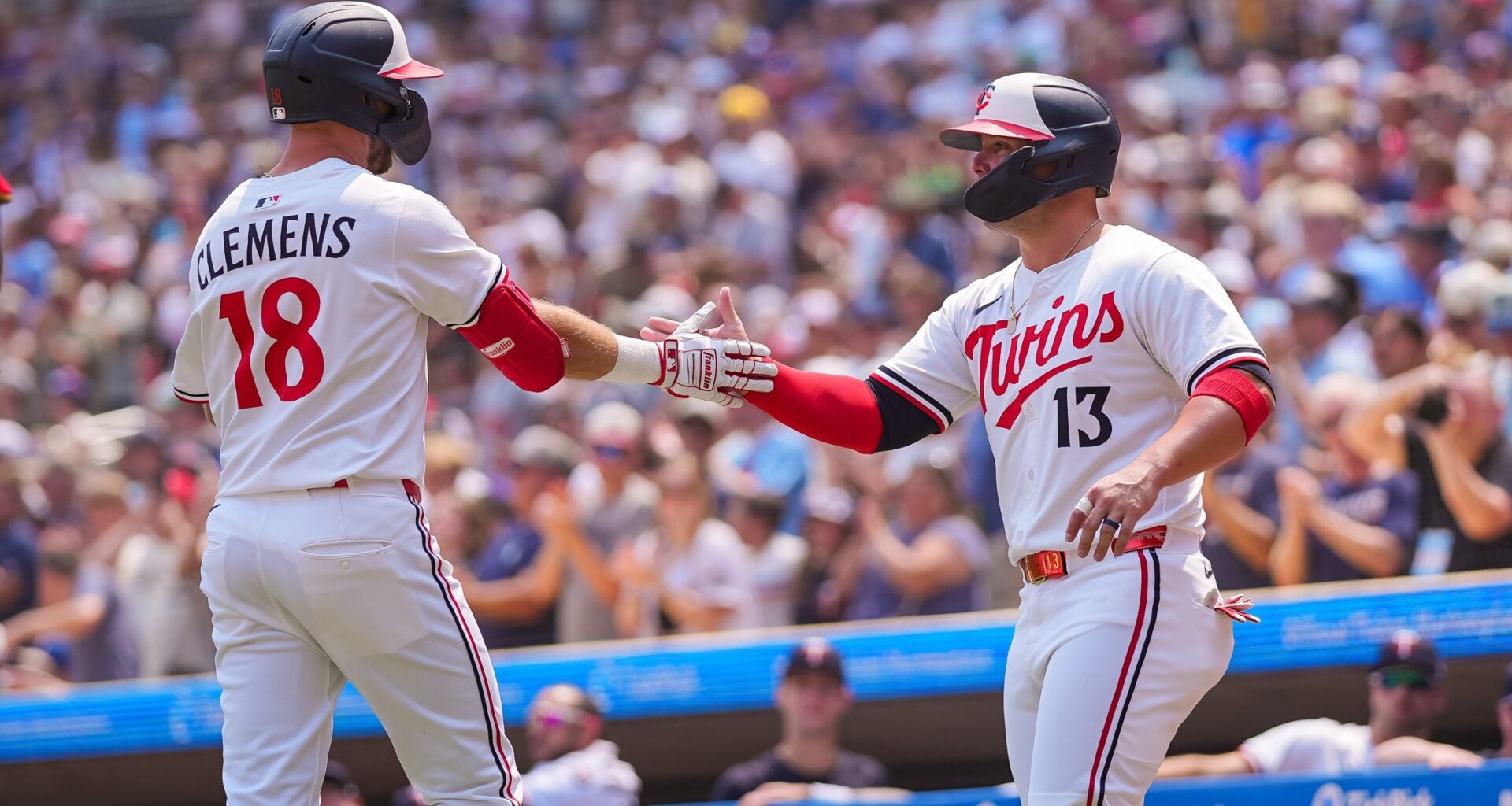
The Minnesota Twins have one of the best pitching staffs in baseball — that is, when the big names are healthy. With Pablo López, Bailey Ober, and Zebby Matthews set to return soon, starting pitching should once again be a strength of the team. The bullpen, aside from a few rocky appearances in June, have been lights out.
The hitting, on the other hand? A clear area of opportunity. Coming out of the break, the Twins have the sixth-worst team OPS in the American League. Of the teams behind them, the White Sox and Orioles will almost certainly miss the playoffs. The others — Royals, Rangers, and Guardians — all stake their playoff claim on the backs of their pitchers as well, and the Royals and Guardians are also likely to miss out on the postseason due to mediocre hitting.
The best playoff teams feature well-balanced rosters, and it’s clear the Twins will need to upgrade their offense should they feel that October baseball is a real possibility. But, where would it make the most sense to upgrade based on the players currently on the team? Let’s take a look, position by position, and see where the need is the greatest. I’ll rank the positions from lowest need (or least likely to try to upgrade) to greatest need or most likely.
Center Field: 3.5 fWAR (2nd in the AL), 136 wRC+ (1st in the AL), +6 FRV (6th in the AL)
This one is super easy. Byron Buxton is the best two-way centerfielder in the American League, and it’s not close. His backup, Harrison Bader, would be a starter for probably half the teams in baseball. Both offensively and defensively, the team would be hard-pressed to actually upgrade from either player.
Left Field: 2.6 fWAR (3rd in the AL), 103 wRC+ (5th in the AL), +2 FRV (2nd in the AL)
Bader has gotten more starts here than anyone else, and that’s unlikely to change, unless the Twins move him at the deadline. He’s got elite defense, and an average bat that plays just fine in left. Willi Castro and Luke Keaschall can both play here too. It’s extremely unlikely they pick up a left field bopper.
Shortstop: 0.7 fWAR (12th in the AL), 93 wRC+ (12th in the AL), -12 fielding runs (15th in the AL)
Carlos Correa has clearly not been himself this season, and the Twins’ best hope is he can find his stride at the plate and in the field. If, instead, he is experiencing a rapid, age-based decline, they are in trouble for the next few seasons. To be clear though, the Twins will not move on from Correa, nor will they pick up a backup that’s better than both Castro and Brooks Lee.
Second Base: 0.2 fWAR (13th in the AL), 106 wRC+ (3rd in the AL), -4 FRV (13th in the AL)
Lee is the second baseman of record, but Kody Clemens and Keaschall (when he returns in a couple weeks) slot in well there as well. Could the Twins upgrade here? Maybe. Would it make sense? Probably not. Keaschall probably isn’t as good as he was in his limited action with the Twins prior to breaking his arm on a hit by pitch, but he absolutely looked major-league ready, and the Twins probably don’t need yet another second baseman.
Third Base: 0.3 fWAR (12th in the AL), 69 wRC+ (13th in the AL), -2 FRV (11th in the AL)
When healthy, Royce Lewis is the starter. Castro and Lee both see plenty of innings there as well. The biggest challenge here is that Lewis has not been healthy, or right at the plate, for the majority of the season. Assuming the Twins still believe in his immense talent and upside, it seems unlikely they would attempt to upgrade the position at the deadline, unless they found a player who is a clear upgrade both offensively and defensively. It seems unlikely.
Right Field: 0.5 fWAR (11th in the AL), 88 wRC+ (13th in the AL), -5 FRV (10th in the AL)
Right field has been manned primarily by one of Matt Wallner or Trevor Larnach, with Castro also seeing some action here. None of the three are especially good defensively, and the aggregate offensive output at the position have been subpar. Not great, for the lower end of the defensive spectrum. There’s a bit of a logjam here unless the Twins move two of those three at the deadline. That is a possibility, to be certain, and it could be a straightforward move to pick up a slugger rental while recouping value.
Catcher: 0.4 fWAR (14th in the AL), 85 wRC+ (10th in the AL), -4 FRV (10th in the AL)
This position is trickier. One one hand, Ryan Jeffers has been solid, as he has been basically since his rookie year. He has accounted for 1.1 fWAR himself, and has a 111 wRC+. Christian Vázquez has lost a step defensively, and is a downright offensive liability. Could the Twins trade Vázquez and his expiring contract, replace him with a journeyman for the remainder of the season, and also trade for a good catching prospect? Maybe. They will need a second catcher next season either way, and it’s not clear that one is currently in the organization.
First Base: 0.4 fWAR (10th in the AL), 89 wRC+ (11th in the AL), +5 FRV (1st in the AL)
Ty France has gotten the majority of reps at first base this season, with Clemens getting a few starts more recently as the Twins have begun platooning the position. France has been good defensively, but despite being a clutch hitter for much of the season is just not a plus hitter at this stage of his career. This may be the single likeliest position to trade for as the position isn’t blocked by anyone who is a key part of the Twins plans.
Designated Hitter: 0.6 fWAR (9th in the AL), 103 wRC+ (12th in the AL)
The Twins have generally opted to rotate guys through DH to give them a half-day off. On a team with a plus offense, this is a great strategy. With the Twins and their sub-par hitting, the lineup spot that should have the most pop has been rather anemic, with roughly league average hitting from the position that should be perhaps 20% better than average. It makes so much sense to try to upgrade here as it should be cheap to do so.
So, summing all this up, it seems clear that the Twins would benefit from seeking to acquire a big bat at the bottom of the defensive spectrum. Typically, this is also the easiest player type to acquire at the deadline, with right fielders, first basemen, and designated hitters on expiring contracts often changing teams for the price of a good reliever or a decent prospect. Should the Twins find themselves light buyers (perhaps the likeliest scenario in my opinion, given the sale of the team is working towards completion), a pitcher-for-hitter swap for a big bat just may be what helps the team live up to the potential they had heading into the season.
In part two, I will look at hitters that fit these profiles that just may be available over the next several days.