
Lost in recent reports that Jacksonville developer Patrick Zalupski has agreed to pay $1.7 billion for the Tampa Bay Rays is an extraordinary premise.
Zalupski is paying more than eight times what the previous owner paid for the club despite not knowing where the Rays will play home games.
The only specific detail leaked on a stadium’s location is the county. Zalupski’s team of investors reportedly prefers Hillsborough.
With Major League Baseball expected to approve the deal by the end of September, it’s no small question. Where, in a county that at 1,266 square miles is about the size of Rhode Island, will the Rays call home?
Which sites in Hillsborough County have emerged as possibilities? Which ones could make sense? Here’s a rundown:
Ybor Harbor
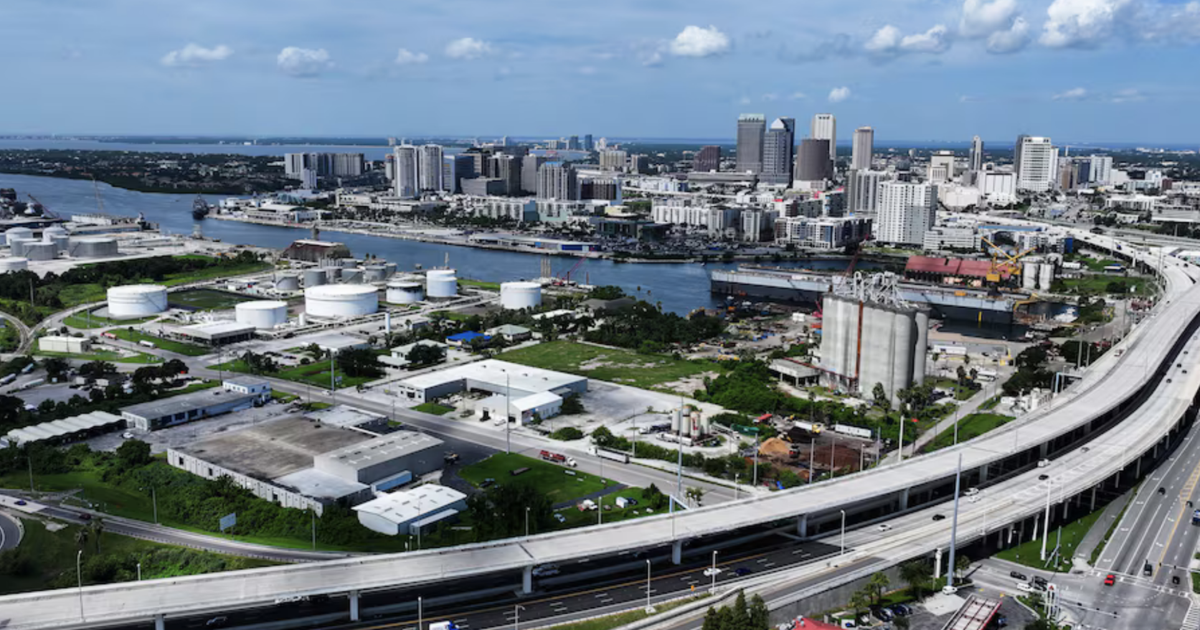
The roughly 45-acre waterfront site in an industrial part of town that the current Rays ownership sought as recently as 2023 is back on the table, even after plans were announced for a Tampa Bay Sun stadium there.
Hillsborough County Commissioner Ken Hagan said developer Darryl Shaw, who owns the shipyard, is on board with accommodating baseball.
The Rays’ current ownership previously pitched a 32,000-seat stadium with a roof, plus a $2.3 billion surrounding development with thousands of homes. Hagan said he is ready to dust off that pitch for the new ownership group.
Hagan dubbed this site as the “leader in the clubhouse” so far.
Pros: Centrally located near downtown Tampa between Ybor City and the Channel District. It checks the new ownership group’s box for a larger redevelopment. It could be close to a Brightline station.
Cons: A waterfront stadium could mean building higher to stave off sea-level rise. The site is next to gasoline storage tanks that come in handy after hurricanes. Maritime businesses and high-paying jobs could be displaced.
Hillsborough College
There’s an idea to build a Rays stadium at the Dale Mabry Highway campus of Hillsborough College. Tampa Mayor Jane Castor calls this plan “a viable option” that could open up more space for parking and easier traffic flow.
Pros: It would join Raymond James Stadium and the New York Yankees’ spring training complex to create a centrally located destination sports corridor. Because of its location, it’s easier to “flush traffic” after games, Castor said.
Cons: It’s farther from Tampa’s urban core than Ybor Harbor.
Sulphur Springs
The former Tampa Greyhound Track is an option for a Rays stadium, according to Elliott Hornblass, whose firm, Hornrock, is a partner in the deal. The group, which also owns Derby Lane in St. Petersburg, purchased the 130-acre site in February.
“We’re considering any number of options that we think would be served to enhance the community,” he said. “Clearly, having a stadium is one of them.”
Hornblass said he has not been contacted by potential new owners of the Rays.
Pros: The site has ample parking and easy access to Interstate 275. That could appeal to fans in booming Pasco County.
Cons: It’s not located near the urban core.
WestShore Plaza
WestShore Plaza is right off Interstate 275, the Howard Frankland Bridge to St. Petersburg and Tampa International Airport, and it could fit a stadium.
There is a deal in place to redevelop the site with shops, apartments, office and medical space, but no permit has been pulled and the land is for sale.
Pros: Central location surrounded by lots to do. Easier access for Pinellas County residents.
Cons: The Rays have raised concerns in the past about flight path restrictions.
Florida State Fairgrounds
Zalupski is tight with Florida Gov. Ron DeSantis. The developer donated to DeSantis’ presidential campaign, and DeSantis appointed Zalupski to the University of Florida’s board of trustees. Zalupski could call in a favor to DeSantis about a stadium site at the Florida State Fairgrounds, which is state property. DeSantis, after all, is a baseball fan who met with Major League Baseball Commissioner Rob Manfred last December.
Castor, however, called this location “highly unlikely.”
Pros: The fairgrounds would be closer to an Orlando audience.
Cons: It’s far from Tampa’s core, and the area lacks steady growth. It also might dislodge the annual Florida State Fair and other events, which might require buy-in from Agriculture Commissioner Wilton Simpson, who has had a frosty relationship with DeSantis.
Times staff writers Juan Carlos Chavez and Rebecca Liebson contributed to this report.