
There’s no real reason to believe that the Twins won’t sell, at least a little bit. You’ve read enough stories here detailing why, who is available, what the Twins could expect in return, yadda yadda.
If you’ve been reading Twins Daily for a while, you’ll also probably know how these articles work—this is the eighth I’ve written in the last 25 months. Below, I’ve listed the 14 times the Twins have sold at the deadline since 2017, Derek Falvey’s first year controlling the team. I’ve roughly ordered them from highest quality to lowest quality, preferring trades that bring back big-league players, even if the Twins didn’t get their money’s worth. You can argue over it if you want.
After getting feedback on these, I’ve slightly altered the format of the information given. I’ve listed player stats: innings pitched or plate appearances, ERA+ or OPS+, and Baseball Reference WAR. For Minnesota’s return (e.g., Joe Ryan). I listed their performance as a Twin first. For the other team’s return (e.g., Nelson Cruz), I listed their performance through whatever team control Minnesota had at that time first. I want to compare what the Twins got out of the deal against the overall value they sent out.
For Twins players, mostly prospects, this excludes value they accumulated elsewhere (e.g., Zack Littell in Tampa), even if they were still on the contract they had with the Twins. For other teams’ players (e.g., Ryan Pressly), I have highlighted what they did on the contract they were on with the Twins, even if they finished the contract with another team, to note the value given up. However, I do not count anything after the player signs an extension. Complain in the comments if you don’t think it’s fair.
I also attempted to add as much context as concisely possible, because stats don’t tell the whole story.
1. 7/22/21: Minnesota acquires Joe Ryan* (587 IP, 114 ERA+, 11.0 bWAR), Drew Strotman (did not reach Minnesota) from Tampa Bay for Nelson Cruz (238 PA, 101 OPS+, 0.4 bWAR), Calvin Faucher (138.2 IP, 94 ERA+, 0.3 bWAR under team control; 47 IP, 64 ERA+, -0.8 bWAR for the Rays), +10.3 bWAR for Minnesota.
This one hurt, as Cruz was a fan favorite and the leader of the greatest power offense in baseball history, but it’s turned out better than most could imagine. Although Strotman washed out of the organization in 2022, Ryan has emerged as a frontline starter who continues to improve. To get Ryan, the Twins gave up two months of Cruz, who was merely league-average for the Rays, and Faucher, who struggled in Tampa but is a nice piece in Miami’s pen after being traded there ahead of the 2024 season.
2. 7/27/18: Minnesota acquires Jhoan Duran* (230.2 IP, 170 ERA+, 7.2 bWAR), Ernie De La Trinidad (did not reach Minnesota), Gabriel Maciel (did not reach Minnesota) from Arizona for Eduardo Escobar (223 PA, 102 OPS+, 0.6 bWAR under team control; 1,544 PA, 102 OPS+, 6.2 bWAR for Arizona), 6.6 bWAR for Minnesota.
Escobar was a solid regular and fan favorite for the Twins on an expiring contract, and he signed a three-year extension with Arizona after the trade, continuing to be a contributor at multiple positions. De La Trinidad and Maciel are out of affiliated ball and on Oakland’s High-A team, respectively. Jhoan Duran debuted in 2022 and has been one of the more dominant closers in baseball ever since.
3. 7/30/21: Minnesota acquires Simeon Woods Richardson* (219.1 IP, 99 ERA+, 3.2 bWAR), Austin Martin* (257 PA, 89 OPS+, -1.0 bWAR) from Toronto for José Berríos* (242.1 IP, 85 ERA+, 0.9 bWAR under team control; 745.1 IP, 103 ERA+, 7.4 bWAR for the Blue Jays), +1.3 bWAR for Minnesota.
We’re years away from knowing for sure who won this trade, and it could get much better or much worse, hence its middling position in this ranking. José Berríos quickly signed a seven-year, $131-million extension with Toronto, but struggled mightily in 2022 before his extension kicked in. He’s been a solid No. 2 or 3 starter from 2023 to 2025, but the Twins had no intention of extending him. Woods Richardson had a bumpy ride in the majors, but has provided meaningful innings for two years. Martin, once a top prospect in baseball, stumbled in his first year of big-league action in 2024 and has not made it back to the show in 2025. There was an opportunity cost to this trade, as it netted two top-100 prospects but meant starting over a bit in the rotation.
4. 7/30/17: Minnesota acquires Zack Littell (63.2 IP, 99 ERA+, 0.2 bWAR for Minnesota; 538.1 IP, 108 ERA+, 7.2 bWAR under team control), Dietrich Enns (4.0 IP, 71 ERA+, -0.1 bWAR for Minnesota, 42.1 IP, 116 ERA+, 0.2 bWAR under team control) from New York (AL) for Jaime Garcia (37.1 IP, 94 ERA+, -0.1 bWAR), +0.0 bWAR for Minnesota.
After deciding that maybe they shouldn’t go for it, the Twins traded Jaime Garcia to New York and retained his salary. In return for 37 1/3 mediocre innings from Garcia, who retired the following year, Minnesota received Zack Littell and Dietrich Enns. Littell was a solid enough reliever for three years, until being designated for assignment after 2020, and he’s reinvented himself as a starter in Tampa. Enns has been unremarkable, pitching in 2017, 2021, and 2025 for three organizations.
5. 7/31/18: Minnesota acquires Logan Forsythe (205 PA, 81 OPS+, 0.2 bWAR), Luke Raley (did not reach Minnesota, 1,175 PA, 115 OPS+, 6.0 bWAR under team control), Devin Smeltzer (140 IP, 106 ERA+, 1.6 bWAR for the Twins; 162.1 IP, 74 ERA+, 1.4 bWAR under team control) from Los Angeles (NL) for Brian Dozier (170 PA, 77 OPS+, 0.1 bWAR), +1.7 bWAR for Minnesota.
Brian Dozier was on the wrong side of 30 and in the middle of a pedestrian year, after the Twins passed on better opportunities to cash in on his talents. Forsythe was acquired to finish the year in Dozier’s spot at second base, and Luke Raley was later traded back to LA in the Kenta Maeda trade. He’s since emerged as a solid bat for a few different teams. Devin Smeltzer was a feel-good story who filled a swingman role on some good Twins teams over four years.
6. 7/30/21: Minnesota acquires John Gant (33.2 IP, 76 ERA+, -0.3 bWAR), Evan Sisk (did not reach Minnesota; 5.1 IP, 259 ERA+, 0.1 bWAR under team control) from Cincinnati for J.A. Happ (54 IP, 98 ERA+, 0.5 bWAR), -0.8 bWAR for Minnesota.
This trade was a salary dump to salvage some money from Happ. Gant came over to offset some of the salary and fill a rotation slot, and he was not offered arbitration after the season. Evan Sisk was part of the trade that brought Michael A. Taylor to Minnesota for 2023. It was impressive to get anything of value in the trade, given Happ’s struggles in Minnesota.
7. 7/28/18: Minnesota acquires Gilberto Celestino (409 PA, 70 OPS+, 0.2 bWAR), Jorge Alcala* (187.2 IP, 99 ERA+, 1.1 bWAR, 200.2 IP, 105 ERA+, 0.2 bWAR under team control) from Houston for Ryan Pressly* (77.2 IP, 243 ERA+, 3.0 bWAR under team control; 333 IP, 151 ERA+, 6.4 bWAR for the Astros), -1.7 bWAR for Minnesota.
One that got away, Pressly has made two All-Star Games in Houston since the trade, and the Astros extended him—though it was clear the Twins had no intention of doing the same. Alcala has shown flashes as a late-inning arm, but he has failed to provide any level of consistency and was traded earlier this year. Celestino was rushed to the majors in 2021 and has not seen success in MLB; he’s now in the Mets system.
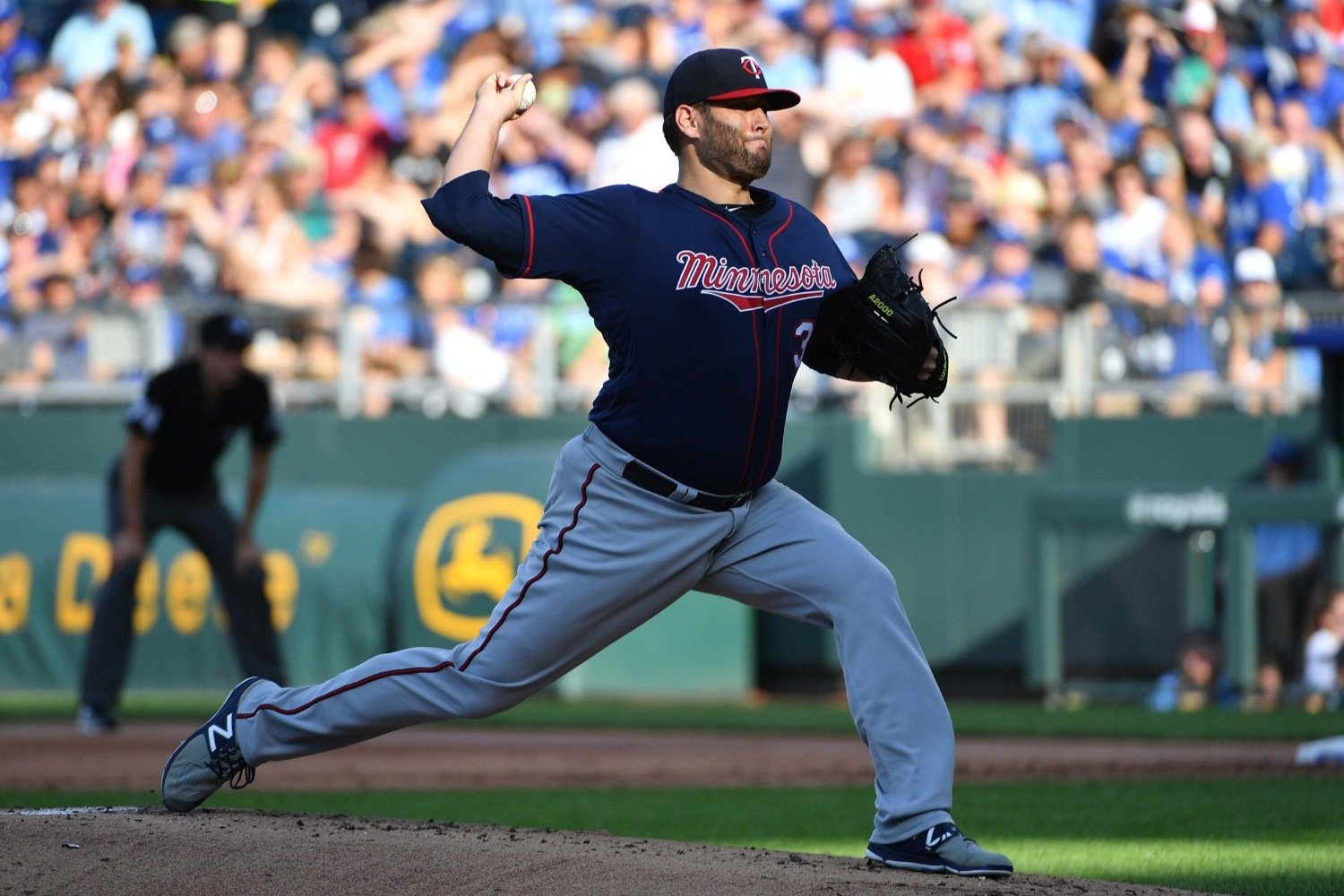
8. 7/30/18: Minnesota acquires Tyler Austin (141 PA, 110 OPS+, 0.3 bWAR), Luis Rijo (did not reach Minnesota) from New York (AL) for Lance Lynn (54.1 IP, 102 ERA+, 0.3 bWAR), +0.0 bWAR for Minnesota.
It was time for Lynn to go. The surly man did not perform in Minnesota, but he has been a quality, reliable pitcher outside of his four months in a Twins uniform. He just retired this spring. Rijo washed out of Minnesota’s system after 2022, and Austin spent time at first base and designated hitter but was again traded in 2019, after C.J. Cron emerged as a better first baseman. It was good to get any big-league asset out of this trade.
9. 7/30/21: Minnesota acquires Alex Scherff (did not reach Minnesota) from Boston for Hansel Robles (25.0 IP, 131 ERA+, 0.5 bWAR under team control; 49.2 IP, 95 ERA+, -0.3 bWAR for Boston), -0.5 bWAR for Minnesota.
Robles had a rocky half-season in Minnesota as a setup man in a poor bullpen, so the team was never likely to get much of anything in return. Scherff is currently at Wichita, but his performance has not been anything to be excited about from a minor-league reliever.
10. 7/26/23: Minnesota acquires Dylan Floro (17.0 IP, 84 ERA+, 0.0 bWAR), from Miami for Jorge López (20.2 IP, 85 ERA+, 0.3 bWAR under team control; 11.2 IP, 52 ERA+, -0.5 bWAR for Miami), -0.3 bWAR for Minnesota.
After being acquired at the 2022 deadline to pair with Duran in the back of the Twins’ bullpen, López’s tenure started shaky and only got worse. By July the following year, the Twins sent him to Miami for Floro, who ate a few innings out of the pen and was cut late in the season. López was a functional reliever in 2024, but the Twins weren’t going to wait for that player to reappear. They seemed relieved to get anything for him in the first place.
11. 7/30/18: Minnesota acquires Chase De Jong (18.2 IP, 84 ERA+, 0.0 bWAR for the Twins; 181.0 IP, 78 ERA+, -0.1 bWAR under team control), Ryan Costello (did not reach Minnesota) from Seattle for Zach Duke (14.2 IP, 75 ERA+, 0.0 bWAR), +0.0 bWAR for Minnesota.
Duke was having a decent year as a middle reliever. For the last two months of 2018 Duke, the Twins got 18.2 innings of Chase De Jong, who had a good 2022 in Pittsburgh but has otherwise been unremarkable.
12. 7/31/17: Minnesota acquires Tyler Watson (did not reach Minnesota) from Washington for Brandon Kintzler (26.0 IP, 131 ERA+, 0.5 bWAR under team control; 68.2 IP, 123 ERA+, 1.2 bWAR for the Nationals), -0.5 bWAR for Minnesota.
Brandon Kintzler was a great story for the Twins, improbably rising to become an All-Star closer in 2017. The Twins traded him and his expiring contract for Watson, who never made the majors. Washington extended Kintzler on a two-year deal, but he was traded to the Cubs in 2018 for future Twin Jhon Romero.
13. 8/9/18: Minnesota acquires Dakota Chalmers (did not reach Minnesota), from Oakland for Fernando Rodney (20.2 IP, 108 ERA+, 0.2 bWAR under team control; 35.0 IP, 70 ERA+, -0.3 bWAR for Oakland), -0.2 bWAR for Minnesota.
Stop me if you’ve heard this before: the Twins traded their closer at the deadline. Pulling an Oakland on Oakland, they got back righty Dakota Chalmers, a lottery ticket who struggled with command and is now in independent ball.
14. 7/30/21: Minnesota acquires Stevie Berman (did not reach Minnesota) from Los Angeles (NL) for Andrew Vasquez (63.2 IP, 104 ERA+, 0.6 bWAR under team control; 1.2 IP, 999 ERA+, 0.1 bWAR for the Dodgers), -0.6 bWAR for Minnesota.
Despite the excitement surrounding Andrew Vasquez as a prospect, he was never able to stick with Minnesota and was flipped for a depth catcher who was waived and is now in Toronto’s system.
There you have it. How do you feel about the Twins’ prospects of gaining assets in trades this season? How much confidence do you have that this front office will bring in beneficial pieces? History is one of our best guides; listen closely to what it’s telling us.