
Thursday marked another clearly defined chance for the Red Sox to take a meaningful step forward, and they declined.
The July 31 trade deadline came and went with Boston making a pair of acquisitions that didn’t move the needle. Left-hander Steven Matz arrived from the Cardinals late Wednesday night and right-hander Dustin May came in from the Dodgers less than an hour ahead of the 6 p.m. conclusion.
Advertisement
Those two veterans qualify as a disappointment in a market where a championship standard used to be the only one set. They certainly don’t keep pace with the hive of activity elsewhere in the American League playoff chase, with the Blue Jays, Yankees, Astros, Mariners and Rangers all acting boldly in their attempts to reach October.
“We can’t ignore what other teams are doing,” Red Sox chief baseball officer Craig Breslow said. “At the same time, our focus today was identifying and pursuing players who we felt like were good fits for our team.
“Ultimately, we’re going to be defined by what happens from tomorrow through our last game.”
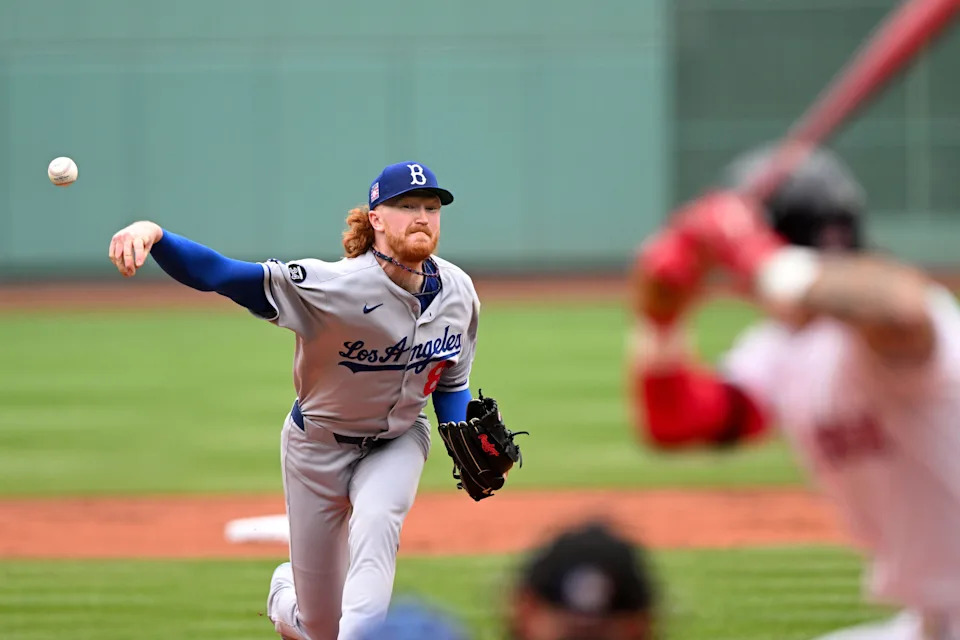
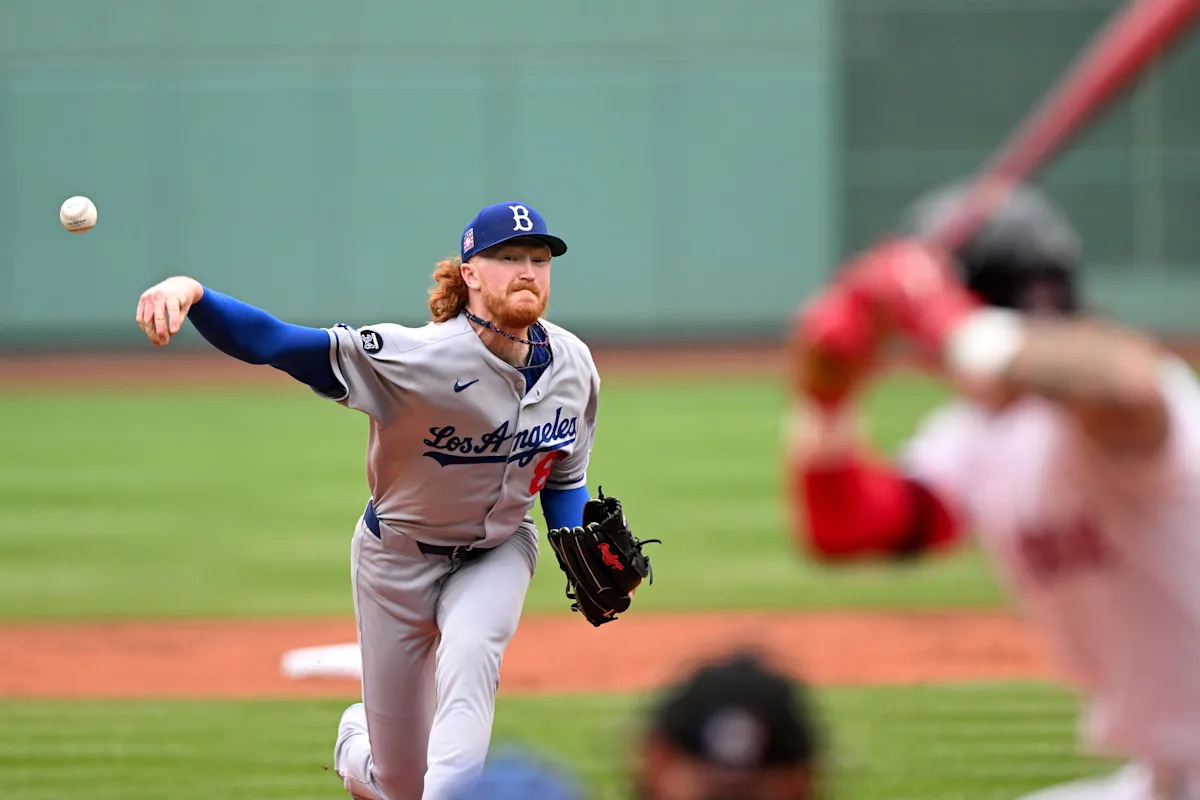
Dustin May, shown pitching against the Red Sox on July 27, was traded from Los Angeles to Boston on July 31.
Blaze Jordan went to St. Louis for Matz and reunites with Chaim Bloom, the former Boston executive who drafted him here in 2020. James Tibbs III and Zach Ehrhard were sent to Los Angeles for May, who was about to be dropped from the starting rotation in favor of a bullpen role. The Red Sox parted with their No. 10, No. 19 and No. 30 players in the minor leagues per SoxProspects.
Advertisement
Matz has been superb against left-handed hitters this season, holding them to just a ,442 OPS and three extra-base hits in 89 plate appearances. May is returning off multiple injuries that cost him 2024 and at times has flashed the stuff that made him a premier prospect entering the late 2010s. What Matz and May are not, respectively, are a high-leverage arm for the eighth inning or a No. 2 starter behind Garrett Crochet – two glaring areas of need Boston carried through the opening four months.
“There’s not a lot of sympathy for how hard we tried to get deals across the line,” Breslow said. “I understand that.”
Breslow has proven he can make big moves in a little less than two years on the job. Trading for Crochet and signing him to a contract extension, successfully recruiting Alex Bregman in free agency and sending Rafael Devers away in a shock blockbuster all qualify. That’s what makes the immediate outcome of this last real window to strengthen for the stretch run sting even more.
“We pursued a number of impact opportunities,” Breslow said. “Obviously not all of them work out, but it wasn’t from a lack of trying to be as aggressive as possible.”
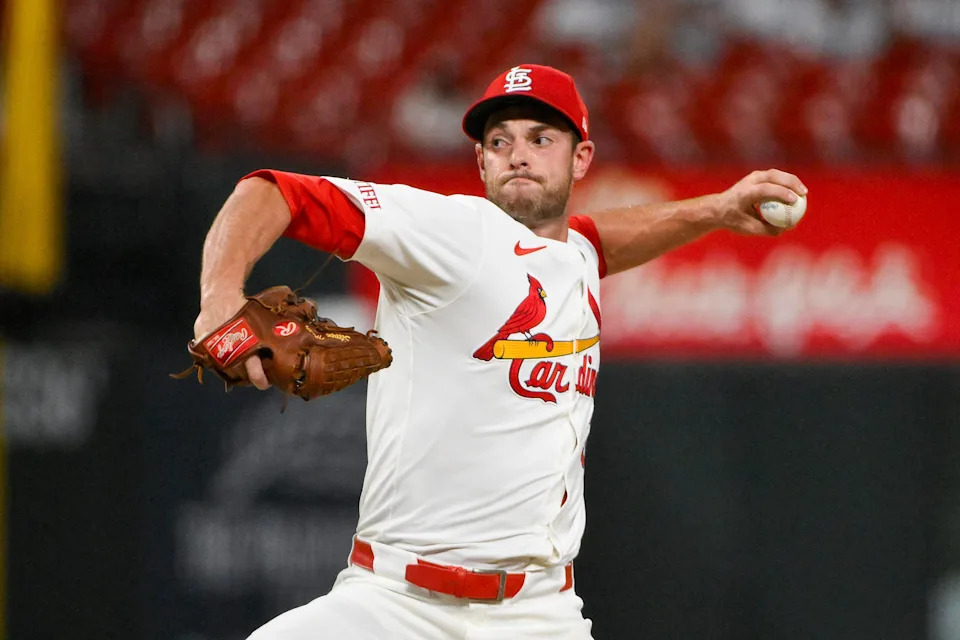
Steven Matz pitches against the Miami Marlins on July 28. The reliever was traded to the Red Sox on Wednesday.
Tibbs was part of the return in the Devers trade to the Giants, one that saw the Red Sox shed some $250 million remaining on the third baseman’s contract. Breslow and club executive Sam Kennedy both said at the time those resources would be used elsewhere to create a better future roster, but Boston didn’t take on any meaningful salary while adding Matz and May for the remainder of 2025. The Red Sox remain under the second threshold of the Competitive Balance Tax this season and are nowhere close to the first threshold for 2026.
Advertisement
Starting pitching seemed to carry a particular premium at this deadline. Dylan Cease, Sandy Alcantara, Mitch Keller and Zac Gallen were all names who didn’t move. Merrill Kelly and his expiring contract went from the Diamondbacks to the Rangers, with Texas sending three of its top 13 prospects to Arizona.
The Red Sox were linked to Twins right-hander Joe Ryan both before and up to the deadline, but no deal materialized. He represented the ideal upgrade for Boston – a clear option behind Crochet in a short series, an All-Star and a 20-something who doesn’t hit free agency until after the 2027 season. The Red Sox could certainly revisit talks for him in the winter, but that won’t help them in August and September.
“We were willing to talk about all of our guys in the name of improving the team,” Breslow said. “It just didn’t work out.”
Breslow mentioned the cohesiveness of the current roster as something he wanted to maintain. That meant no dealing from an outfield surplus that included possible pieces like Jarren Duran, Wilyer Abreu and Roman Anthony. Boston also declined to dip too deep into a farm system that features pitchers like Payton Tolle, Luis Perales and Brandon Clarke.
Advertisement
“None of the deals that didn’t end up being executed, in my opinion, came from a lack of being aggressive or an unwillingness to be uncomfortable,” Breslow said. “But it does take two teams to line up in order for trades to come across the line.”
The Red Sox host the Astros for a three-game series this weekend. Carlos Correa, Jesus Sanchez and Ramon Urias will all be settling into the visiting clubhouse at Fenway Park, with Houston opting for a Correa reunion and shifting him to third base. Boston can only hope its own additions help deliver postseason baseball to the Back Bay for the first time since 2021.
On X: @BillKoch25
This article originally appeared on The Providence Journal: Boston Red Sox swing and miss at 2025 MLB trade deadline