
It’s been a few days since Minnesota’s whirlwind trade deadline. How is everyone doing? Frankly, the phrenetic pace at which everything occurred made it difficult for me to fully understand the nature of what just happened. Things certainly changed; but just how much? And how do we make sense of it beyond the obvious financial incentives?
Today, we’ll observe the moves through the lens of the major league roster. I’ll be honest: this will be a granular article, though I’ll add analysis where I see fit. At hand is a discussion on options, 40-man roster considerations, arbitration, prospect timelines, and all that joyous nerd stuff that you, the advanced baseball fan, care so much about. Let’s start with the players who arrived as big leaguers.
Already on the 40-man:
James Outman joins the team with a year of service time already under his belt; he’ll potentially be arb-eligible post-2026, and is in his final option year. That final point is a critical one: acquiring Outman was a head-scratcher—the last thing the team needed was a left-handed outfielder—and the Twins don’t have much time to potentially fix him. He can’t go back to the minors in 2026 without being DFA’d, thus exposing him to waivers. If he doesn’t turn it around in St. Paul soon, his time in Minnesota will be curt.
Taj Bradley becomes a Twin with a year of service time as well, making him potentially arb-eligible post-2026. He has an option year remaining. Minnesota has, well, options with him: the rest of 2025 could be spent entirely on adjustments and finding familiarity in the organization with no concern for roster shenanigans. The best news? If everything goes well, and Bradley hits his stride in 2026, the Twins will have three more years with the righty, as he enters arbitration prior to the 2027 season.
Mick Abel still has not exhausted rookie eligibility, meaning the team has basically forever (six years) to mold the 23-year-old to their vision. He has two more option years after this season.
I believe Alan Roden has passed the rookie threshold through time spent on the active roster, though he’s short on at-bats. It’s a moot point given that the Twins sent him straight to the big-league club, anyways, and look to give him consistent playing time. Because that clock has started, he won’t potentially be arbitration eligible until after the 2027 season, and he has two option years left after 2025. The team has the time and resources to be patient with the 25-year-old outfielder.
Players eligible for the Rule-5 draft in 2025:
Now we’ll begin to cover the players who will need to be added to the 40-man roster to avoid possible selection in the Rule-5 draft this year. Here’s a quick primer on the subject for those unaware of details about the draft.
The three players eligible following this season are Hendry Mendez, Matt Mikulski, and Kendry Rojas.
With all due respect to the athletic abilities of Mikulski, his inclusion in the Carlos Correa deal was pure eyewash; he’s 26 and hasn’t made it out of A+ ball since being drafted in 2021. I doubt he remains in the organization following this season.
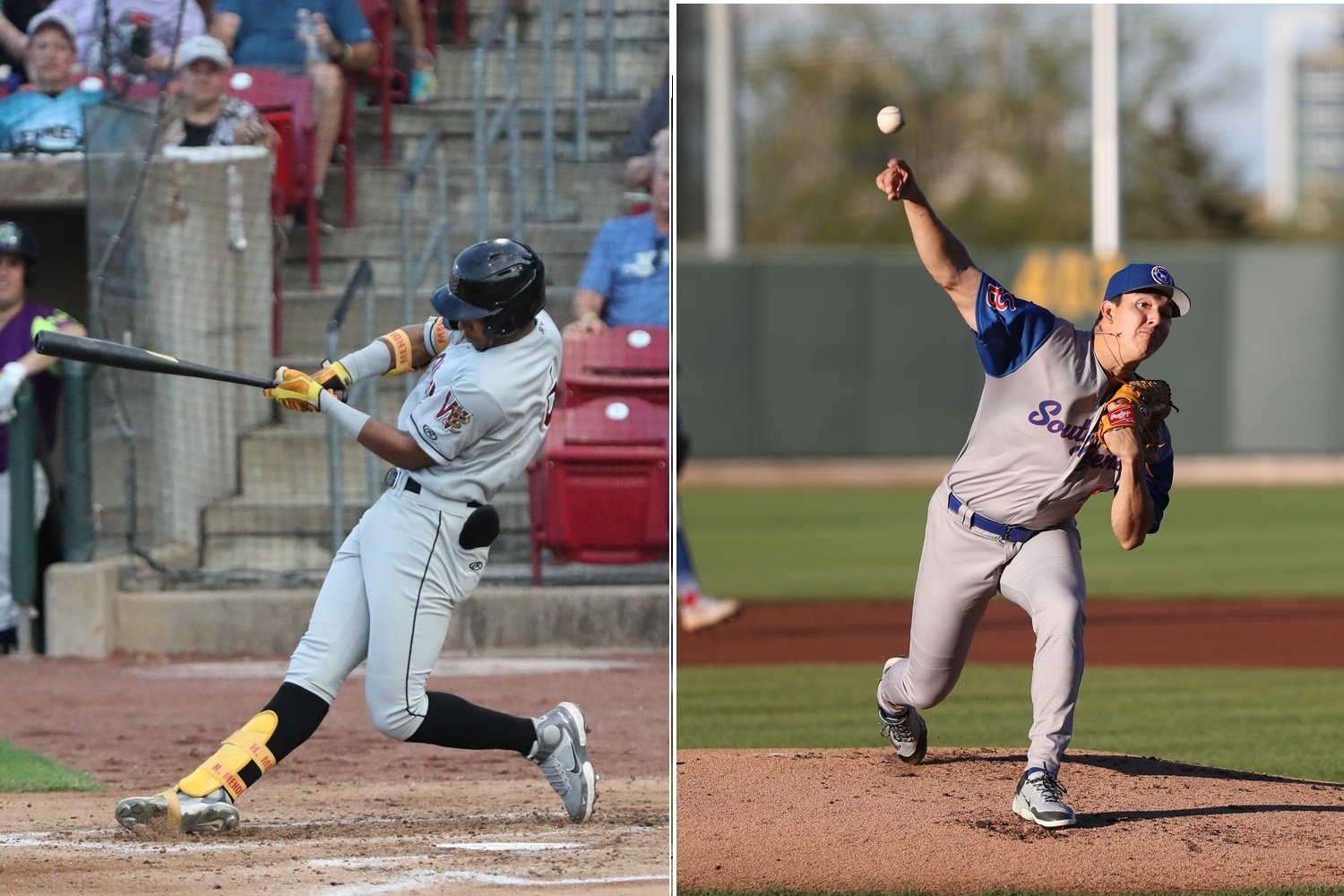
Mendez is an interesting case. He’s displayed legitimate hitting ability throughout his time in the minors yet hasn’t been healthy enough to push himself into a higher echelon of prospect conversation. Again, the Twins have enough major-league outfielders to go around—and there’s three (four if you count Luke Keaschall; maybe a fifth depending on how much you like Kala’i Rosario) outfield prospects at AA and higher who will demand priority over the 21-year-old. I don’t think the organization will add him to the 40-man roster, but it’s also unclear at the moment whether another team will pick him. He’s a tweener. Consider this a José Miranda situation.
Finally, Rojas will certainly be added to the 40-man roster. No more analysis is needed.
2026
Sam Armstrong was the lesser-heralded pitching prospect arriving in the Willi Castro deal. His numbers are simply fine, but he deserves a spot in the AA rotation, and the Twins won’t have to decide whether to protect him until next year. By then, the answer should be apparent.
2027
We have a quartet of players for this year: Enrique Jimenez, Eduardo Tait, Ryan Gallagher, and Garrett Horn. We can bunch them as “international youngsters” and “college arms.”
Let’s start with the pitchers. As 22-year-olds, their worthiness to be added to the 40-man roster should be self-evident by 2027. In fact, one would expect their major-league impact to arrive a year earlier, if either is, indeed, a legitimate prospect. Gallagher has the leg up in performance and level (he’s at AA), though Horn isn’t far behind, as he was sent to A+ ball, which would be his first taste of play at the level.
I’m not going to insult your intelligence by predicting whether actual teenagers will still be notable catching prospects in two years. The only conclusion here is that the Twins can place the pair in the slow cooker for some time before they need to worry about pushing their development to the big leagues.
2029
Yes, this baby goes all the way out to 2029, which will happen when you trade for someone born the year Obama was first elected president. Geremy Villoria is so far away from 40-man consideration that this paragraph’s sole purpose is to be a reminder to set an alarm four years in the future.
Broadly speaking, it seems that the Twins either focused on immediate talent or guys who won’t affect the roster until years down the road. Most executives will say they look for a blend of talent age, and Minnesota was no different here. The optimistic view is that the initial wave—Bradley, Abel, and Roden—will stabilize the club, while players like Tait and Gallagher serve as reinforcements. Hovering above all of this is the seemingly imminent arrival of Walker Jenkins, Kaelen Culpepper, and Emmanuel Rodriguez, if he could ever stay healthy. At the very least, they appeared to have avoided an overwhelming wave of needed 40-man additions in any one year and instead should shuffle in talent through the seasons. Keep an eye out for 2027, especially.
Though 40-man implications aren’t the sole driver of determining when a player becomes a big leaguer, it’s a good predictor of one’s timeline. Teams generally make prospects potential players when they have to, unless someone suddenly Juan Sotos their way through the minors. Consider these years to be approximations of when these players should become Twins.