
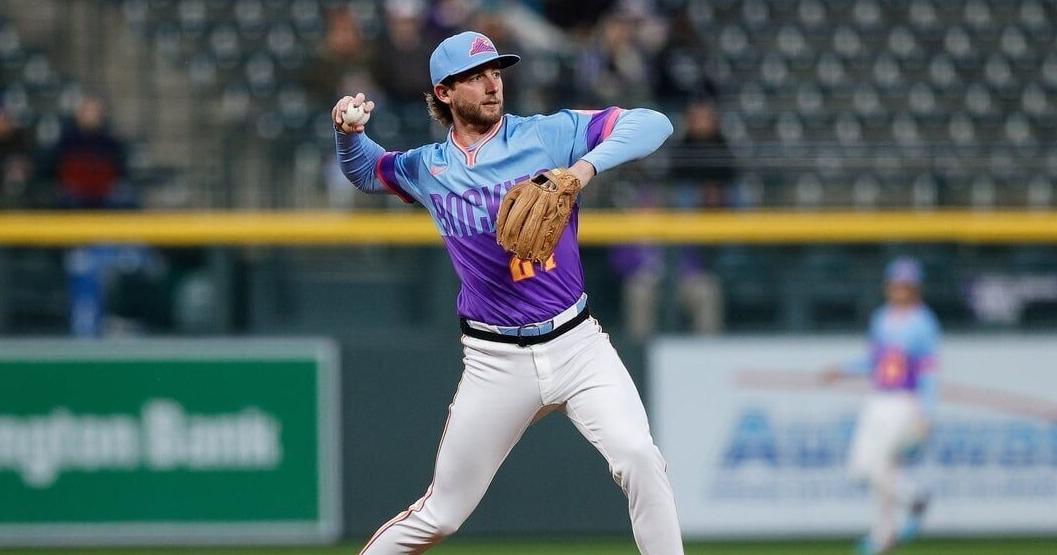
A group of friends and I have made it our mission to visit every MLB ballpark. These stadiums are unlike most other major sports league stadiums, as they provide much more character, design, and even unique gameplay due to the non-unified playing field dimensions. Every stadium has it’s quirks and features that make it stand out, and it’s a fun experience every time you get to experience a new stadium.
This past week, our mission brought us to Coors Field in Denver, Colorado, home of the Colorado Rockies. The game itself was one of the best I’ve ever seen, as the Rockies and their opponent, the Pittsburgh Pirates, combined for 40 hits and 33 runs. It was a rollercoaster of emotions from start to finish, as the Pirates scored nine first inning runs only for the Rockies to battle back over the course of the next eight innings and eventually win on a walkoff home run that just so happened to land in the section in which we were sitting. It was incredible to say the least, and a moment I will never forget.
But what about the park itself? Lets start with a quick rundown of everything Coors Field is working with. First, the ballpark is nestled very comfortably into the heart of Denver, giving it an accessibility that is above average compared to other league stadiums.
Upon entering, the park offers a very busy and packed concourse, with different food stands and built in concessions every 20 meters on both the left and right hand sides. In addition, there is also a plethora of team stores to buy apparel, including a large team store which has the largest assortment of jerseys and other memorabilia across the entire stadium. There are also batting cages and other baseball related games which people can pay to do.
As you make your way past the left field foul pole or the right center gap, the concourse begins to open, allowing for a view from behind home plate that looks out into the city and the mountain ranges that lay in the horizon. There is even some higher seating in both right field and center field which give a little bit of a view over the home plate seats and into the distance.
Although the concourse opens up significantly in the outfield, the food options continue to be plentiful. The options include your typical hot dogs, burgers and bratwursts to a very intricate barbecue station that offers brisket, pulled pork, and other similar items, to stations where you can buy sliders, ice cream, cookies, burritos, tacos, and many other things. Simply put, the selection of food options is the best and most abundant I’ve seen in any stadium in my short experience.
The field and the style of play it offers is one of the most unique in the entire MLB. With Denver’s altitude being significantly higher than any other park in the league (5,280 feet above sea level compared to the second highest altitude in the league, Chase Stadium in Phoenix, Arizona, which sits at 1,090 feet), fly balls travel significantly farther than any other location.
The stadium attempts to counteract this by setting it’s outfield walls farther back than most other parks in the league. In fact, the distance from home plate to the farthest point in center field reaches 415 feet, the farthest in the league. Yet, it’s still not enough to stop Coors Field from being the most offensively friendly park in all of baseball.
MLB’s advanced stat measuring system, Statcast, has a park factor rating in which it measures which stadiums tend to be more or less productive offensively. A 100 rating is considered balanced, and higher ratings are more offense-friendly. Coors Field has a park factor rating of 112, and the next closest to it (Fenway Park in Boston, home of the 302-foot right field foul pole) is 105.
The field certainly is not lacking in unique ballpark experiences. Of course, unique can be good or bad depending on what it provides for an experience compared to other places around the league. In my opinion, however, Coors does this extremely well.
I mentioned that the food options are probably the best I’ve seen in a ballpark in my, admittedly, limited experience. Compared to the likes of Comerica Park in Detroit or even American Family Field in Milwaukee (notorious for it’s fantastic food), no other park I’ve been to gives you the variety of food that Coors Field does.
I am usually always a fan of any open concourse that any ballpark likes to offer. It gives the whole stadium a much more inviting feel compared to stadiums that make you feel boxed in and cramped. Although it doesn’t do the open concourse as well as Kauffman Stadium in Kansas City, I give the stadium a lot of props for finding room to have any open concourse while still having one of the largest seating capacities in the league.
In the areas where it isn’t open, the concourse still offers a nice, wide area to maneuver around the stadium. While there is always plenty of people walking around because of the numerous food, merchandise, and games, Coors Field still leaves plenty of space in it’s walkways to feel like you can move with as little traffic as possible. The whole stadium maximizes its space without making the stadium feel unnecessarily large.
The stadium uses individual seating behind home plate and down the foul lines and has benches in the outfield, where my party and I sat. The benches were rather uncomfortable over the course of the whole game, however I do appreciate the benched seating as it gives people an opportunity to space themselves however they see fit as opposed to individual seating which makes your space feel a bit more confined. Perhaps I am the only one with that perspective, but regardless, it’s once again an example of maximizing space without feeling too cramped or too large.
The layout of the field has a grandiosity to it that I really enjoy. As you look out across the field, it feels more like a golf course than a baseball field with it’s extensive rows of meticulously trimmed grass. Mixed with the elevation, the larger field not only makes home runs more plentiful, but also makes them look like incredible feats of power.
The biggest complaints I have for the stadium is that there are blind spots where certain amenities don’t extend to. I mentioned the skyline view that is only available in certain parts of the stadium, as well as the open concourse that is far more extensive towards left field than in right field. The bullpens are also located right next to each other in right field, which not only increases the clutter in that part of the ballpark but also confines the experience of looking down into the bullpen to just those sitting in right field. Depending on where you are in the park, the experience can vary in both negative and positive ways.
Besides that, I don’t have a ton else negative to say about the stadium. Although I don’t think I had a ton of expectations heading into the game, I still was impressed by everything the stadium offered. I would absolutely recommend checking out a game if you are taking a trip to the Denver area, and seeing what this notorious stadium has to offer.