
A word of caution: lately the A’s are not reacting to a problem, they’re causing one. It’s too bad that 2025 went sideways so suddenly and completely, but like it or not this season has been a rebuilding one, not a competing one, since the calendar turned to June.
That doesn’t mean you don’t go out and try to win every game. You’re trying to establish a winning culture, give players confidence that they and their team can succeed, keep fan interest and put opposing teams on notice. So you’re always trying to win games. Just not at the expense of the future when the value of a present win has become more marginal.
Mark Kotsay loves his platoons even if he doesn’t appear to fully understand them and lately that fetish is coming at a potentially big cost. Let’s take a look at some of the most concerning lineup decisions in the season’s second half…
If you want a player to master a skill you need to offer them chances for repetitions even if that comes with growing pains. If a hitter struggles against LHP, all sitting him is going to do is to ensure those skills further erode or never develop.
That’s fine with a 32 year old role player who has established who he is, who is isn’t, and who he can or cannot be. But for young players who are far from finished products, the last thing you want to do is narrow their skill set.
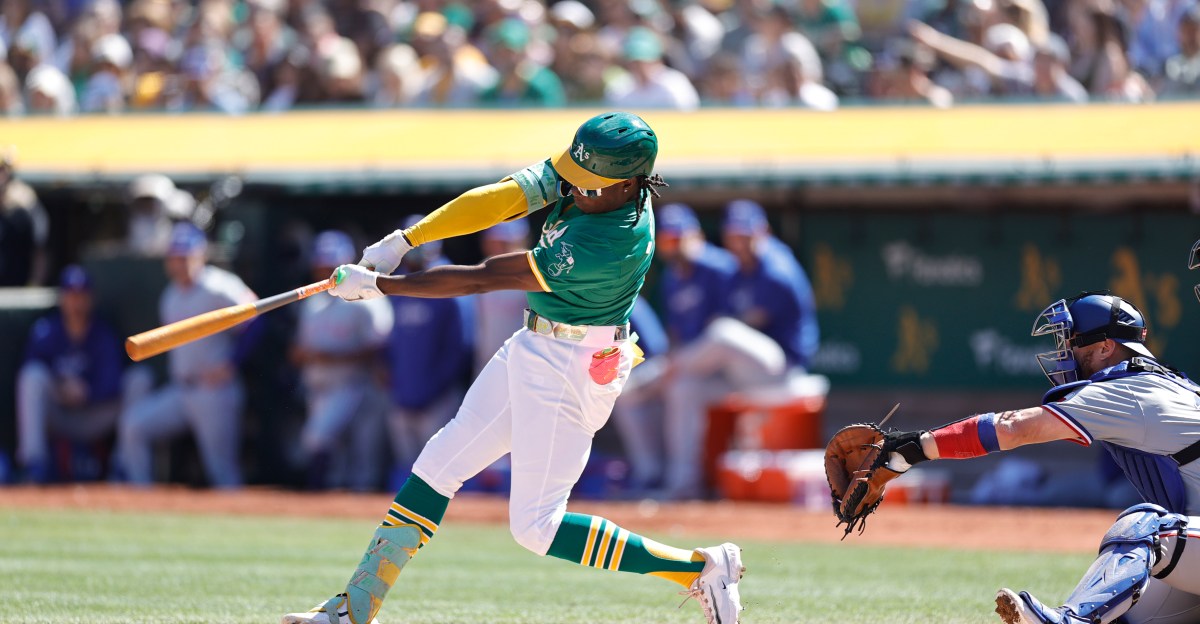
Butler has become a platoon player, sitting against LHP in the second half. This comes after the A’s made a conscious decision to extend his contract 2-3 years beyond free agency. There is something oxymoronic about making a long term commitment to a young player and then turning him into a platoon player.
If the A’s don’t think Butler can master hitting LHPs they should not have chosen him for a rare long term investment. But there’s no reason to think Butler is incapable of hitting LHPs because in 2024 he did just that.
When Butler is hitting well he hits everyone and when he’s hitting badly he can’t hit anyone. If Law just didn’t have the chops he probably wouldn’t have hit .291/.315/.523 against southpaws last season. One thing is for sure: Butler’s ability to hit lefties is not going to get better by sitting against them.
He needs the reps, he needs to figure out a winning strategy and it’s the same one that is key to hitting RHPs: lay off the high fastball and take the outside pitch the other way. When he is locked in, being patient, laying off sucker pitches and using the whole field, Butler is a tough out against LHPs and RHPs alike.
Bottom line: Butler needs to be doing what the A’s signed him to do and that is play most every day. If they have to complement him with a RH batting platoon OFer, then his extension was not money well spent. All the A’s are doing right now is making him worse and worse against lefties when the potential is there. They need to get him ready to hit LHPs well in 2026.
Tyler Soderstrom is another LH batter who is struggling against LHPs. Unlike Butler, though, Soderstrom has yet to see success in the big leagues against lefties (career .228/.266/.331). It’s possible that he can mash RHPs but just can’t solve LHPs enough to warrant an every day starting job.
However, this is far from clear or any sort of “done deal”. In fact just last week Soderstrom clocked not one but two HRs against LHPs on consecutive days. If given enough reps we will learn whether his failings against LHPs are part of early career struggles or having staying power.
This is exactly the time to find out, while Soderstrom is still just 23, showing enough improvements in LF to be a desirable every day option, and the 2025 season is about trying to get ready to compete hard in 2026. It’s hardly the time to sit him in favor of a different LH hitter (JJ Bleday), and Denzel Clarke’s injury has opened up a spot for Colby Thomas independent of Soderstrom and Butler.
Bottom line: Butler and Soderstrom are integral pieces to the A’s current core and it would behoove the club not to turn them into platoon players, and to stunt any progress against LHPs, just because they have struggled against LHPs in their early 20s.
Colby Thomas is still in the “prospect” phase — we don’t know how good he is or whether he will be a big part of the team’s future going forward. It’s ok that he’s not playing every day in his maiden cup of coffee. However…
Twice, Thomas has started against a LHP, and had an unusually good plate appearance or two only to be yanked for a pinch hitter against a RH reliever. When a guy has been striking out 60% of the time and looking completely over matched and then finally puts together a quality at bat or two, the last thing you want to do is choose that moment to pull him. Let him harness that confidence and try to build on it.
And then there’s the matter of giving a player a chance to show what he can do. Last night Kotsay reversed form and decided to start Thomas even with a RHP, Shane Baz, on the mound. How did Thomas respond? He lined a single and a double, and had a terrific situational at bat that ended with a sacrifice fly.
Like Butler, Thomas showed that perhaps it’s not so much a LHP-RHP thing but more that when his approach and confidence are high he can hit anyone and when they are bad he can’t hit anyone. If Thomas is finally showing up with some discernment, a plan, and an approach beyond “swing violently at everything and hope for the best,” this would be the time to give him some regular at bats and see what you get.
Bottom line: The 2026 A’s will be better off for this information and certainly better off if one of their outfielders can be more than the weak side of a platoon.
This is not to say that platooning is never a good idea. It’s more to suggest that platooning young players, in a rebuilding season, is self-defeating and creates a self-fulfilling prophecy of failure and limitation. Let the kids play because next year, you’re going to reap whatever you sow and you should be focusing on reaping more than 2/3 of a player from your brightest young talent.