
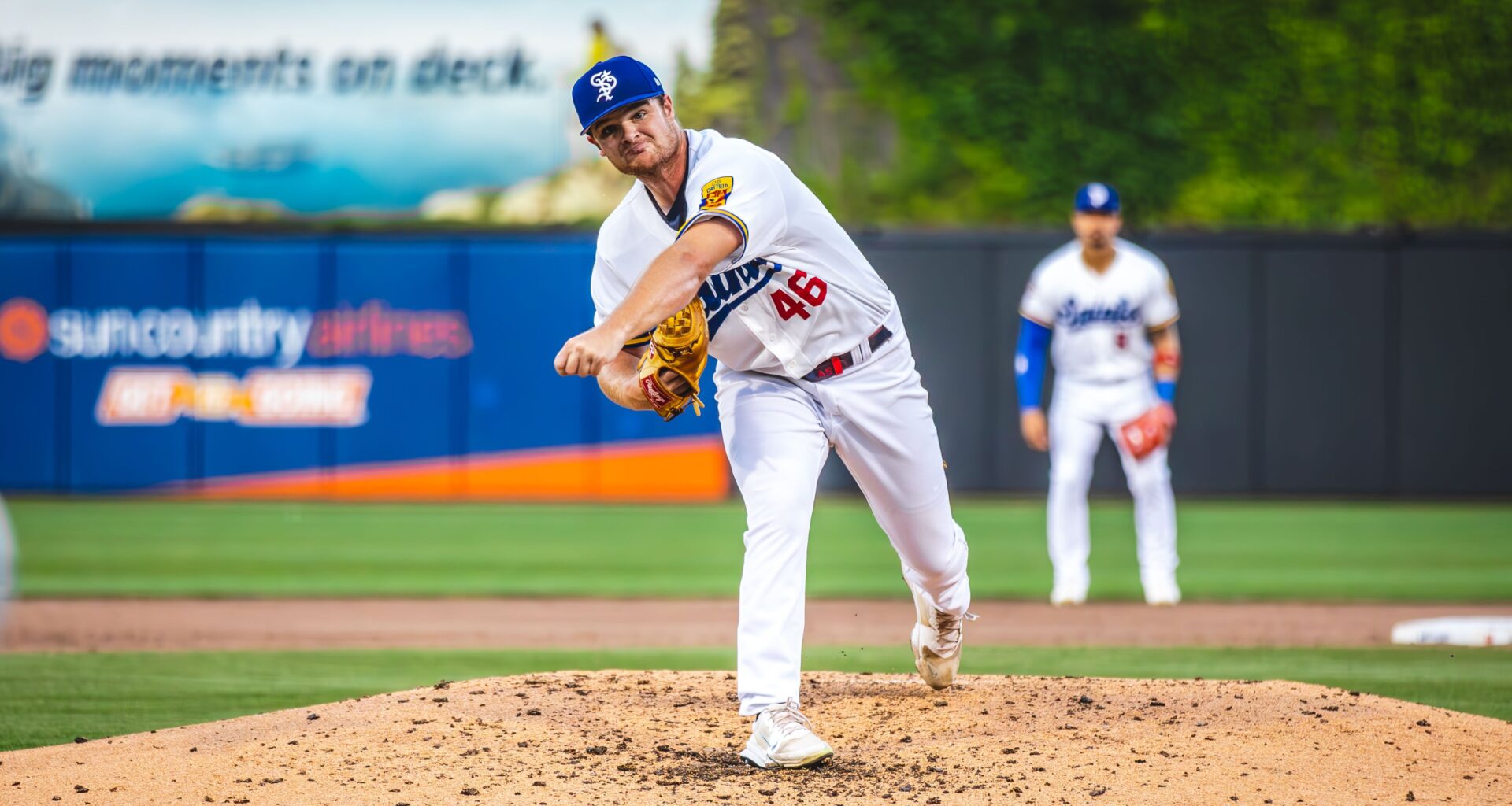
When the St. Paul Saints announced that Connor Prielipp would be making the jump from Double-A Wichita, it was another milestone in what has already been a winding journey. One of the hardest-throwing southpaws in the system, Prielipp’s ascent is notable for both his talent and his turbulence. After all, this is the first year he’s pitched above Single-A, and injuries have repeatedly slowed his path.
For Twins fans hoping to see him in Minneapolis soon, there are still some boxes that need to be checked before he’s ready for The Show.
Staying on the Mound
The first and most crucial question mark surrounding Prielipp is simple: health. Since being drafted in 2022, he has undergone both Tommy John surgery and an internal brace procedure, costing him the better part of two seasons. Between Alabama, the minors, and his pro rehab, his innings total since 2020 remains shockingly light for a 24-year-old pitcher (under 32 professional innings entering 2025). The Twins know he has the arsenal to compete, but the reality is that his body hasn’t proven it can hold up across a full professional season.
At Double-A Wichita, Minnesota kept his workload tightly managed. He never pitched past the fifth inning and never threw more than 76 pitches in an outing. That caution speaks volumes. Before the Twins can even consider him for a rotation spot in Minneapolis, he’ll need to prove he can consistently take the ball every fifth day without setback.
Building Up the Innings
The next step in Prielipp’s progression is building volume. In Wichita, his strikeout numbers were eye-catching (27% K rate), but the club has yet to see him navigate a lineup three times through or reach the 90–100 pitch range that big-league starters regularly handle. In his last three Double-A appearances, he allowed multiple earned runs and averaged just over three innings and 70 pitches per appearance.
Triple-A will provide the stage for this. Even if his ERA or strikeout totals fluctuate, what the Twins want to see is stamina. Can he get through five innings regularly? Can he stay sharp past the 70-pitch mark? Until he demonstrates those traits, he’ll remain more of a “talented prospect” than a true major-league option. In his Triple-A debut on Tuesday, he pitched 3 1/3 innings on 81 pitches (53 strikes) with four walks and five strikeouts.
Command, Not Just Stuff
One area that makes Prielipp stand out is his ability to throw strikes. His 6.7% walk rate ranked among the best in the Texas League, and his career strikeout-to-walk ratio (20.4 K-BB% at Double-A) is one of the highest in the Twins’ system. Still, command in the upper minors is a different beast. Triple-A hitters are far less likely to chase out of the zone and more capable of punishing mistakes left over the plate. Nerves may have impacted his Triple-A debut, where he walked a season-high four batters. At Double-A, Prielipp never walked more than two batters in a game.
For Prielipp, refining that edge between throwing strikes and commanding them will be crucial. His slider is a true out pitch, but big-league hitters will force him to land his fastball consistently in the zone if he’s going to find success at the next level.
Lessons From the Bullpen Path
The Twins have been down this road before with talented but injury-risk arms. Most recently, Jhoan Duran was shifted to a relief role after his own durability questions surfaced. That transition allowed him to stay healthy, focus on shorter bursts, and eventually become one of the most dominant late-inning weapons in all of baseball.
The same fate could await Prielipp if the innings never build up or if the medical red flags persist. His mid-90s fastball and wipeout slider could play up even more in relief, giving the Twins another potential weapon at the back of their bullpen. It’s not the preferred path, because Minnesota would love to develop him as a starter. However, history shows that the bullpen can sometimes be the best way to unlock a pitcher’s potential while managing risk.
What Comes Next?
The Twins didn’t promote Prielipp to St. Paul because he was dominating Double-A. He had a 3.65 ERA with a 1.49 WHIP, and those numbers don’t scream “ready.” Instead, they want him tested against more advanced hitters while stretching his arm in a more controlled environment. If he stays healthy and can handle a larger workload, he has the tools to move quickly from “project” to “rotation option.”
In many ways, Prielipp remains the ultimate high-risk, high-reward arm in the system. The ceiling is that of a playoff-caliber starter, the kind of cost-controlled lefty that the Twins haven’t developed in years. But the floor, if his health doesn’t hold or he can’t build innings, is a reliever role or stalled progression.
For now, the biggest victory is that Prielipp is still healthy. The Saints placed him on the development list after his outing Tuesday, to give themselves an extra arm as they massage and manage his workload in the final phase of the season, but he has no injury concerns at the moment. The next victory will be when he proves he no longer needs such careful handling, in whatever role.
What stands out about Prielipp’s season so far? What will his role be in 2026 and beyond? Leave a comment and start the discussion.
Interested in learning more about the Minnesota Twins’ top prospects? Check out our comprehensive top prospects list that includes up-to-date stats, articles and videos about every prospect, scouting reports, and more!