
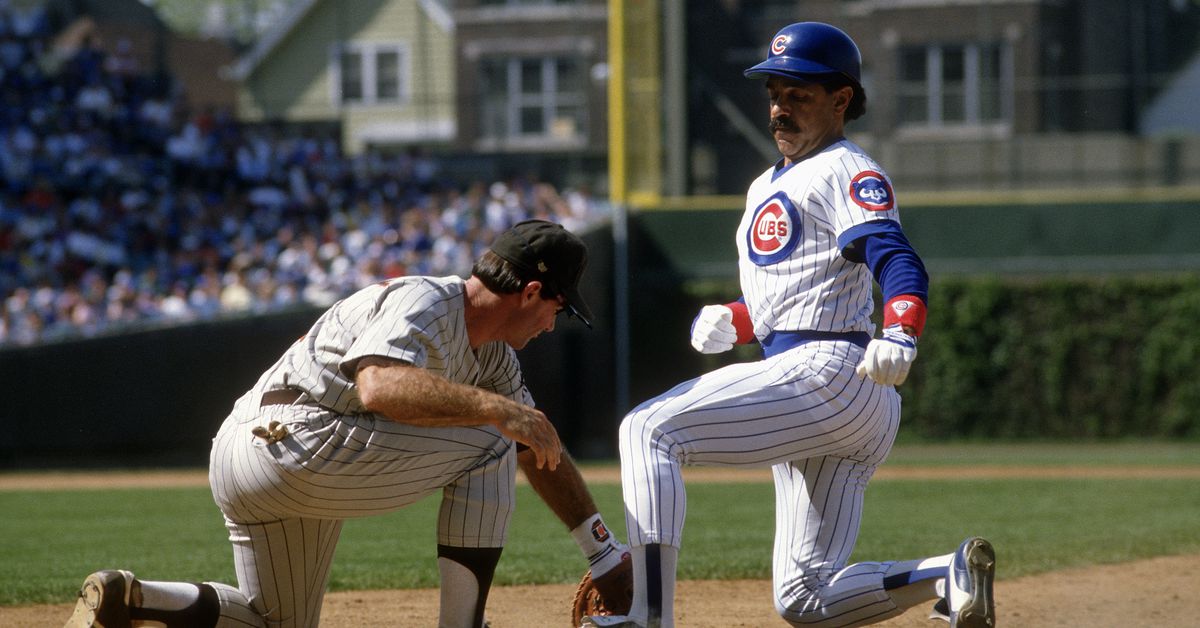
Justin Turner had struggled all year until he hit his stunning walkoff double Tuesday evening at Wrigley Field.
That prompted me to take a look back at Cubs history to see what happened when the Cubs signed or traded for similar older players. Some did well — but most did not.
Here are some of the criteria I used.
The player had to be over age 30
The player had to have had several positive WAR seasons and/or an OPS over .800 for a time, or been generally recognized as at least a solid regular, if not an All-Star
The time period checked was the Expansion Era, 1962 to present
I only looked at hitters, not pitchers, though I could do a companion piece at some point
Last note: This is not intended to be a complete list. There might be other older players you recall who the Cubs picked up late in their careers who did well on the North Side, or not so well. Feel free to add them in the comments.
Older players who failed after the Cubs acquired them
Wes Covington, 1966
Covington posted 4.5 bWAR from 1963-65 and had an OPS of .833 in 349 games, all that in a lower-offense era. The Cubs acquired him by trade, for outfielder Doug Clemens, in January 1966.
He lasted only nine games with the Cubs, going 1-for-11 before being released. The Dodgers picked him up and he wasn’t any better there, going 4-for-33, though he did get one at-bat in the 1966 World Series.
Charley Smith, 1969
Smith hit 20 home runs for the 109-loss Mets in 1964, leading the team. By 1968 he was a part-time player on the fifth-place Yankees, his biggest claim to fame there was that he had been acquired by the Yankees from the Cardinals for Roger Maris.
The Cubs acquired him for cash considerations in March 1969, but he went just 0-for-2 before being let go.
Jimmie Hall, 1969
The Cubs were desperate for an outfield bat in late 1969, so they acquired Hall in September from the Yankees for Rick Bladt and a minor leaguer (Bladt was a PTBNL, since the trade deadline had passed).
From 1963-67, Hall had been a good power hitter for the Twins and Angels, posting 16.2 bWAR in those five seasons and hitting 114 home runs. But he’d declined in 1968 and by 1969 was a part-time player. The Cubs were his third team that year, and he went just 4-for-25 in 11 games. The Cubs kept him in 1970 and he wasn’t any better, 3-for-32. They sent him to the Braves mid-season for cash considerations.
Bobby Darwin, 1977
Darwin hit 65 home runs with 5.5 bWAR for the Twins from 1972-74, but also led the league in strikeouts all three years.
By 1976 he was a part-time player with the Red Sox, posting a .565 OPS, and the Cubs traded a reliever named Ramon Hernandez for him in May 1977.
He went just 2-for-12 for the Cubs in 11 games before he was released.
Ken Henderson, 1979
Henderson was touted as “the next Willie Mays” with the Giants in the mid-1960s, and did have three pretty good years there from 1970-72, with 50 home runs and 11.3 bWAR. Traded to the White Sox, he had a 4.7 bWAR year there in 1974 with 20 home runs, but then his career began a decline. The Cubs acquired him from the Reds for cash considerations in June 1979. He hit .235/.361/.333 in 62 games for the Cubs in ‘79 and .195/.333/.305 in 44 games in 1980 before being released.
Bobby Bonds, 1981
The itinerant Bonds played for seven other teams before joining the Cubs in June 1981. And, through 1979, he had been a very good player, with four 30-homer seasons, 58.2 bWAR, 321 total homers and 441 stolen bases.
Injuries and a reported alcohol problem had made Bonds’ performance decline, but when the Cubs got him June 4, 1981 from the Rangers for cash considerations, Jack Brickhouse exulted about him on the WGN broadcast. The Cubs, as you likely recall, were off to a horrendous start that year and Brickhouse insisted Bonds would “save our season!”
Bonds dived to try to catch a fly ball in the very first inning he played for the Cubs June 4, 1981, and broke his wrist. He didn’t miss too much actual time since most of the time he would have been out was cancelled by the players’ strike.
He batted .215/.323/.380 with six home runs in 44 games with the Cubs and was released at the end of the season.
Jim Sundberg, 1987
The longtime Ranger, Brewer and Royal had won six Gold Gloves by the time the Cubs got him, and had made three All-Star teams. He’s known as one of the greatest defensive catchers ever.
When the Cubs got him in a trade for Thad Bosley and Dave Gumpert just before the 1987 season at age 36, though, he was pretty much done. He played sparingly in 1987 and 1988 for the Cubs, just 85 games, batting .212/.314/.321. Reportedly also unhappy in Chicago, the Cubs did him a favor by sending him back to the Rangers, where he ended his career.
Candy Maldonado, 1993
Maldonado had been a pretty good player for the Dodgers, Giants and Blue Jays for several seasons from 1986-92, in that span posting 12.2 bWAR and hitting 113 home runs. He was 32 when the Cubs signed him as a free agent before the ‘93 season. He got a two-year deal for about $3.3 million, which was pretty big money in those days. He had a 2.5 bWAR season with 20 HR and an .819 OPS in ‘92. What could go wrong?
Everything, as it turned out. Maldonado couldn’t really play the field anymore and seemed very unhappy in Chicago. He batted just .186/.260/.286 with three home runs in 70 games. The Cubs managed to get some value when they traded him to Cleveland, acquiring Glenallen Hill in return.
Howard Johnson, 1995
HoJo had five really good years for the Mets from 1987-91, posting 20.7 bWAR and hitting 157 home runs. He led the NL in homers in ‘91 and twice finished fifth in MVP voting.
A serious wrist injury in 1992 started him on a performance decline, and he really wasn’t the same after that plus having knee and shoulder surgery after the season.
The Cubs signed him as a free agent just before the ‘95 season and he batted .195/.330/.355 (-1.1 bWAR) with seven home runs in 87 games.
Jeff Blauser, 1998
Blauser had been known as a “Cub-killer” in his 11 years with the Braves, and it was true: In 78 career games vs. the Cubs, he hit .351/.413/.611 with 15 home runs, by far his best against any team he played against for more than a handful of games.
He’d had a good year in ‘97: 308/.405/.482, 4.8 bWAR, an All-Star selection. He was only 32. Again, what could go wrong?
Plenty. Blauser continued to kill the Cubs, this time as part of the team. He hit .226/.343/.342 in 223 games with the Cubs, for a total of 0.2 bWAR.
Carlos Gonzalez, 2019
CarGo had been one of the best players in MLB from 2010-16 with the Rockies, winning three Gold Gloves and hitting 184 home runs, for 21.6 bWAR.
His performance began to decline in ‘17 and he wound up in Cleveland, where they released him in May 2019.
The Cubs picked him up and he batted just .175/.306/.300 with one home run in 15 games.
He did make this memorable catch in a game against the Angels at Wrigley [VIDEO].
Eric Hosmer, 2023
The Royals star had 15.5 bWAR in seven years in Kansas City, including four Gold Gloves, but as soon as he signed a big-money deal with the Padres, his performance tanked.
The Cubs had him for 31 games and he batted .234/.280/.330 before being released. At least it cost the Cubs only the minimum salary, as the Padres had released him.
Trey Mancini, 2023
On the other hand, the Cubs signed Mancini to a two-year deal around the same time they picked up Hosmer. Why Jed Hoyer decided the Cubs needed two aging first basemen in the same year is beyond me.
Mancini played 79 games for the Cubs and batted .234/.299/.336, and made this key error in a game against the Cardinals in London [VIDEO].
Mancini lasted another month with the Cubs before they released him.
I promised you I’d post some good performances by aging players the Cubs got near the end of their careers — and yes, there have been a few, so here they are.
Older players who succeeded after the Cubs acquired them
Davey Johnson, 1978
Johnson, who’d set a MLB record for home runs by a second baseman in 1973 with the Braves, played a couple of years in Japan after that and then came back to MLB. He played only 24 games with the Cubs, but hit .306/.393/.490. He was 35 and I remember thinking at the time that they should have kept him around.
Instead he retired and began a long managing career. Maybe the Cubs should have kept him around as a coach.
Cliff Johnson, 1980
Here was a time where the lack of a DH In the NL hurt the Cubs. Johnson began his career as a catcher with the Astros, but wasn’t really good at that, nor playing any other defensive position.
The Cubs tried him at first base and even left field, but he was terrible in the field. The man could hit, though: .235/.335/.429 with 10 home runs in only 68 games with the Cubs. That included a walk-off grand slam in a game that had been suspended May 28, 1980 and completed Aug. 8. That allowed Johnson to technically play for two teams on the same day, as he had played for Cleveland that day too.
If the NL had the DH at the time, the Cubs probably would have kept Johnson. Instead he went to the AL and had several good years as a DH for the A’s and Blue Jays.
The same is the case for Rico Carty, who hit .214 in 22 games for the Cubs in 1973, after having been a good player for the Braves for several years before that, including a .366 season for Atlanta in 1970 (5.8 bWAR). Injuries had forced him to miss all of 1971, but as a guy who couldn’t play the field, there was really no place for him on the Cubs at that time.
Carty went on to have several fine seasons as a DH in Cleveland, Oakland and Toronto from 1975-79 (10.4 bWAR, and a 31-HR season split between the A’s and Blue Jays in ‘78.)
Jay Johnstone, 1982
Johnstone had been mostly a role player for several teams before the Cubs got him in June 1982 after he’d been released by the Dodgers.
He was a useful backup outfielder for the rest of that year and through 1984, batting .257/.350/.415 with 16 home runs in 558 PA for the Cubs.
He’s also a great Immaculate Grid answer, having played for eight teams.
Richie Hebner, 1984
Hebner had been known as a Cub-killer during his time with the Pirates, Phillies and Mets. He batted .317/.386/.493 with 17 home runs in 500 career plate appearances against the Cubs.
So when the Cubs got him at age 36 in 1984, many figured, “This is it, the Cubs can finally win!”
They did, in fact, win the NL East, and Hebner’s bench production helped. He didn’t play much, with only 91 PA, but he batted .333/.407/.444. Inexplicably, Jim Frey gave him only two plate appearances in the NLCS.
Hebner batted just .217/.266/.308 in 83 games for the Cubs in 1985, then retired.
Davey Lopes, 1984
The Dodgers star made four All-Star teams and led the NL in steals twice in the 1970s. He was 39 when the Cubs got him from the A’s in August 1984 for Chuck Rainey.
Lopes went just 4-for-17 in 16 games for the Cubs in ‘84 and was left off the playoff roster. Too bad, maybe he could have helped, because in ‘85 at age 40 he had an excellent season as a part-time player.
He batted .284/.383/.444 in 99 games with 47 stolen bases (and only five caught stealing!). The 47 steals remains the MLB record for a season for any player 40 years old or older.
Lopes also played well in 1986, batting .299/.419/.490 with 17 steals in 59 games before the Cubs traded him to the Astros for Frank DiPino, who was a useful reliever for a couple of years.
This was one of the Cubs’ best-ever acquisitions of an older player. Lopes had 3.9 bWAR in 174 games for the Cubs, all at age 39 or older.
Gary Gaetti, 1998
This was an absolute steal. Gaetti was actually playing pretty well for the Cardinals when they released him in August 1998. The Cubs pounced, signing him, and he batted .320/.397/.594 with eight home runs in just 37 games.
That included this key home run in the 1998 Cubs/Giants tiebreaker game:
So then the debate: Keep Gaetti at age 39 for 1999, or try someone else at third base?
The Cubs kept him, and it did not work out. He batted just .204/.260/.339 in 113 games and was terrible defensively. He was released at the end of the 1999 season, but we will always have those memories of that great six weeks in 1998.
Fred McGriff, 2001
There was the curious dance McGriff made with the Cubs as the trade deadline approached, deciding whether he wanted to leave his home in Tampa. Ultimately he agreed to the deal, and he hit well enough with the Cubs, .282/.383/.559 with 12 home runs in 49 games. He had a 30-homer season for the Cubs in 2002, but it was a lost year on the North Side.
While McGriff’s performance gave the Cubs 3.3 bWAR in 195 games, he never seemed happy on the North Side.
Kenny Lofton, 2003
The Cubs got Lofton and Aramis Ramirez in that famous July 2003 deal which was one of the better trades in recent Cubs history. Ramirez, of course, became a Cubs stalwart for nearly a decade.
Lofton was acquired because Corey Patterson had suffered a season-ending injury. Lofton was great, batting .327/.381/.471 with 12 steals in 56 games, and he hit well in the postseason.
But with Patterson due back, Lofton was allowed to walk as a free agent. In hindsight, of course, the Cubs should have kept Lofton, even at age 37. He had 8.3 bWAR over the next four years with the Yankees, Dodgers, Phillies and back in Cleveland, where he’d launched his stellar career after one year in Houston.
Jim Edmonds, 2008
Edmonds had tormented the Cubs for years in St. Louis, but when the Padres signed him in early 2008, he appeared done. Like, D-O-N-E done, in 26 games he batted .178/.265/.233. So San Diego released him.
The Cubs picked him up and he was great. In just 85 games for the Cubs, Edmonds batted .256/.369/.568 with 19 home runs, and they really should have kept him for 2009 instead of signing Milton Bradley. Edmonds sat out the 2009 season, then returned and had a decent 2010 split between the Brewers and Reds.
I hope you’ve enjoyed this little walk through Cubs history. As the headline says — signing older players past their primes sometimes works, but most times it doesn’t. Will Justin Turner “turn the corner” after his big hit Tuesday?
As always, we await developments.