
“If fighting is sure to result in victory, then you must fight, even though the ruler forbid it; if fighting will not result in victory, then you must not fight even at the ruler’s bidding.” – Sun Tzu, The Art of War
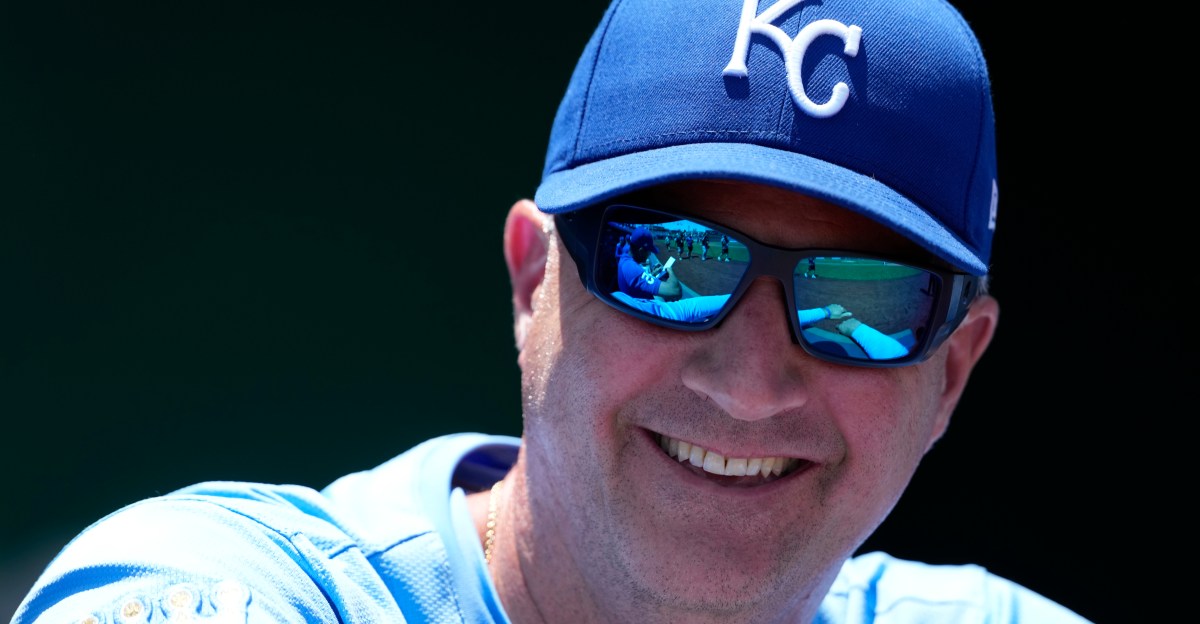
Saturday night, Manager Matt Quatraro had a decision to make. It was the bottom of the eighth inning. His Royals were losing 3-2; they had not ever held a lead in the game. The team hadn’t had a day off since August 14th, more than a week before. In the month of August, their starting pitchers – once the indefatigable stalwarts of the roster – hadn’t been able to go deep into games at all, going at least six innings only four times. The previous night he had been forced to use Bailey Falter in the eighth inning of a tie game because that night’s starter hadn’t been able to finish the sixth and because Angel Zerpa and John Schreiber, two of the Royals’ better, still-healthy relievers, had only been able to combine for a single out. In part because they had been worked so hard over the previous weeks.
But this was an important game, as all games are in late August when you’re within a couple games of being in or out of the postseason. And the Royals were only down by one. If the Royals kept the Tigers off the board in the eighth, maybe someone could run into a game-tying home run in the top of the ninth. The odds were very against it with FanGraphs and Baseball Savant both giving the Tigers an 87% chance of winning the game before the inning had even started. So Matt Quatraro took a page out of Sun Tzu’s book and decided if he wasn’t going to win, then he wasn’t going to fight. Rather than call on Zerpa, Schreiber, Lucas Erceg, or Carlos Estévez to keep the game close, he decided to use Sam Long. If Long kept the game tied, cool, we’ll do what we can next inning. If he couldn’t, oh well, it almost certainly wasn’t going to happen anyway. It didn’t matter what his lord (in this metaphor, that’s the fans) said about it.
Sam Long gave up a solo home run before getting the next three outs, and the Royals went down quietly in the ninth to complete the loss.
But there is a reason Sun Tzu said not to fight if you can’t win. Because then you can use those resources to fight another battle that you can win. So when the Royals found themselves trying to beat back a Tigers comeback in the fifth inning, Angel Zerpa was available to him. Admittedly, things didn’t work out with Zerpa. But he also had Schreiber available to him, and Schreiber pitched 1.1 clean innings to let the Royals take back the lead in the sixth inning. Lucas Erceg was then available to pitch the seventh, and Estévez the ninth. And now Erceg and Estévez will also be available for tonight’s game in Chicago, should they be needed. By not fighting a battle he couldn’t win, Matt Quatraro set himself up to win multiple future battles that were within his grasp.
Back on June 28, the Dodgers were losing to the Royals 9-1 and brought in position player Miguel Rojas to pitch the eighth inning. Prior to that, they had used Luis García to pitch the seventh when the Dodgers were only down 6-1. To that point, García had pitched to a 4.33 ERA and the Dodgers weren’t high on him. He gave up three runs and only got one out, and the Dodgers cut him the next day.
The Dodgers are, by a fair margin, the team to have used the most position players as pitchers. Enrique Hernández and Miguel Rojas have combined for 10.1 innings for the Dodgers. When a game seems likely to be lost, they have consistently given in and lived to fight another day. This was the kind of strategy that led them to a World Series victory last season and has them fighting for their division in a year where their Opening Day starting rotation has managed to pitch only 360.2 innings this year.
The Dodgers are a very good team beyond their ability to spend money (look at the Mets) and develop players (look at the Rays). Following their lead on strategy makes a lot of sense.
I want to focus in on that Sunday game a bit more. I already discussed how sacrificing Saturday’s game gave him options he wouldn’t have otherwise had for fighting Sunday’s battle, but when many fans were giving up after the Royals blew a 6-1 lead, Quatraro and his team were still fighting. Q called in John Schreiber to stop the bleeding from getting any worse after Zerpa failed to do his job, and then the team kept fighting behind those choices to retake and eventually hold the lead to win the day.
Q giving up on Saturday was not a sign that he doesn’t know how to fight or doesn’t want to fight. It was a sign he knows when to fight and when to live to fight another day. And Sunday’s actions showed not only that Q knows when to fight a winnable battle, but that the team will follow him wherever he leads. It would have been so easy for a team with less fight in them, with less belief in themselves, or with weaker leadership to simply give in and try to escape Detroit as quickly as possible. Instead, buoyed by Q’s tactical decisions even in the face of adversity, they won the day. That’s the sign of a team inspired by their leadership – both at the player and managerial levels – to do everything they can, always.
Matt Quatraro took a lot of flak for his decision Saturday. But, strategically, it was the right call. I hope Q keeps making tough calls like those, because if the Royals are going to sneak into the playoffs, it’s going to be by taking every edge they can get. Even if it means not trying as hard to win unwinnable games as might seem “honorable” or “right”.