
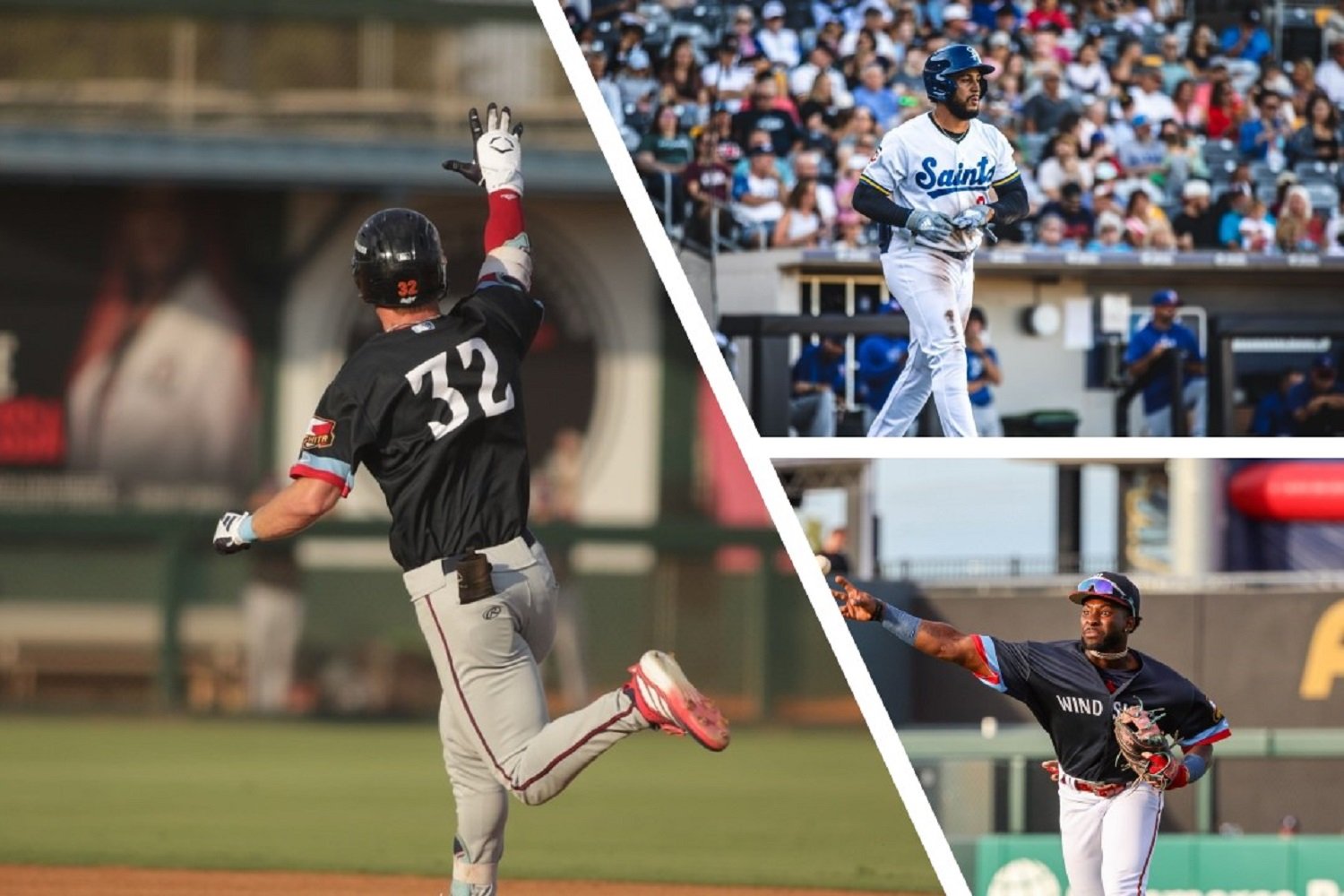
The Twins’ front office has tried to walk a fine line in recent years: remaining competitive while holding onto top prospects that represent the future core. That balancing act is nearing its end. Within the next year, Minnesota is expected to see one of the largest waves of homegrown talent the franchise has had since the early 2000s. The result could be a lineup packed with youth, upside, and plenty of growing pains.
Here’s a look at what the 2026 Twins lineup might realistically look like in the second half of next season, and why these names are part of the long-term plan.
Catcher: TBD
The catcher position remains a question mark, after years of stability. With Ryan Jeffers likely on the move by the 2026 trade deadline, Minnesota seems sure to bring in a stopgap veteran. That player will handle most of the second-half catching duties in 2026, while the organization takes a longer look at its internal options. Most fans will be waiting on Eduardo Tait, the top prospect acquired for Jhoan Duran, but he won’t be ready for Target Field until 2027 or later.
First Base:
First base continues to be a revolving door. The club has gone the veteran route in recent years, with Ty France underperforming and Carlos Santana exceeding expectations defensively en route to a Gold Glove. Aaron Sabato lingers as a potential internal option, but the Twins have yet to show real belief in him. Expect another short-term veteran acquisition until a long-term solution emerges—but don’t expect it to be a high-profile or high-cost one.
Second Base: Luke Keaschall
The former third-round pick has made his mark on the Twins this season and pushed himself into the team’s long-term plans. Keaschall’s feel for contact and his athleticism make him a strong candidate to grab hold of the second base job. He likely will also see some time in the outfield as he gets further away from last summer’s Tommy John surgery. His steady bat gives the Twins a reliable option in the middle infield, and his on-base skills fit nicely into a developing core.
Third Base: Brooks Lee
While Royce Lewis has been the face of the franchise’s future at third base, the Twins may look to move on from him this winter in an attempt to shake up the core of the roster. That would shift Lee to the hot corner, as other shortstop prospects matriculate through the farm system behind him. Lee’s switch-hitting ability and consistent contact skills have shown some flaws in his first full season in the big leagues. He must start proving he can lay off borderline pitches and hit for more power.
Shortstop: Kaelen Culpepper
Drafted as a projectable shortstop, Culpepper has made steady progress offensively and answered some draft day questions about his defense. His development with the glove gives him a chance to stick at one of the most demanding positions, and his emerging bat could make him a long-term answer up the middle. In his first 100 games this season, he posted an .843 OPS while being two years younger than the average age of the competition in the Texas League. With Lee’s speed as a question mark up the middle, Culpepper may get the nod sooner, rather than later.
Left Field: Walker Jenkins
The Twins’ crown jewel prospect should be ready to take on Target Field’s spacious left field as early as next year. An argument can be made that the Twins should have him on next year’s Opening Day roster. That likely won’t happen, but Jenkins has all the makings of a franchise cornerstone, including size, power, patience, and an advanced feel for hitting. Minnesota promoted him to Triple-A this weekend, where the 20-year-old will get an opportunity to compile numbers in the offense-friendly International League. When he reaches the majors, he likely will endure some early struggles, but his upside is unmatched in the organization.
Center Field: Byron Buxton
The heart of the franchise still beats in center field. While health remains an ongoing concern, Buxton continues to be a difference-maker when on the field. If he’s able to stay in the lineup like he has in 2025, his veteran presence will be invaluable to a young group learning how to win. This is a similar role to the one played by Matt Lawton in 2001, when the Twins surprised many by being in contention in the first half (before slumping down the stretch).
Right Field: Emmanuel Rodriguez
Rodriguez brings a tantalizing power-and-patience profile that should translate well at the big-league level. Unfortunately, injuries have limited him throughout his pro career. His ability to get on base and drive the ball into the gaps could make him one of the most dangerous hitters in the lineup. The Twins see him as a key part of the corner outfield mix moving forward.
Designated Hitter: Matt Wallner
Wallner has shown flashes of becoming a serious power threat, and the designated hitter role gives him the flexibility to focus on his bat. While contact issues remain a concern, his left-handed power is an asset the Twins will need as they enter a new era. He’s been the team’s second-best hitter (behind Buxton) over the last two seasons. Like Lewis, he could be a trade candidate if the Twins want to shake up the core.
Projected 2026 Twins Batting Order (2nd Half of Season)
Luke Keaschall – 2B
Byron Buxton – CF
Matt Wallner – DH
Brooks Lee – 3B
Walker Jenkins – LF
Emmanuel Rodriguez – RF
Kaelen Culpepper – SS
First Base – TBD
Catcher – TBD
If this lineup comes together as expected, it will be one of the youngest rosters in baseball. That means plenty of ups and downs, similar to the early-2000s Twins teams at the Metrodome. But like those squads, this group has the potential to grow together into a contender. The stands at Target Field may look sparse at first, but the next wave of Twins baseball could bring fans back in a big way.
What changes will occur to this lineup before the second half of next season? Leave a comment and start the discussion.