
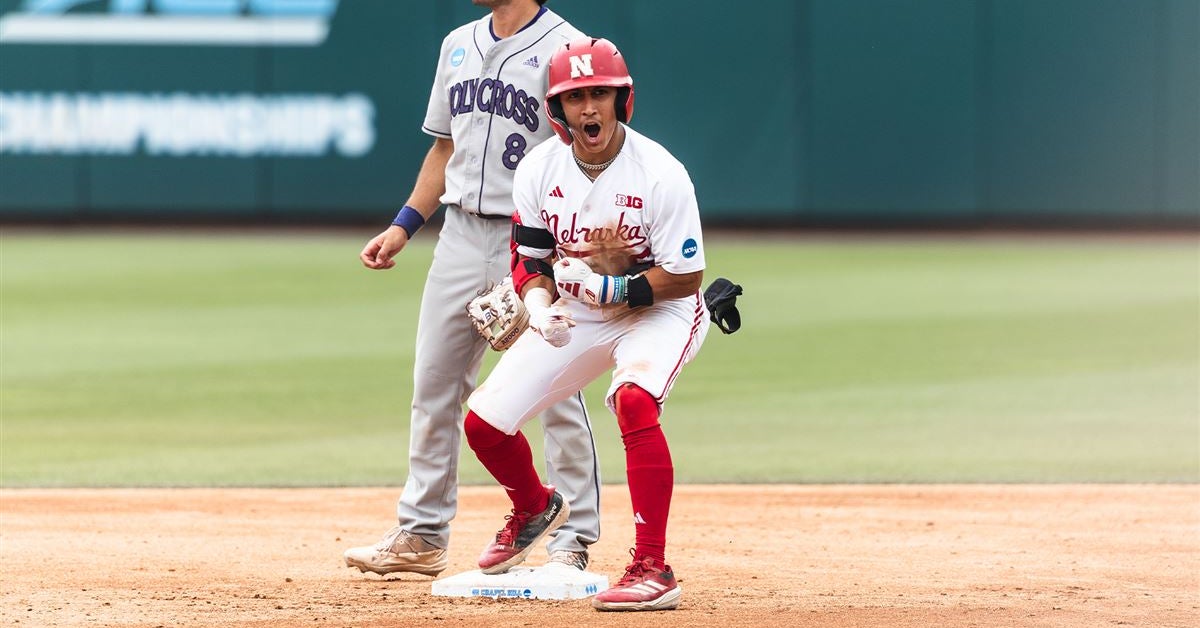
Classes started in Lincoln this week, meaning the dust has settled on a busy offseason for Nebraska Baseball that began in the days after the Huskers were eliminated in the NCAA Tournament in North Carolina.
After a season where the Huskers saw elite arms in Big Ten play (UCLA, Oregon, even Michigan State), as well as in several non-conference games (Oregon State, Vanderbilt, LSU) Nebraska head coach Will Bolt said the Huskers went hunting for more pop at the plate.
Bolt said it was important to find players who could hit for power to widen the margin of error against good pitching.
“It’s knowing where your schedule has to be to get the RPI good enough, the type of arms you face to do that and now, with the addition of the other teams in our league, you’re not going to get free passes often, all those teams play good defense, you’re not getting a lot of extra outs,” Bolt told Husker247 last week. “You’re facing dudes on the mound where it’s hard to get three hits in an inning. But can you draw a walk or get a hit and then get a big swing?”
Out of the portal Nebraska added several players with a history of hitting for power. Southern Indiana first baseman Cole Kitchens (12 homers, 60 RBI last season), Washburn infielder Jett Buck (21 homers, 68 RBI last season) former Arizona and Grossmont College infielder Nico Newhan (19 homers, 68 RBI last year) will all add power to the Husker lineup.
They will hope to add to a Husker offense that hit 62 homers as a team in 62 games, which finished 12th in the conference in 2025. The Husker offense was a work in progress until the final two months of the season. In the first 18 games of the season, Nebraska hit .240 as a team with 14 homers, averaging just five runs per game. Bolt took on a larger role in running the offense in the middle of the Huskers’ lengthy California trip. Over the final 44 games of the season, Nebraska hit .290 with 44 homers and averaged 6.5 runs per game.
The Huskers didn’t record their first sacrifice bunt on the year until that California trip, and while Nebraska went looking to add more power in the offseason, Bolt said he wants to continue to have the ability to bunt and move runners.
“I think where we want to land is we want to be able to bunt for a hit, and lay down a bunt when we need it, but have a little more emphasis on the slug,” Bolt said. “In ’23 that was where we were, but we were a little too one-dimensional with the swing-and-miss and non-execution at times. If we can take some of our new personnel and blend that with how we played offense the last few months, I think we’re going to do some good things.”
On the mound, Nebraska needed to add more experience after the departures of veterans Will Walsh and Jackson Brockett. Injured starter Mason McConnaughey signed with the Texas Rangers and closer Luke Broderick signed with the Rockies. Transfer portal addition JD Hennen from Augustana signed a pro deal with the Baltimore Orioles and JUCO transfer Cash Kuiper signed with the Detroit Tigers.
The Huskers added a trio of transfer portal arms, getting former Indiana and Miami of Ohio starter Cooper Katskee. Katskee earned third-team All-America honors last season and was named MAC Pitcher of the Year. Mississippi State pitcher Kevin Mannell will get a chance to start at Nebraska, but proved to be a valuable relief arm in the SEC, and Missouri Western transfer Lynden Bruegman could give valuable innings from the left side this year in Lincoln.
The Huskers will be turning over nearly half their roster from last season, and Bolt said the work his staff did this summer was focused on finding talented players that were also a fit with the team’s culture.
Nebraska returns a group of veterans who have won back-to-back Big Ten Tournament championships in very different ways and finding transfers who fit in well was a priority.
“You see there’s so many guys out there,” Bolt said. “I think it’s incredibly important to get the right guys — the guys who are going to fit your culture. Nebraska baseball and where we need to be when we’re at our best, we’re a culture-first program. Obviously you need to have talent, but if you just try to stockpile talent and ignore the culture piece, I don’t think you win here.”