
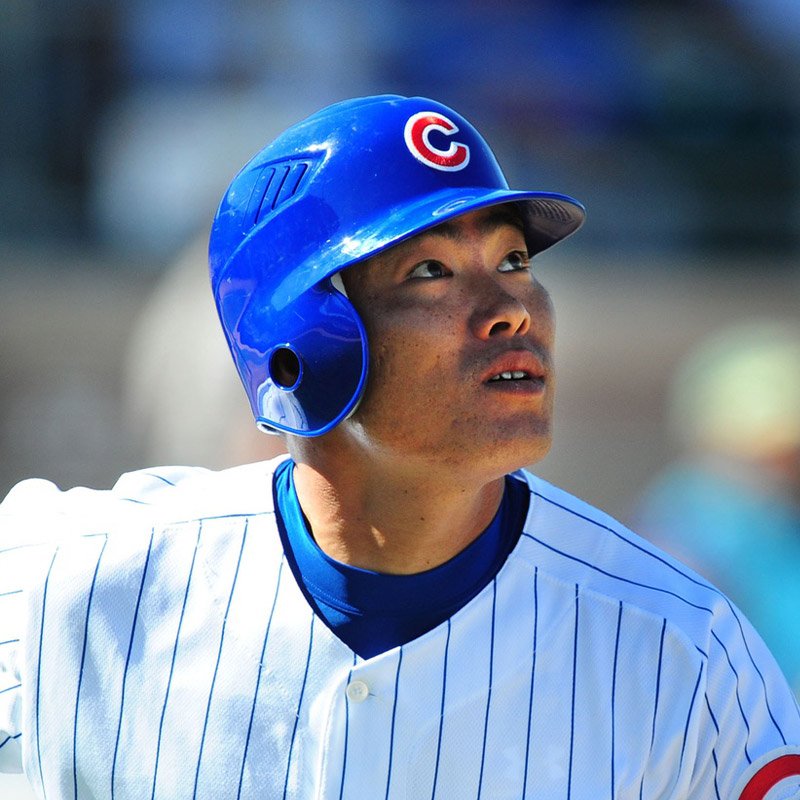
Kosuke Fukodome was a star for the Chunichi Dragons of the Nippon Professional Baseball League (NPB) after being drafted by them in the first round of the 1998 NPB draft. He helped lead them to a championship in his rookie season and famously stopped another Japanese baseball icon, Hideki Matsui, from winning the league Triple Crown in 2002 by winning the batting title with a .343 average. Eventually, he would go on to win the Central League MVP award in 2006, after he hit .351 with 31 home runs and 104 RBIs.
After his star turn in the NPB, Fukodome became a free agent after the 2007 season, and he signed with the Cubs on December 11 of that same year. The Cubs gave him a four-year, $48 million contract to be their primary right fielder, as he was set to replace Jacque Jones (traded to Detroit) and Cliff Floyd (contract option declined). Fukodome told reporters at the time that he chose the Cubs specifically because he wanted to be remembered as the first Japanese-born player to play for the historic franchise.
Kosuke would make his MLB debut on March 31, 2008 against the Brewers. His debut was a choice one: he went three-for-three that featured a double on the first pitch he saw, and of course he hit a legendary game-tying, three-run homer off Eric Gagné (the only relief pitcher of the last 30 years to win a Cy Young award) in the bottom of the ninth. In what is perhaps the single-most niche trivia answer of all time, Kosuke Fukodome is the only batter to ever hit a home run on opening day off of a relief pitcher who had previously won a Cy Young award.
Fukodome earned an all-star selection for his first-half efforts, and would eventually go on to finish sixth in the rookie of the year balloting. However, much like the modern Cubs’ Japanese-born star, Seiya Suzuki, Fukodome had a hot start to his debut season that fizzled out as the year wore on. He batted .327 in April of 2008, and then each subsequent month had a lower batting average than the last, culminating in a ghastly .178 batting average in September of his rookie season (he was also helpless against the Dodgers in the NLDS that year, going just one-for-ten with four strikeouts at the plate).
Though he never quite lived up to the promise that first month showed, he was a valuable part of the roster in the years that followed. In his sophomore season, Kosuke moved to center field after the Cubs traded for Milton Bradley [in hindsight: yikes], and eventually usurped Alfonso Soriano for the leadoff gig in the batting order. Despite putting up a rather mediocre 4.7 WAR in four seasons with the Cubs, he was a fan favorite for his energy and love of the game, and his jersey was actually the best selling on the Cubs for multiple months during the 2010 season.
Fukodome’s tenure with the franchise ended when they traded him to the now-Cleveland Guardians at the 2011 trade deadline, receiving outfield prospect Abner Abreu and pitching prospect Carlton Smith in return. He would go on to finish his stateside career with the White Sox (on a major-league deal) and Yankees (minor-league deal) in 2012. He returned to the NPB and played for the Hanshin Tigers (where he had a late-career resurgence), before ultimately ending his career with two more years with his original team, the Dragons. Fukodome retired on September 23, 2022 at the age of 45. In a slightly-more interesting trivia fact, he was the final active player in the NPB who had played at least one game in the 1990s.
Of course, Fukodome’s impact on the Cubs stretches far, far beyond whatever on-field value he provided the team. He paved the way for many more Japanese stars to follow, especially in relation to the Cubs. He helped the team make pitches to both Yu Darvish and Suzuki, and though it’s unclear if he’s doing the same in the Cubs’ pursuit of Shohei Ohtani, his comfortability with and love of Chicago and Cubs fans have made the team a premier destination for NPB stars.
It may be a rudimentary assessment of things (someone was going to the be the first Japanese player on the Cubs), but without Fukodome, there’s no telling if the Cubs would have ever had So Taguchi, Koji Uehara, Hisanori Takashi, Munenori Kawaski, Darvish, Kyuji Fujikawa, Tsuyoshi Wada, or Suzuki. That pipeline, even more than his time with the team, is Kosuke Fukodome’s Cubs legacy.