
We’ve got pennant races, awards races, all the usual September fun. We’ve also got teams that will mark down 2025 as a disappointment, but might be poised for success in 2026 and beyond.
Here are looks at four of those teams, along with a key number demonstrating each club’s progress. Crazy as this sport is, all four teams might be pretenders. But in trying to establish which clubs next season might surprise, it’s a start.
Arizona Diamondbacks
Key number: 21-16 record since deadline, fifth-best in majors.
It seems implausible, but the Diamondbacks are playing better than they did before trading first baseman Josh Naylor, third baseman Eugenio Suárez, right-hander Merrill Kelly, outfielder Randal Grichuk and reliever Shelby Miller.
Staff ace Zac Gallen is finally back in form. Shortstop Gerardo Perdomo, second baseman Ketel Marte and right fielder Corbin Carroll are major producers. When healthy, catcher Gabriel Moreno can be, too. And manager Torey Lovullo deserves credit for holding the team together when, on multiple occasions, it could have fallen apart.
First, the Diamondbacks endured season-ending injuries to righty Corbin Burnes and relievers Justin Martinez and A.J. Puk. Then they lost nine of 10 around the deadline, with their players clearly unsettled by the team’s sudden transformation into a seller.
Lovullo ensured the Diamondbacks never quit. The 2026 club will be younger and better defensively, though it will be without left fielder Lourdes Gurriel Jr., who suffered a torn ACL in his right knee on Sept. 1, for at least the first half. If general manager Mike Hazen can bolster his rotation beyond Ryne Nelson, Brandon Pfaadt and Eduardo Rodriguez, the DBacks will not be without hope.
The question is how Hazen will find additional starters. And the answer, after last offseason’s $210 million splurge for Burnes, is likely through trade.
The Diamondbacks do not lack for chips. They need to determine how Blaze Alexander and Jordan Lawlar fit in their infield, whether to take full advantage of Tim Tawa’s defensive skill in center, what to do with outfielders Alek Thomas and Jake McCarthy. They also are high on two prospects, Double-A outfielder Ryan Waldschmidt and Triple-A second baseman/outfielder Tommy Troy.
An offseason trade of Marte seemed possible last month when the Arizona Republic reported that he irritated some of his teammates by asking for too many days off. But Marte apologized, seemingly putting the matter to rest.
The Diamondbacks would listen on Marte if only because of the money he is guaranteed, $102.5 million over the next six seasons. But their asking price for the player who leads all second basemen in fWAR would be exorbitant, making a deal highly unlikely.
Burnes, Martinez and Puk, all of whom underwent major elbow surgeries, could return at some point before or after the deadline. None, however, would be certain to make a significant contribution.
Perhaps Hazen could sign a short-term starter in addition to making a trade or two. He also might need to invest in a first baseman, where Pavin Smith, Tyler Locklear and Tawa are the internal options.
Even after trading Naylor, Suárez and Grichuk, the Diamondbacks remain a top 10 offense. The same might be true next season, especially if Lawlar, a top prospect who is 9 for 74 to start his major-league career, finds his footing.
Figure out the pitching, and the Diamondbacks might be better than people expect.
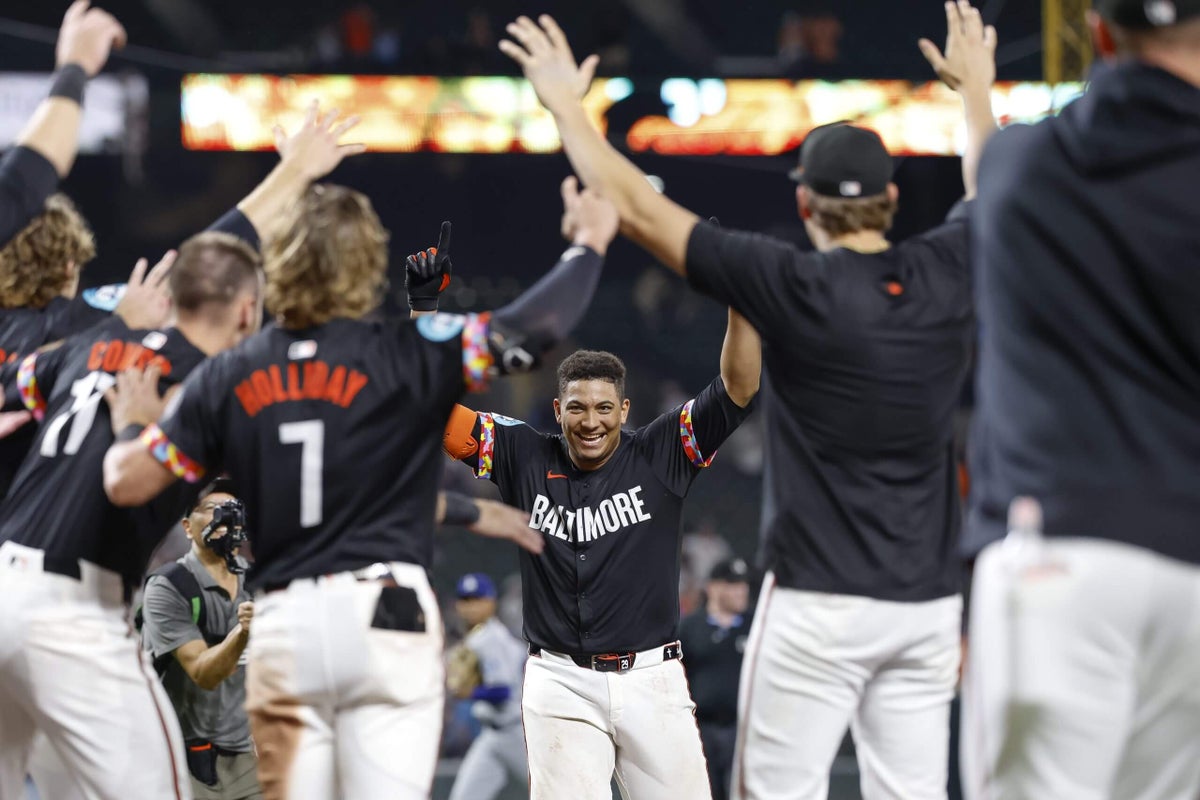
Baltimore Orioles
Key number: 48-41 record since May 28, sixth-best in majors.
The Orioles’ 5.60 rotation ERA through 55 games, the third-worst in the majors, effectively doomed their season. The emergence of left-hander Trevor Rogers and return of righty Kyle Bradish at least give the team a head start on putting together a better starting staff in 2026. The rotation, though, is but one issue.
Virtually the entire bullpen will need to be rebuilt in the wake of general manager Mike Elias trading two controllable relievers, Andrew Kittredge and Bryan Baker, and losing closer Félix Bautista to rotator-cuff surgery.
Perhaps even more alarming: Many of the team’s young position players – a collection that not long ago was the envy of the sport, and remains highly regarded – have stagnated, or even regressed.
Injuries were part of it, at least for catcher Adley Rutschman, third baseman Jordan Westburg and left fielder Colton Cowser. But shortstop Gunnar Henderson has not been as good as he was in 2023 and ‘24. And second baseman Jackson Holliday, while approaching a 20-homer, 20-stolen base season at age 21, has yet to truly break out.
Next season will be critical for Rutschman, in particular. The Orioles are unlikely to trade him when they still need his defense and game-calling – Samuel Basallo might prove more of a first baseman/DH than a catcher. But the entire group, including rookie first baseman Coby Mayo and outfielder Dylan Beavers, needs to show progress.
Elias did not trade any of the core young players when their values were higher, so he likely won’t be inclined to move any of them now. His more probable path will be to trade prospects for major-league help. He acquired 15 at the deadline, six of whom entered the team’s top 30, according to MLBPipeline.com.
Dean Kremer will return with Rogers and Bradish in the rotation, with Tyler Wells, Cade Povich and others also in the mix. Just like last offseason, the Orioles will need at least one more starter, preferably a No. 1, at least a No. 3. At this point, anything they get from Grayson Rodriguez, who underwent right elbow debridement surgery last month, will be a bonus.
The bullpen will be even more of a heavy lift, and the Orioles need to determine whether Tony Mansolino – 52-49 since taking over for Brandon Hyde – should be their permanent manager. But as much as anything, the offense will dictate the team’s 2026 success. The Orioles should be better than where they ranked entering Tuesday, 17th in the majors in run per game.
Athletics
Key number: 43-40 record since June 4, 11th-best (tied with Padres) in majors.
The A’s also started the season fairly well, opening with a 22-20 record. It’s their 1-20 mark from mid-May to early June, fueled largely by bullpen trauma, that prevented them from contending for a wild card.
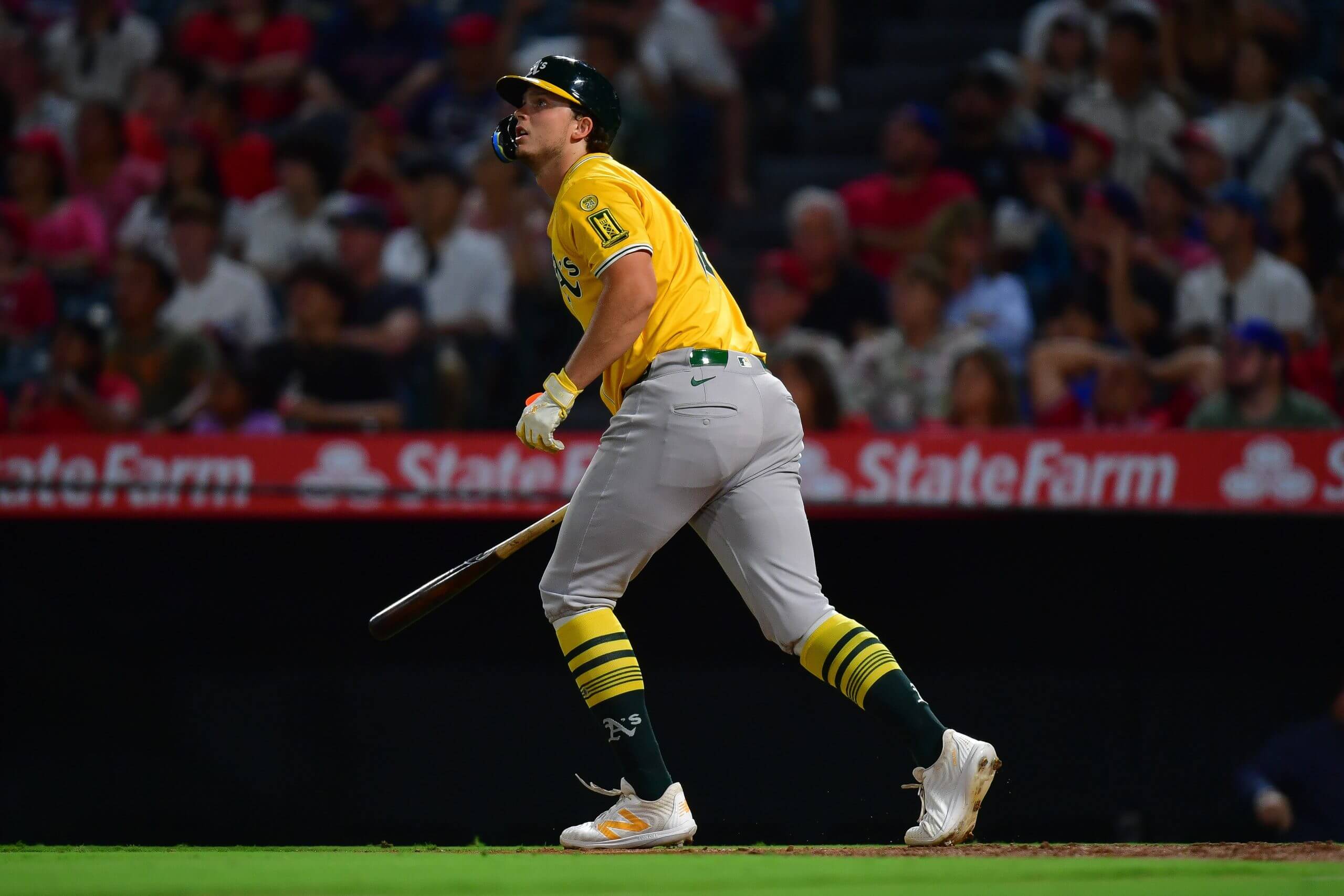
A’s rookie Nick Kurtz homers against the Angels over the weekend. (Gary A. Vasquez-Imagn Images)
The offense, which entered Tuesday first in extra-base hits and fourth in runs per game since the All-Star break, is what the Orioles thought theirs would be. First baseman Nick Kurtz, as MLB.com’s Mike Petriello wrote, is enjoying one of the best rookie seasons and best second halves ever. And virtually all of the A’s top hitters – from Kurtz to catcher Shea Langeliers to designated hitter Brent Rooker; left fielder Tyler Soderstrom to shortstop Jacob Wilson to right fielder Lawrence Butler– are under long-term control.
Third base remains a weak spot – Max Muncy, the player the Athletics want to install at the position, has been out since July 21 with a fractured right hand. Adding pitching depth, though, will be general manager David Forst’s priority this offseason. The A’s entered Tuesday with the fourth-worst ERA in the majors, and will be stuck at hitter-friendly Sutter Health Park in West Sacramento for at least two more seasons.
In theory, right-hander Luis Severino’s initial difficulties at Sutter Health might turn off some free-agent starting pitchers. Severino, however, had started to adjust, producing a 4.26 ERA in his last four home starts before suffering a strained left oblique. Other A’s pitchers, including lefty Jeffrey Springs, who is under contract for next season, have fared decently at home. And a starter who signed a longer deal could join the entire organization in counting down the days to Las Vegas.
Of course, the extent to which owner John Fisher will boost payroll is an open question. While the A’s increased their Opening Day figure from $61.3 million in 2024 to $74.7 million in ‘25, they were still far below the projected $130 million to $150 million range for their ramp-up period to Las Vegas.
The A’s are encouraged by the progress of some of their younger pitchers – Luis Morales, J.T. Ginn and Mason Barnett, as well as the currently injured Gunnar Hoglund, Jacob Lopez and Jack Perkins. Gage Jump and Kade Morris are two prospects on the rise. And other teams regarded their addition of Braden Nett in the Mason Miller trade as a coup.
The bullpen improved after manager Mark Kotsay got the relievers into the right roles, ranking as one of the league’s best since mid-June and maintaining that level even without Miller. The outfield defense was a problem for much of the season, but Soderstrom improved in left and Denzel Clarke – out since July 20 with a right adductor strain – will again be a boon to run prevention in center.
The offense alone will make the A’s interesting, maybe even dangerous. Their ability to take the next step will hinge on their pitching.
Pittsburgh Pirates
Key number: 25-20 since July 20, sixth-best (tied with Yankees, Royals and Blue Jays) in majors
Attention, Bob Nutting: Whether or not you keep general manager Ben Cherington, your team actually might not be that far away from contention, assuming you’re interested in such a thing.
The clock is ticking on the Pirates with NL Cy Young favorite Paul Skenes, who is under club control for four additional seasons, but at escalating salaries starting in 2027. The rest of the rotation, which entered Tuesday ranked sixth in the majors in ERA, is also quite good. With Skenes, Mitch Keller and Johan Oviedo, with Jared Jones returning from elbow surgery sometime next season, and with Bubba Chandler, Braxton Ashcroft, Mike Burrows, Hunter Barco and Thomas Harrington all in the mix, the Pirates are looking — dare we say it? — at a starting pitching surplus.
The trick now, for Cherington or whoever replaces him, is to find enough offense to correct the roster’s extreme imbalance. The Pirates rank last in the majors in runs per game. Andrew McCutchen, who turns 39 next month, entered Tuesday ranked second on the team in OPS. Tommy Pham, 37, ranked fourth.
First baseman Spencer Horwitz, who underwent wrist surgery in February, should be better next season. Perhaps Jared Triolo can be a bridge at shortstop to the game’s No. 1 prospect, 19-year-old Konnor Griffin, who also could wind up in center.
But center fielder Oneil Cruz is regressing, Ke’Bryan Hayes-style, and no other Pirates hitter is even remotely exciting. Chicago White Sox infielder Lenyn Sosa entered Tuesday with a higher OPS than the Pirates’ team leader, right fielder Bryan Reynolds.
This is Cherington’s sixth season. As good as he has been amassing pitchers, he has been just as bad identifying hitters. Imagine what a shrewd, wheeler-dealer type could do with the Pirates. Not many exist in this risk-averse sport, but the right person could swap out some young pitchers for young hitters without raising payroll much, if at all. A quality free-agent bat or two also could make a difference, but Nutting has never shown an inclination to spend much on the open market.
The Pirates are 52-55 since Don Kelly replaced Derek Shelton as manager, but they already have wasted two years with Skenes. The chances of them keeping him for their remaining four years of club control are remote. Nutting will recoil at paying Skenes exorbitant salaries in arbitration, and almost certainly seek a massive return in a trade before losing him as a free agent.
Now is the time for the Pirates to make a push. And shame on Nutting if they don’t.
The Athletic’s Stephen Nesbitt and Melissa Lockard contributed to this story.
(Top photo of Samuel Basallo and Orioles teammates: Brandon Sloter/IOS/Getty Images)