
It was 8:46 Thursday morning and FDNY Engine 3, Ladder 12 was ordered into formation by Chief John Gormley.
There they stood in dress blues, shoulder-to-shoulder, in straight lines that went six deep.
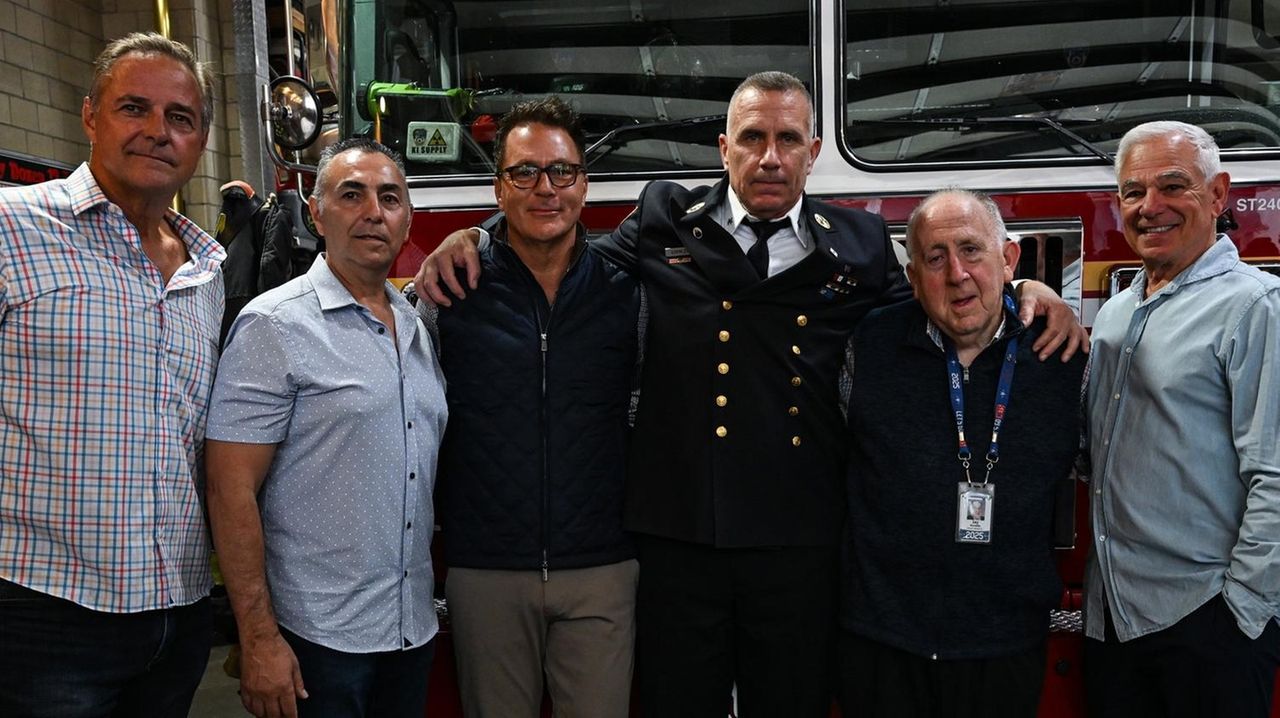
Standing in solemn silence in the back were Jay Horwitz and John Franco and Todd Zeile and Al Leiter and Bobby Valentine.
Twenty-four years later, the memories of that Sept. 11 day and the ones that immediately followed still resonate for members of the 2001 Mets. So coming to the firehouse in the middle of Chelsea is not merely an obligation. It is not even a responsibility. Rather it is a sacred duty for Horwitz, Franco, Zeile, Leiter and Valentine, who have attended the annual memorialization every year, save for 2020 due to the COVID-19 pandemic.
“The biggest, most important thing about why we do, what we did, and why we continue to do what we do is because you can’t forget what happened on September 11, 2001,” Leiter said.
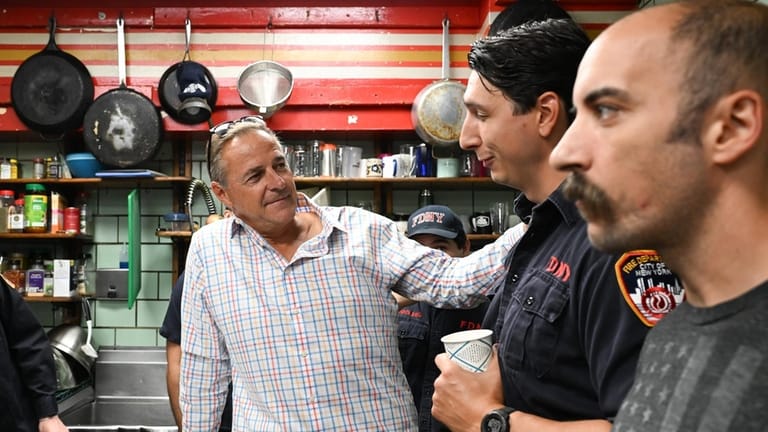
Al Leiter visits with members of FDNY Engine 3, Ladder 12 firehouse on Sept. 11, 2025. Credit: Marcus Santos
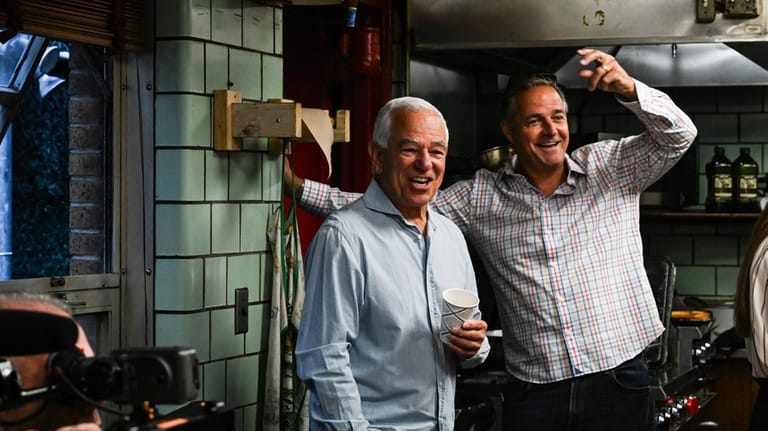
Former Mets manager Bobby Valentine, left, and pitcher Al Leiter visit with members of FDNY Engine 3, Ladder 12 firehouse on Sept. 11, 2025. Credit: Marcus Santos
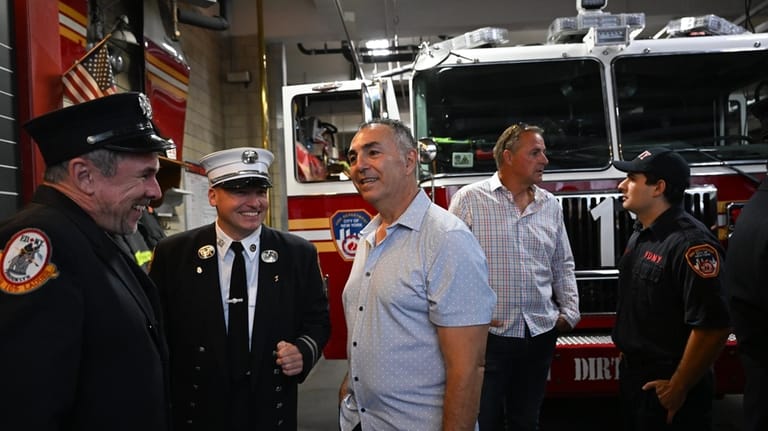
Former Mets pitchers John Franco, left, and Al Leiter visit with members of FDNY Engine 3, Ladder 12 firehouse on Sept. 11, 2025. Credit: Marcus Santos
The members of that Mets team have not forgotten what happened 8,766 days prior. It has been etched into them as it has for so many others.
“We came across the George Washington Bridge at two o’clock in the morning on the night of the attacks and the Towers were gone,” Zeile told Newsday in a quiet moment. Shortly after the attacks, Major League Baseball had postponed games and the Mets, who were in Pittsburgh at the time, bussed back to New York.
“There was smoke blowing in the air,” Zeile said. “We could smell it all the way uptown at the George Washington Bridge and at that moment there was absolute silence on the bus. I think there was a realization that the world would never be the same. And then I think very soon after that, baseball was not being played [and] guys went back to their houses and tried to figure out what do we do? What can we do?”
Shortly after returning to New York, Shea Stadium was transformed into a staging ground and supply area to help with rescue and recovery. The Mets would help by loading needed equipment onto trucks and visiting with first responders.
In those moments, bonds were formed that still exist today.
“It shows they haven’t forgotten,” Gormley said, before pausing. After a few moments, he continued: “The support we got from organizations outside of the fire department in the days following 9/11 were critical for us to get through as a department. And the fact that they’re still coming here and supporting us year after year and show us that they have not forgotten.”