
Here’s a look back at what happened in the Chicago area on Sept. 12, according to the Tribune’s archives.
Is an important event missing from this date? Email us.
Weather records (from the National Weather Service, Chicago)
High temperature: 96 degrees (1952)
Low temperature: 44 degrees (2014)
Precipitation: 2.43 inches (1961)
Snowfall: None
Daylight saving time 2023: Why it began, where it exists and how it saved one Chicago man’s life
1937: A Tribune story reported that some 20,000 children born in Chicago since 1920 were celebrating the wrong birthday. Why? They were born between midnight and 1 a.m. while Chicago observed daylight saving time for five months of the year. Springfield, however, remained on Central Standard Time. State law provided that its records should be kept in a uniform matter throughout the state, so corporation counsel Barnet Hodes ruled that Springfield time should prevail because that’s where the state’s health department office was located.
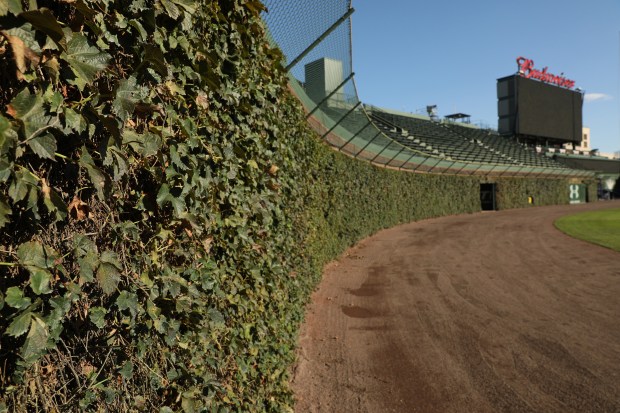 Ivy covers the left field wall at Wrigley Field on Oct. 16, 2017. (Chris Walker/Chicago Tribune)
Also in 1937: The original ivy at Wrigley Field was planted, the Tribune reported. Chicago Cubs executive Bill Veeck strung the vines from the top of the wall to the bottom, then planted the ivy at the base of the wall.
“Bittersweet now is climbing the new buff brick circular wall, and when planting time is right Boston ivy will thicken the foliage” at Wrigley Field, reporter Edward Burns wrote.
1946: Lights were strung across the infield at Wrigley Field and over a boxing ring to give fans a better view when middleweight champion Jake LaMotta knocked out Bob Satterfield in the seventh round of a match.
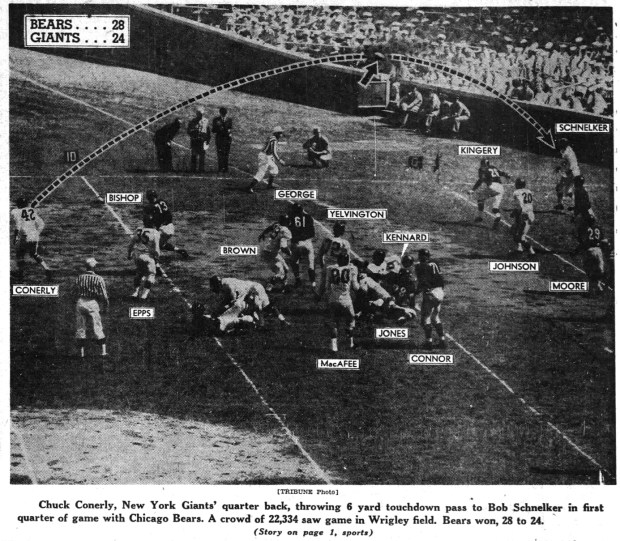 The Chicago Bears, led by rookie quarterback Zeke Bratkowski, beat Frank Gifford and the New York Giants 28-24 on Sept. 12, 1954, at Wrigley Field. (Chicago Tribune)
1954: Chicago Bears rookie quarterback Zeke Bratkowski made his Chicago debut as a pro, but the Georgia All-American did not stand out in a contest that found Bears coaches disappointed with their team’s showing despite beating the New York Giants 28-24.
After Bratkowski, a rookie QB didn’t start in the Bears’ season opener until 2005.
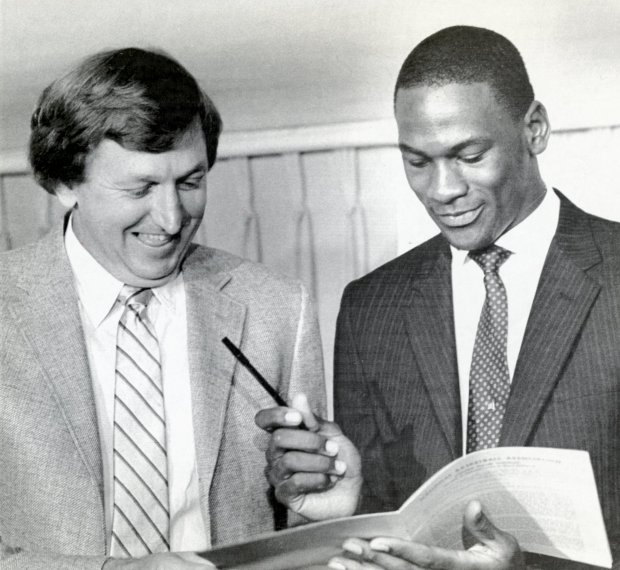 Michael Jordan, right, looks over a multimillion dollar contract he signed with the Chicago Bulls as Bulls general manager Rod Thorn looks on, Sept. 12, 1984. (Ray Foli/UPI)
1984: Michael Jordan arrived in Chicago to sign a contract worth more than $6 million.
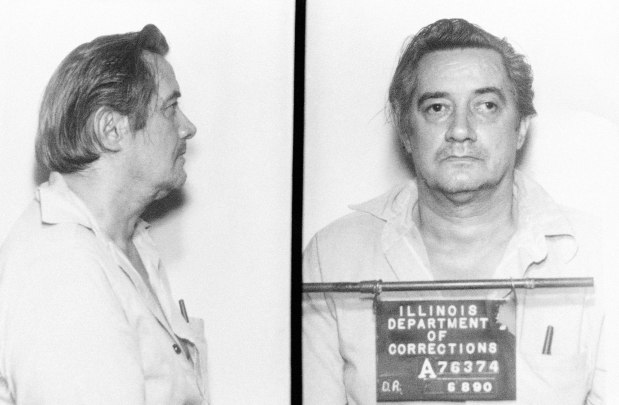 Charles Walker, shown in an undated photo, was executed at 12:01 a.m. Sept 12, 1990, at Stateville Correctional Center in Joliet. (AP)
1990: After abandoning his appeals, Charles Walker became the first person to be executed in Illinois since 1962, and also the first person to die by lethal injection in the state.
Walker was sentenced to die for killing a young couple near Mascoutah in 1983 for $40 in beer money.
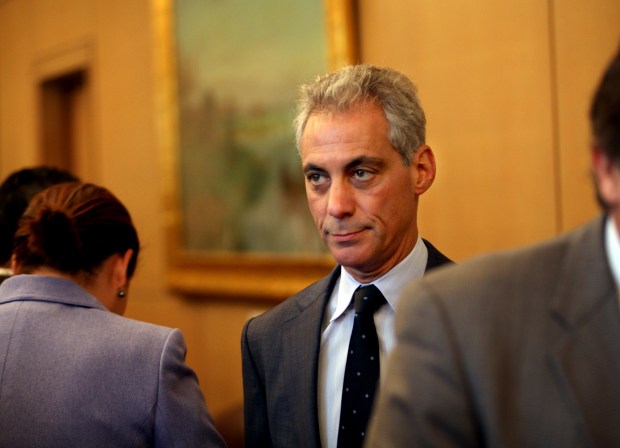 Mayor Rahm Emanuel outside the Chicago City Council chambers on Sept. 12, 2012. (Nancy Stone/Chicago Tribune)
2012: Chicago’s “Welcoming City” ordinance passed. Building on an existing ordinance that prohibited agencies from inquiring about the immigration status of people seeking city services, this ordinance also prevented local police from detaining people solely on the belief that they are in the U.S. illegally, and cooperating with federal agents when they suspect status is the only reason the warrant has been issued.
Chicago’s more than 40-year history as a sanctuary city
With its introduction in July 2012, Mayor Rahm Emanuel said the ordinance would “make Chicago the most immigrant-friendly city in the country.”
Want more vintage Chicago?
Subscribe to the free Vintage Chicago Tribune newsletter, join our Chicagoland history Facebook group, stay current with Today in Chicago History and follow us on Instagram for more from Chicago’s past.
Have an idea for Vintage Chicago Tribune? Share it with Kori Rumore and Marianne Mather at krumore@chicagotribune.com and mmather@chicagotribune.com