
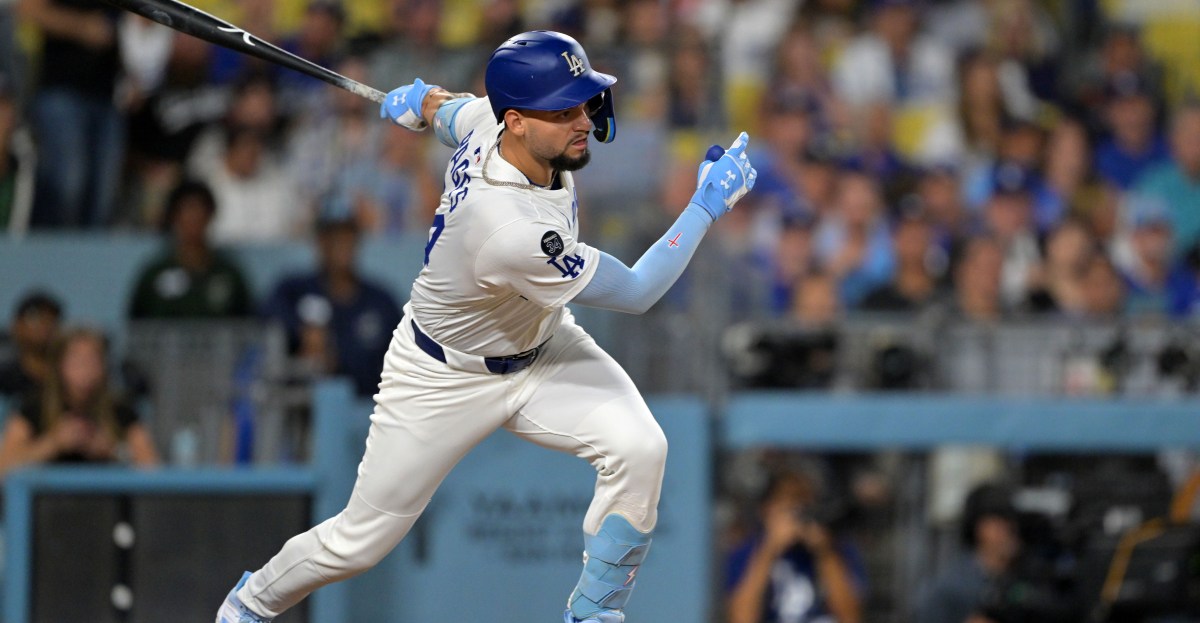
Postseason baseball is unpredictable. The nature of this sport means that in short samples, even the best teams are susceptible to a slip-up that in no way accurately reflects their talent. These are well-documented things. In the middle of a season in which the race for the NL West has been on everyone’s mind, one could argue that both the Dodgers and Padres lost the plot. No matter who ends up winning this division, that team will have something to lament about their outlook.
Under the current postseason format, there is a legitimate argument that no difference between seeds is as impactful as the one between the second and third seeds. Being number one is nice, and a potential home-field advantage in a championship series between the two best clubs can’t be overlooked. It does not compare to the impact of going from skipping a round and starting your postseason run with a five-game set to playing that extra Wild Card round decided in a best-of-three.
The more talented you are, the greater your desire to play a longer series because it gives you a better chance to exercise your superiority on the field. That’s the essence of sports and particularly baseball. Now, you could claim that your regular-season output indicates exactly who you were, and if there were better teams, there were better teams, but the truth isn’t that simple. In actuality, the current Dodgers squad is superior to the level it played at for much of the season, and probably the same could be said of the Padres. Even now, the Dodgers would rather play the Brewers (one seed) in a best of seven than a best of five or three. Losing two of three to Philly, the Dodgers once again experienced how common it is to come out on the losing end of a short series and basically destroyed their already slim chances of securing that bye.
Sure, there is still great value in coming out on the winning end of this race with San Diego, but under the current scenario, not playing the Cubs seems like a bigger advantage than actual home field for the NL Wild Card round, particularly given the Mets recent skid.
The sample size is still rather small under this new format, but what we’ve routinely seen is that home field means particularly diddly squat in these best-of-three series. Across three postseasons, the road team has won eight out of 12 Wild Card rounds. Especially amusing is the fact that the number three seed in the NL has been eliminated every time, only winning one of seven games against the six seed. None of this really matters, and one could point to the 2020 run in which the Dodgers faced and properly handled a mediocre Brewers squad in a best-of-three at home. The simple fact is that the unpredictability of these short series is real, and it could be a problem.
Surely at some point amidst the Dodgers’ struggles in the middle of the year, you thought about how lucky they were to still be in first. In the middle of that, the team moved further and further away from one of the two playoff byes, something that could easily prove costly in the Wild Card round.