
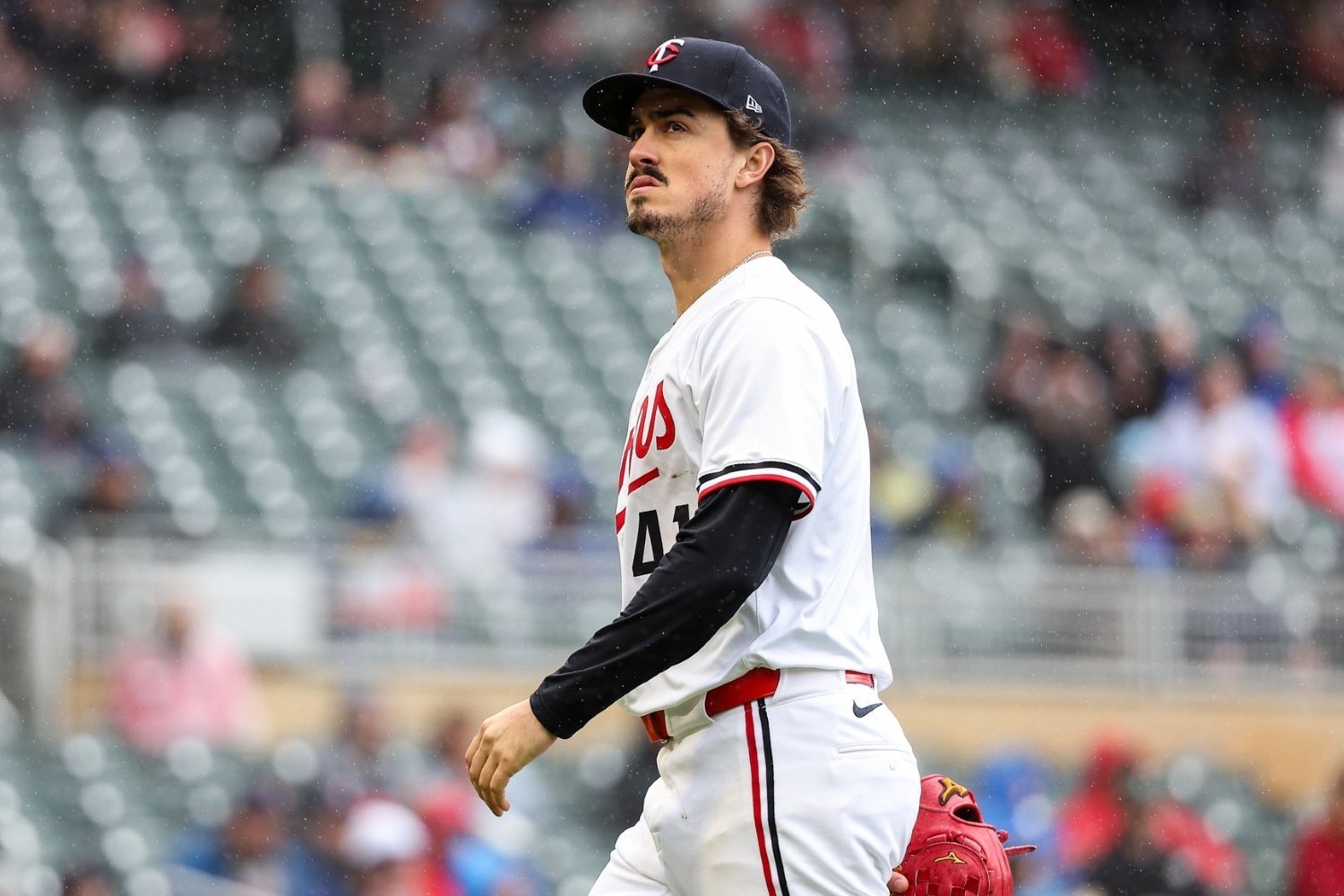
For a long stretch this year, Joe Ryan looked like everything the Twins always hoped he could be: swing-and-miss stuff, elite control, a bona fide frontline starter. His surface numbers backed that up, with elite peripherals and counting stats that put him among the American League’s better arms. But the storyline that’s defined his career, more than the strikeouts, is durability—or the lack thereof. That thread keeps showing up, even in a season where he finally got the All-Star nod.
This isn’t the first time Ryan’s ability to take the mound and pitch competitively for a full season has been questioned. In 2023, the Twins were unsure of how to use Ryan and Bailey Ober in their postseason rotation. The club knew that Pablo López and Sonny Gray would be in the top two spots. When it came to the club’s first game versus Houston, the reins were turned over to Ober, instead of Ryan. Ryan got the start in Game 4, which became the decisive game. However, Minnesota only let him pitch two innings (1 ER on two hits) and turned it over to the bullpen. Ryan had been too inconsistent to earn any more trust than that, partially due to pitching through injury for much of the second half.
Last season, the Twins were in the hunt for the playoffs in the second half, with 90% playoff odds in mid-August. Ryan suffered a season-ending shoulder strain on August 7, though, after he exited a start at Wrigley Field. He didn’t require surgery, but his season was over. The team had an epic collapse down the stretch, and it’s easy to wonder: what if Ryan had been healthy? Could he have helped the club avoid their grisly fate?
Why This Matters
The Twins know, on paper, that Ryan is a top-of-the-rotation arm. However, they have tougher decisions to make about committing future payroll and roster construction to a pitcher whose calendar has an asterisk: “great, if he gets through the back half.” The Twins know what they’re getting when he’s right: a starter who can give the bullpen breathing room and dominate. But they also know what they get when the wear shows up: short starts, extra bullpen usage, and the subtle (or sudden) collapse of a rotation plan in September. This year, he’s been able to stay on the mound and establish a new career high in workload, but his performance has been markedly worse since the beginning of August.
If the Twins decide to retain Ryan and build their 2026 plan around him, it may be time to reevaluate his usage. That means:
Aggressive workload management: An innings cap or series-of-starts cap in the early season, with a ramp tailored to his history. Let the calendar, not panic, dictate his place in September.
Rest and recovery emphasis: Deeper in-season monitoring, scheduled extra days between starts if metrics trend poorly, start having rest conversations before anything becomes a bigger problem.
Rotation construction that protects him: Continue to build the organization’s pitching pipeline. If the back end of the rotation is unreliable, Ryan’s failures cascade. A deeper rotation means the Twins can accept the occasional two-inning outing, without turning September into a bullpen apocalypse.
Retaining him this way buys upside: the Twins still have an ace when he’s right, but you try to blunt the damage when he’s not. That’s a reasonable strategy, if the Twins aren’t convinced the market will pay top value for him in a trade. Right now, the market is at least whispering about interest. He’s been listed among the offseason’s top trade candidates, which underscores how other clubs value his present performance despite the worry about the back halves of seasons.
The alternative is blunt and transactional: the Twins could sell high on a pitcher who’s shown All-Star-level production and still has two years of control left. Moving him would solve the durability headache by making it someone else’s problem, and it would accelerate a rebuild or restock the farm system with controllable talent. Teams in win-now mode often overpay for present performance. If other front offices believe Ryan is a 4+ WAR difference-maker when healthy, the return could be significant.
That said, trade markets price in risk. Other teams aren’t blind to the shoulder history or the second-half fades. Any package the Twins get will be discounted by how much prospective buyers think Ryan might buckle late in the season. If the Twins’ front office is convinced they can better manage Ryan and extract more value than a trade return, they’ll keep him. This summer’s roster shakeups showed the Twins were willing to move many pieces, but they retained Ryan as part of the core construction at that time.
All the debate, projections, and contract math come down to one simple thing: what happens when Ryan goes through a full spring, a regular season, and into September without the physical hiccups he’s shown before? That’s the question investors (the front office or trade suitors) want to see answered. To whatever extent we got an answer to that this year, though, it wasn’t a happy one.
If the Twins keep him and 2026 shows those things, they’ve got a frontline starter they can build around, and the “what-if” of 2025 fades into a memory. There’s also a chance that Ryan again wears down, or an injury pops up. Then the narrative flips: his trade value tanks, his arbitration trajectory becomes a liability, and the Twins are left balancing lost wins with future payroll commitments.
Ryan’s 2025 told two truths at once: he’s legitimately good, and he’s still a gamble. For the Twins, keeping him is a bet that smarter load management and surrounding pieces can turn upside into reliability. Trading him is a bet that the market will overvalue current performance and spare the Twins a long, expensive experiment.
Which gamble is smarter? That depends on how patient Minnesota wants to be, and how many heartbreaks they’re willing to endure before Ryan finally, fully answers the simple question he’s failed to solve so far.
Can Ryan ever answer his biggest question? Will the Twins trade him this winter? Leave a comment and start the discussion.