
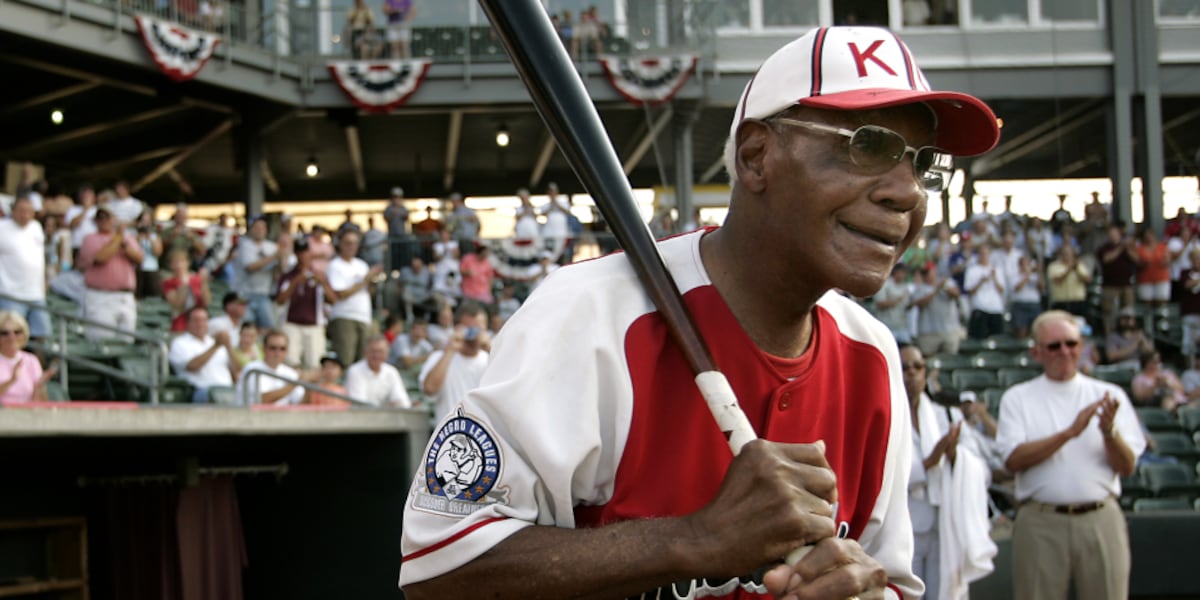
KANSAS CITY, Mo. (KCTV) – John Jordan “Buck” O’Neil lived 94 years with purpose – a man defined by optimism, resilience, and an unshakable love for others.
Friends like Bob Kendrick called him the consummate optimist, someone who always found the sunny moments of a partly cloudy day. But in Kansas City, and far beyond, he is remembered as something more: a man determined to ensure his buddies from the Negro Leagues are never forgotten.
It was Buck’s leadership as chairman that helped the Negro Leagues Baseball Museum (NLBM) move into its permanent home at 18th and Vine in 1997. The late Hall of Fame manager, scout, coach and ambassador gave the museum its spirit, and, as NLBM President Bob Kendrick often says, “It’s the house that Buck built.”
That house continues to grow.
The museum is in the midst of a massive expansion that will triple its size to more than 30,000 square feet. Plans include new galleries, interactive exhibits, and even a baseball-themed hotel. But perhaps the most symbolic piece of the project is happening just next door, at a building where Negro Leagues history began.
In 1920, Black baseball leaders gathered inside the Paseo YMCA in Kansas City, led by Rube Foster, to officially form the Negro National League. Today, that same building is being transformed into the Buck O’Neil Education and Research Center.
“Three-fourths of that building has been completed,” Kendrick said. “We only have some work to do in the basement of that building, and as soon as we build an elevator tower and install an elevator, we will actually start to utilize that space. Of course, it will be connected to the new museum, and there will be ways in which our guests can move seamlessly from one space into the other. And so, yeah, I think Buck would be pleased with what his museum is doing, how it continues to grow, and we hope that we can just continue to allow it to thrive.”
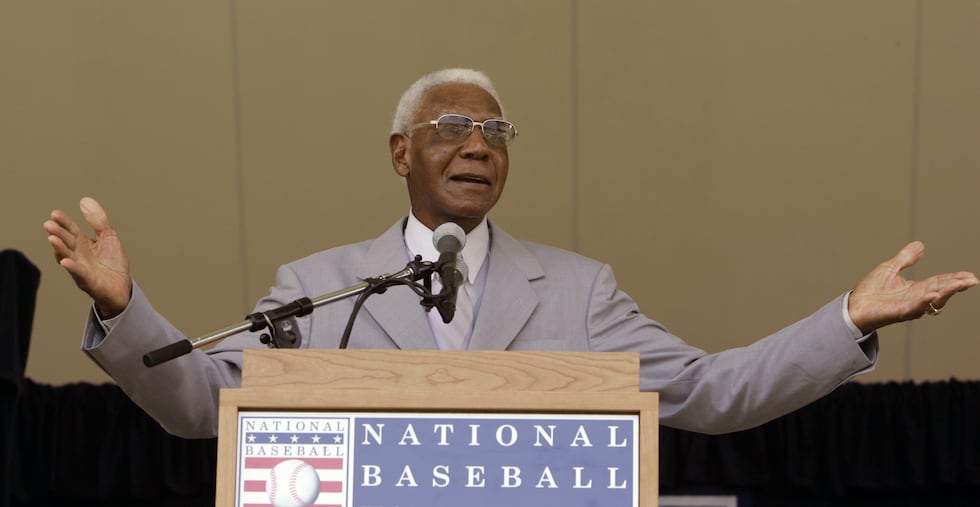 John “Buck” O’Neil, a former Negro league player and manager, talks about the Negro League in this July 30, 2006 file photo at the Baseball Hall of Fame Induction in Cooperstown, N.Y. One of the game’s most beloved ambassadors, O’Neil was posthumously honored Wednesday, Oct. 24, 2007, by the Hall with a Lifetime Achievement Award named in his memory. (AP Photo/ Jim McKnight, File)(Jim Mcknight | ASSOCIATED PRESS)
That seamless connection – between past, present, and future – is exactly what O’Neil devoted his life to. Even when adversity came, Buck answered it in a way that left people smiling. In 2006, he fell one vote shy of Major League Baseball’s Hall of Fame. Instead of bitterness, he traveled to Cooperstown to speak on behalf of 17 Negro Leaguers who were inducted that year.
“I think he saved that induction ceremony, and it was one of the most selfless acts in American sports history,” Kendrick said. “What he was able to do to push aside his own disappointment of not getting in and then being there in Cooperstown.”
During that speech, O’Neil led the crowd in song – inviting thousands to sing along with him, “The greatest thing in all my life is loving you.”
It was Buck’s defining message – never lose faith in others.
O’Neil was posthumously inducted into the Hall of Fame in 2022, just as the NLBM launched its expansion.
”It took me a while to kind of, I guess, come to some reasoning around this. Because 16 years later, I’ll be honest, I was still feeling a little salty. Yeah, I wasn’t being Buck-like,” Kendrick said.
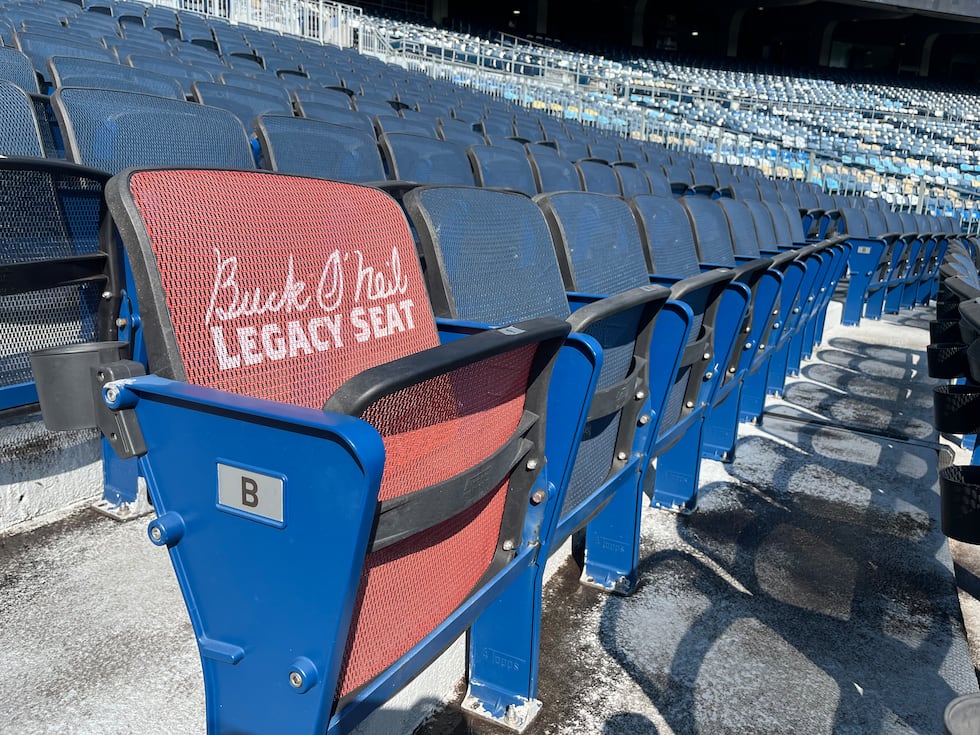 The Buck O’Neil Legacy Seat at Kauffman Stadium.(Ryan Hennessy, KCTV5)
He’s not alone with that sentiment. Kendrick recalled traveling to Cooperstown for the ceremony.
“Because I wanted it to happen while he was still alive. And I remember meeting my buddy, Joe Posnanski – Buck’s buddy, as well. We met in Albany, New York, and neither one of us are feeling this, but it was almost obligatory. I’m the president of the museum,” Kendrick said. “Joe had written a great book about Buck, so we’ve got to be there. And so we’re driving over to Cooperstown, and the minute we get to Cooperstown and park the car, something happened.
“We get out of the car, and we are besieged by Buck O’Neil fans. And everybody wanted to hug. They wanted to take pictures. They wanted to tell their Buck stories. They wanted us to tell Buck stories. And all of a sudden, all of this angst that I had been feeling, this harboring of some ill will about how that thing turned out 16 years prior, started to dissipate. And you could feel the spirit of Buck O’Neil all throughout Cooperstown, and I think Joe and I both allowed ourselves to embrace the moment and enjoy it the way that Buck would want us to enjoy it.”
But O’Neil’s presence can already be felt across Kansas City. From 18th and Vine to Kauffman Stadium, his name and spirit are woven into the fabric of the city. His spirit is honored at every Royals home game with the Buck O’Neil Legacy seat – where Buck sat as a scout, and now community members are recognized during 81 home games, every year.
“We’ll never run out of people in Kansas City that carry on Buck O’Neil’s legacy and spirit,” said Kurt Nelson, senior director of the Royals Hall of Fame. “That’s the special thing – it’s not just the Royals making that selection, it’s all of us in the community.”
The story of Buck O’Neil – and the Negro Leagues – is one of triumph over adversity. It’s a reminder that baseball was never just about the game, but about people daring to dream in the face of prejudice. Buck carried that lesson with him his entire life, fighting not with anger, but with love.
And now, with every new brick, every new exhibit, and every song still sung in his honor, his legacy keeps leading the way.
Copyright 2025 KCTV. All rights reserved.