
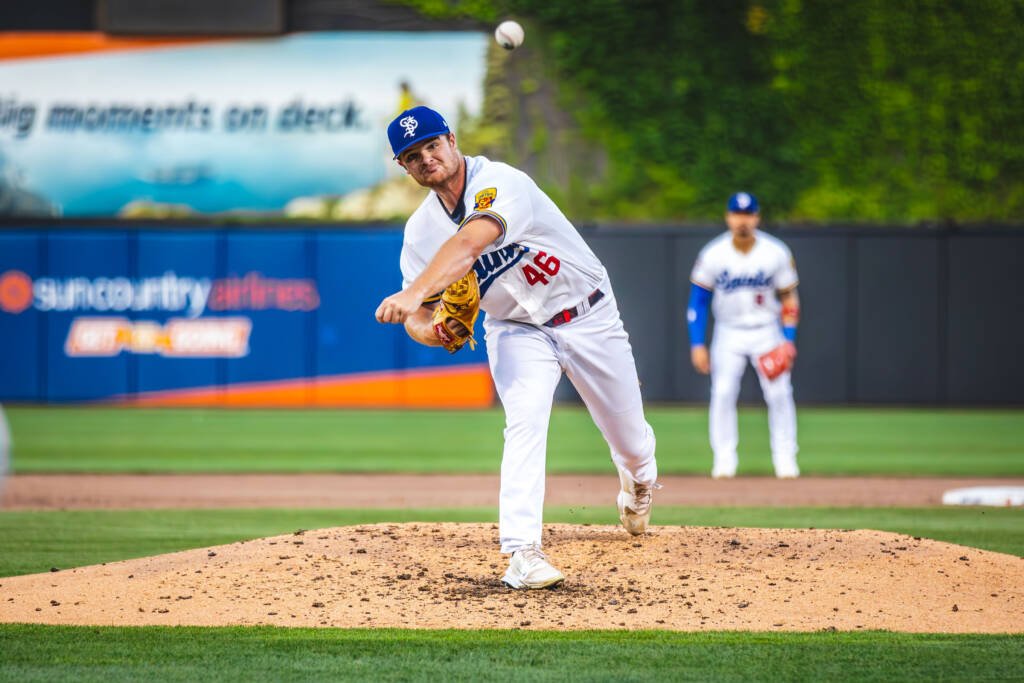
When Derek Falvey was hired away from Cleveland, the expectation was clear: bring that organization’s steady stream of arms to Minnesota. In Cleveland, pitching prospects seem to appear out of thin air, whether it’s a starter stepping in to cover a rotation spot or a reliever throwing 98 mph with a wipeout slider. Nearly a decade later, fans are still waiting to see if the same can happen in Minneapolis.
A Different Path to Development
Minnesota hasn’t replicated Cleveland’s high draft pedigree or international pitching dominance. Instead, the front office has adopted a unique approach: identifying unheralded college arms in the mid-to-late rounds, refining their mechanics, expanding their pitch mix, and emphasizing velocity gains.
It’s how Bailey Ober, David Festa, and Zebby Matthews all forced their way onto prospect lists and into major-league roles. But 2025 served as a harsh reminder of the risks. All three dealt with injuries this summer, and while velocity gains can elevate a pitcher’s ceiling, they also push arms closer to breaking down. The pipeline looked stocked in February. By September, it looked more fragile than fans had hoped.
The Current Rotation Picture
The Twins’ top three (Pablo López, Joe Ryan, and Ober) were supposed to be the bedrock of the 2025 staff. Instead, injuries and inconsistency have raised questions about all three, with trade rumors swirling as the front office reassesses roster priorities. López and Ryan are set to be two of the highest-paid players on next year’s roster, and that could mean shopping them this winter in an attempt to further reduce payroll and amass even more young talent.
Festa was one of the organization’s brightest pitching hopes, but a thoracic outlet syndrome diagnosis casts a long shadow over his career path. Initial reports are positive, in that it is the less devastating form of TOC, but it is still one of the worst diagnoses for a pitcher. Simeon Woods Richardson and Matthews both had chances, but were unable to seize rotation spots. They showed flashes, but flashes don’t win a division.
Other Reinforcements
At the trade deadline, the Twins went shopping for arms to fortify the future. Mick Abel and Taj Bradley both come with pedigree as former top-100 prospects, while Kendry Rojas offers intriguing upside. The Twins have talked very highly of him since he was acquired.
Minnesota had other prospects who were expected to break through in the minors this year, but that did not happen. Andrew Morris, though slowed by injury, showed promise late in the season. Marco Raya flashed his potential, while Cory Lewis endured a season to forget. There is hope that these three can have a healthy winter and return in 2026 with something to prove.
These young arms highlight a familiar theme: the Twins are still searching for their “pipeline identity.” Cleveland can rely on a constant churn of major-league-ready pitchers. Minnesota has to piece theirs together through trades, tweaks, and patience.
The 2026 Pitching Pipeline: Tiers of Hope
Instead of a single clear pipeline, Minnesota’s future appears more like a layered system of possibilities.
Projected Opening Day Options
López, Ryan, Ober – All three could anchor the rotation if healthy and not traded, but each carries questions about durability or performance.
Bradley, Woods Richardson – The former trade acquisitions will push for full-time roles, especially with their big-league experience over the last two seasons. Bradley has frontline upside if he clicks, while Woods Richardson needs to sharpen his command.
Next Wave of Starters
Abel, Matthews – Both showed flashes in 2025, but need consistency. Each could profile as a back-end starter or a dominant relief option.
Raya, Morris, and Rojas – Young arms with enough stuff to break through in 2026. If the frontline group falters, these pitchers may get opportunities.
Wild Cards
Festa – Everything hinges on how he recovers from thoracic outlet syndrome. If he avoids surgery and bounces back, he could still be a long-term piece.
Lewis – After a rough year, he’ll need a strong rebound to reestablish himself in the pipeline.
Connor Prielipp – He was one of the top-performing starters in the system this season. Does it make sense for him to shift to a bullpen role, or to stay in the rotation?
This tiered structure highlights the Twins’ reality: plenty of options, but few certainties. And given how many bullpen spots are up for grabs after the trade deadline selloff, some of these names (particularly the “next wave” and “wild cards”) may be asked to shift into relief roles. That could accelerate their path to the big leagues, while also giving the Twins a chance to stabilize a bullpen in flux.
When Falvey arrived, the vision of a self-sustaining pitching pipeline was one of the biggest selling points. In 2025, the promise remains only partially fulfilled. Minnesota has discovered hidden gems, taken calculated risks on projects, and acquired talent through trades. But until the Twins can count on consistent, reliable production from their pipeline, both in the rotation and bullpen, fans will keep wondering when the “Cleveland magic” is finally going to show up at Target Field.
Next season could be the year it finally starts to become a reality—or it could be another reminder that Minnesota’s pipeline still leaks.
How do you feel about the pitching pipeline heading into 2026? Leave a comment and start the discussion.