
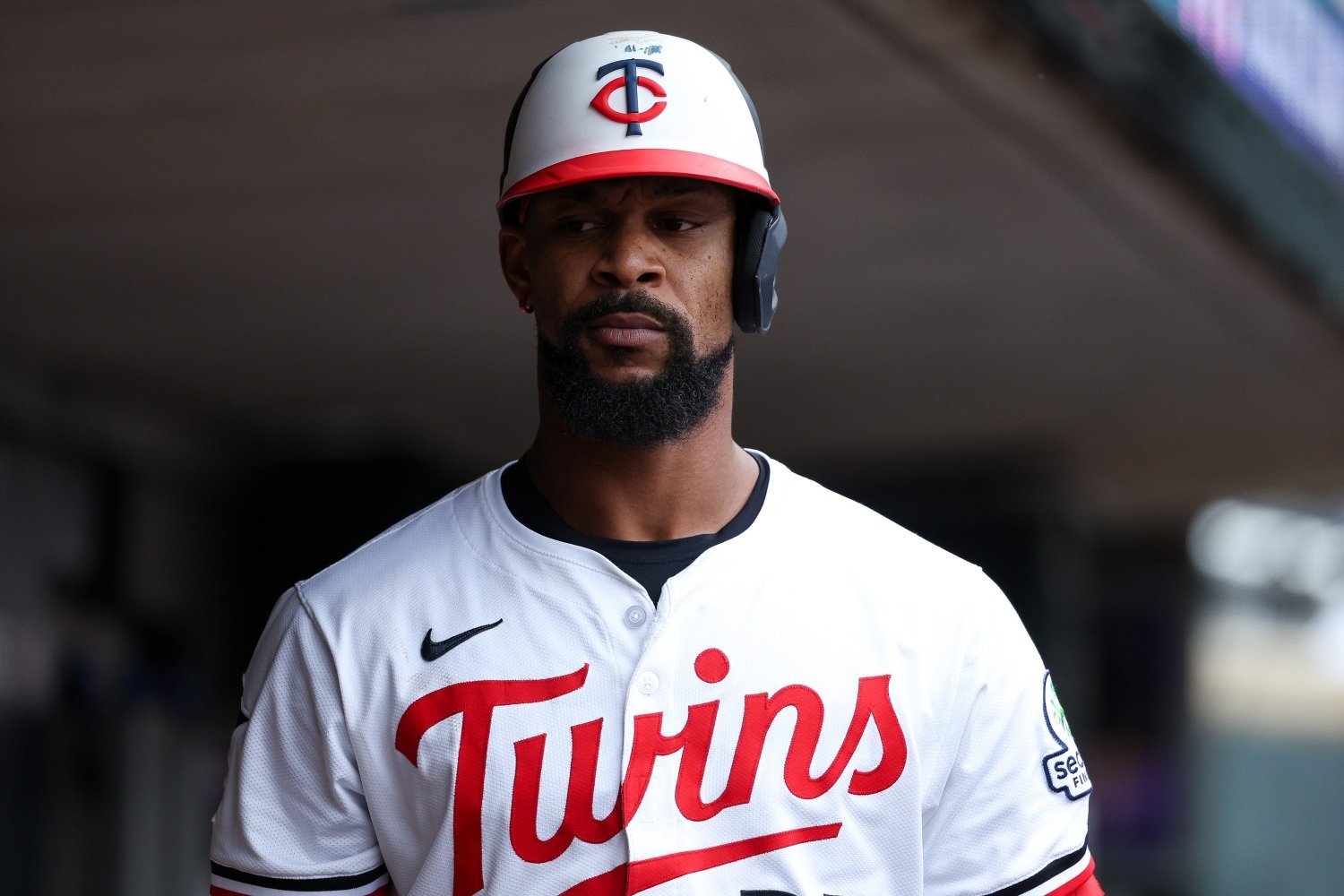
The Minnesota Twins ended the 2025 season with 92 losses and no postseason appearance for the second consecutive year. For all the chatter about “retooling on the fly,” it looks more like the team has dug itself into a deeper hole. Now, with a new manager coming in for 2026, the front office may be setting them up to fail before the season even starts.
Buxton and Ryan Were Great, and It Didn’t Matter
Byron Buxton’s season was about as perfect as any Twins fan could dream of. He stayed healthy, dominated at the plate, and played center field with his usual highlight-reel flair. Joe Ryan looked like one of the best pitchers in the American League until fatigue (and perhaps discontent) caught up with him late in the year.
Those two performances should have been the backbone of a playoff team. Instead, the Twins collapsed. That’s the harshest evidence that this core isn’t good enough. Even if Buxton and Ryan repeat those seasons (a big “if”), they can’t drag this roster to contention on their own. Regression is more likely, and that means the team’s secondary pieces must step up. The problem? The track record suggests they won’t.
Trade Deadline Priorities: Floor Over Ceiling
The Twins’ front office made clear choices at the deadline: they wanted players who could impact the roster in the short term. Mick Abel, Taj Bradley, Kendry Rojas, Alan Roden, and James Outman all fit that mold.
Abel’s stuff is real, but he’s still working through command issues.
Bradley has emitted flashes of brilliance but comes with plenty of volatility.
Rojas is young and intriguing, but not a sure thing; his injury track record says that much.
Roden’s injured thumb prevented him from making an impact.
Outman looks more like a fourth outfielder than an everyday solution.
Could the Twins have traded for higher-upside prospects further away from the majors? Sure. But they didn’t. Instead, they’ve built a roster that looks like it could hang around .500 if everything goes right, which is rarely the case.
Banking on Rebounds and Breakouts
Beyond the deadline additions, the Twins are counting on a list of names that comes with more questions than answers.
Matt Wallner needs to rediscover his power stroke after a disappointing season.
Royce Lewis flashed excitement and improved as a third baseman, but hasn’t found offensive consistency.
Austin Martin thrived in a partial-season audition, but can he replicate those results for 162 games?
Brooks Lee owns the shortstop job, but must prove he can hit enough to keep it.
Luke Keaschall showed promise when healthy, but his durability remains a concern.
The front office will also dangle hope in the form of Walker Jenkins, Emmanuel Rodriguez, and Gabriel Gonzalez. All three ended 2025 at Triple A and are expected to debut in 2026. While they bring excitement, it’s unreasonable to assume they’ll carry the team as rookies. If the Twins are already leaning on prospects to save the season, that’s a major red flag.
That’s a lot of “ifs” in one infield and outfield mix. And the danger with building around “ifs” is that they rarely all hit at once. Maybe Wallner rediscovers his power stroke and shows a newfound capacity to handle high-velocity hurlers, but what if Lewis’s offensive inconsistency lingers? Maybe Lee steadies himself at shortstop, but what if Martin’s strong finish turns out to be just a hot streak?
The Twins don’t need one or two of these bets to pay off; they need almost all of them to click just to be respectable. It’s the exact opposite of how sustainable contenders are built. Winning teams insulate themselves with depth and proven production, so that if a player backslides, the roster doesn’t collapse. Right now, Minnesota’s roster construction feels like a house of cards, waiting for the first gust of wind to send it tumbling. It’s the planning fallacy in baseball team form.
The Bigger Picture: A No-Win Situation
The Twins’ brass will hand their new manager a roster that has the potential to look competitive on paper but is riddled with volatility. If things go sideways early, fans will blame the skipper, and not be stern enough with regard to the flawed roster construction. If everything clicks, the Twins might hang around in the Wild Card race, but it’s hardly the kind of setup that screams long-term stability.
It feels like the front office is trying to buy time while hoping a few lottery tickets cash in. That leaves the new manager stuck in the middle: judged on wins and losses while managing a team built more on wishful thinking than certainty. And that’s why, unless something changes dramatically this winter, the Twins aren’t setting up their new manager to succeed. They’re setting him up to fail.
Are the Twins putting their new manager in a no-win situation? Leave a comment and start the discussion.