
At least Skip Schumaker would know what he’s getting into if he takes the Texas Rangers managerial job.
As a senior advisor to Chris Young for the last year, the frontrunner to be the Rangers’ next manager had a good look, often first-hand, at all of the organization’s issues and challenges. And, besides, after two years in the guts of Miami’s messy fish market, just about anything would be an upgrade in work environments.
That said, man, the memories of the world champion Rangers may seem so fresh in folks minds, but in terms of baseball, it’s ancient history.
With that in mind, the Rangers’ situation is by no means clean. Here’s a look at the issues Schumaker – or the next manager – will have to tackle:
Rangers
The offense
The key to “fixing” the Rangers is finding a way to make the offense not, um, stink. There is no other way to put it. It is the first priority for the new manager and the biggest task.
The Rangers didn’t hit four-seam fastballs in 2024, tried to address it for 2025, and didn’t hit them again. In fact, based on the league average, the Rangers’ .233 batting average against four-seamers in 2025 was even worse than their .233 batting average against the pitch in 2024. The league average on the pitch was .250, up from .246 in 2024. And on the slug side, though the Rangers went from .380 in 2024 to .382 in 2025, that, too, represented a bigger deviation from the league average. It was .424 in 2024; .433 this year. The Rangers changed hitting coaches and messaging and didn’t make any improvement.
They swung too much, got themselves too often in bad counts, chased and didn’t walk. Add on that they weren’t very good at situational hitting. They either have to change personnel or approach. Simple as that, though it’s a lot more simple to express than it is to execute.
The clubhouse
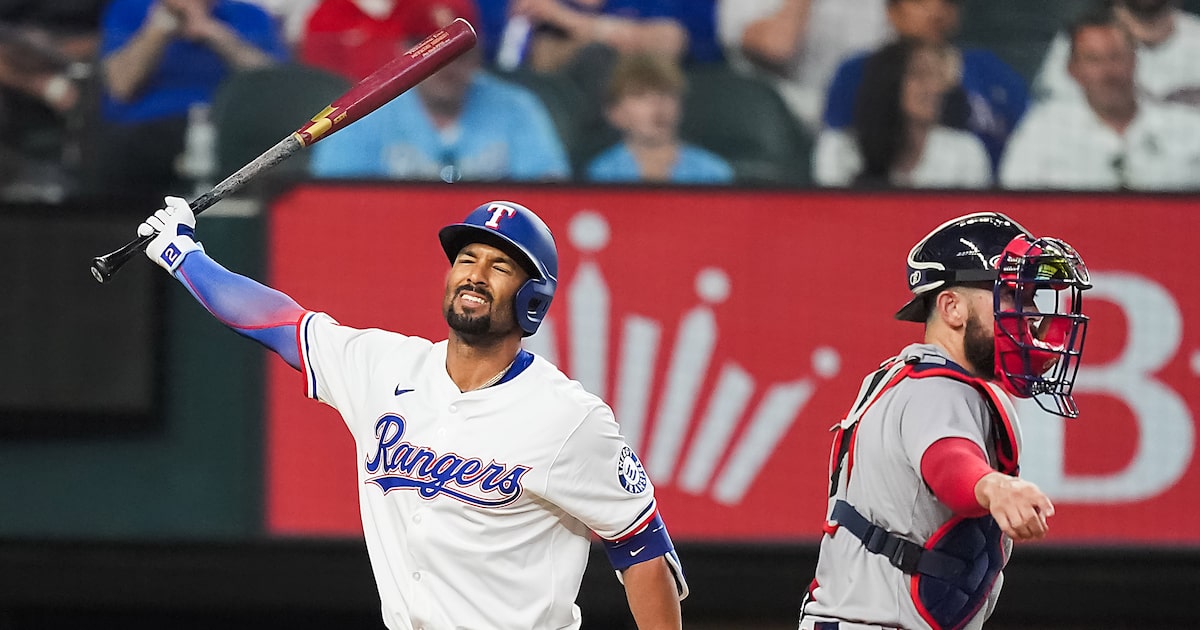
Even in 2023 the clubhouse was not really what you would call vivacious. A lot of that was solved by winning. But as expectations were raised in 2024 and losses mounted, it became more and more palpable that there wasn’t a ton of personality in the clubhouse. The veteran position players were mostly quiet and individualistic in preparation, which could leave the younger players a little bit adrift. That issue only seemed to grow in 2025. It was only magnified when the Rangers played their best baseball while missing multiple veterans. It was punctuated by Marcus Semien’s end-of-year comments that seemed to question the desire of players in the clubhouse. That rankled a number of people around the organization, since Semien’s offensive performance over the last two seasons was in the bottom 10 percent in baseball.
Semien and Corey Seager prepare differently. That happens. It should not cause stress in the clubhouse over which example to follow or which voice to listen to. And it shouldn’t lead to a team that functions as individuals rather than as a unit. Since Semien raised the clubhouse issue, it probably falls on him to take the first step.
Managing up and down
Young is not a passive leader. He is intense and wants to do whatever he can to help win and feels like he should have been more proactive in 2024. He is around a lot. And he can be emotional. The new manager will have to understand how Young is wired and how his presence can also impact the team.
The best way for a manager to handle that is to be able to manage both up to the President’s office and down to his roster. That means being more proactive. As managers go, Bruce Bochy tended to trust veterans to figure out issues and that, over time, slumps would correct themselves to true performance. When a change is made from that type of manager, the hiring pendulum swings toward putting somebody in the dugout more willing to be proactive.
The manager-GM (or President) relationship is the most important one in the organization. While it is technically a superior-subordinate relationship, it must function more as a partnership. The manager must know the GM’s thought process, anticipate it, and either be aligned in it or present compelling reasoning for a different approach.
Payroll
Only one person controls the payroll – the owner. So, the manager doesn’t have a role in that. But he must understand the realities and the challenges it presents when taking the job. Young has indicated that the Rangers payroll is likely to come down from $241 million. With five players of the 26-man roster under contract for approximately $140 million in 2026, how far the payroll falls could really impact the practicality of contending.
If the idea is to significantly slash payroll, then there are only two options: Finish off the roster with cheap pieces or trim from the five-man group (Jacob deGrom, Nathan Eovaldi, Corey Seager, Marcus Semien and Joc Pederson) to create more flexibility. If the Rangers try to trade Semien or Pederson, they’d still have to pay down significant amounts of their contract. Then again, Schumaker managed the No. 23 payroll in baseball to a wild card berth in 2023 and was rewarded by having ownership slash payroll by nearly $15 million. He’s dealt with this before.
The farm
By mid-season, after the Rangers traded a passel of pitching at the deadline, Baseball America had downgraded the club’s talent ranking to 26th of 30 organizations. There isn’t a lot of help coming, particularly on the position player side. The pitching talent is still pretty good, but it’s hard to see the Rangers getting much help for their offensive holes in 2026. Alejandro Osuna should figure into the right field situation. Cody Freeman should have a role as a utility/bench player. After that? Maybe the only hope is to move top prospect Sebastian Walcott to another position like the outfield or third base and hope he’s ready by mid-season. After that, there really isn’t a position player on the horizon other than Abimelec Ortiz who might be a Rowdy Tellez starter kit.
Find more Rangers coverage from The Dallas Morning News here.
Click or tap here to sign up for our Rangers newsletter.