
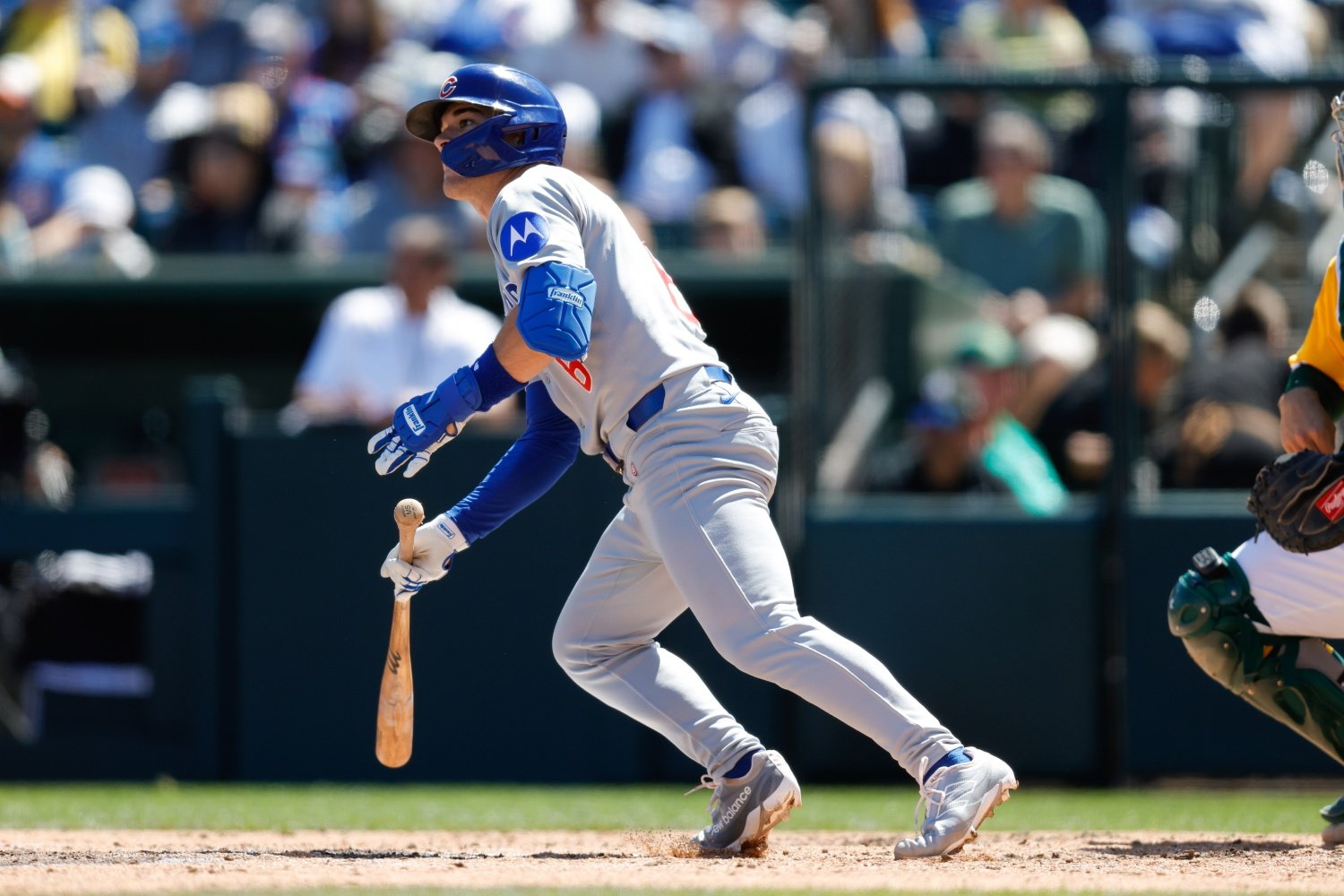
If you were hoping that you’d click on this article, open it up and read that Matt Shaw had either changed his setup or gotten rid of his leg kick, then I have bad news for you; he hasn’t. Shaw’s general batting stance, load, and leg kick are all in a very similar form to what you saw earlier this year in Chicago; there is no massive overhaul underway on those aspects of his swing. If he didn’t fix the two things many wanted him to fix, how, then, has he made any changes? The answer is far more subtle, but I think it’s quite meaningful.
Let’s first remind ourselves what Shaw looked like during his time with the Cubs. I’ve chosen a hit Shaw recorded in a game against the Padres on April 5. Here’s a video of the hit in question. Shaw was up 2-1 in the count against Padres starter Nick Pivetta. The pitch is a cutter located belt-high, on the outer third of the plate. Pivetta’s cutter does not grade out particularly well based on Stuff+. This is a pitch you’d think Shaw should do damage on. The result? A weak “single” (it’s a single in the scorebook, but the 88-mph ground ball had an xBA of .150 on it) to the right side. It was not quality contact, and he was clearly lucky to come away with a positive outcome.
TkFkVkJfWGw0TUFRPT1fQUFkWlhBSldVUVFBWGdFSFV3QUhDVlJXQUFBRFZ3TUFWMUlEVXdVQkJsZFNCQWRm.mp4
Weak ground balls were far too frequent during the rookie’s first ride of the senior circuit. Shaw is always going to be a bit of a groundball merchant at times; it comes with the territory of a high-contact, aggressive hitter: They can get sucked into swinging at less-than-excellent pitches. It’s what you get when you trade power for contact. But this isn’t necessarily a pitch Shaw should struggle to hit hard the other way.
Let’s compare this to a plate appearance the Cubs’ youngster took Thursday evening against the St. Paul Saints. Shaw was up to hit in the ninth inning. Saints pitcher Brady Feigl is a long-time Triple-A veteran, as the 34-year-old has been in professional baseball since 2014, even making a few appearances with the Pirates in 2024. He’s not a chump, anyway. Feigl started Shaw off with a changeup a bit higher than belt-high, but the same general area as the Pivetta pitch. Like the Pivetta pitch, this one was located on the outer third of the strike zone. Unlike our previous example, though, Shaw deposited the ball into the right-center-field bleachers with a 102-MPH exit velocity, for a walk-off home run. It was his second of the day.
Your initial response is likely, “I don’t see anything different,” and on my initial watch, I didn’t see much different, either. He’s still got the awkward, toe-in setup (the video from his home run with the I-Cubs gives you a really great side shot in all of its glory). He’s still using the same leg kick. The pitch is in the same general area. Feigl isn’t Pivetta, but Pivetta’s cutter isn’t a great pitch. But then I saw it. It’s subtle, but it’s his front shoulder and the posture of his top half that have changed.
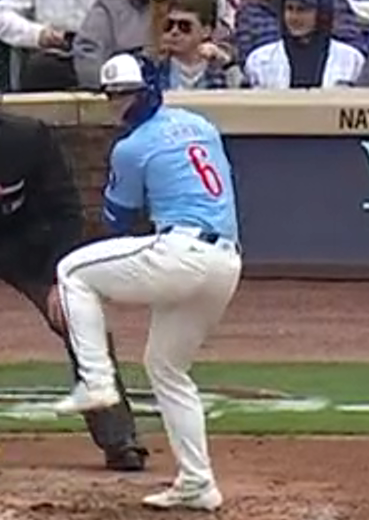
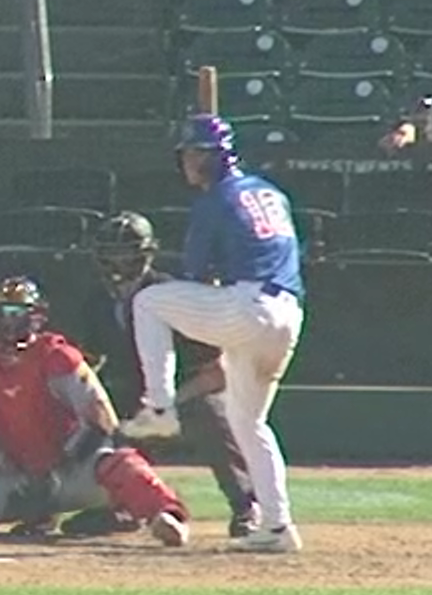
Sadly, the I-Cubs feed is not shot in HD, so it’s a bit fuzzy, but you can kind of see it if you’re looking. There are two small changes here. The first is that he appears, during his leg kick, to remain a bit more upright on the top half. He’s staying taller. The second is that the front shoulder is slightly less closed-off, and less tucked in. It’s hard to capture in the video above, as the feed cuts very quickly from the side-view to the pitch, but you can really see it on his first home run of the day, below. This home run was also on a pitch on the outer third—a fastball that was actually a ball, according to Statcast. Shaw hit a home run to right on this pitch, as well.
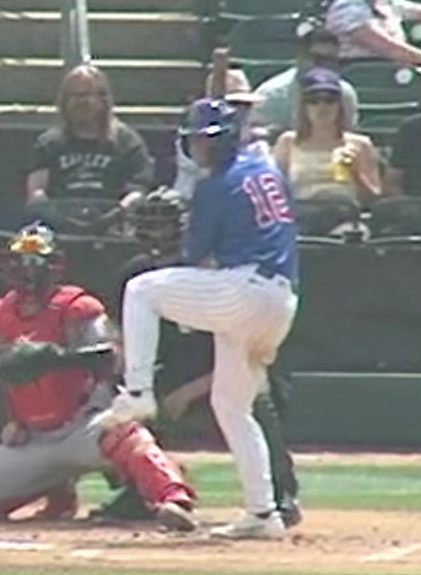
Once again, note that the top half remains taller and he’s less hunched, but also the front shoulder is in a slightly more open position. What this allows him to do is clear through his top half better and stay through the ball. With a closed-off and tucked-in front shoulder and elbow, it becomes just a bit more difficult to clear on the swing; his own body was acting as a barrier. That forced extra rotation and for him to pull off the ball. With his home runs, and with his shoulder in a slightly more open position to begin with, he wasn’t fighting his own top half anymore. Instead, he gave himself a little added flexibility. Look at the point of contact between the two swings. Remember, these are both pitches in the same general area.
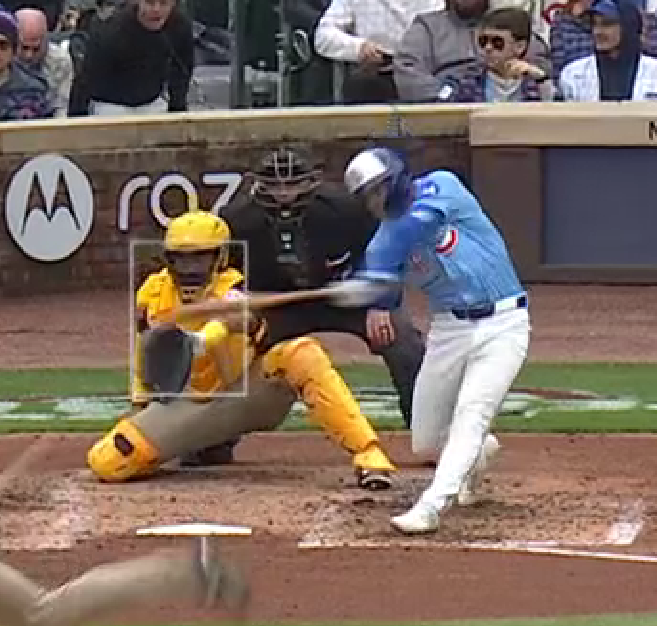
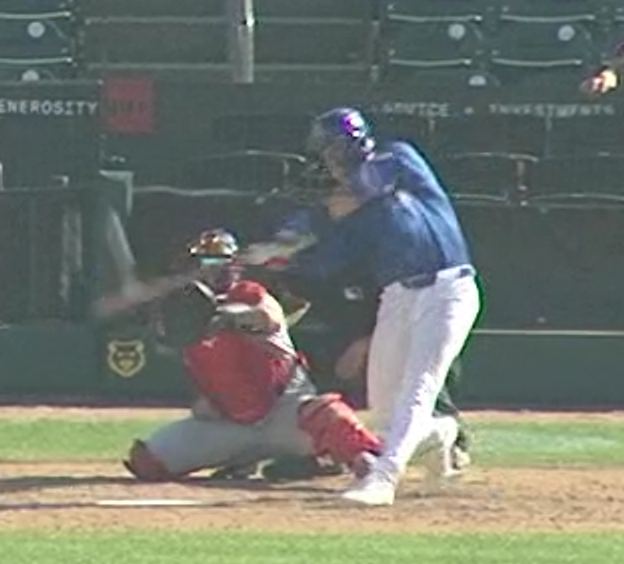
You can also take note of where Shaw’s back side (and where his top half, in general) is. He hits a ground ball against the Padres for a few reasons. His back side isn’t able to stay tall and lift the ball, and his entire top half has to rotate more to clear his closed-off front shoulder. On the home run, he’s able to stay “outside-in,” as an old-hitting coach would say. He doesn’t rely as much on rotating his shoulders (or at least, that rotation occurs more organically), and his backside stays in a position where he can lift the ball.
This represents a much more subtle change than eliminating a leg kick or changing his stance; baseball is literally a game of inches. Those inches are the difference between a 100-MPH home run to right-center field and a weak topper to second base. They’re also how a slump happens. When you’re just an inch or two off with your swing, it messes with everything. Not every fix requires a full swing overhaul. Funky can work, as long as the sum of the parts results in good contact.
Shaw’s swing looks much better. There are times in which he doesn’t use the big leg kick, and there are times he does. Friday night, one day after the two homers I highlighted above, Shaw hit two more home runs against the Saints again. This time, he didn’t use the kick on either of them. But his first home run was, once again, to the opposite field. It came off former top prospect Tyler Beede, on a cutter. And once again, note the upper body and point of contact:
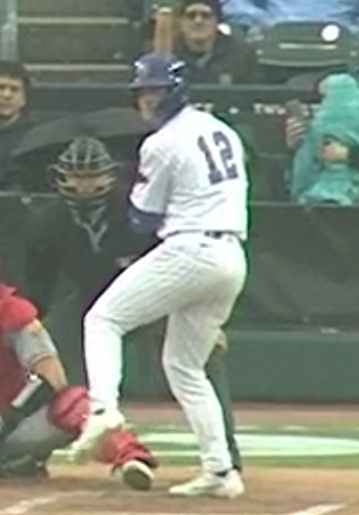
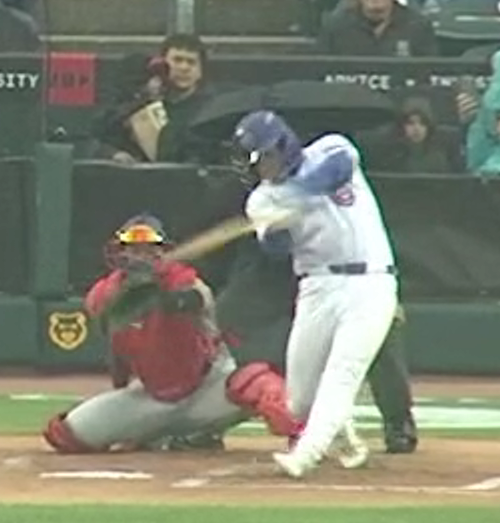
All of this is just a very long way to say; Matt Shaw’s swing is back—literally and figueatively. And with his swing back, it’s likely we see him back in Chicago sooner, rather than later. The swing feels fluid again, and he doesn’t look like he’s fighting himself, like he was earlier this year. I expect when he comes back, we’ll see a better run from the Cubs’ top position-player prospect, because of these very subtle changes.
What do you think of Matt Shaw’s changes? Do you think these will help the infielder hit better in his second go? When would you like to see him come back? Let us know in the comment section below!
Interested in learning more about the Chicago Cubs’ top prospects? Check out our comprehensive top prospects list that includes up-to-date stats, articles and videos about every prospect, scouting reports, and more!