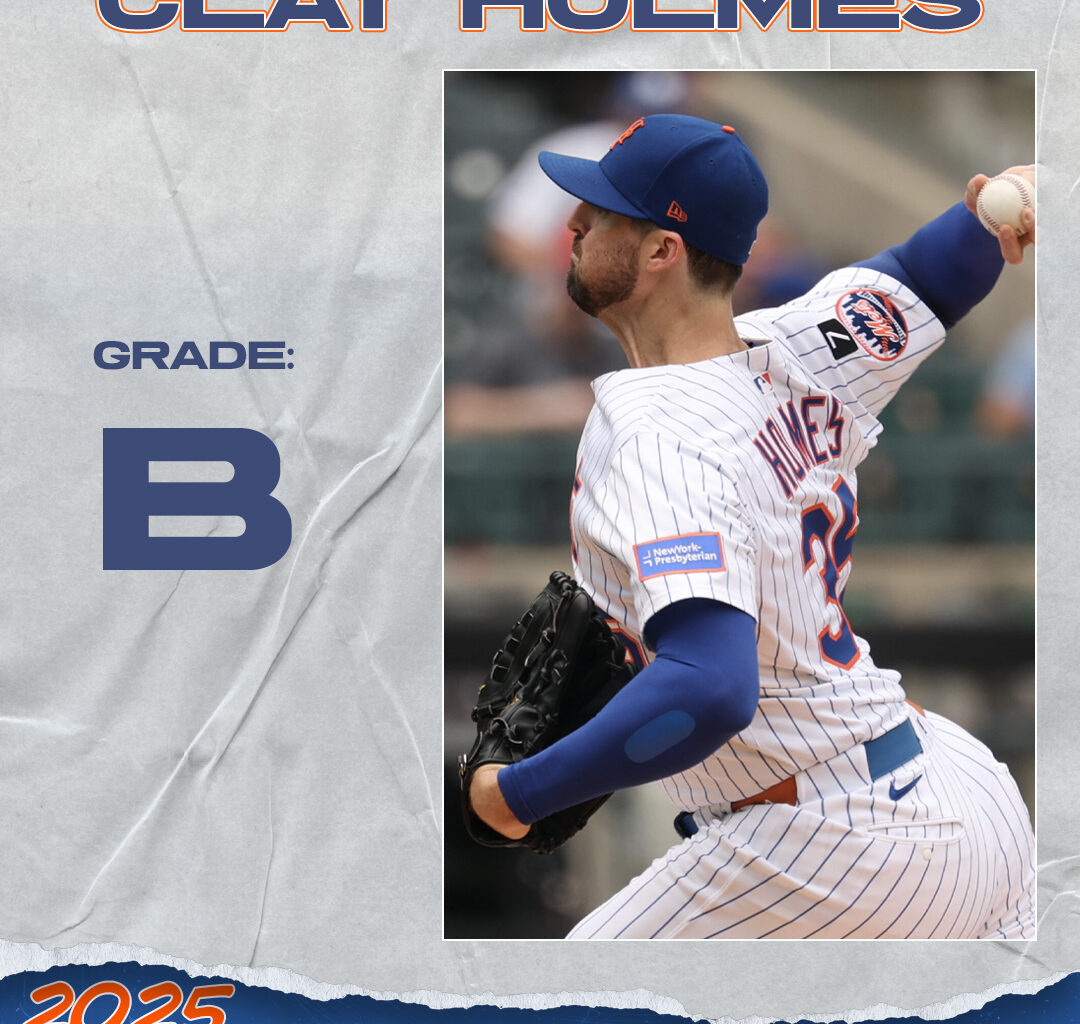
Player Data: Age: 32 (3/27/1993) B/T: R/R
Primary Stats: 33 G (31 Starts), 165 2/3 IP, 3.53 ERA, 1.304 WHIP, 12-8, 129 K, 66 BB
Advanced Stats: 114 ERA+, 18.2% K%, 9.3% BB%, 4.39 xERA, 4.11 FIP, 4.25 xFIP, 1.9 fWAR, 2.0 bWAR
2025 Salary: $13 million
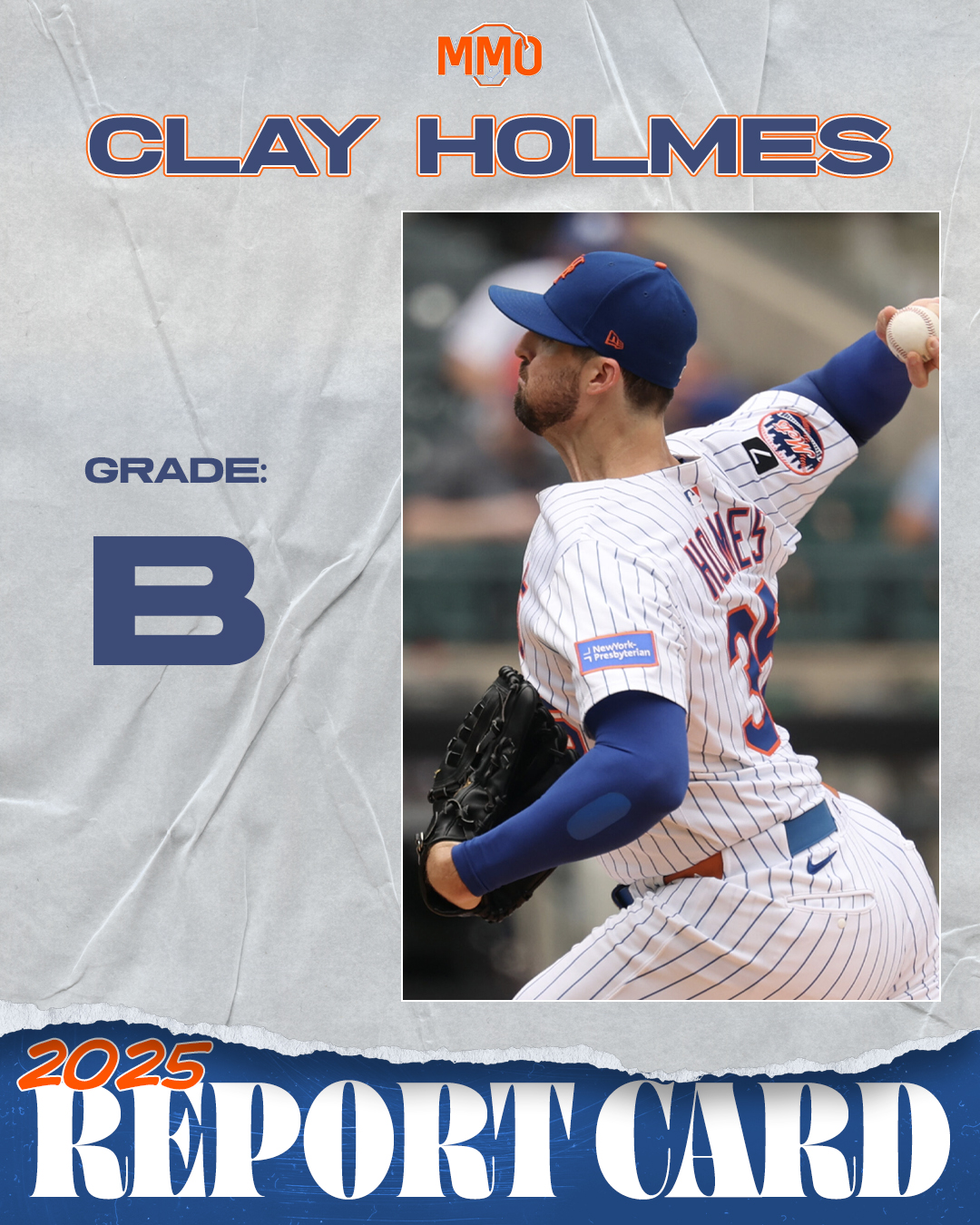
Grade: B
2025 Review
After spending three seasons as the Yankees’ closer, Clay Holmes signed a three-year contract with the Mets in December to be a starter for the first time since 2018. There were many questions surrounding this move, but Holmes impressed in spring training, earning the Opening Day start in Houston. While his overall numbers may not be those of an ace, Holmes gave the Mets more than they could’ve asked for in his first full season as a starter in a year when starting pitching was the team’s biggest weakness.
Like most of the Mets’ roster, Holmes battled some inconsistency during the season. He had a 2.99 ERA after his start on July 2, but over his next 13 starts, he posted a 4.96 ERA, averaging under five innings per start. However, Holmes finished strong, allowing just an unearned run over 10 2/3 innings in his last three outings – including six innings of one-hit ball against the Marlins to keep the Mets alive in the 161st game of the season.
Holmes battled command issues at times, with his walk rate jumping to 9.3%, his highest mark since 2021. His strikeout rate fell to 18.2%, the lowest he’s had over a full season. While Holmes’ groundball rate also decreased, his 55.1% rate led the team’s qualified pitchers, and only David Peterson had a lower fly-ball rate than Holmes’ 18.2% mark. Holmes also did a good job at limiting damage, as opponents batted just .185 with a .523 OPS with runners in scoring position.
As expected, Holmes’ velocity dropped across the board, but that didn’t mean his pitches were necessarily less effective. His sinker improved from a negative-3 run value to a plus-10, and his opponents’ batting average and slugging percentage both dropped by over 30 points. Holmes added in a change-up for the first time, which produced solid results, generating a 29.9% whiff rate and a plus-2 run value. Holmes’ best pitch on a rate basis was his cutter, which recorded a plus-4 run value despite being used just 8.3% of the time, and opponents had just a .173 xBA and .232 xSLG against it. On the flip side, Holmes’ slider got hit very hard, to the tune of a .611 xSLG and six of the 14 homers he allowed.
Perhaps Holmes’ most valuable trait was his availability. Holmes led the team with 31 starts and made two relief appearances late in the season. His 165 2/3 innings were second on the team, only trailing Peterson, and he threw at least five innings in 23 of his 31 starts, which is nothing to scoff at for a pitcher in his first full season as a starter. In a starting rotation mired with injuries, Holmes took the ball every fifth (or sixth) day, never once landing on the injured list or having his spot in the rotation skipped.
2026 Preview
The Mets’ starting rotation may look very different in 2026, but Holmes appears to have done enough to keep his spot. He’s entering the second year of his contract and in an era when teams shell out large amounts of money for starting pitchers, Holmes’ $13 million annual salary looks like a bargain. Even if Holmes’ numbers regress a little bit, he slots in nicely as a middle to back-end rotation starter, and if necessary, he can become a high-leverage reliever like he was in the Bronx.