
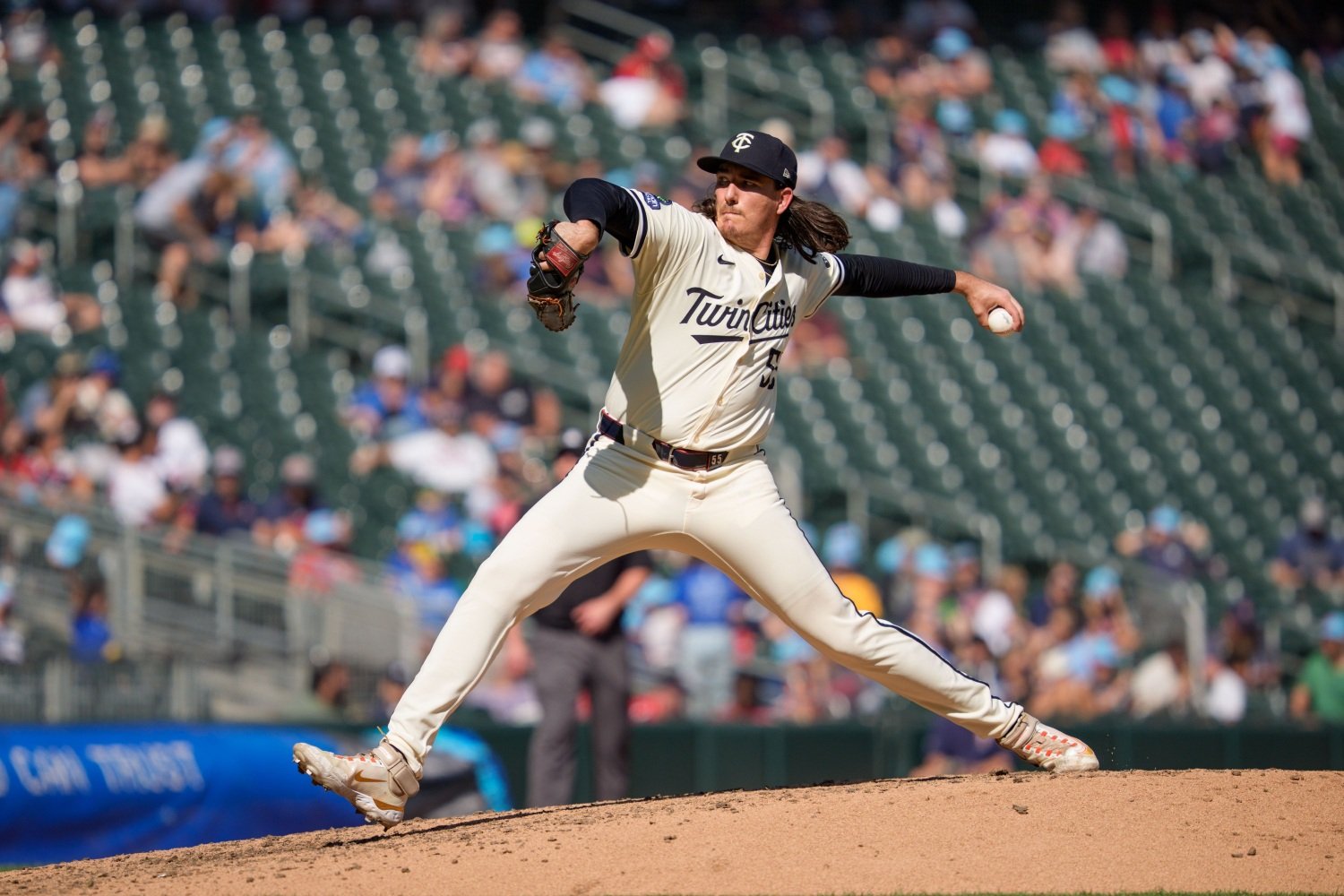
Don’t lose sight of this: Being a good relief pitcher in the major leagues is hard. That said, it’s not as hard as being a good starting pitcher, or a good shortstop or a good cleanup hitter. Relievers are role players. They enjoy the advantages of playing at a higher baseline level of effort, relative to the absolute maximum they can do, and of being sheltered (most of the time) from the worst matchups they might face if their manager weren’t carefully selecting the situations in which they’re used.
You really just need one good thing, to be a good reliever. You have to have a calling card. That’s not to say that overspecialization is advisable. In the age of the short start and the three-batter minimum rule, it pays to be versatile and durable. Still, because relievers play in such short bursts and under such favorable conditions, having one really good trait can be enough to keep you around. It might even be enough to make you a positive contributor on a winning club.
Kody Funderburk entered 2025, though, without that one thing. He was an up-and-down relief arm in 2024, used more or less as cannon fodder. The Twins didn’t view him as a well-built weapon against lefties, but nor has he ever been a reverse-splits guy. He does get lots of ground balls, but because he’s generally struggled with walks and doesn’t miss bats, he was always a bit too much of a risk to bring into a high-leverage situation, even to get a lefty batter out or to induce a double play. He was missing the kind of ingredient that cements a player in the majors, and keeps them off the shuttle to Triple A.
Over the summer, though, he found it. Funderburk slightly lowered his arm angle and his release point this season. As a result of the mechanical tweak, he achieved more extension at release, which added a half-tick to his fastball. The change in angles also made it easier for him to keep his primarily east-west arsenal on the plate. Fully 53% of his pitches this year were in the strike zone, according to Statcast; that’s up from just over 50% in 2024.
.jpeg.57ad63a1eff208d0c6b33464d7c4f9d1.jpeg)
He still walked batters at about the same rate, and there’s work left to do with his sequencing to better convert the increase in strikes thrown to a decrease in free passes, but Funderburk no longer found himself working from behind in so many counts. He kept the ball in the park much better, because hitters couldn’t sit on his cutter, and indeed, the lower angle opened up much greater usage of his sinker and changeup, each of which helped him seek grounders.
Were Funderburk pitching in front of a better defense, he’d probably have put up even better numbers this season. As it was, he finished the campaign with a 3.51 ERA in 41 innings for the major-league team, most of them pitched after the trade deadline fire sale. That’s sustainable. In fact, he can improve upon it next year. The Twins should pencil him into their relief mix heading into the offseason, which is a concrete improvement from where he slotted into their depth chart as recently as three months ago.
It would be good, I think, to visualize this arm angle change in a couple of ways more concrete than that numerical chart. First, let’s compare the arsenal Funderburk threw to lefties in 2024 with that for 2024, by looking at an animation of his pitch mix coming toward a lefty from an imagined lefty’s vantage point.
.png.de33120581416150f6945cff9c4f66c6.png)
Slightly reducing the arm angle actually makes the cutter separate from his other offerings more than it did last year, for Funderburk, but that only sounds like a bad thing. It’s actually exactly what he needed. Getting around the cutter a bit more allows him to drive it to the outside edge against lefties, while his sinker runs nicely back to the inside corner. He emphasized his slider more this year, at the expense of his sweeper. That sounds like a distinction without a difference, but it’s not. Firstly, as he lowered his arm angle and brought his sinker forward as his primary fastball, Funderburk naturally went to the breaking ball that better tunnels with the sinker. His sweeper, as you can see in the upper half of the image above, tunnels better with the cutter; he’s more deceptive with the slider taking over.
Secondly, though, making the slider a primary weapon to lefties also made it easier to maintain that pitch and execute it consistently to righties. One challenge for a reliever is that their arsenal needs to overlap, from a matchup perspective, more than a starter’s does. A starter who has three pitches that work against lefties and three that work against righties will get enough reps and enough time between starts to hone all of those offerings. A reliever has to be ready at all times, which usually means keeping the repertoire streamlined and sharp for whoever digs into the box.
.png.1907f8f7315ea083e3773a2e014f9bec.png)
Here, you can really see why the sinker and cutter disguised one another better in 2025 than in 2024. The sweeper is turning into more of a curve, a pitch thrown ball-to-strike to catch the batter off-guard and steal a call. The slider and changeup stay on plane with the sinker and cutter longer, from a righty’s perspective, despite the lower slot.
Here’s a glimpse of the change in video form. First, watch Funderburk throw a sinker to a lefty in 2024.
NjQxdllfWGw0TUFRPT1fQjFWWEFRWU5VQW9BWFZBQ1ZBQUFBUVZlQUFBQ0JWTUFBbFlDVWxBSEJsSmRWUU5R.mp4
That’s not a bad way to shoot for that corner, but Funderburk decidedly missed. Now, consider the way he went after another lefty, in August.
UUEyclZfWGw0TUFRPT1fQndOU1ZsUUdWUVVBRHdkV1h3QUhVd1ZUQUZrRlZBVUFCbFJYQkFWVUIxVlRBVmRX.mp4
Though neither the velocity nor the simple movement metrics on that sinker changed much this year, it’s easy to see why Funderburk now likes it enough to be throwing it more often. It’s livelier. It’s also more likely to find the zone. Let’s freeze on the release point of each of those pitches.

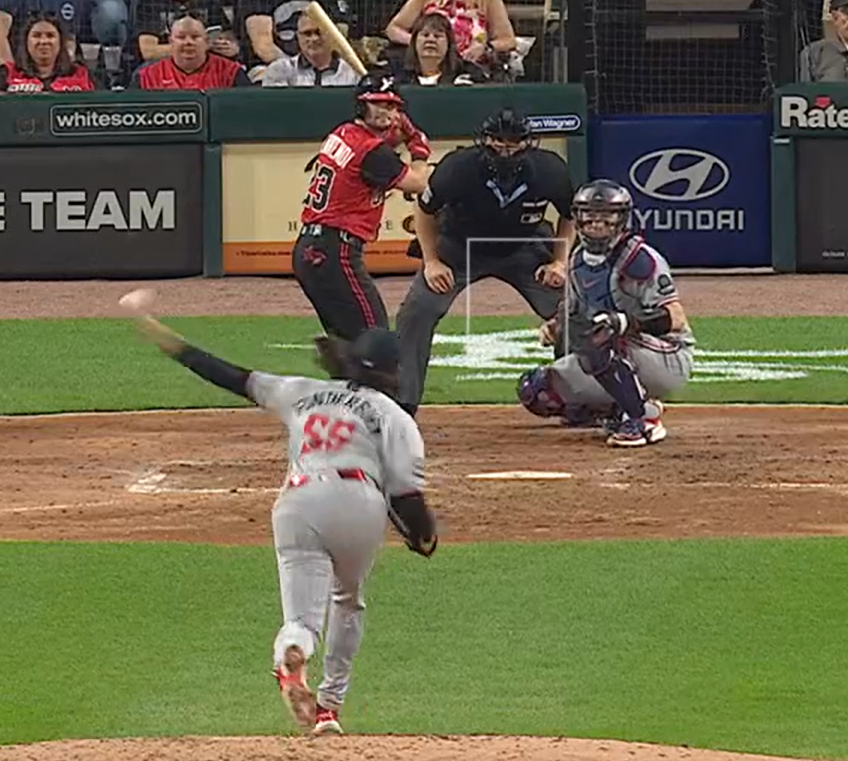
You can see the difference, in the angle of the arm relative to the shoulder. It’s much harder to see from this angle, but Funderburk is also getting a bit deeper into his legs as he flies down the mound. Thence comes his better extension and the added deception of a change in release angle.
Funderburk is not a future closer. His upside looks something like what Caleb Thielbar gave the Twins for a few years. Until this season, though, Funderburk looked like he might never get off the roster bubble. Changing his mechanics (and letting that inform changes in approach) got him off that bubble. It was a small thing, but it became a bigger one for both the player and the team after the July shakeup. In 2026, it might feel like a fairly big thing to have done.