
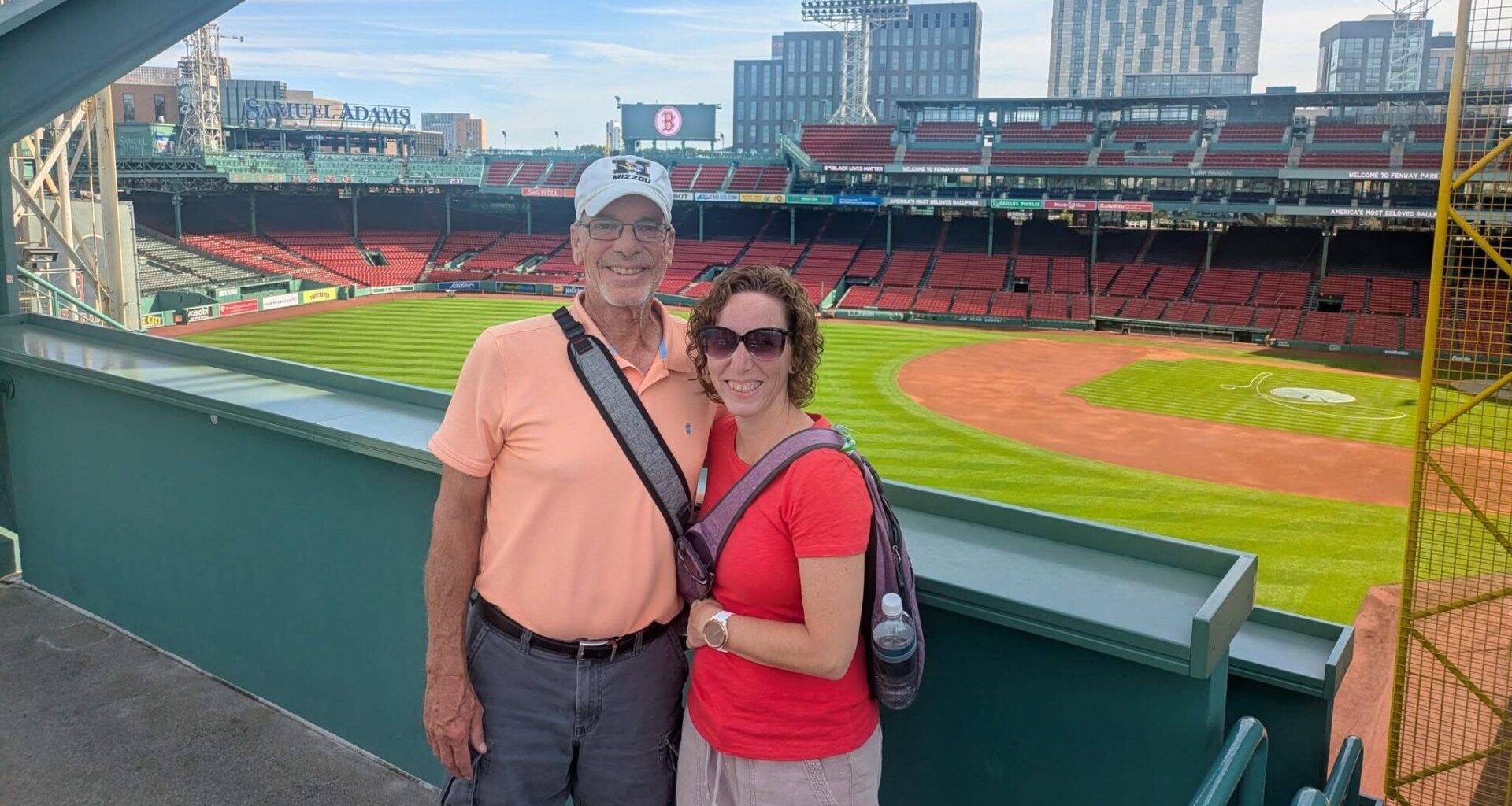

BOSTON — Every baseball fan has a bucket list.
I have been fortunate to witness 11 World Series games in person — two as a young fan in 1967 and 1968 and nine as a sportswriter in the 1980s, all in St. Louis.
Moreover, I was in the right field auxiliary press box — sitting alongside a young Chris Berman of then-fledgling ESPN — for the Ozzie Smith “Go crazy folks, go crazy” moment in the 1985 National League Championship Series against the Dodgers.
I have been both a spectator and working press at Wrigley Field. Once, while traveling for Opening Day with Jeff Dorsey, then doing a morning show for WGEM radio, I wandered the entire interior of the park to the sounds of the grounds crew preparing for that afternoon’s game.
I took in a game at old Yankee Stadium — “The House that Ruth Built — during its final season in 2008 and days later made the pilgrimage upstate to the National Baseball Hall of Fame and Museum in Cooperstown, N.Y.
I had the privilege of spending a few hours with my boyhood idol, Cardinals pitcher Bob Gibson, during a banquet in 1980, a year before he was elected to the Hall of Fame. There were impromptu chats with Stan Musial, Jack Buck, Mike Shannon and others over the years at Busch Stadium.
I have been lucky. And now I can check off another item.
Our oldest daughter, Jessica, took me to Boston for four days around my birthday in late September. We walked the entire Freedom Trail over parts of two days, soaking in the city’s historical sites, and ventured through neighborhoods to get a taste of their culture and cuisine.
We spent three hours at the John F. Kennedy Presidential Library and Museum and took a tour of TD Garden, home of my beloved Celtics (and their NBA-record 18 championship banners) and The Sports Museum, which features a half mile of assorted exhibits.
There also was an obligatory visit to Cheers.
The most anticipated stop on the agenda, however, was to take in the regular-season finale between the Boston Red Sox and Detroit Tigers at Fenway Park, the oldest active ballpark in Major League Baseball.
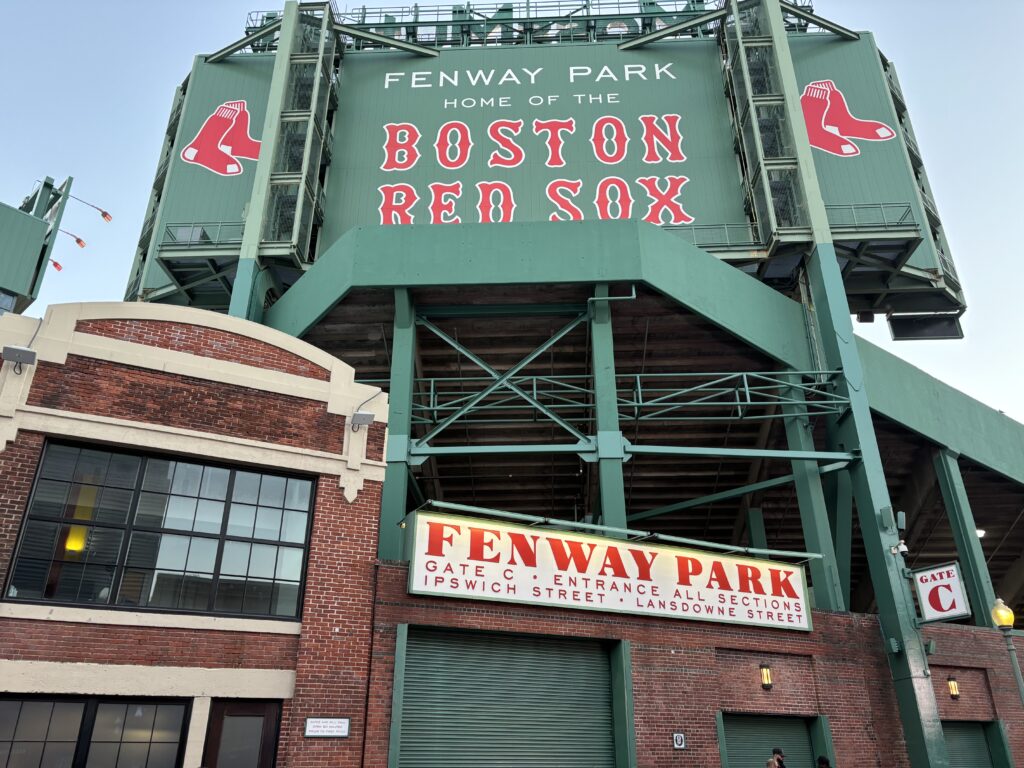 Here is the view outside Fenway Park in Boston. | Don Crim photo
The first game was played there on April 20, 1912, days after the Titanic sank. The cozy park was built on a relatively small piece of land surrounded by Brookline Avenue, Jersey Street, Van Ness Street and Lansdowne Street in Boston’s Fenway neighborhood, the reason for its asymmetrical layout.
The area features buildings of similar height and architecture, so the park blends in with its surroundings.
Jersey Street runs along the first base side of the park and is cordoned off on game days and becomes Yawkey Way in honor of longtime owners Tom and Joan Yawkey. It is jammed with various concessions, live music, souvenir shops and a man on stilts wearing a Red Sox uniform — the back of the jersey reads Billy 1 1/2 — taking selfies with fans.
We entered Gate D and into the narrow, bustling lower concourse. We each dined on a combo meal consisting of a hamburger, fries and a drink. I opted for the souvenir cup, which upped the total price another $3 to $45 and change.
The first thing you notice once seeing the field is the plush green grass. Fenway’s notoriously small foul territory also creates an intimate atmosphere.
Our seats were 24 rows from the field, just to the right of home plate. They provided a panoramic view of the 37-foot-high Green Monster and hand-operated scoreboard in left field, the quirky “Triangle” region with its jewel box shape in center and Pesky’s Pole down the right field line.
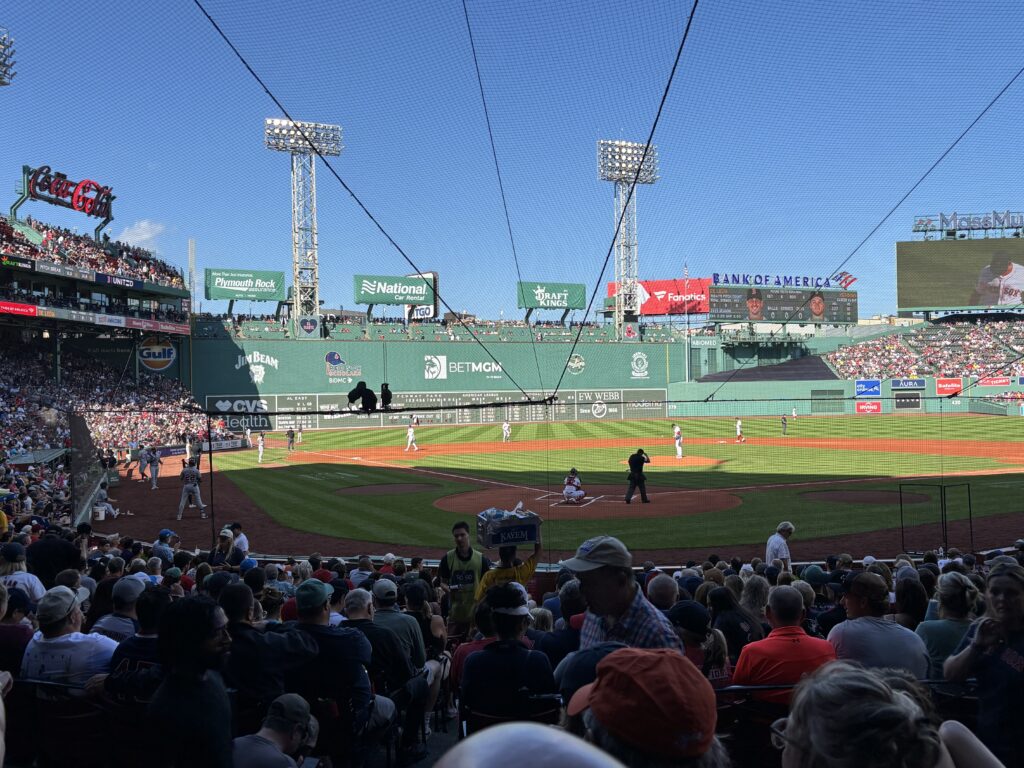 This is the view of Fenway Park from the seats Muddy River Sports Senior Columnist Don Crim and his family enjoyed during the Boston Red Sox’s regular-season finale against the Detroit Tigers. | Don Crim photo
Pesky’s Pole is named after longtime Red Sox shortstop Johnny Pesky. It’s officially 302 feet from home plate. If a fly ball can wrap itself around the pole, it’s one of the cheapest home runs in baseball.
Lore has it, though, that it really measures only 298 feet, and when MLB made the edict requiring all outfield dimensions be no shorter than 300 feet, workers simply used a brush and a little paint to alter the footage.
Fenway is the fourth-smallest stadium by seating capacity in baseball (37,755), and it has differed between day and night games since 2003. That’s when the team installed a tarp that covers center field seats during day games to provide a better backdrop for batters, reducing the capacity by about 450 seats.
Aside from the action, we watched a two-man crew sprint out a door at the base of the Green Monster with a ladder between innings to manually update scores for other American and National League games.
We were in line for two ice creams served in miniature Red Sox helmets ($17.70, with tip) while “Take Me Out to the Ballgame” was being played in the middle of the seventh inning.
We listened as the crowd loudly sang along to Neil Diamond’s “Sweet Caroline” in the middle of the eighth, punctuated by the lyrics “So good, so good, so good,” an every-game tradition since 2002
That, of course, was immediately followed by chants of “Yankees suck, Yankees suck.”
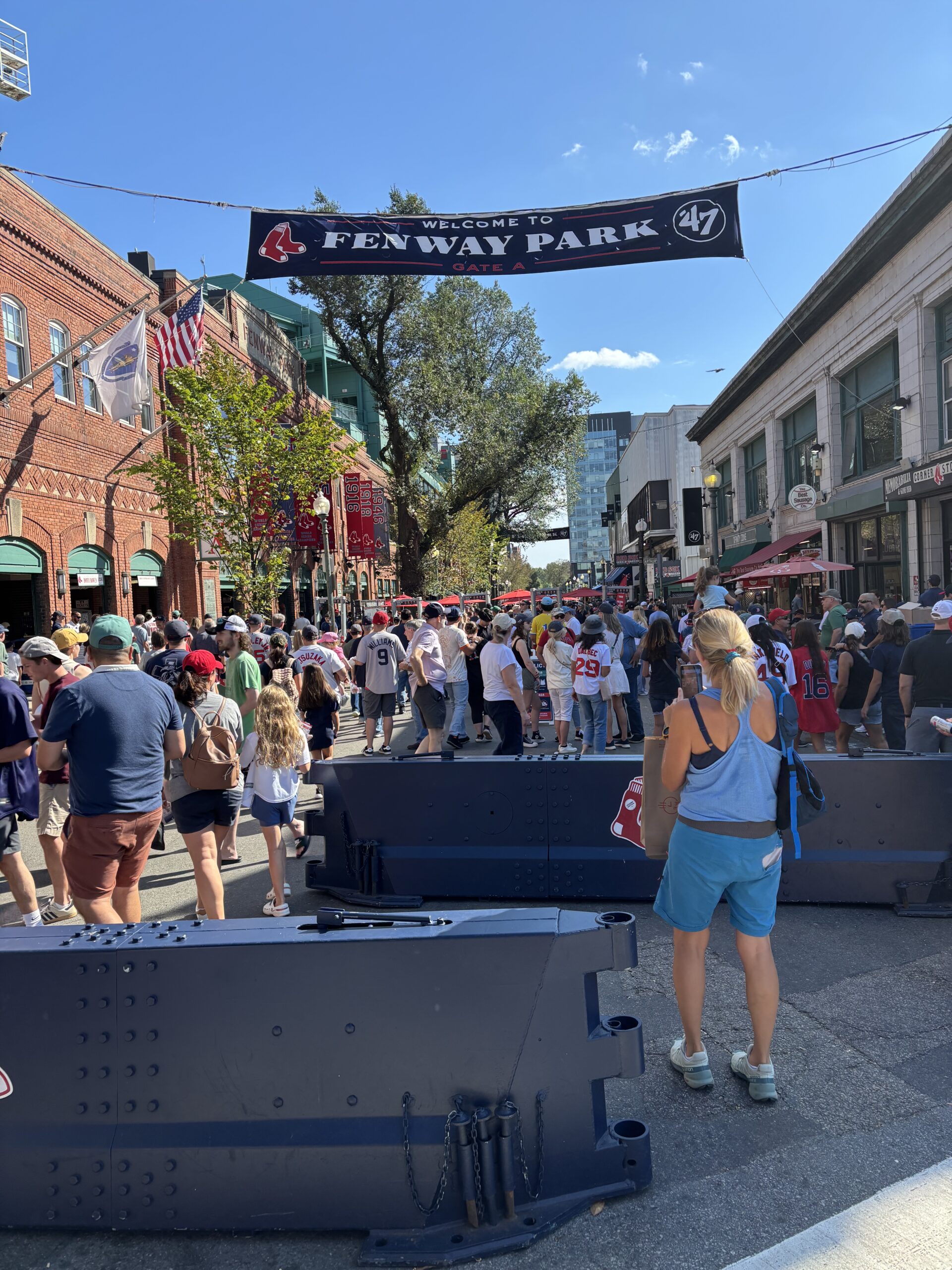
Yawkey Way
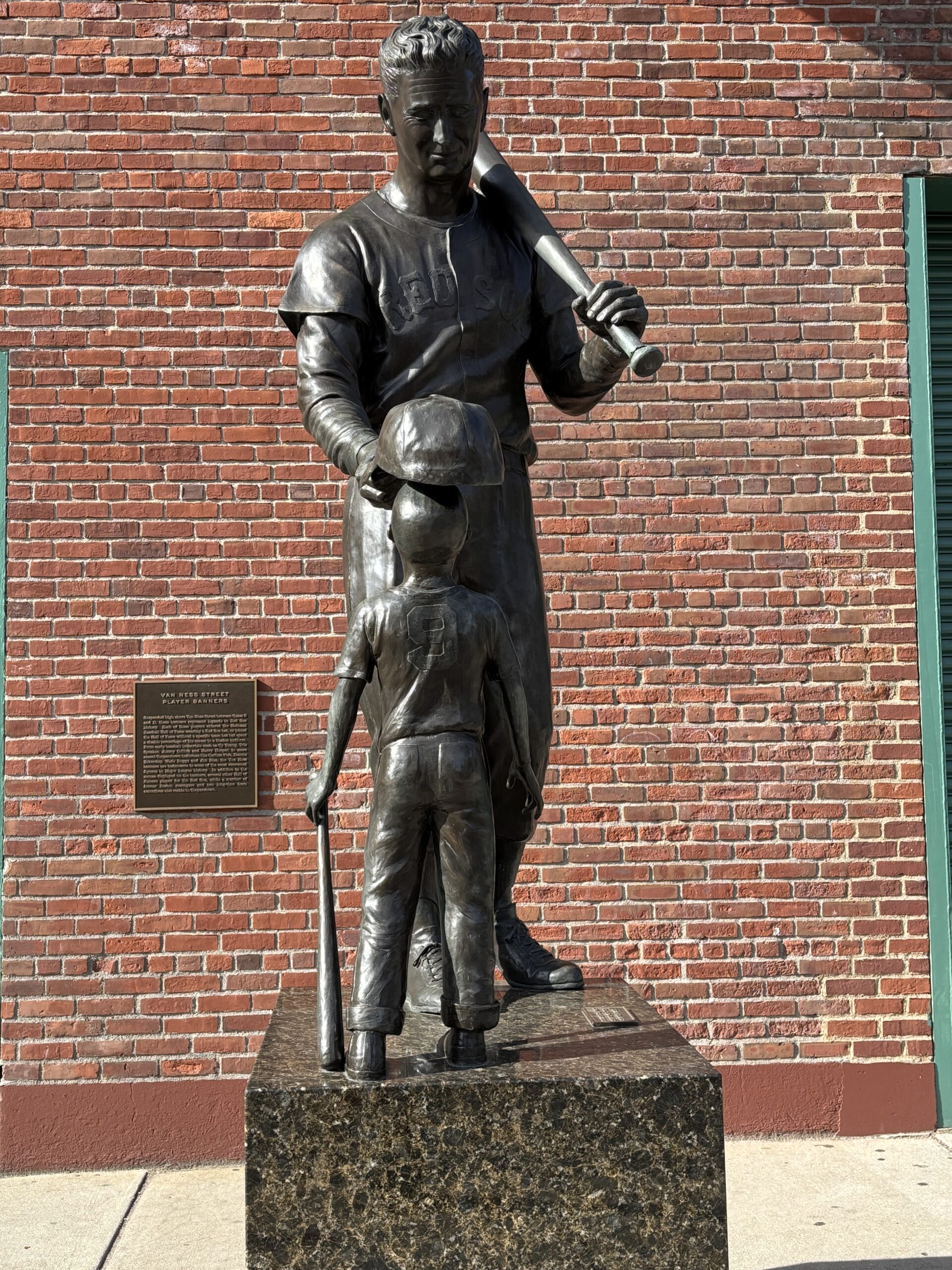
Ted Williams statue
We strolled down Lansdowne Street behind the Green Monster after the game, an area bustling with entertainment. Following a tip from Quincy’s own Charlie Vogel, we ducked into the “Bleacher Bar,” which features a screened, field level view of Fenway from center field.
We came across three statues behind the stadium along Van Ness Street. One is Ted Williams and a small boy, a second Carl Yazstremski. The third is called “The Teammates.” It features Red Sox legends Williams, Pesky, Bobby Doerr and Dom DiMaggio, all of whom hailed from the West Coast and played together for seven seasons.
We returned the next day for a 90-minute guided tour of Fenway.
We sat in the wooden grandstand seats that still exist in the Loge section near the left field corner.
We walked atop the Green Monster, which was added in 1934. It was covered with advertising until 1947, when it received a nice coat of Fen Green paint and a local journalist dubbed it the Green Monster — or “Monstah,” as it is pronounced in New England.
I sat in one of the 269 seats atop the wall, next to the foul pole made famous by Carlton Fisk in 1975 when he waved a fly ball fair for a home run in the bottom of the 12th inning of Game 6 of the 1975 World Series.
It has since been dubbed the “Fisk Pole,” meaning Fenway is the only ballpark in the majors with two named foul poles. Both are covered with names etched by fans.
We learned the Yawkeys inscribed their initials on the Green Monster in Morse code on the white strip under “American League” where out-of-town scores are posted.
At the time the park was built, Massachusetts law prevented professional games being played on Sundays within 1,000 feet of a church, which Fenway was. That rule eventually was lifted and the Red Sox played their first Sunday game at Fenway on July 3, 1932.
We sat in MLB’s largest press box, dedicated to legendary baseball writer Peter Gammons. From there we could see the lone red seat amidst a sea of Dartmouth Green in the right field bleachers (Section 42, Row 37, Seat 21). It signifies the longest home run ever hit in Fenway, a 502-foot blast by Williams on June 9, 1946.
We saw a rooftop farm that grows vegetables. Two-thirds of the crop is used in park concessions and the remaining third is donated to a local food bank.
At the conclusion of the tour, we strolled through a mini museum in a nondescript area just above Gate D that features dozens of artifacts and exhibits, including baseballs signed by players on every World Series winning team. Ozzie Smith’s signature was front and center on the 1982 Cardinals ball.
There were glass exhibits of lockers featuring memorabilia of the 10 players who have had their numbers retired, a list of the team’s Cy Young Award winners and bats from each of Boston’s batting champions.
There were photos of Fenway Park through the years and actual stadium seats since 1912. (The first was a simple wooden chair.)
There’s also a bat from Babe Ruth, who starred as a pitcher and outfielder for the Red Sox before being shipped to the hated Yankees in 1920, prompting the “Curse of the Bambino.” The Red Sox won the World Series four times between 1912-18, but then not again until 86 years later in 2004.
Fenway calls itself “America’s most beloved ballpark,” and I can’t disagree.
Next on the bucket list is to watch a game in baseball’s third-oldest park, Dodger Stadium, which opened on April 10, 1962.
Maybe Steve Hawkins can use his California connections to help a fella out.
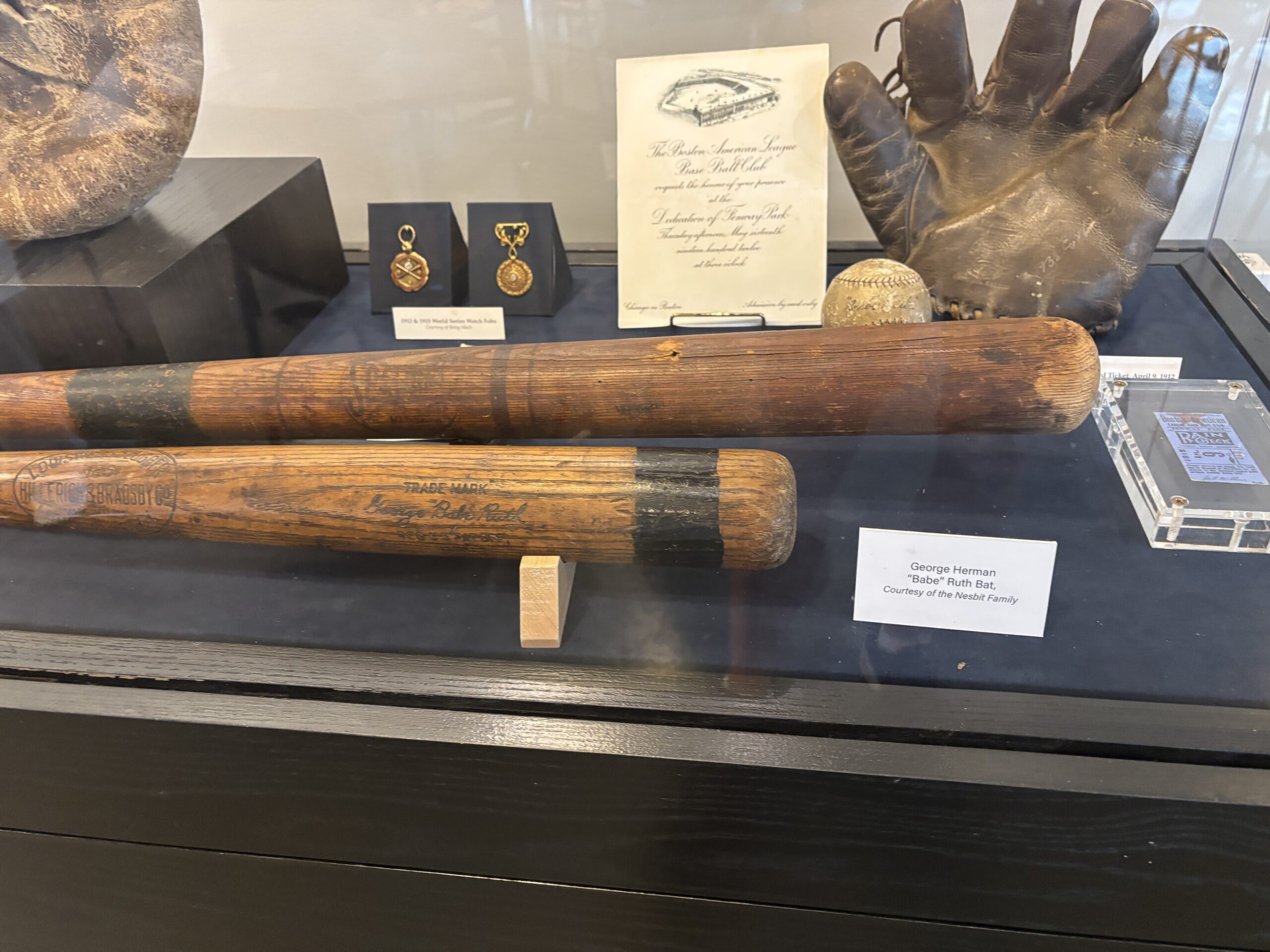
Babe Ruth’s bat
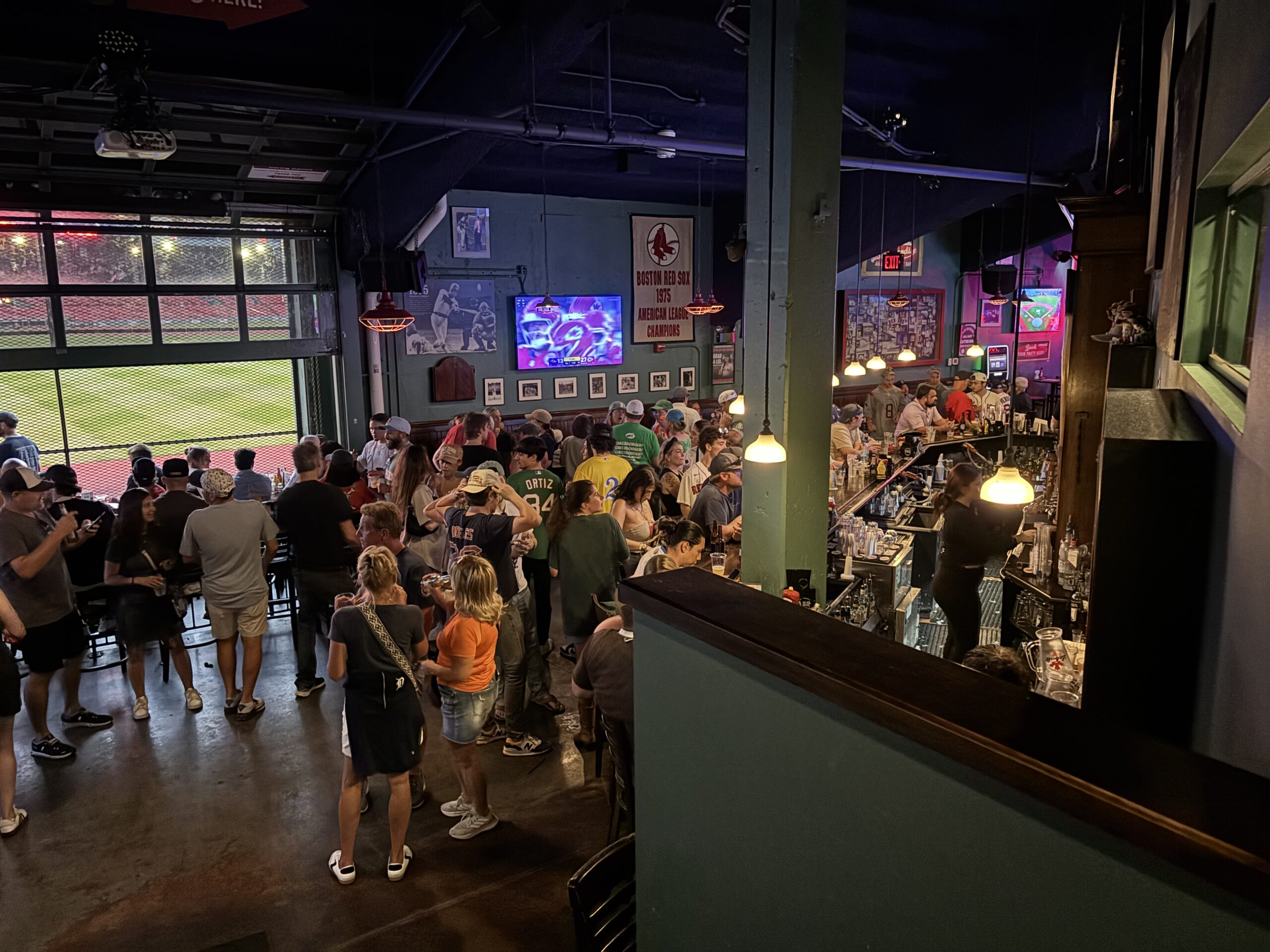
Bleacher Bar
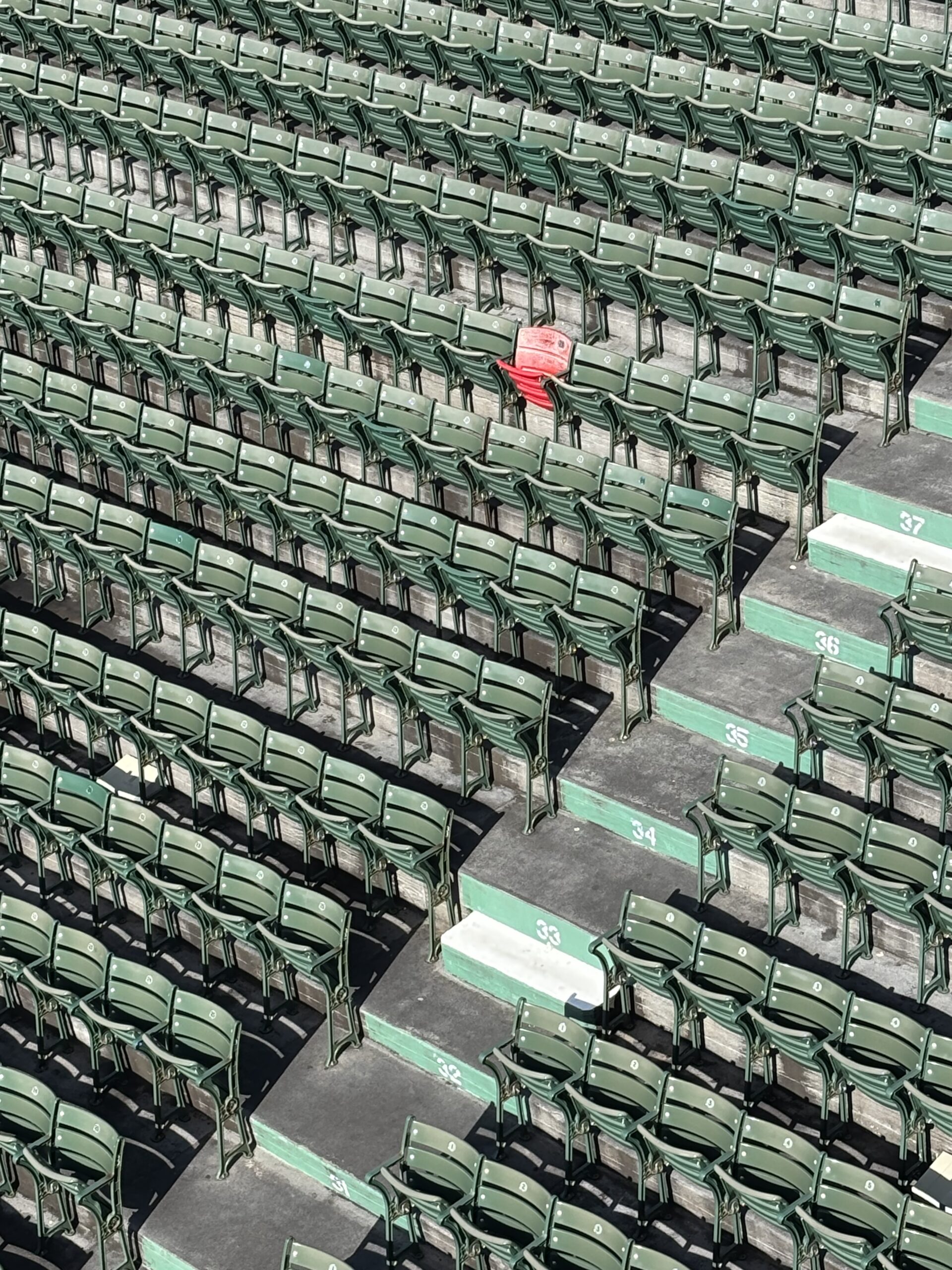
Seat of longest home run
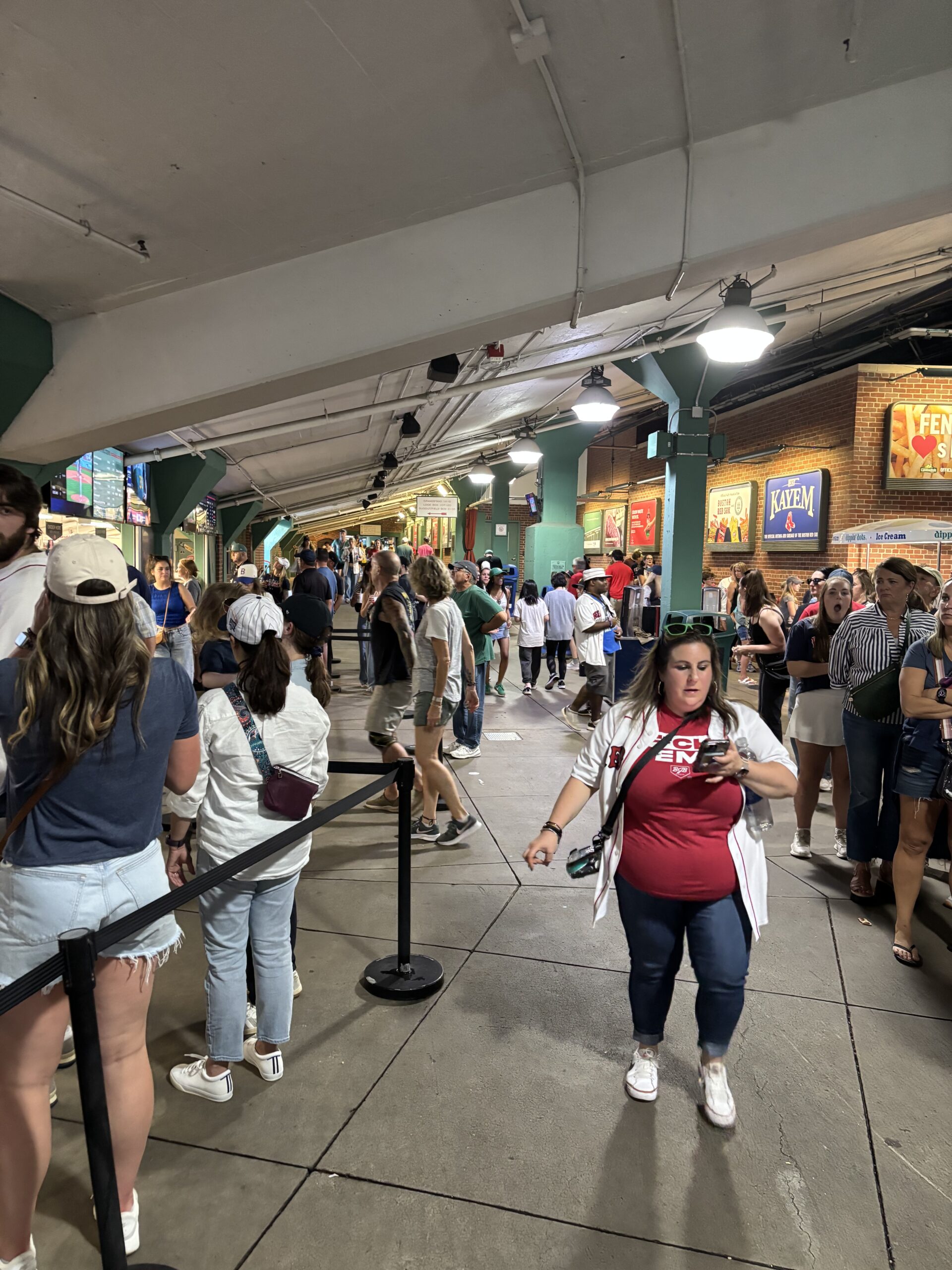
Fenway Park concourse
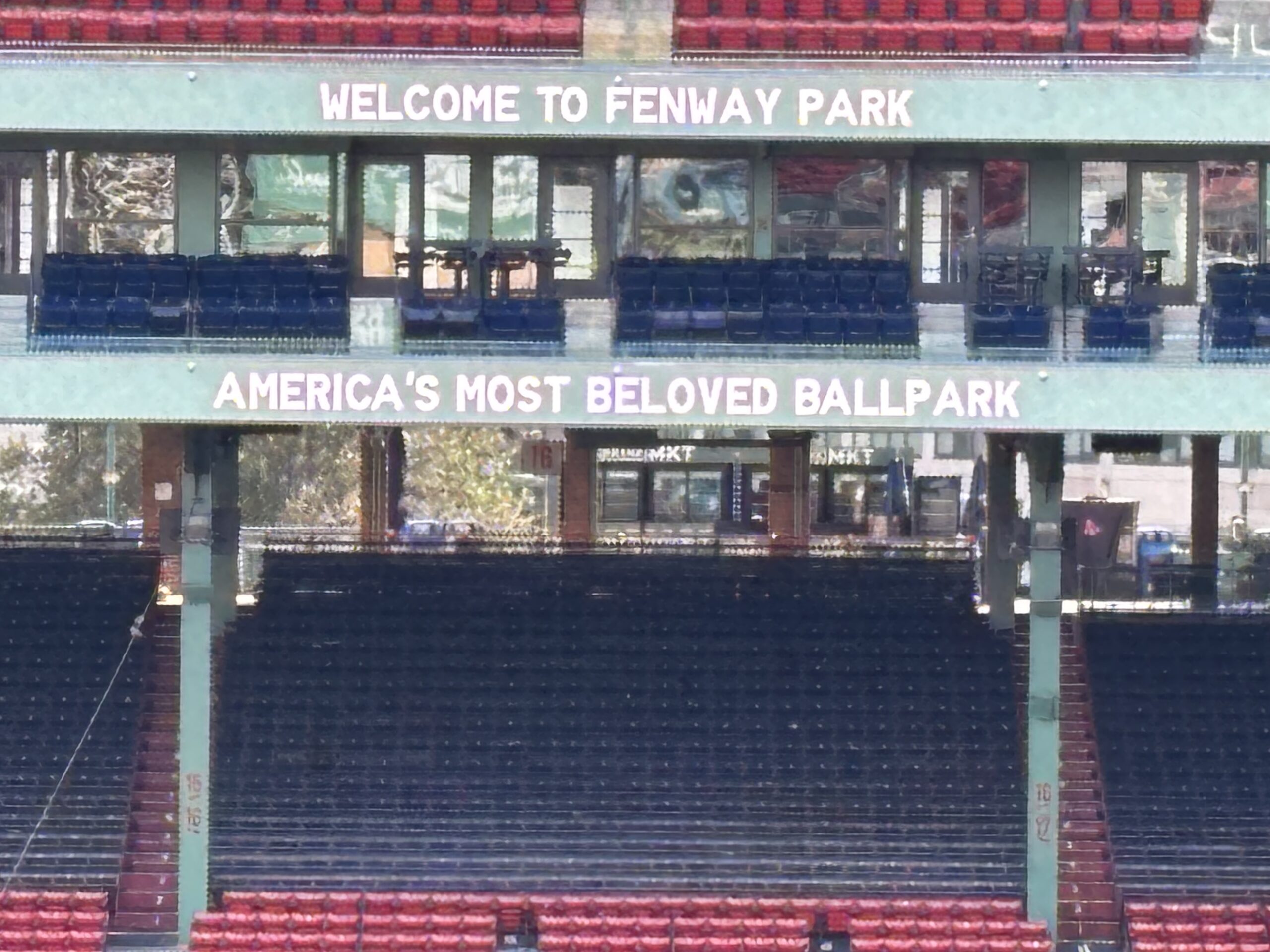
America’s Most Beloved Park