
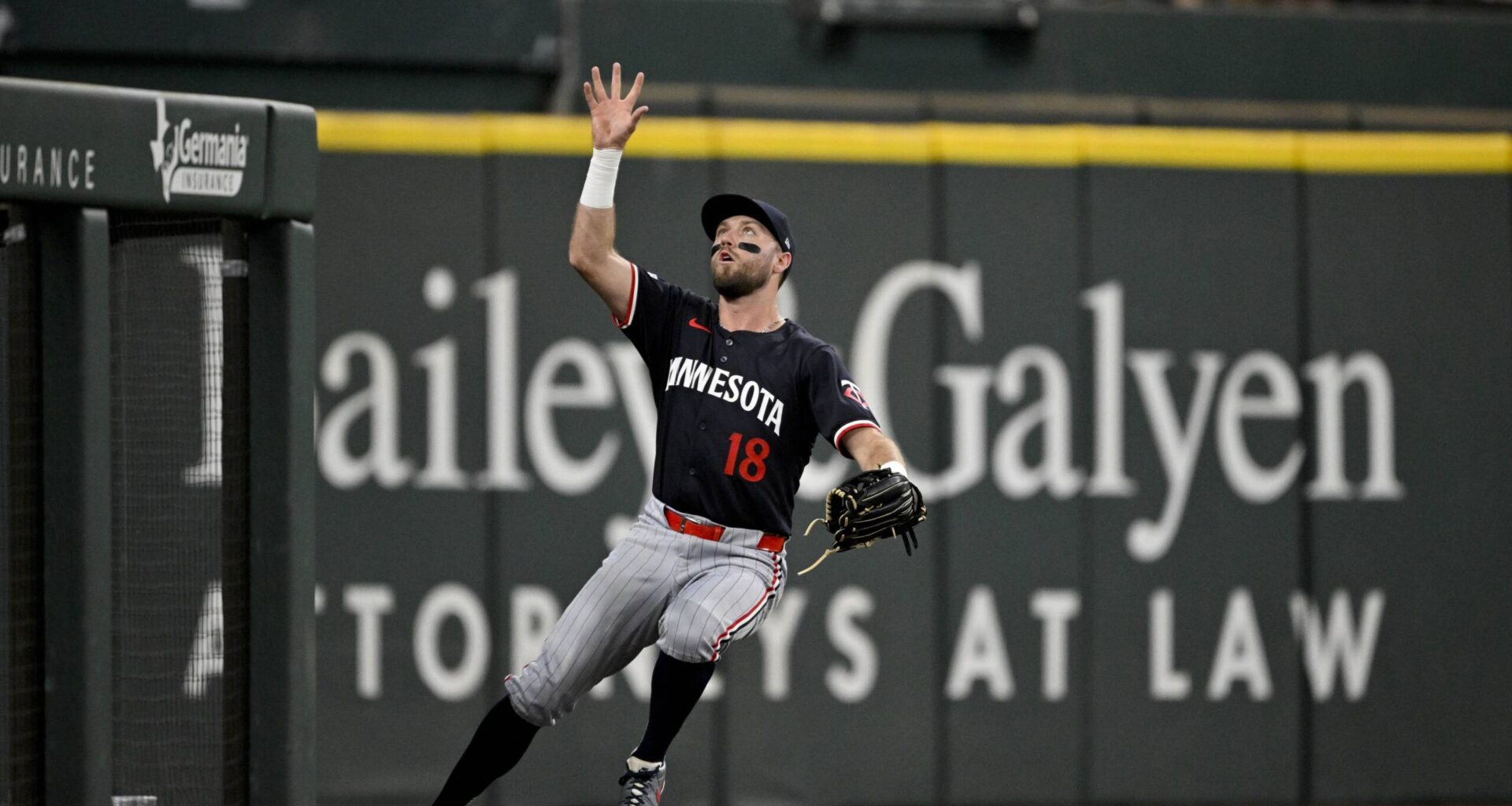
There weren’t too many pleasant surprises for the Minnesota Twins this year, but one of the positive outcomes was acquiring Kody Clemens off the waiver wire in late April.
Clemens had few expectations when he arrived in Minnesota. He went 0-for-7 with the Philadelphia Phillies before they cut him loose, and the Twins picked him up to fill a roster desperately in need of infield depth. However, by the end of May, Clemens was hitting .273/.351/.606 slash line with five home runs and 12 RBI over 75 plate appearances. It looked as though the Twins got the best bargain out of the bin.
He eventually regressed, posting a combined .196/.273/.439 slash line in June and July. Still, the Twins got 1.2 WAR from a career 0.0 WAR player. He set career highs in games played (119), home runs (19), RBI (52), OPS (.715), and almost every other category.
Add the career highs and the positive impact he had on his teammates in the clubhouse, and Clemens was Minnesota’s best waiver wire pickup this season. He projects to be their everyday first baseman on Opening Day 2026. However, that won’t be the best way to optimize Clemens as a player.
Kody Clemens’ power has translated to the majors, and the Twins can move him between four different positions on the field. He won’t be the same caliber of a utility player that Willi Castro was for the Twins. Still, he’s a fit for a bench utility/role, averaging 350 plate appearances a year instead of starting every day.
Clemens played in 49 of the 53 remaining games on the schedule following the fire sale and put up a .207/.264/.379 slash line with just seven home runs, 21 RBI, over 183 plate appearances. That was better than his performance in June and July, but still not the type of numbers any team wants from an everyday player.
Still, Clemens gave the Twins the kind of production they’ve been hoping for from Edouard Julien over the last two seasons. After hitting .263/.381/.459 with 16 home runs as a rookie, Julien has only slashed .208/.299/.324 with 11 home runs, 33 RBI, and 163 strikeouts over 509 plate appearances over the last two years.
Julien’s reduced production at the plate has led to a bench role for him. Given that Clemens’ 2025 numbers are only slightly better than Julien’s over the last two seasons, Clemens proved to be better suited for a bench or platoon role next season.
The Twins have roughly a $90 million payroll entering the 2026 season. If they can spend an additional $35 to $40 million in free agency this offseason, then they can easily afford a right-handed hitting first baseman who would be a good platoon alongside Clemens. Wilmer Flores, or switch-hitters Josh Bell and Carlos Santana, are all viable options.
Minnesota’s current bench depth for first base – Clemens, Julien, Mickey Gasper, and Aaron Sabato – will not be enough for it to compete next season. If the Twins have any money to spend on one of those free agent options, they need to pursue one of them.
The Twins will need more depth than they currently have on their major-league roster if they even want to come close to competing next season. Adding to the roster and moving Clemens into a utility role will help them deepen their lineup and allow them to field a competitive roster next season.
Clemens is a good player, but the Twins are not utilizing him to the best of his abilities if he’s starting every day at first base. Therefore, they must pursue a free-agent option and convert Clemens into a utility role, platooning between the right side of the infield and corner outfield positions.