
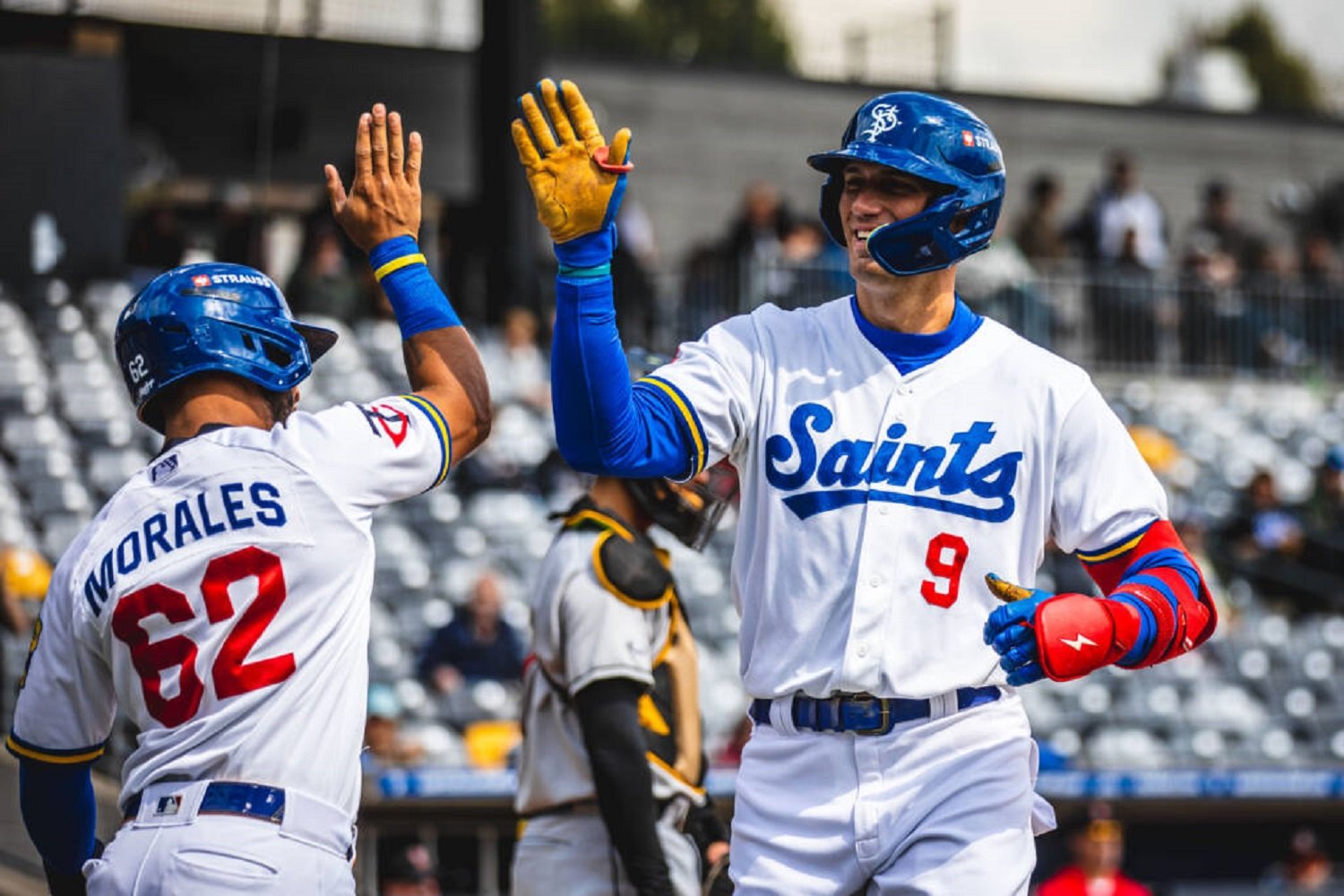
Carson McCusker’s ascent to the Minnesota Twins is a fascinating blend of perseverance and power, arriving just as the club faces a dearth of right-handed bats following multiple big-league injuries. Turning 27 later this week, McCusker is markedly older than the typical call-up. His right-handed power could be a timely infusion, but expectations should be kept in check.
McCusker’s story diverges sharply from the typical draftee pipeline. After being selected in the 26th round by the Brewers in 2017, he opted not to sign, and instead played four seasons at Oklahoma State University before going undrafted in 2021. Undeterred, he spent parts of three seasons in independent ball before earning a minor-league contract with the Twins in June 2023. Standing 6-foot-8 and 250 pounds, his imposing frame and prodigious raw power quickly separated him in the minors. His relative inexperience against professional pitching may temper expectations about his development curve, but his success in that timeframe speaks to a polished approach born of necessity.
The Twins’ Right-Handed Void
With both Byron Buxton and Carlos Correa placed on the seven-day concussion list over the weekend, Minnesota’s lineup suddenly lacks its two best right-handed bats. Buxton, leading the team in many offensive categories, ran face-first into the back of Correa while chasing a pop-up against Baltimore, and has since entered concussion protocol. Correa exited the same game immediately, and was placed on the IL the day before Buxton.
Royce Lewis, freshly activated on May 5 from a hamstring strain, has been slowly regaining form but still lacks consistent power production. José Miranda, once seen as a potential solution, was demoted after a slow start, slashing just .167/.167/.250 in 12 MLB games. That leaves a glaring hole for a right-handed power bat, and the Twins hope McCusker can fill the need.
The Good: Power Explosion
At Triple-A St. Paul, McCusker has torched opposing pitching, with 10 home runs and a 1.061 OPS in 154 plate appearances. His batted-ball profile is head-turning:
Barrel Rate (16.3 %): Among the best in the International League, indicative of optimal exit-velocity/launch-angle combinations.
Average EV (94.2 mph) & Max EV (115.0 mph): Reflecting elite raw power.
Hard-Hit Rate (58.1 %): Over half of his batted balls measure 95 mph or higher off the bat.
wOBA (.461): Ranking in the 97th percentile of Triple-A hitters, underscoring his run-creation prowess.
These metrics paint McCusker as a true slugger. He has the kind of bat that can alter the balance of a game with a single swing.
The Bad: Contact and Discipline Concerns
On the other hand, McCusker’s power profile comes with exaggerated versions of the warts associated with many power hitters. He has struck out in 29.9% of his plate appearances, which raises red flags about his ability to handle big-league offspeed stuff. His 8.4% walk rate is an improvement, compared to his 7.1% rate at Triple-A last season. Still, his swing-and-miss tendencies remain:
Whiff Rate (33.5%): Evident in his high strikeout percentage, prompting concerns that MLB pitchers will exploit his occasional inability to adjust mid-at-bat.
Z-Contact Rates (78.8%): In-zone contact rates have room for improvement, hinting at potential struggles catching up to major-league velocity.
Big-league pitchers will surely test McCusker’s chase zones early, forcing him to prove he can consistently put the bat on the ball at the highest level.
Not Just a Lefty Masher
Although many long-legged sluggers show a stark platoon split, McCusker’s Triple-A numbers tell a different story this year. In 37 plate appearances against right-handed pitching, he’s slashed .361/.411/.649, virtually neck-and-neck with his overall Triple-A line. Last season, he posted a .959 OPS against lefties with an .804 OPS versus righties.
That said, the Twins will likely continue to deploy him in a traditional righty/lefty, platoon simply because big-league matchups (and how Minnesota manages its roster) still favor handing McCusker more at-bats versus southpaws and having him on the bench against righties. His statistical neutrality won’t immediately override established platoon principles, especially given his lack of prospect sheen.
Hitting at 6-Foot-8: What It Takes
McCusker is a monster in the batter’s box. Only five position players in MLB history have stood 6-foot-7 or taller and weighed at least 240 pounds: Frank Howard, Aaron Judge, Oneil Cruz, Steven Moya, and Nate Freiman. Here’s why each offers insight into the skill set McCusker must harness:
Frank Howard (6-7, 275 lb): The “Capital Punisher” led the AL in homers twice with a short, powerful swing that maximized his loft and exit velocities. Despite limited athleticism, Howard showed how a strong lower half and quick hands can turn length into launch.
Aaron Judge (6-7, 282 lb): Judge pairs his mammoth frame with elite bat speed and an uncanny ability to cover the strike zone. He routinely barrels pitches on both inner and outer thirds thanks to remarkable coordination for his size. His athleticism proves that power and defense can coexist at XXL proportions.
Oneil Cruz (6-7, 260 lb): Cruz’s loose, handsy swing lets him adjust to high-spin fastballs in the upper zone. This is an uncommon trait for such a long-armed hitter and underscores the value of barrel control. That said, he still strikes out at a very high rate.
Steven Moya (6-7, 260 lb): Moya combined strength with surprisingly good balance, translating into solid plate discipline and the ability to drive both grounders and fly balls. His career shows that a tall slugger must still hone strike-zone judgment to stick at the highest level; that’s what separates Judge and Howard from the rest of the bunch.
Nate Freiman (6-8, 245 lb): The former A’s first-baseman used a compact stroke and low-centered stance to reach pitches down in the zone, proving that tall hitters succeed when they optimize leverage and maintain a level bat path. However, like that of Moya, his career in the majors was relatively short and forgettable.
The blueprint for McCusker is clear: convert his extraordinary raw power into consistent contact by refining his plate mechanics and strike-zone control, leveraging his size to drive balls to all fields.
Realistic Expectations
It would be unreasonable to project McCusker as an offensive savior for the Twins. Instead, realistic expectations for the former independent-league slugger include:
Immediate Impact: A power boost from the right side, capable of multiple extra-base hits in his first handful of games against favorable matchups.
Patience Needed: Early struggles with strikeouts are likely. A 25% K rate would be a win.
Defensive Replication: Limited to corner outfield and DH duties, minimizing the need for defensive adjustments.
McCusker brings raw power to the Twins at a crucial juncture, after an unconventional ascent through independent ball and the minor leagues. While he must prove his contact skills and adjust to big-league pitching, his potential to deliver right-handed power makes him more of a threat than many of Minnesota’s other righty options. Expect him to be a high-variance bat, capable of game-changing homers but prone to strikeout frustrations as he acclimates to MLB life.
What stands out about McCusker? Leave a comment and start the discussion.