
As the Cubs gear up for a pivotal winter, the first three major decisions they’ll need to make are about the three pitchers on whom they hold club options. We’ve already talked at length about the complex, layered options in Shota Imanaga‘s deal, whereby the team has to either exercise a three-year, $57-million extension or let Imanaga choose between a $15-million player option and free agency.
That one looks fairly easy, though, at least in terms of the first move. The Cubs should and will turn down that option, knowing that even if Imanaga elects free agency, they can extend him a qualifying offer, worth about $22 million. Imanaga would be wise to accept that deal, even if he first turns down the $15 million. If he doesn’t, Chicago can recoup a draft pick when he signs elsewhere. Since Kyle Tucker is likely to net them an extra pick, too, they’d be amassing long-term assets while clearing money from the payroll, to reinvest elsewhere.
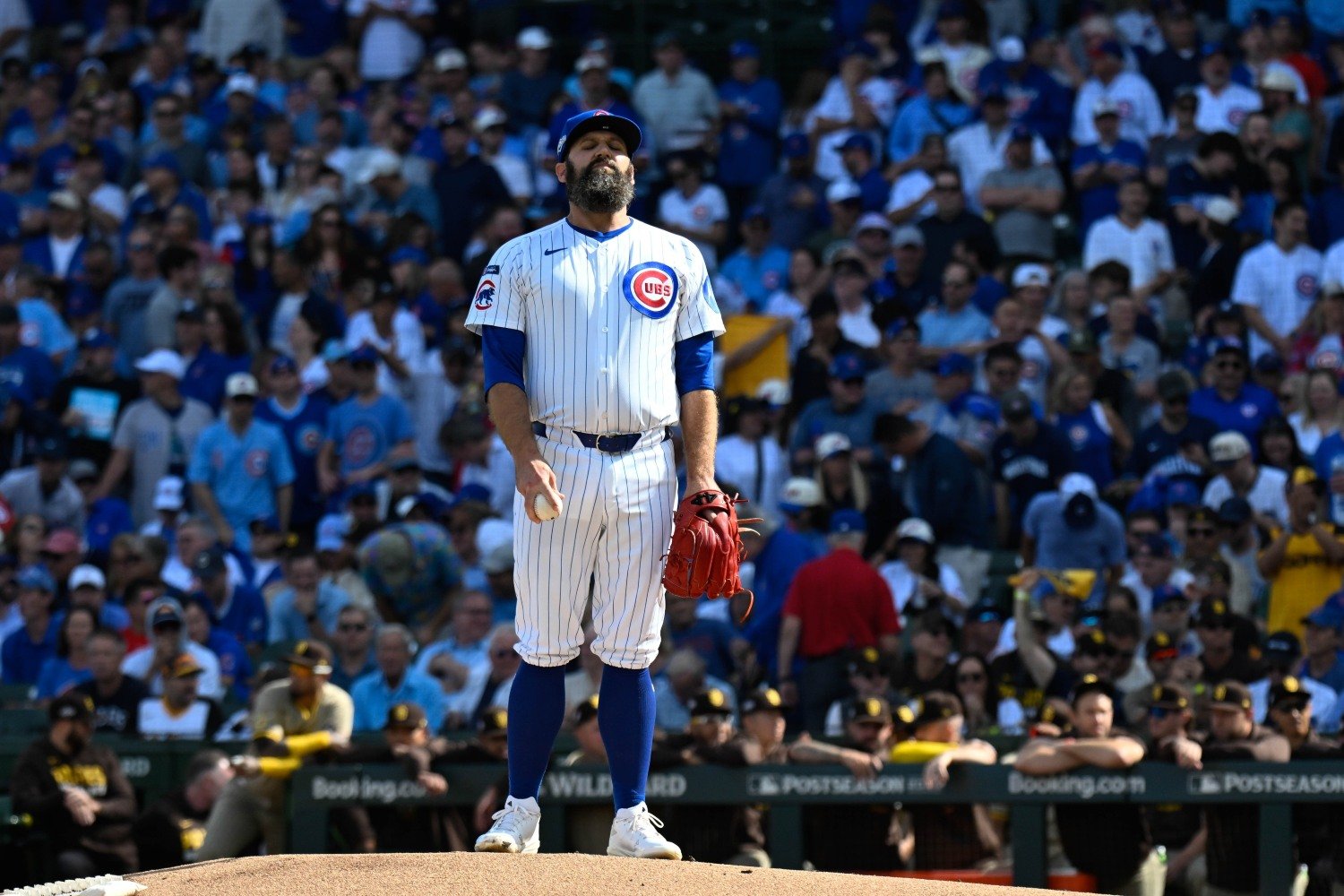
The two tougher calls are on veteran arms Colin Rea and Andrew Kittredge. The deal to which Chicago signed Rea last winter includes a $6-million club option for 2026, with a $750,000 buyout. Thus, it would cost them just $5.25 million to bring him back. That’s solid value, for a pitcher who thrived with the adjustments the Cubs recommended to him and who pitched much more than initially expected for them in 2025. On the other hand, Rea is a low-ceiling hurler. He’ll turn 36 next summer, and he’s had a strikeout rate below 20% in each of the last two seasons. As we discussed earlier this month, one of the key mandates for the front office this winter is to assemble a staff that will miss more bats. Rea doesn’t fit well into that plan.
Kittredge poses a similar dilemma. He signed a one-year deal with the Orioles last winter, worth $10 million. The first $9 million was paid in 2025, and there’s a club option for 2026 worth $9 million, with a $1-million buyout. When the Cubs traded for Kittredge in July, they obtained that option, which ends up being an $8-million decision. Kittredge, too, is 35 years old, but he struck out 30.8% of opposing batters last year—and it was 34.0% with Chicago, after the deal (even including a low-strikeout showing in the postseason).
Matthew Boyd, Jameson Taillon and Cade Horton can be penciled into next year’s starting rotation. In the second half, Justin Steele will join that mix. If he stays healthy and develops the way they hope, Jaxon Wiggins will be a candidate to join the staff during the season, too. The safe bet is that Imanaga will be back with the team in 2026, one way or another. That leaves room for an offseason addition, but it also leaves Rea in a quasi-competition with Javier Assad for a back-end starter or swingman role. The Cubs have to plan for injuries and amass as much depth as possible. Still, it feels as though the call they make on Rea will tell us something about their plans for the offseason. If they keep him, they’ll likely look to move on from Assad, or else trade one of Taillon, Boyd and Imanaga.
The Kittredge option will be even more telling, in an even more direct way. If they retain him, they’re almost certainly not going to bring back free agent Brad Keller. If they decline the option on Kittredge, it sends a signal: they’re likely to make a strong push to keep Keller, after the breakout season he enjoyed in high-leverage relief for them in 2025. Shortly after the end of the World Series, we’ll find out whether the Cubs will have Imanaga, Rea and/or Kittredge on their pitching staff for 2026. That will lend lots of clarity, because the paths forward with or without each hurler become much more defined.