
As MLB’s offseason nears, those who follow the Minnesota Twins have received little to no information on what the club’s self-imposed salary ceiling will be entering the 2026 MLB regular season. Will it hover around $140 million, like it did entering the 2025 season? Will it drop down to $130 million, similar to 2024? Or, will it plummet to unforeseen levels of voluntary poverty, settling around $80-100 million?
Admittedly, every outcome is undesirable, given that ownership has steadily decreased the club’s payroll following its record-breaking $164 million figure in 2023. Yet, given that the club’s baseline 2026 payroll sits around $95 million, there is reason to hold out some hope that the Pohlad family and yet-to-be-announced limited partners will greenlight some spending flexibility. Team decision-makers could possess $15-20 million to spend, even if payroll is reduced to an uninspiring $110-115 million entering next season. Even if it’s less than that, though, they can create room to spend by making trades—one the first, most obvious place toward which they might direct those resources is first base.
As part of the 2025 trade deadline fire sale (wherein the club traded 11 players from its 26-man roster), the Twins dealt primary first baseman Ty France. They installed Kody Clemens as their primary first baseman, handing the left-handed journeyman hitter the majority of starts at the position over the final two months of the season. Clemens struggled in his altered role, hitting .207/.264/.379 with a 75 wRC+ over 183 plate appearances. Yet, with no other option at the position in the majors or high minors, the 29-year-old enters the offseason as the club’s de facto first base option for 2026.
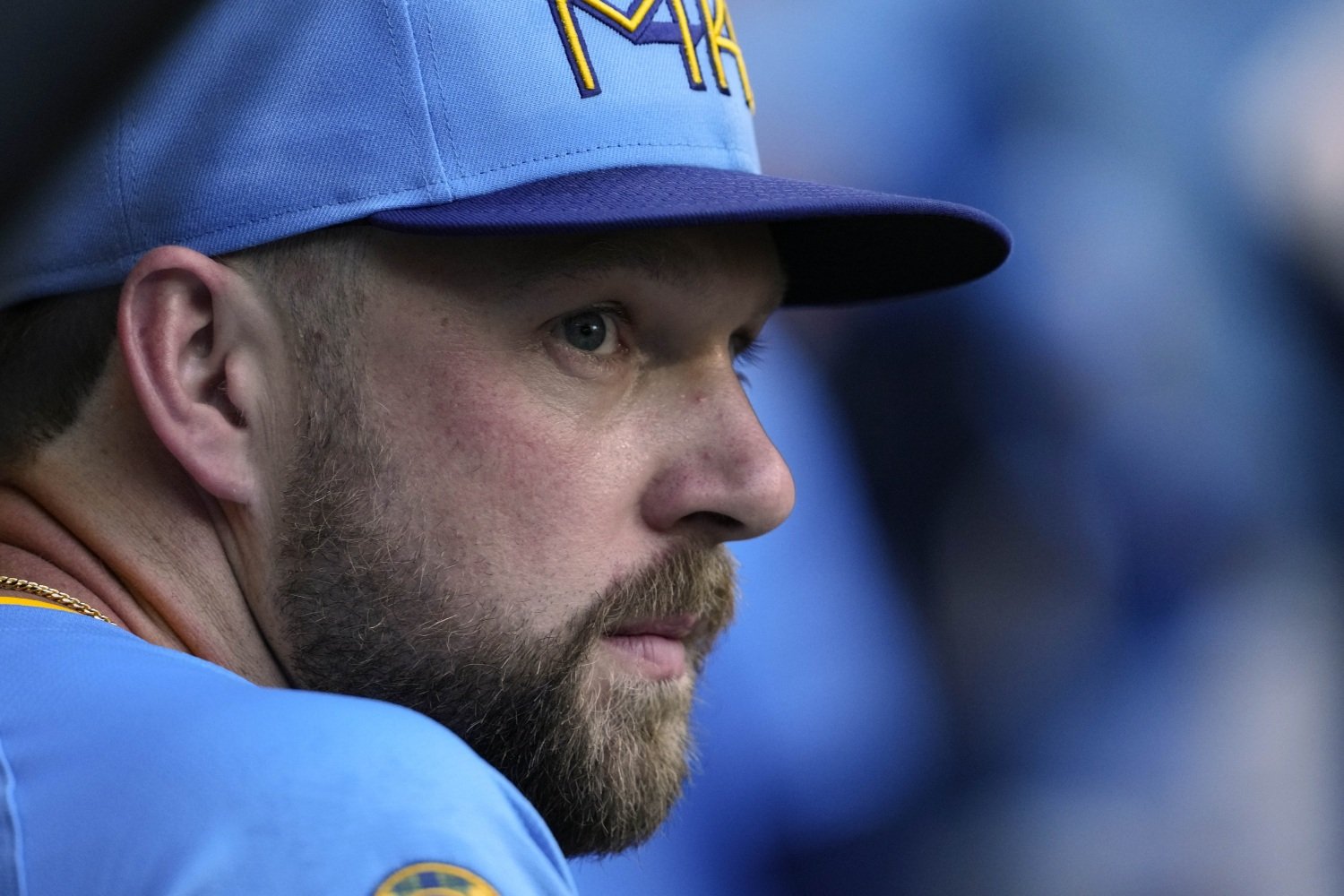
Given his late-season struggles and overall offensive ineptitude over his career, Clemens is a fringe major leaguer who could be designated for assignment early next season. The front office needs to acquire another viable first baseman this offseason. No option is more appealing than impending free agent Rhys Hoskins.
Signed to a two-year, $34-million contract by the Milwaukee Brewers two offseasons ago, Hoskins performed at a league-average rate over two seasons in Milwaukee, netting a 105 wRC+ over a combined 845 plate appearances. In his first six seasons in the majors, the former Philadelphia Phillie established himself as one of the league’s premier power hitters, slugging 148 home runs over that stretch.
Hoskins continued his power-hitting tendencies in his first season in Milwaukee, hitting 26 home runs over 517 plate appearances in 2024. Unfortunately, he then missed 72 games this season, after suffering a Grade 2 left thumb sprain in early July. He hit only 12 home runs over 328 plate appearances, and was replaced by surprise star Andrew Vaughn while on the injured list.
After leaving Hoskins off their NLDS and NLCS rosters in favor of Vaughn and backup first baseman Jake Bauers, Milwaukee will decline Hoskins’s $18-million mutual option for next season. The 32-year-old will enter free agency without a robust market. The Twins should make a concerted effort to sign the injury-riddled slugger, particularly given the significant drop-off in affordable options at the position after Hoskins.
Despite Hoskins’s injury-riddled 2025 campaign, Minnesota would likely need to spend between $8-10 million to secure his services. Signing Hoskins to a contract in this range would likely consume a significant portion of the club’s resources this winter—but that’s the best way they can improve under their financial circumstances.
If Minnesota signed Hoskins, he would become the club’s primary first baseman, while mixing in at designated hitter. The former Brewer would instantly become a cog in the middle of Minnesota’s lineup, alongside plus hitters Byron Buxton, Luke Keaschall, Ryan Jeffers, and Royce Lewis. Hoskins wouldn’t make the Twins’ lineup one of the AL’s best. However, his addition would make Minnesota’s lineup respectable and provide the club the opportunity to score runs at a more efficient and consistent rate than last season, potentially helping the club return to postseason relevancy in 2026.