
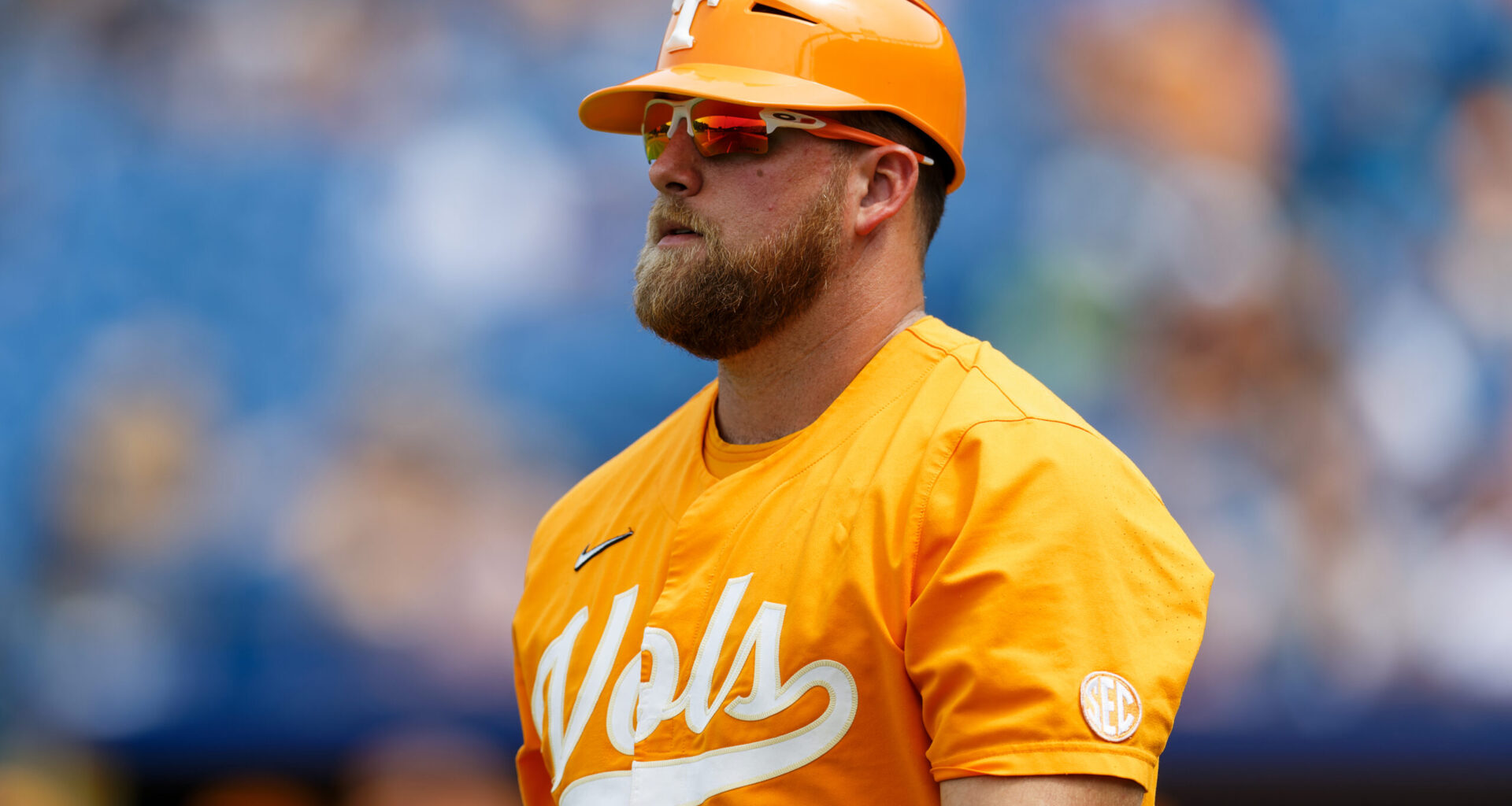
When Tony Vitello agreed to become the next Giants manager, Tennessee didn’t just lose a head coach. It lost the architect of the most aggressive, swagger-filled and successful identity the program has ever had.
And while Vitello’s leap to the majors is historic, it also leaves behind a timing problem no powerhouse college program wants and few have ever had to deal with—a full-scale coaching search in late October.
There’s no playbook for this. Programs don’t hire head coaches at this point in the calendar. Yet, that’s the reality Tennessee is now facing.
What comes next will determine whether the program can preserve what Vitello created or risk watching it unravel. The calendar is unforgiving, the margin for error is slim and the questions posed to Tennessee are big.
Below, you can find answers to key questions about where Tennessee’s coaching search currently stands and what’s at stake as the Volunteers attempt to navigate one of the most delicate pivots in modern college baseball history.
Where Do Things Stand For Tennessee’s Coaching Search As Of Now?
Tennessee’s most straightforward move in the wake of Vitello’s stunning jump to the majors would be to promote associate head coach and recruiting coordinator Josh Elander. Internally, nobody fits the continuity model better.
Pitching coach and interim head coach Frank Anderson also has the resume to warrant consideration, but multiple sources told Baseball America the veteran coach prefers to remain in an assistant role at this stage of his career. That leaves Elander, 34, as the most logical successor.
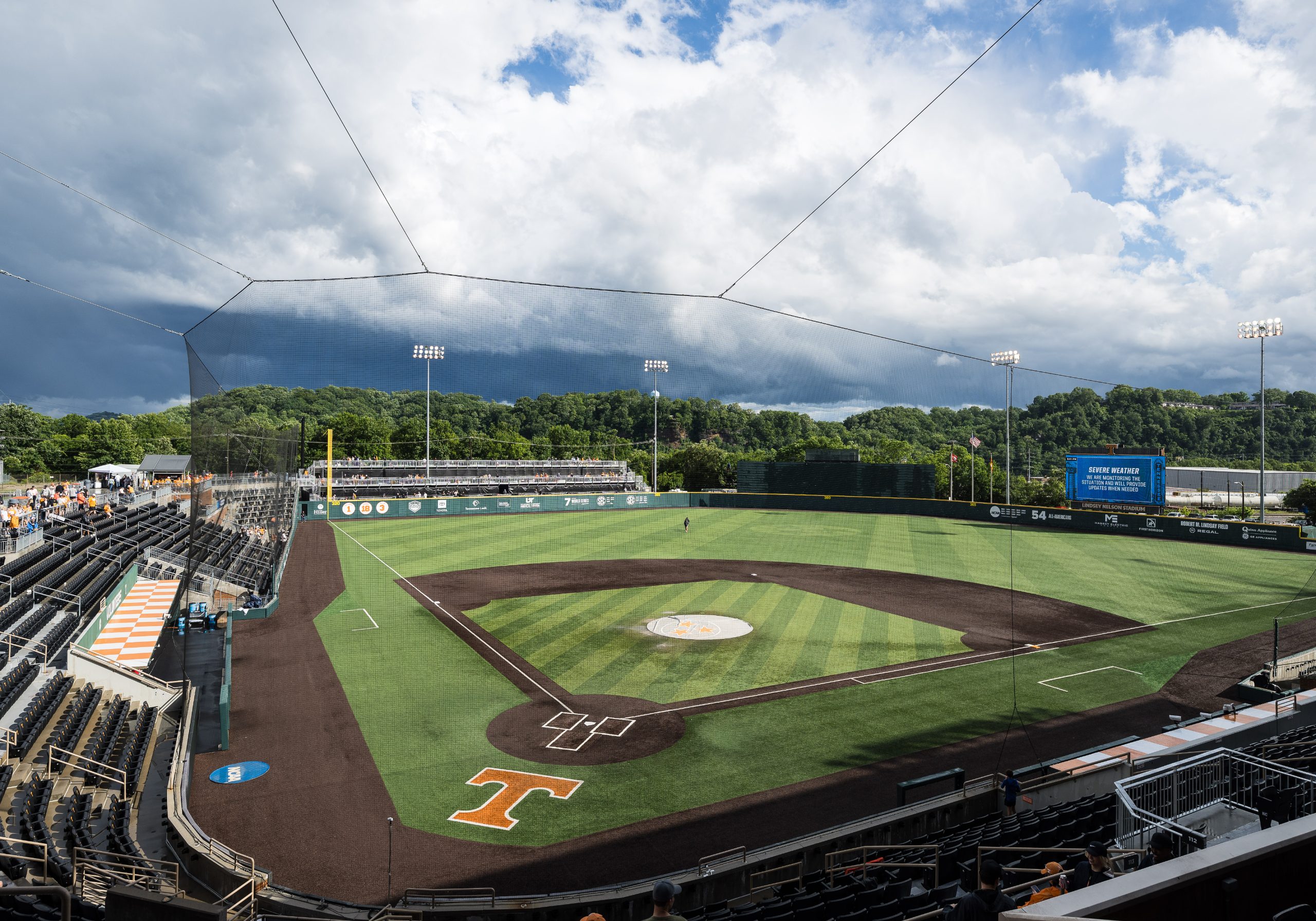
Despite his age, Elander is far from green. He cut his teeth under Vitello at Arkansas in 2017, then followed him to Knoxville that summer and became a foundational pillar for the Volunteers’ rise. He is widely credited as the architect of Tennessee’s elite high school recruiting classes and is regarded as one of the premier hitting instructors in college baseball. Promoting him would preserve the identity Tennessee built under Vitello and maintain continuity for a roster built in his image.
However, according to multiple sources, the administration is choosing to broaden its coaching search process rather than hand the whistle directly to Elander.
Coastal Carolina head coach Kevin Schnall, Kansas coach Dan Fitzgerald and Oregon coach Mark Wasikowski have emerged as three names most frequently mentioned on Tennessee’s very early wish list. Each represents a different brand of program-building success.
Schnall reached the College World Series final and won National Coach of the Year in his first season as a head coach. Fitzgerald is coming off a record-breaking 2025 campaign and has Kansas positioned to contend in the Big 12 in 2026 and beyond. Wasikowski won a share of the Big Ten title and conference coach of the year honors in 2025 and has another highly competitive roster lined up.
Whether any of those coaches would leave their programs in late October is unclear, and the timing complicates Tennessee’s ability to move as swiftly as it would like. Multiple sources indicated the Vols want this wrapped quickly, but poaching a sitting head coach this late in the cycle introduces real obstacles.
All of which brings the focus back to Elander. He remains the most seamless fit. Yet sources are skeptical he’ll ultimately be the hire. What is not in doubt is who the baseball world sees as the obvious choice. Alumni, active players, opposing coaches and fans are aligned: If Tennessee wants continuity and the preservation of what Vitello built, Elander is the overwhelming favorite.
Are There Recent Examples Of Major Programs Making An Outside Hire This Late?
If Tennessee opts to hire an external candidate, it would be stepping into almost entirely uncharted territory.
In college baseball, the coaching carousel is built around the postseason calendar. Changes typically unfold between late May and early June, after conference tournaments and the NCAA Tournament conclude. Some programs get a head start and make a move before the season ends, as Mississippi State did in 2025. Others stretch into late June or early July as negotiations finalize or coaches exit for professional jobs.
But late October? That almost never happens.
In the last decade, there is only one true parallel at a major program: Auburn’s abrupt dismissal of Sunny Golloway in September 2015. In that scenario, Auburn spent nearly a month without a head coach before hiring Mississippi State assistant Butch Thompson in late October.
It ended up being a home run. Thompson has led Auburn to two College World Series appearances and recently earned a contract extension through 2031 worth an average of $1.5 million per year with rollover options through 2033. As such, he’s become the standard of what a late-cycle coaching hire can be if aligned correctly.
But that example also points to the rarity of the situation. One success story in 10 years isn’t a trend. It can work, as Auburn showed, but the volatility is real and the margin for error narrows significantly with every week that passes.
Are There Recent Examples Of Internal Promotions That Have Succeeded?
If Tennessee chooses continuity and elevates Elander, recent history suggests the model can work—and work quickly.
There is an important distinction, though: This would not be the promotion of a short-term staffer handed the keys to a program after a brief stopover. Texas A&M’s elevation of Michael Earley after Jim Schlossnagle’s departure in 2024, for example, falls into that category. Earley had only been in College Station for three seasons. That is not the same blueprint as Elander, who helped architect Tennessee’s rise from the ground floor and has eight seasons invested in the program.
The more accurate comparisons are the long-serving assistants who stepped into the big chair and kept their programs ascending.
West Virginia’s Steve Sabins spent eight seasons on Randy Mazey’s staff from 2016-24 before being promoted. In his first year leading the Mountaineers, he delivered 44 wins and a super regional berth, proving that elevating a key internal voice can preserve or enhance a program’s trajectory.
Schnall followed a similar arc at Coastal. After a lengthy run as Gary Gilmore’s righthand man, he took over in 2025 and immediately guided the Chanticleers to the College World Series final while winning National Coach of the Year. His transition showcased the power of continuity within a defined culture and system.
UC Irvine’s Ben Orloff is another success story. A former Anteater star from 2006-09, he returned to his alma mater as an assistant in 2016 and ascended to head coach in 2019. In the years since, he has established Irvine as one of the West Coast’s most respected mid-major programs and a perennial postseason threat.
For Tennessee, Elander fits that mold. He knows the roster, the blueprint, the identity and the engine that fueled the Volunteers’ rise. Given that track record, it isn’t difficult to picture him extending it.
Could Tennessee’s Coaching Change Lead To A Mass Player Exodus?
Technically, yes. Any head coaching change triggers a 30-day transfer portal window, even if it occurs during a period when the portal is closed. Tennessee’s roster will receive that window, and players will have the option to explore the market.
That said, the term “mass exodus” doesn’t align with reality in late October.
This is not the same as a May or June coaching change, when players can enter the portal, find a new home and enroll without losing time. With the fall academic calendar already underway, only graduate transfers would be eligible to compete immediately in 2026 if they leave now. Any underclassman transferring to another Division I program would have to sit out the season.
However, there is a theoretical workaround: A player could drop to the junior college level for the spring, play immediately and reenter Division I in 2027 or be drafted that summer. Could one or two Tennessee contributors take that path? It’s possible. Is it likely to become a trend? Almost certainly not.
That’s the biggest deterrent to a roster-wide departure in Knoxville. Leaving now almost certainly costs a Division I player a season on the field. They could take their case to court, but that comes with its own fees and a potentially-lengthy timetable with no guarantee of victory, either. For a team built to contend, the calculus shifts heavily toward staying, at least until the coaching picture crystallizes.
What’s The Potential Impact On Tennessee’s Recruiting?
Tennessee’s rise has been fueled by premium high school talent, and the next two classes may be the program’s most loaded yet. That success is tied directly to Elander, who, again, is widely regarded as one of the elite recruiters in the sport.
The Volunteers’ 2026 class is stacked with early round draft caliber commitments, including outfielder Trevor Condon, two-way talent Cole Koeninger, shortstop Landon Thome, righthander Gary Morse, catcher Sean Dunlap and outfielder AJ Curry. The 2027 group may be even more impressive, as three of the top 10 high school prospects in the country, shortstops Dylan Seward (No. 1), Max Hemenway (No. 3) and Leo Nockley (No. 9), are already verbally committed to the Vols.
As in any college sport, a coaching change introduces uncertainty, and uncertainty is the enemy of recruiting. Even the perception of instability can create openings for rival programs to apply pressure on committed players who have not yet signed or enrolled. The longer the search drags, the more vulnerable Tennessee becomes to poaching and decommitments.
Elander is the potential stabilizing force. Promoting him would signal continuity and preserve the relationships that helped build Tennessee’s recruiting edge. An external hire, however, risks cracking that foundation. It would be unrealistic to assume every blue chip commitment would remain locked in if the architect of their recruitment is no longer leading the charge.
There is a possible middle-ground scenario: Tennessee could hire an outside head coach and retain Elander and Anderson on staff to maintain continuity. That path could protect the recruiting classes, but it would require both current assistants to accept supporting roles under a new boss and an external candidate willing to inherit non-negotiable staff pieces. That model can work, but it requires alignment from all sides.