
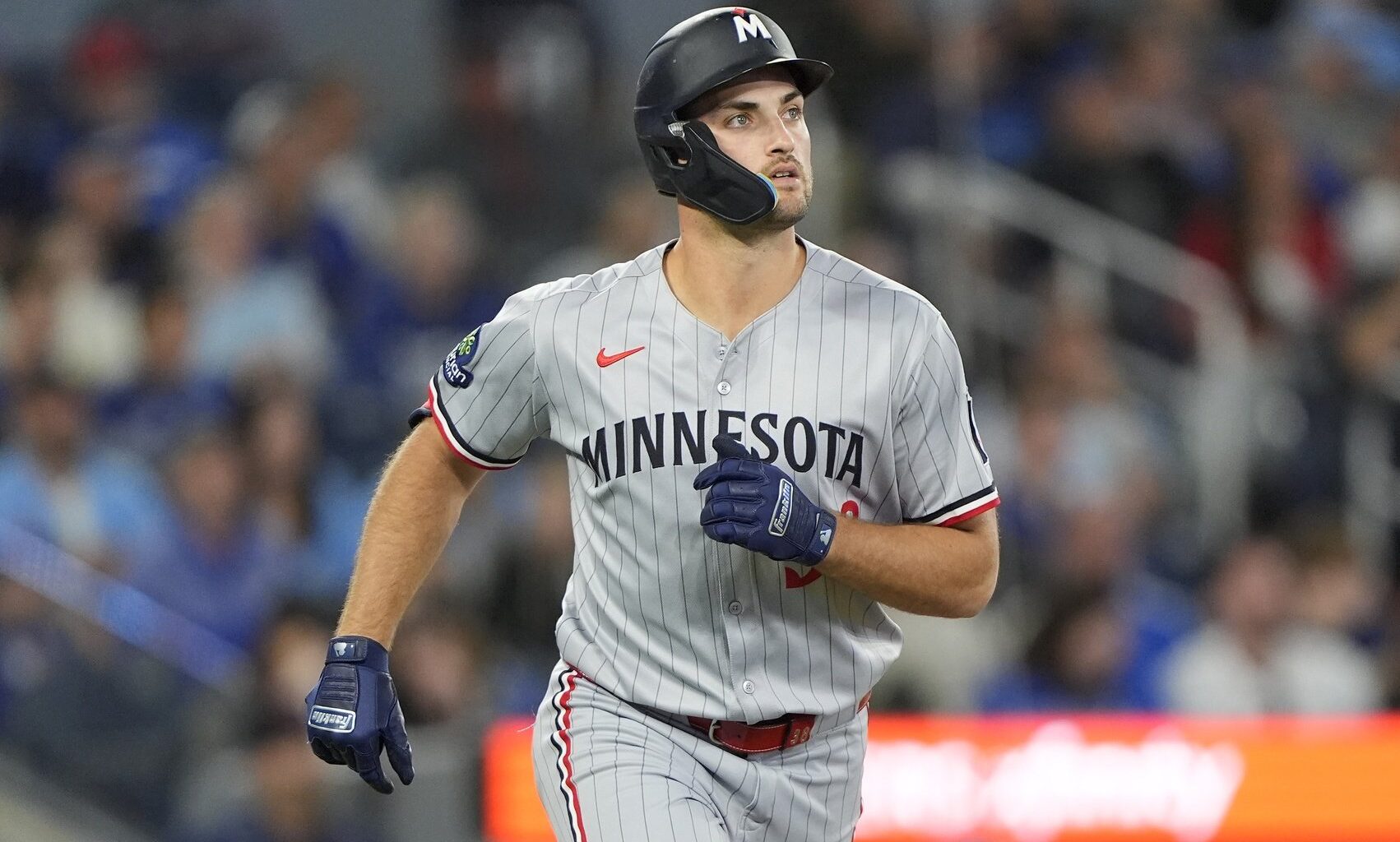
Here are a few things that might surprise you about Matt Wallner‘s 2025 season, compared to his previous norm: he struck out less, swung and miss less, and walked more. And despite batting just .202, he was still 10% better than the average MLB hitter overall.
I don’t think these facts match up with a lot of perceptions from the fanbase, understandably enough. With his big penchant for big whiffs, Wallner’s aesthetics haven’t quite matched the caliber of his offensive performance in the big leagues, which is why many didn’t recognize that he was one of the most productive hitters in all of baseball for the first couple seasons of his career, rubbing shoulders on the wOBA leaderboard with perennial MVP contenders.
Wallner’s step back in 2025 was disappointing and discouraging, to be sure, but from my view, less disturbing than some of the other hitters covered in this “Road to a Rebound” series. (Find previous entries linked at the bottom of this article.)
The Cruel Whims of BABIP and RISP
In 2023 and 2024, Wallner greatly exceeded his expected batting average, for one simple reason: amazing fortune on balls in play. Between those two seasons, his .358 BABIP was third-highest in MLB (min. 500 PA), enabling him to bat .257 despite a 34% K-rate.
There’s always a degree of randomness involved with BABIP. It definitely helps to consistently hit the ball hard as hell, but in the case of Wallner — a lumbering fly ball hitter — such a high rate of reaching on contact never felt sustainable. (Especially because, to be clear, home runs do not count toward one’s batting average on balls in play.)
Sure enough, things swung in the opposite direction for Wallner in 2025. His .228 BABIP ranked third-worst in the majors (min. 300 PA) and as a result his batting average sunk to nearly the Mendoza line.
One of the other glaring characteristics of Wallner’s 2025 season was his performance with runners in scoring position, where he batted just .177. Fifteen of his 17 homers were solo shots. Troubling numbers! But we’re talking about a sample size of 62 at-bats, and the same thing is true of Wallner’s RISP stats as his BABIP — prior to being very bad in 2025, they were extremely good.
I’m not saying either of these things are out of a hitter’s control. But again, there’s definitely some randomness involved and Wallner seems like proof positive, given how relatively little his underlying metrics changed. I feel safe in saying that, even without the kind of wholesale adjustments we need to see from Brooks Lee and Royce Lewis, Wallner will naturally gravitate back toward being a quality hitter in 2026.
But just how far he bounces back with the bat matters because his defensive outlook has shifted more firmly for the worse.
An Uncertain Defensive Future
Wallner has persistently rated out very poorly in the field, thanks mainly to a lack of range, and that could present an issue for a Twins team that has been vocal about wanting to sharpen up defensively. The missed plays became more frequent and noticeable from Wallner, who on several occasions gave up extra bases on ill-advised dives. His stellar arm just doesn’t come into play often enough to be a major asset.
I’m of two minds on Wallner and his defensive future. I do think that upgrading to someone like Alan Roden could potentially save a bunch of runs, but then you’ve got Roden and his questionable bat starting in right field. Actually what I find most likely is that Wallner holds down the job for a while longer, before Byron Buxton eventually slides to right field and Walker Jenkins takes over in center.
Either way, whether he’s holding down right field as a subpar glove or relocating to DH, the pressure will be on Wallner’s bat to produce if he’s going to emerge as a true cornerstone player.
Sturdy Strengths to Build On
I’m probably more bullish on Wallner than any other Twins hitter who had a down year and is looking to rebound. There are some variables that can affect his outcomes greatly, and slumps will remain inevitable, but when your core foundation involves taking good at-bats, walking at a 12% clip and consistently hitting the ball as hard as anyone in the league, you’re going to be in solid shape at the plate. Certainly there are tweaks and adjustments Wallner can and should make to facilitate better outcomes on swings next year, but there’s reason for confidence that he can get back to meeting his high bar for offensive output.
Explore previous entries in the “Road to a Rebound” series: Brooks Lee, Royce Lewis