
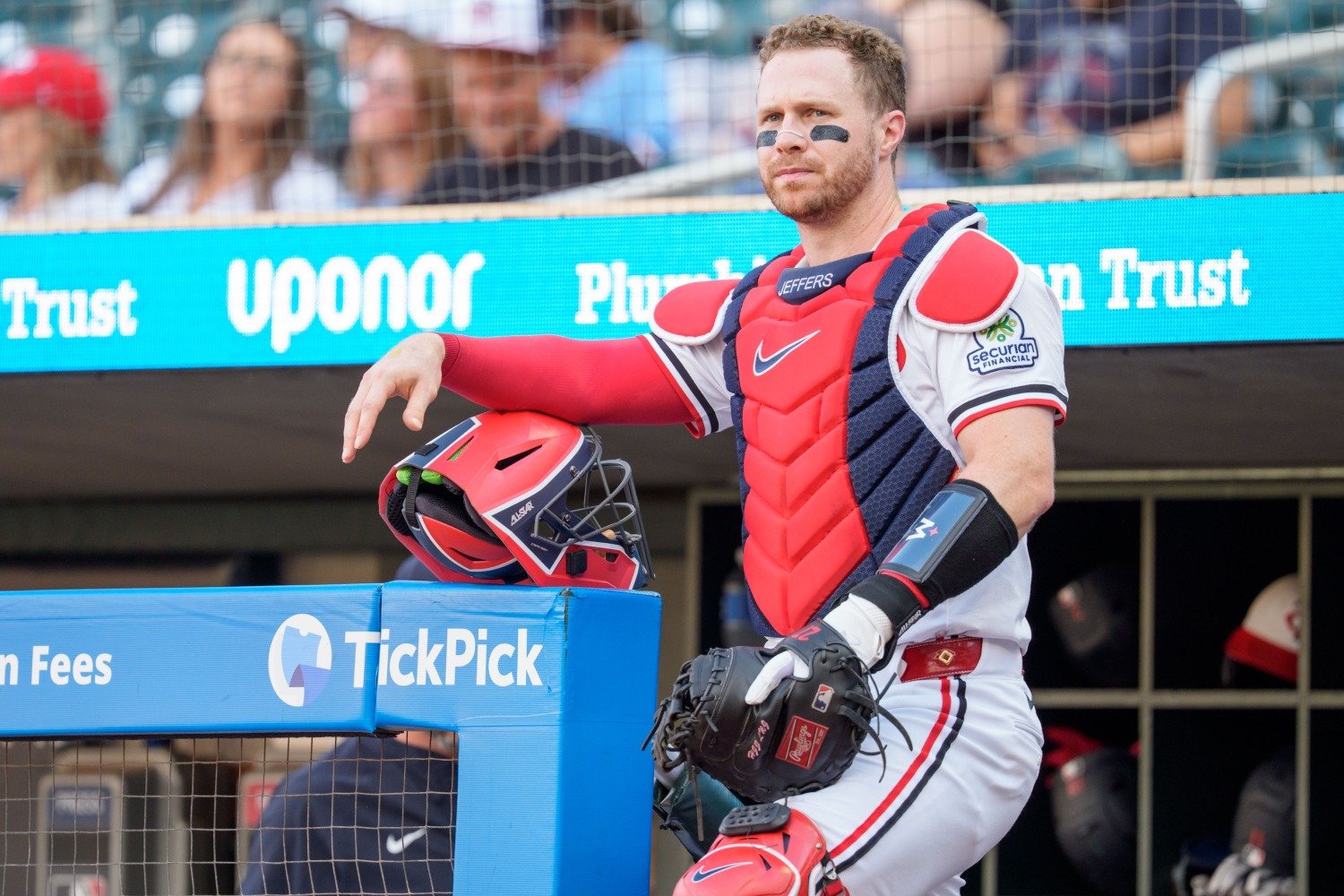
No team in baseball got fewer called strikes on pitches outside the strike zone in 2025 than the Minnesota Twins’ 295, according to Statcast. The cocktail of a pitching staff that throws lots of non-fastballs (seeking chases outside the zone, rather than calls on the edges of it) and poor pitch framing by catcher Ryan Jeffers led to very few marginal strikes for the team. They were middle-of-the-pack, meanwhile, with 513 called balls on pitches technically within the strike zone.
Twins batters were similarly maltreated by the umpires, but again, it had something to do with the way they played. Minnesota hitters had 411 strikes called on pitches outside the zone (third-most), and 528 balls called on pitches within the zone (10th-most). These numbers don’t even out, not just because the Twins had the wrong side of umpiring over the course of the season, but because of the well-documented change in the size of the strike zone resulting from a shift in the way the league evaluates arbiters that was rolled out over the winter.
The patient approach taken by Twins hitters leads, unavoidably, to lots of balls called on pitches that are “too close to take,” by the standards of previous eras in the game. It also results in some called strikes, though, that might technically be outside the zone, but are still the responsibility of the hitter. They really were too close to take; you have to find ways to cover the zone better.
Next season, though, there will be a greater recourse than nodding and adjusting. Jeffers, any of the pitchers he works with, and all Twins batters will have the right to challenge ball-strike calls they deem to have been wrong. Each team will get two challenges to start each game, and they only lose them if they challenge a call and the system confirms it. In other words, if an umpire is consistently wrong and a team gets the hang of challenging calls when they are, they might flip a dozen calls within a single game.
The net of -101 calls on umpire errors in 2025 placed the Twins ahead of only the White Sox (-143) and Astros (-126) among the 30 teams. Five clubs (the Tigers, Diamondbacks, Blue Jays, Yankees and Giants) netted at least 100 calls in the opposite direction, so the magnitude of this effect could be significant. Imagine if Byron Buxton had the right to tap his helmet and overturn this crummy call.
MnIyR3hfWGw0TUFRPT1fVkZkV1ZWQUhCMUFBQVZNRVVBQUhDRkpmQUZsV1ZGVUFCRllDQWxCVVZRSldBUUFF.mp4
That would have flipped a strikeout to a walk; it’s a big deal. At other times, though, the effects can be almost as large even when they’re much more subtle. Consider this call, also against Buxton.
ZFhWNndfWGw0TUFRPT1fVndSVlVBQldVd1VBRFZKVFVBQUhBUTllQUZsWFZ3QUFCVkFIVkZJR1ZGZFNWZ0ZR.mp4
The difference between 0-1 and 1-0 is huge. When a righty batter started a count ahead of a lefty pitcher 1-0, in 2025, they batted .260/.377/.437. When the hurler got ahead 0-1, they held those hitters to .224/.269/.352. Every missed call on a first pitch is worth roughly 6.7% of a run; that kind of difference can add up fast.
Next year, the challenge for all 30 teams will be to make good use of the new system. The Twins have more space to use it than most teams do, because if they simply challenged every pitch, they would have had a higher success rate this year than almost anyone else. Of course, it’s not that simple. The two Twins hitters who saw the most out-of-zone pitches called strikes were Carlos Correa (already gone) and Trevor Larnach (a non-tender candidate). They took lots of pitches, and they figure to do so again in 2026, but they do need to moderate and modify their approach. If they make good individual and collective adjustments, they might have more overall success, but it might not come in the form of more favorable calls at the edges of the zone.
There’s also the question of how competent each player in a lineup (and especially each catcher who takes their place behind the dish when a team is pitching) can get at challenging pitches. That will be a point of emphasis for smart teams in the spring, because ideally, players will feel empowered to make as many challenges as possible—without getting two wrong and leaving themselves without the right to appeal during the late innings of a game. Teamwork will matter, but if the Twins default to having hitters be extremely conservative with their challenges, they might only realize the benefits of the system on one side of the runs ledger.
With new personnel entering the picture late in the 2025 season and more changes coming, the Twins should be one of the teams best positioned to get better by being good at using the challenge system in 2026. It’s not as simple as operating the same way and tapping one’s head more often, though. Their efforts to get the better side of calls whenever possible have to be mitigated by a broader focus on playing winning baseball, overall.