
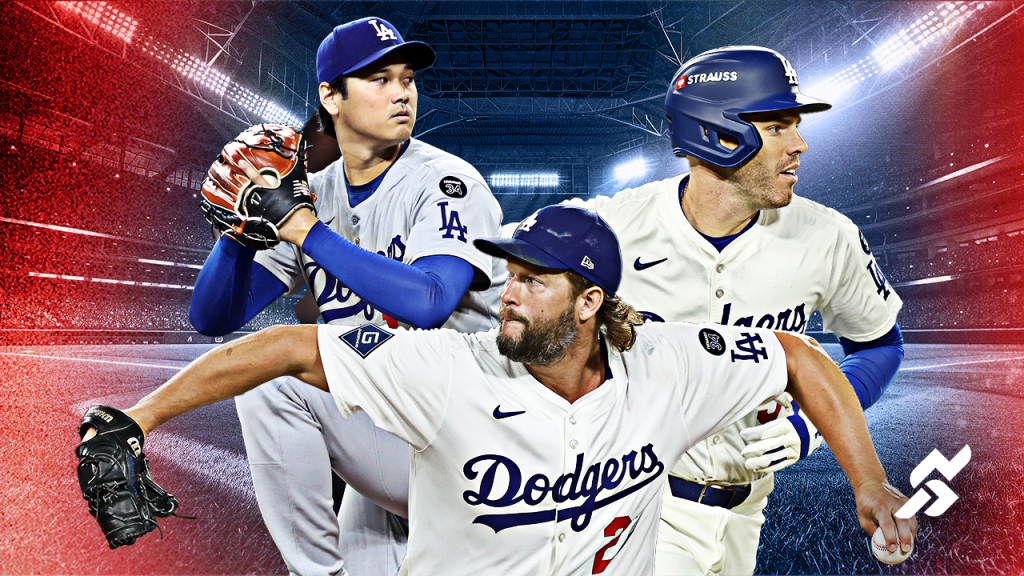
The Los Angeles Dodgers have often played second fiddle to the New York Yankees in baseball’s history books. Their 23 World Series appearances trail only the Yankees’ 41, and they lost eight of the 12 times they met in the Fall Classic. The Yankees have 22 players wearing their cap in the Baseball Hall of Fame, while the Dodgers are tied for second with the Giants at 15.
But the Dodgers beat their cross-country rivals on two fronts in 2024. They rolled over the Bronx Bombers in five games to win their second World Series in five years. And on the financial side, LA became the first team in baseball history to generate $1 billion in gross revenue.
The only other sports teams in the world to hit that mark are the NFL’s Dallas Cowboys and LaLiga giants Real Madrid and Barcelona.
The Dodgers’ road to $1 billion was built on a combination of new blood in the owner’s box and front office, a blockbuster local TV contract, and a generational player on and off the field that arrived with the 2024 season to turbocharge ticket revenue and sponsorships.
The Dodgers were far from a juggernaut when Mark Walter led a group that bought the team for $2.15 billion in 2012. They would miss the playoffs for the third straight season that year and had not been to the World Series since 1988. Attendance ranked 11th in MLB in 2011, and it had been 10 years since they had a top-five payroll, which ranked 10th in 2012.
Walter’s first full season in charge was the end of the penny pinching that existed under prior owner Frank McCourt. In 2013, the Dodgers signed the richest TV deal in the history of baseball: $8.35 billion over 25 years with what is now Spectrum. The Dodgers’ payroll doubled for 2013 and has remained in the top three since then, outside of 2019 and 2023 when it dipped to fifth. It was the start of the club’s current 13-year playoff streak.
In October 2014, Walter and Dodgers CEO Stan Kasten hired Andrew Friedman from the Tampa Bay Rays to run the team’s baseball operations. Friedman has been the architect of the Dodgers’ big league success, as well as building the No. 1 farm system in baseball.
The on-field success has provided the Dodgers with significant pricing power for tickets and sponsors. The Dodgers lead baseball in attendance year after year, thanks in part to Dodger Stadium being MLB’s only venue that holds more than 50,000 people. Still, their pricing historically kept them from the No. 1 slot in baseball’s gate revenue rankings, which typically had the Yankees on top.

In 2024, the Dodgers took the crown at $4.29 million per regular-season home game, based on figures from MLB’s internal gate report shared with Sportico by a non-Dodgers team. The Yankees ($4.11 million), Cubs ($3.25 million), Red Sox ($2.93 million) and Houston Astros ($2.69 million) were next up. Meanwhile, teams at the bottom of the financial table are generating $500,000 per game, including premium seating.
The Dodgers’ average ticket price was $87 last year, which ranked fourth behind the Yankees ($99), Chicago Cubs ($90) and Boston Red Sox ($89), according to MLB’s internal report. But coming off their 2024 World Series, the Dodgers raised 2025 prices and challenged the Yankees for the top spot.
The higher prices are fueled in part by demand triggered by the arrival of Shohei Ohtani for the 2024 season on a then-record 10-year, $700 million contract. Ohtani has also supercharged sponsorships for the club. The Dodgers added a steady stream of new sponsor deals during the 2024 season, including Japanese brands All Nippon Airways, Daiso, Kosé, Kowa, Toyo Tires and Yakult. SponsorUnited estimated it meant $70 million in incremental sponsor revenue.
“In terms of off the field, I know you want specifics, and you also know I don’t give specifics,” Kasten said this week on a Sportico podcast on the Ohtani effect. “I will tell you this. We pay him cash $2 million per year. I can safely admit he has cleared that hurdle for us.”
Kasten said that Ohtani cuts across geography and every demographic. Ohtani has also been a boon to baseball’s overall business in Japan, and that is shared equally by all 30 teams. The first game of the 2024 Tokyo Series between the Dodgers and Cubs averaged more than 25 million viewers in Japan—Game 2 topped 23 million. The last game to hit that viewership in the U.S. was Game 7 of the 2017 World Series.
The Dodgers are now worth $7.73 billion, including their real estate and related businesses, by Sportico’s count. The club has closed the gap with the Yankees ($8.39 billion) and ranks No. 14 among franchises in all sports, a list that is dominated by NFL teams at the top.
The Dodgers’ $1 billion in revenue has renewed calls that income disparity has broken the sport. But the Dodgers are Santa Claus for small markets, kicking in roughly $150 million into baseball’s revenue-sharing system. Net revenue was an estimated $855 million.
“The system they want to alter and change is because of the Dodgers?” leading baseball agent Scott Boras questioned in a March phone interview. “No. They should want more teams to be like the Dodgers, and so don’t change the system. Promote ownership to do what they do.”