
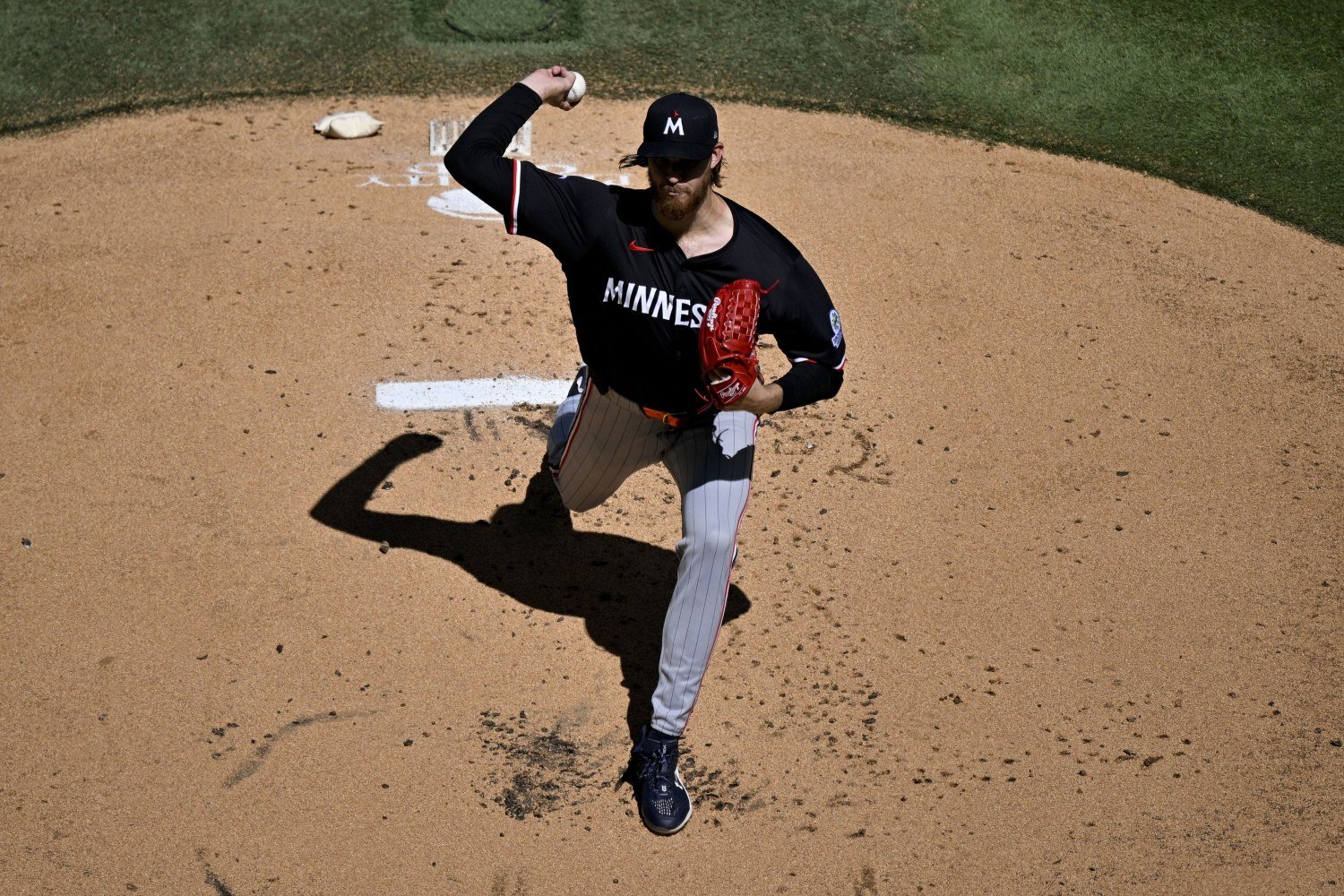
Bailey Ober entered his fifth big-league season with a 3.76 career ERA and a 3.90 career FIP. Despite below-average fastball velocity, he had a 25.6% career strikeout rate. Even at his best, he was vulnerable to the occasional blowup, usually because hitters would square him up and hit a couple of home runs against him in a given start. On balance, though, he was a reliably strong starter, and occasionally something like an ace.
In 2025, his career went off the rails. His ERA spiked to 5.10, and a 4.90 FIP says that was no mere fluke. He continued to pound the strike zone, for the most part, walking just 5.0% of opposing batters, but he allowed almost a home run for every free pass he issued. His strikeout rate, by contrast, plunged to 19.2%. It was, in a word, miserable.
For many, Ober’s low velocity became a focal point. He did lose roughly 1.5 miles per hour in average speed on his heater, pushing him from below-average to one of the very lowest figures in the league. Amid a confusing and frustrating season for both the hurler and Twins fans, confirmation bias rushed in to fill gaps in the collective understanding. Many had always been suspicious of Ober, even as he racked up high-quality innings, because he didn’t throw hard. As he spiraled downward and that velocity dropped even more, those doubters pointed the finger of blame toward that dearth of power.
Honestly, though, velocity wasn’t the problem for Ober in 2025. It’d be lovely if he discovered a way to get back the speed he lost, and even to vault ahead, but he didn’t fail because he doesn’t throw hard enough. Rather, the problems that piled up on him had to do with insufficient feel for movement and location, on all the pitches in his diverse arsenal.
Compare the location of his four-seam fastballs and changeups against left-handed batters, from 2024 and 2025. In the former season, he held lefties to a .235 weighted on-base average (wOBA). In the latter one, that number was .305.
.png.f8af71eab7c2f714f0c1f36777bc5029.png)
When Ober used his heater against lefties, he was much more likely to pull the ball and put it on the inner third of the plate this year than in the past. He missed inside on them more and above the zone more. The area he targeted most often in 2024 (and had the most success in), up and away, was harder for him to hit. With his changeup, he missed away by a significant margin more often. Given the way his stuff works, those pitches well off the plate didn’t tempt opposing batters much.
The same was true, broadly, when Ober faced righty batters.
.png.e39f6f79aba7b8eabed819a491d4ea5b.png)
Against righties, Ober’s fastball missed high less often this year, but that just meant that it spent more time in hittable areas along the top rail. His changeup was, of course, less of a weapon to righties than to lefties; that’s in the nature of an offspeed pitch to same-handed batters.
One major key to Ober’s season—one that shows up in the image above, but relatively subtly—is the new sinker he incorporated. It wasn’t a panic-induced inclusion in his arsenal; Ober brought that new pitch to spring training and utilized it right away when the season began. However, it never became much of a factor for him. He threw fewer than 100 total sinkers, almost all of them to fellow righties.
The sinker isn’t a good pitch, really. According to pitch-modeling metrics, it’s perhaps the worst offering in his repertoire.
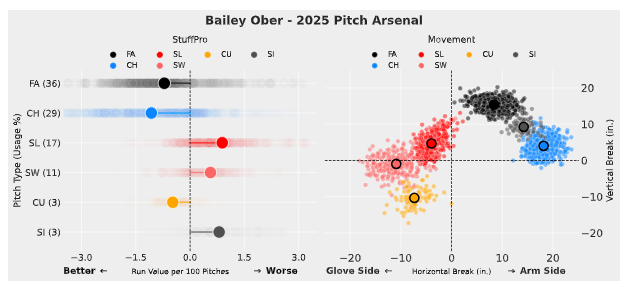
The pitch will have value, though, if Ober can gain better comfort with it and start locating it more consistently—thereby giving him the chance to throw it more often. As you can see above, Ober’s breaking balls also don’t rate very well. Both his sweeper and his shorter, tighter slider need work, and having a different fastball to play off of might pay big dividends for him.
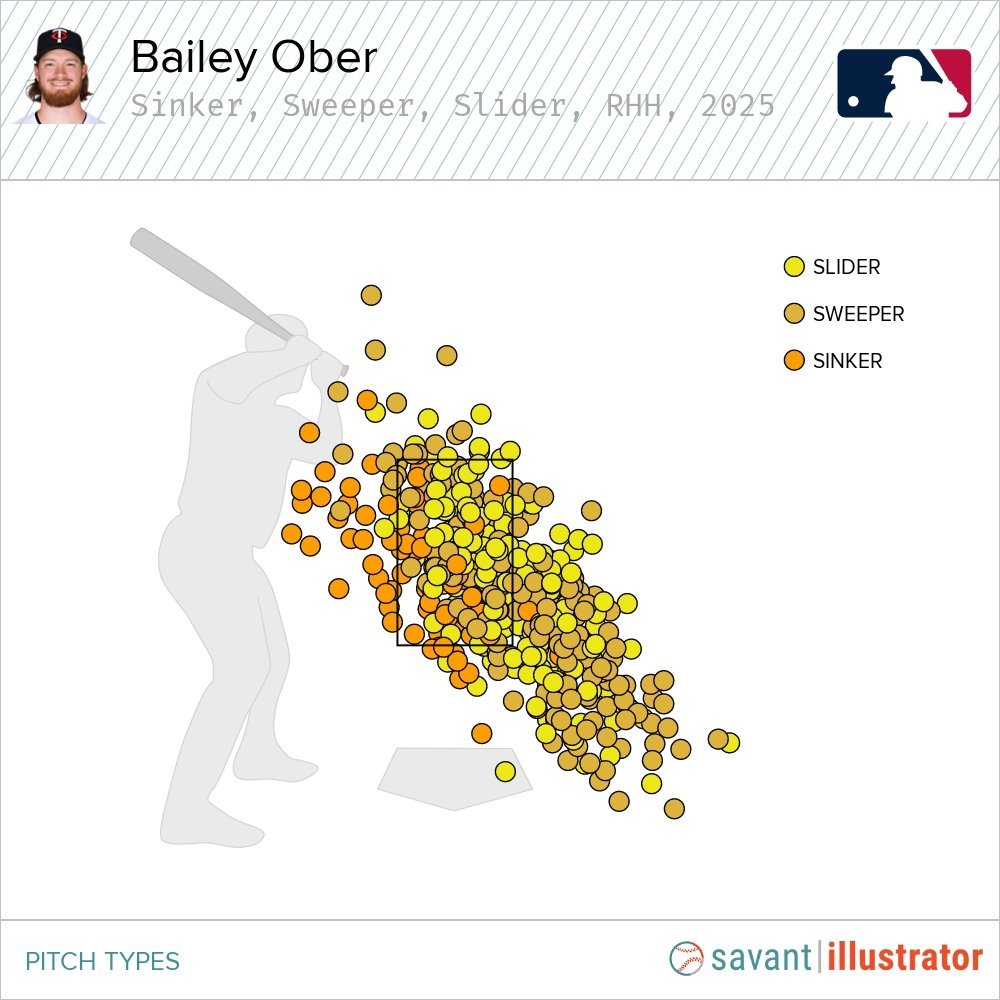
Reliably using the sinker would open up more of the strike zone and mitigate some of Ober’s homer problems. It might also, indirectly and eventually, restore his ability to miss bats against righties. As he heads into his 30s, Ober probably won’t suddenly regain the velocity he suddenly lost last year. What he could do, however, is tap into the value of an altered arsenal that suits his strengths and his style well. He just needs to build significantly on the small experiment he attempted during his worst season yet. The Twins need their mid-rotation workhorse back. Ober can still be that guy, but it might require an uncomfortably complete reinvention.