
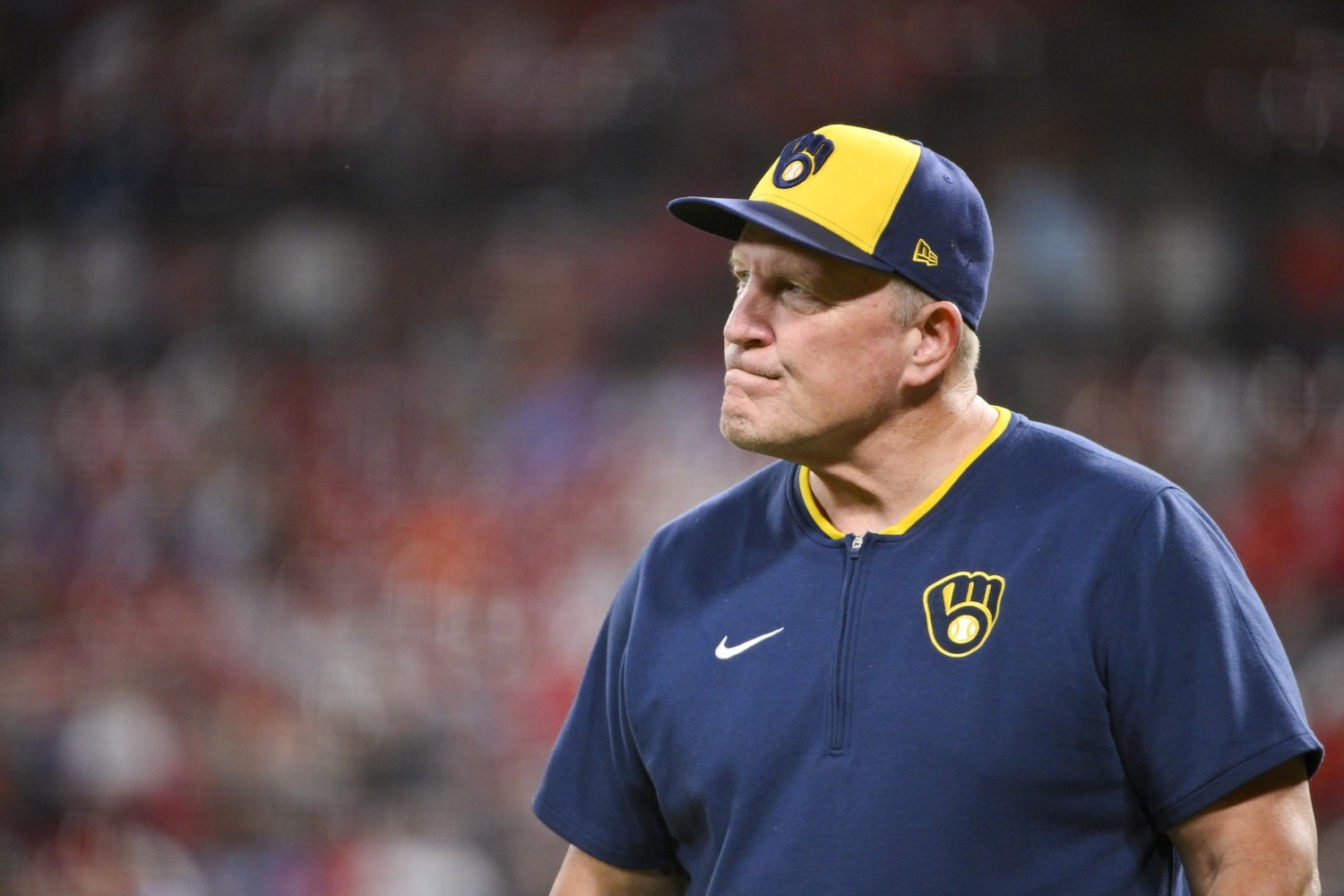
In 24 tries, the 2025 Milwaukee Brewers got calls overturned via replay review 17 times. Only the Arizona Diamondbacks had a higher success rate when they chose to challenge a call—but part of the reason for that was that the Crew challenged many fewer plays than many of their opponents. Only the Red Sox (22) issued fewer challenges than did Milwaukee, so while their 70.8% overturn rate looks good, the sheer number of plays they got reversed was tied for ninth-lowest in baseball.
The math says that the team was too conservative with their challenges. They should have asked the umpires to go to the headsets on more close calls. The rules allow each team one challenge (during the regular season), though they can request a crew chief review on close calls in the eighth inning and later. Thus, a team does have to be somewhat more careful early in the game—but realistically, most close calls of any serious importance deserve a second look. It’s not likely that multiple especially close calls will go against you within the window of a game during which you have to initiate any review, so a team should only feel it needs to be roughly 50/50 to make challenging a play worthwhile.
To say the least, the Brewers did not approach it that way. Of their 24 challenges, they issued 12 in innings 1-5. Of those 12, 11 were overturned, meaning that the team only called for the review if they were almost certain it would go their way. In fact, the only play on which they lost a challenge during the first five frames came in the bottom of the fifth, in an August game at Wrigley Field. They kept a very high standard of expected success, and only brought it south of 100% when the leverage was high or the game was getting close to that point at which it’s possible to request a review even if your challenge has already been used.
Overall, the Brewers’ average Leverage Index on challenged plays was 1.59, and the median was 1.24. Isolating the first five innings, the median was the same, but the average dipped to 1.15. The latter makes it sound like they were more lax about requiring the play to matter in order to challenge early, but the reality is that it’s hard to crank the leverage index up especially high in the first half of a game. In practice, the Brewers spent the first five innings of every game challenging only if they felt sure they would be right, and even then, they only challenged plays they viewed as important in the context of the contest.
It’s hard to gauge the right success rate for challenges. The break-even rate does change, to be sure, based on the inning, score and situation, but the biggest variable is the likelihood of success, as estimated by the team’s replay coordinator. Teams handle the decision protocol from there differently. For some clubs, the coordinator will relay a confidence estimate to the dugout, where coaches decide whether to use the challenge based on that information. More often, the coordinator generates an estimate of their own confidence that the play will be overturned, consults a chart or refers to their training on adjusting the advice based on that confidence and the context of the game, and relays a simple ‘go’ or ‘no go’ to the dugout. On balance, though, teams should aim to be right between 60 and 66% of the time. Any less, and you’re wasting time, as well as exposing yourself to the risk of late-game calls that you can’t appeal. Any more and (as was the case with this year’s Brewers) you’re leaving value on the table.
This is a rare instance of the Brewers—a highly analytical organization with great communication and processes to ensure that they win on the margins when it comes to preparation, intelligence and optimization—not being good enough at one of the little things. Next year, they need a better replay review process, so they get more value out of the right to appeal bad calls. Every out, every hit and every run matters, and the Crew didn’t claim every scrap they could in 2025.