
Baseball America continues its series of fall baseball updates with a look at Georgia and Stetson, plus a breakdown of UCLA’s scrimmage against UC Irvine this past weekend.
Georgia Transfer Haul Making Noise
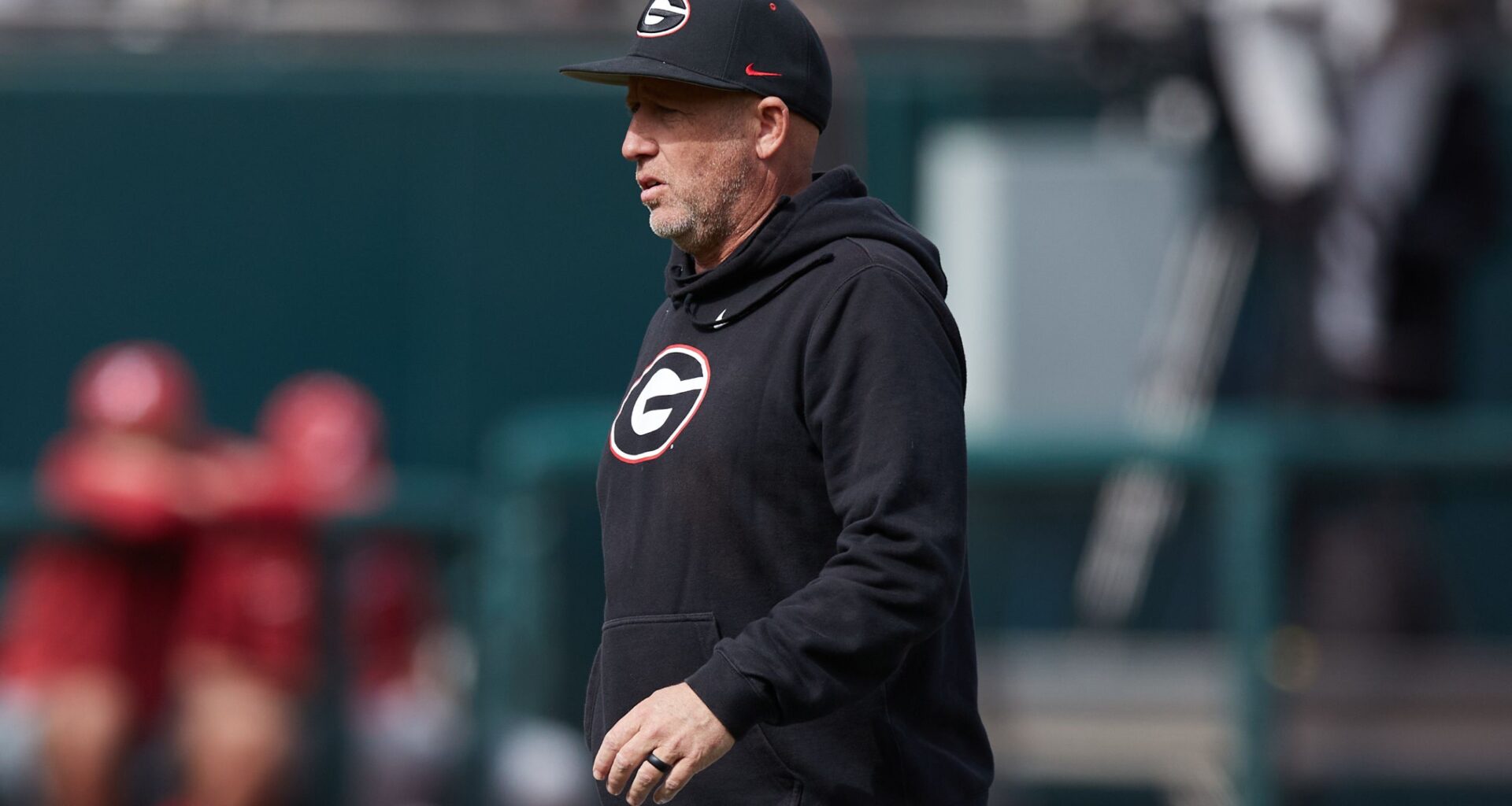
Few programs in college baseball have ascended more quickly than Georgia under Wes Johnson, who has already become the winningest head coach through two seasons in program history. The Bulldogs ended a 16-year super regional drought in 2024 and hosted a regional in 2025, continuing a surge that has turned Athens into one of the sport’s most dynamic destinations.
Johnson has also built a reputation as one of the country’s most aggressive transfer portal recruiters, and it was a standard he upheld this offseason.
Georgia landed one of the nation’s top transfer classes, headlined by former Stanford pitchers Joey Volchko and Matt Scott, USC righthander Caden Aoki and Seattle two-way talent Kenny Ishikawa, among many others. The result is a roster loaded with top 10 talent and legitimate Omaha aspirations.
A former Twins pitching coach from 2019-22, Johnson is regarded as one of the most analytically advanced minds in college baseball. His mad scientist approach to development made Georgia an ideal fit for Volchko, a power arm with elite raw stuff but uneven performance during two seasons at Stanford.
Johnson and his staff have worked extensively with Volchko to add strength, a change that naturally lowered his arm slot by three to four inches. A retooled four-seam grip has given his fastball more carry, and he’s added a high-80s sweeper and true changeup to pair with his signature cutter. Johnson said the adjustments have “unlocked more strikes and repeatability.” If those results hold, Volchko could emerge as one of the first pitchers off the board in the 2026 draft.
Scott has also made major strides since arriving in Athens. Johnson noted that slight mechanical tweaks have helped the righthander’s average fastball climb from 92 mph early in the fall to 96 with as much as 20 inches of induced vertical break. He profiles as another potential early-round draft pick if he sustains that form.
No newcomer, though, has drawn more praise from Johnson than Ishikawa, whom he called “one of the best athletes I’ve ever coached.”
The lefthander has sat 94-96 mph and features a full four-pitch mix—changeup, curveball, cutter and fastball—all grading at least average with plus control and pitchability. Offensively, Ishikawa’s measured approach and compact lefthanded swing give him a chance to hit atop the lineup while anchoring the weekend rotation—a rare two-way centerpiece with true star potential.
The pitching staff’s depth extends far beyond its headliners. Michigan transfer Dylan Vigue has been “as advertised” with a mid-to-high-90s fastball and plus slider. Righthander Justin Byrd, who made 18 strong relief appearances last season, is back with a 93-96 mph fastball that can reach 97, and he’s working to add a fourth pitch to his mix. Redshirt sophomore lefthander Bradley Stewart has touched 99 while throwing strikes consistently.
A name to watch closely is 6-foot-7 righthander Mason Kosowick. The UTRGV transfer leads the team in fall strikeouts after reworking his delivery, and he now runs his fastball up to 98 mph with an above-average slider and quality splitter.
At the plate, Georgia is loaded with options.
Daniel Jackson, a versatile catcher-outfielder hybrid, might be the most dynamic of them all. Johnson described him as a “freak show,” believing he has the strength and athleticism to hit 20 home runs and steal 20 bases. Returnees Tre Phelps and Kolby Branch have embraced leadership roles and continue to anchor the lineup’s veteran core. Meanwhile, new faces like New Mexico transfer Jordy Oriach, Richmond transfer Jack Arcamone, Davidson transfer Michael O’Shaughnessy and freshmen Cole Johnson and Ty Peeples have all impressed with their fall performances.
Top to bottom, Georgia appears to have one of the deepest and most explosive rosters in the country. With Johnson’s innovative pitching mind, a premier transfer haul and an increasingly balanced lineup, the Bulldogs have positioned themselves squarely in the national title conversation entering 2026.
UCLA–UC Irvine Scrimmage Notes
Baseball America was in attendance for a 14-inning scrimmage between UCLA and UC Irvine on Saturday in Westwood. Both programs are again positioned among the West Coast’s best for 2026, with UCLA potentially entering the season as the No. 1 team in the country thanks to elite returning depth and a strong mix of freshman and transfer talent.
Here are some notes and key takeaways from the scrimmage:
UCLA shortstop Roch Cholowsky, the No. 1 player in Baseball America’s 2026 draft class rankings, lived up to expectations. He turned on an inside fastball for a single and later roped an RBI triple. Cholowsky’s swing is contact-oriented but strong, producing loud results without overswinging. His lone strikeout came against UC Irvine freshman Caden Castles. Defensively, Cholowsky’s polish stood out, as he made several highlight plays that drew reactions from the crowd. You can read an in-depth breakdown of Cholowsky’s impressive draft profile here.
UCLA righthander Logan Reddemann, a transfer from San Diego, started and looked every bit the part of the high-end portal addition the Bruins hoped for. Reddemann sat 91-93 mph, touched 95 and featured a plus changeup and average slider from an up-tempo delivery and three-quarters arm slot. He threw a scoreless inning.
UC Irvine didn’t use its top arms, including lefthander Ricky Ojeda (No. 82 on Baseball America’s 2026 draft rankings), leading to a lopsided score across the entire day. Still, the Anteaters held UCLA scoreless through six innings and lost game one 6-4. Freshman righthander Caden Castles turned in the most impressive UCI performance, working with a low-90s fastball, quality changeup and curveball while aggressively challenging hitters in the zone.
UCLA left fielder Dean West collected two hits and showed off an above-average arm. West may not have a singularly plus tool, but his well-rounded profile gives him a chance to be selected in the top seven rounds of the draft.
UC Irvine shortstop Zach Fjelstad looked stronger after a solid 2025 campaign. He notched a sharply-hit single and displayed improved arm strength, particularly when moving to his left on ground balls.
UC Irvine righthander Peyton Rodgers, a transfer from San Diego State, logged two scoreless innings. Operating with a short arm stroke and crossfire delivery, Rodgers sat 91-93 mph and paired his fastball with a low-80s changeup that generated multiple swings and misses.
The day’s most unexpected standout was UCLA righthander Jake Swenson, a Division III transfer from Linfield University. Swenson works with an up-tempo delivery and short arm path, sitting 90-92 mph and touching 94 to go along with a sharp slider. He struck out 17 in a single game at Linfield and now looks, at a minimum, like a legitimate bullpen contributor for a national title contender.
Stetson Looking For Third-Straight NCAA Tournament Appearance
Stetson has steadily reestablished itself as one of the Atlantic Sun’s most consistent programs under coach Steve Trimper, who enters his 10th season in DeLand having already cemented his place in program history.
The Hatters have reached back-to-back NCAA Tournaments and will look to extend that streak to three in 2026, which would tie their second-longest postseason run of the 2000s and mark a first under Trimper. The veteran coach, who guided Stetson to its only super regional in 2018, told Baseball America this year’s group “has the makings of the best offensive team” he has coached since taking over in 2017.
That optimism stems from an offense defined by speed, athleticism and a renewed physical presence. Yohann Dessureault, a fifth-year senior who appeared in just two games last year before suffering a season-ending injury, returns as the lineup’s centerpiece. Trimper said his presence gives the Hatters an “instant cleanup hitter.”
First base and right field will likely be shared by 6-foot-6 senior Jayden Hylton and Miami transfer Renzo Gonzalez. Hylton, who hit .272 with eight home runs and nine doubles as a freshman in 2023, has focused on swing adjustments to keep his barrel in the zone longer. Gonzalez, meanwhile, is trending toward hitting second in the order after batting .264/.358/.353 in three seasons with the Hurricanes.
In the outfield, Landon Russell is back after an uneven 2025 in which he hit .226 with four home runs and 12 stolen bases but struck out 61 times. Trimper believes Russell’s refined approach and plus speed could allow him to reclaim a top-of-the-order role. Corey Robinson, who missed last season following hip surgery, is also in the leadoff mix.
On the infield, Juan De La Cruz provides speed and versatility and is capable of handling shortstop or third base when healthy. Alabama transfer Sean Griggs impressed this fall and could join him on the left side. Behind the plate, freshman Samuel Fernandez has made a strong early statement with above-average raw power and what Trimper called an “elite arm.”
The most pressing challenge for Stetson is on the mound, where it must replace ace Jonathan Gonzalez and All-America closer Ty Van Dyke, both of whom anchored last year’s staff. Several newcomers are expected to help bridge that gap. Joel Core, a transfer from Bethune-Cookman, headlines the group after posting a 5.09 ERA with 78 strikeouts in 74.1 innings and playing a pivotal role in leading his former team to its first NCAA Tournament appearance since 2017. Core has sat 88-91 mph this fall with a quality changeup and figures to lead the rotation.
Righthander Brayden Toro may be the most intriguing addition. The sophomore has sat 93-95 mph with a plus changeup, a cutter that acts like a tight slider when down in the zone, a high-80s sweeper and a low-70s curveball with depth. He’s been consistently around the zone, making him a strong candidate for a rotation or midweek starter role—an assignment Trimper views as critical for boosting RPI.
Sophomore Jose Roig, freshman Thomas Achey and junior Dallis Moran have all stood out, as well, with Moran profiling as a potential closer thanks to a 92-94 mph fastball and solid slider.
A dark horse to watch is righty Trace Hartman, a junior transfer from Division II Charleston. Hartman led D-II in ERA (1.78) in 2024 before a difficult 2025 campaign, but he has rediscovered his form this fall, touching 95 mph with a high-80s cutter, low-80s slider and a developing splitter.
With improved offensive depth, impact newcomers on the mound and top-end athleticism throughout the roster, Stetson looks equipped to continue its postseason streak and push for another breakthrough in 2026.