
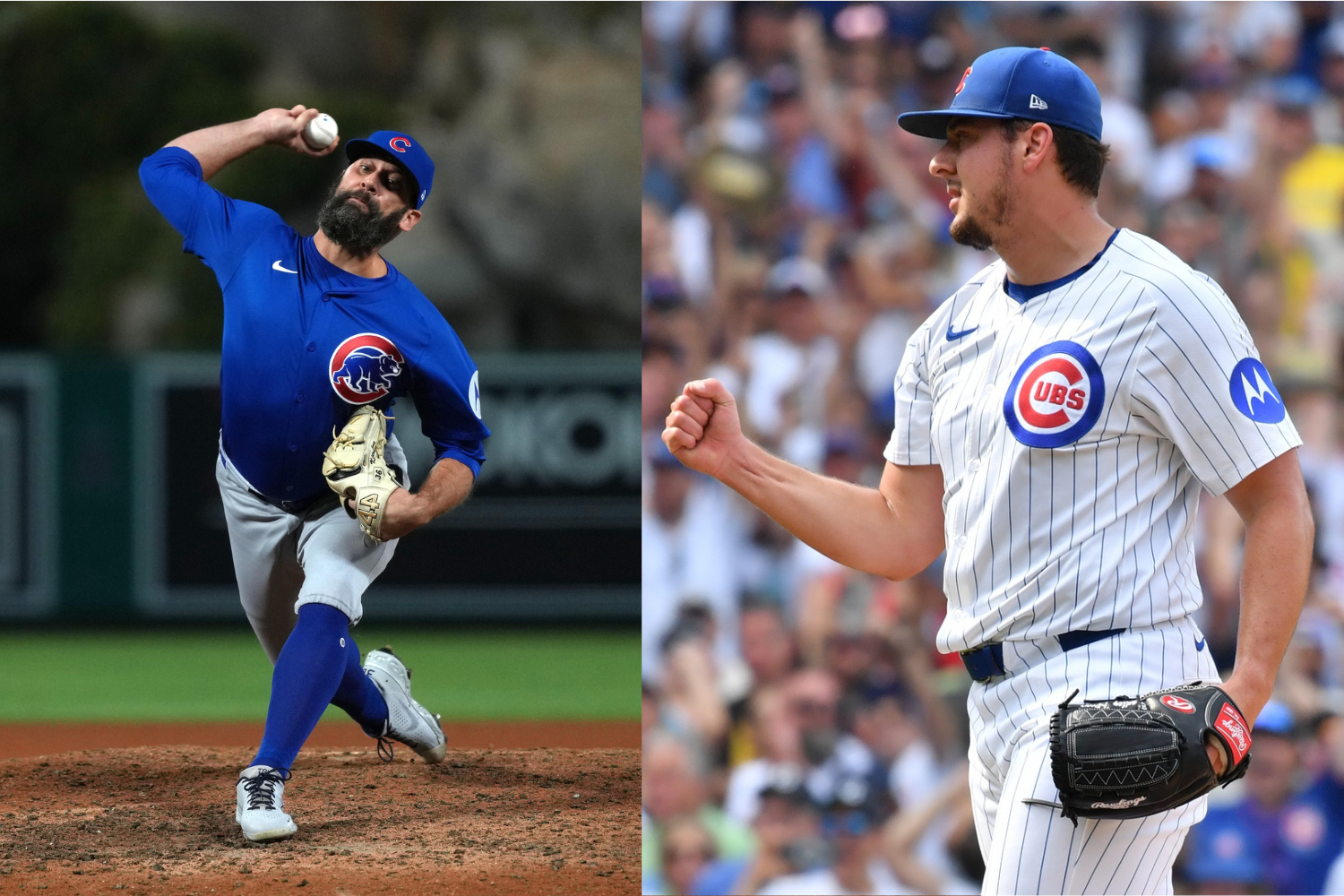
The Cubs traded Andrew Kittredge to the Baltimore Orioles Tuesday, saving the $1 million they were otherwise poised to invest via buyout on the $9-million option they held for his services in 2026. In return, they received only cash. They chose, in effect, something just under $2 million in extra financial flexibility right away over the chance to spend $8 million (the value of the option, less the buyout) to keep Kittredge.
That deal won’t be especially popular, at the front end of an offseason and before Jed Hoyer has made any more concrete moves toward maintaining his team’s competitive position for 2026. Importantly, though, the concreteness of Kittredge worked against him. This moment of the offseason is all about fluidity. By not committing to Kittredge, the Cubs freed up the money they would otherwise have spent on him, keeping their options open—and freed up a place on their 40-man roster, to boot.
That’s not to say that the trade will prove to have been wise. In chess parlance, it’s an opening move that sharpens the position quickly—just as shoving out Shota Imanaga was. Hoyer is fighting to keep options open, but in so doing, he’s reducing the chances of a broadly popular, successful but unspectacular offseason. Moves like this one raise the stakes of the rest of the winter’s work; they make it harder to envision a comfortable middle road. They will, inevitably, make fans more nervous, because they trade in safety nets for the walk on a high wire.
Nonetheless, it’s easy to see the logic at work. As I wrote back on October 22, there was never a chance the Cubs would bring back both Kittredge and fellow right-hander Brad Keller this winter. They had to make an early choice between the two, and saving the buyout (plus getting a little extra cash) does incrementally increase the chances that they can retain Keller.
Considered in that light, this decision makes a good amount of sense. It’s still possible that the Cubs will divert these resources elsewhere, and not spend as much as $9 million on any one reliever this winter. It’s more likely that they’ll reinvest this money somewhere, though, and Keller—a player with whom they’re familiar, now; one five and a half years Kittredge’s junior; and with a different path to similar levels of brilliance this year—appears to be the option they preferred of these two.
Hoyer’s biggest goal for the pitching staff this winter has to be missing more bats. A key question, then, is whether Kittredge (despite a gaudy strikeout rate over 30% in 2025) can be that swing-and-miss reliever. Keller had a lower strikeout rate than Kittredge’s in 2025 and has a much lower one for their respective careers, but Keller had also been a starter until this year.
The Cubs probably assessed the two along lines that look roughly like this. Let’s walk through it together.
Pitcher
StuffPro
PitchPro
Pitch Probability
Surprise Factor
Mvmt. Spread
Vel. Spread
Andrew Kittredge
-0.2
-1
80.9
101.4
79.4
71.1
Brad Keller
-0.5
-0.5
71.9
109.5
93.9
89.9
StuffPro and PitchPro are Baseball Prospectus’s pitch quality metrics, akin to the slightly more famous (but slightly less robust) Stuff+ metrics at FanGraphs. StuffPro measures the sheer nastiness of a pitch’s movement, speed, release and approach angles, while PitchPro also adjusts for location. Zero is average, and a negative number is better; the scale of those two numbers is runs against average, per 100 pitches. In brief, Keller has better raw stuff than Kittredge. The latter achieved more, in 2025, by being more precise with his locations.
Pitch Probability expresses the likelihood that a hitter’s diagnosis of pitch type out of the hand will be accurate for any given pitch by that pitcher. Surprise Factor utilizes a pitcher’s mix and their usage patterns to give an indexed rating to the ability to violate a hitter’s expectations, not via immediate release point or trajectory but by going to a pitch they rarely use or using it in a rare situation. Movement and Velocity Spread rate the extent to which a pitcher’s pitches tend to vary from the movement or the speed a hitter expects based on the pitch type they’re likely to guess on a given offering. For Surprise Factor and both Spreads, the baseline is 100, and higher is better.
Keller is better at disguising which pitches he’s throwing that Kittredge is. He’s better at using unpredictable variations in usage or sequencing to put a hitter on the defensive. His pitches move in a more productive variety of ways, and he changes speeds more deceptively, to boot. The only fundamental skill at which Kittredge outstrips Keller is hitting his spots. While that’s an important skill—and one the Cubs value, perhaps, as much as any team in baseball—it’s a hard one to carry from year to year, especially as (mostly) a two-pitch reliever well into your mid-30s.
The Cubs liked Keller’s fit in their clubhouse in 2025. They liked the way he responded to their challenges and input after they signed him. In their high-level assessment of Kittredge and Keller for 2026, they came away with a strong preference for the latter. That doesn’t mean they’ll re-sign him. Keller could be in line for a handsome three-year deal this winter, and Chicago might prefer to redirect the money they’ve saved by moving Kittredge toward hitters or starting pitchers and go try to find the next Keller on the scrap heap. The decision to trade Kittredge will and should be judged on how they spend the money, the roster spot, and the high-leverage situations in relief they’re choosing not to offer him. However, the deal decidedly increased the chances that they’ll bring back Keller, and since they clearly believe Keller is the better bet of the two hurlers, there’s a definite underlying sensibleness to it.