
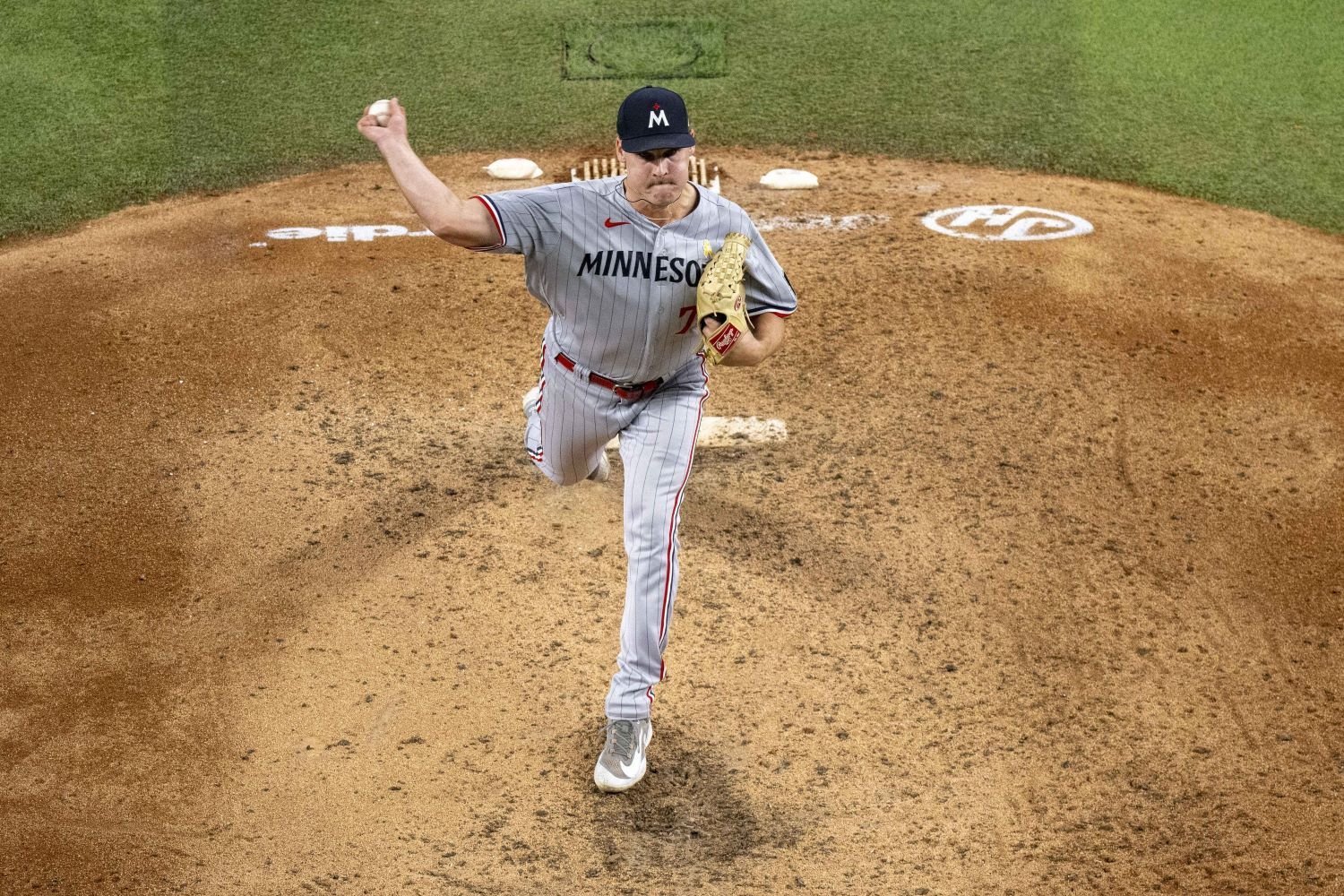
The Twins’ bullpen was once a reliable force. Between 2022 and 2024, Jhoan Duran and Griffin Jax anchored the late innings, while role players like Caleb Thielbar, Cole Sands, and Brock Stewart provided valuable depth. But after the 2025 trade deadline, that group is mostly gone. Minnesota dealt several relievers with years of team control to retool the farm system, leaving the bullpen thin and uncertain heading into 2026.
Still, there is a path to rebuilding an effective unit without breaking the bank. The Twins have internal arms with upside, a few conversion candidates who could thrive in shorter stints, and affordable veterans on the open market who can provide stability. This is how they can build a bullpen capable of competing next season.
Returning Pieces
Justin Topa: The Twins traded for Topa before the 2024 season, hoping to bolster their late-inning depth, and when healthy, he showed flashes of being that dependable arm. His sinker-slider combo generates weak contact, and he has experience in high-leverage spots, which was one of the reasons the Twins targeted him in the Jorge Polanco trade. In 2025, he ranked in the 88th percentile for Barrel rate and the 72nd percentile or better in both walk and ground-ball rate. If he can avoid the injuries that limited his usage, Topa could easily slide into a setup or closer role.
Cole Sands: Sands quietly became one of the most reliable relievers in the organization in 2024. However, he took a step back in the first half of 2025, before a better performance following the trade deadline. His Offspeed Run Value ranked in the 95th percentile, led by a splitter that was worth seven runs and held batters to a .184 SLG. The Twins will need late-inning options early in the year as roles solidify, and Sands’s versatility fits that need perfectly.
Kody Funderburk: Funderburk’s deceptive delivery and sweeping slider make him a tough matchup for left-handed hitters. Last season, he held lefties to a .292 SLG, which was nearly 130 points lower than what righties posted. While command can waver, his ability to miss bats from the left side gives the bullpen valuable balance. His barrel and ground-ball rates would have ranked among the league’s best, had he had enough innings to qualify. With more consistency, he could take on a larger role as a sixth- or seventh-inning option in 2026.
Starters Turned Relievers
Zebby Matthews – The Next Griffin Jax?
Like Jax before him, Zebby Matthews may find his long-term fit in the bullpen. He has the command and competitive edge to attack hitters aggressively, and his fastball could tick up in shorter outings (96.3 mph in 2025). He is arguably a two-pitch pitcher, with his fastball and slider being his best weapons. If he cuts out the other pitches in his repertoire, he may be more effective out of the bullpen. Matthews has spent his developmental years as a starter, but a move to relief could accelerate his path to the majors while helping Minnesota fill a significant need.
Connor Prielipp – The Next Jhoan Duran?
Duran was considered a starter throughout his minor-league career, before injuries forced the Twins to make a shift. The Twins have waited patiently for Prielipp to recover and rediscover the form that made him a top draft pick. His electric slider and mid-90s fastball can be devastating weapons when unleashed in one- or two-inning bursts. Last season, he made 24 appearances (23 starts) and posted a 4.03 ERA with a 27.0% strikeout rate. Much like Duran, Prielipp’s path might not be linear, but if he embraces a relief role, he could emerge as a dominant late-inning force by midseason.
Travis Adams – A Max Effort Option
Adams has spent most of his professional career as a control-oriented starter, but the Twins moved him to a different role last season, with him pitching every four days. A switch to relief could unlock a different version of his arsenal. Instead of pacing himself through multiple innings, Adams could focus on emptying the tank in one frame. His slider had a 32% whiff rate in his first taste of the majors, and his fastball had a 26% whiff rate with an average velocity of 94.8 mph. A sharper slider and increased velocity could turn him into a valuable multi-use arm who can handle leverage or mop-up duties as needed.
Free Agents
Caleb Thielbar – A Familiar Face Returns
If the Twins want a veteran presence who knows the organization and thrives in big spots, Thielbar would be a natural reunion. Even as he nears 40, his ability to command his breaking ball and neutralize left-handed hitters makes him a steadying force. Bringing Thielbar back could also provide leadership for younger pitchers adjusting to life in the bullpen. The Twins could also turn to other veteran free agent lefties like Taylor Rogers or Danny Coulombe.
Minor-League Flyer – A Smart Gamble
Every year, teams find undervalued arms who turn into reliable contributors. Think of this as finding the next Brock Stewart. Minnesota could take a low-risk chance on someone like Stewart, who has shown flashes of potential when healthy. A minor-league deal with an invite to spring training could uncover the next breakout bullpen piece without straining payroll flexibility. Multiple players who fit this mold will likely be in camp with the Twins.
The Blueprint for 2026
The Twins do not need to recreate the Duran-Jax pairing overnight. What they need is functionality, flexibility, and a plan that blends experience with upside. Topa and Sands can handle leverage early. Funderburk and Adams provide innings stability. Matthews and Prielipp represent the next wave of internal talent, while a veteran like Thielbar and a flyer addition round out the mix.
The 2026 bullpen might not grab national headlines in April. Still, with patience and development, it could once again evolve into one of the American League’s more reliable groups by season’s end. Minnesota has rebuilt a bullpen before, and it can do it again.
Can the group outlined above compete in the AL Central? Leave a comment and start the discussion.