
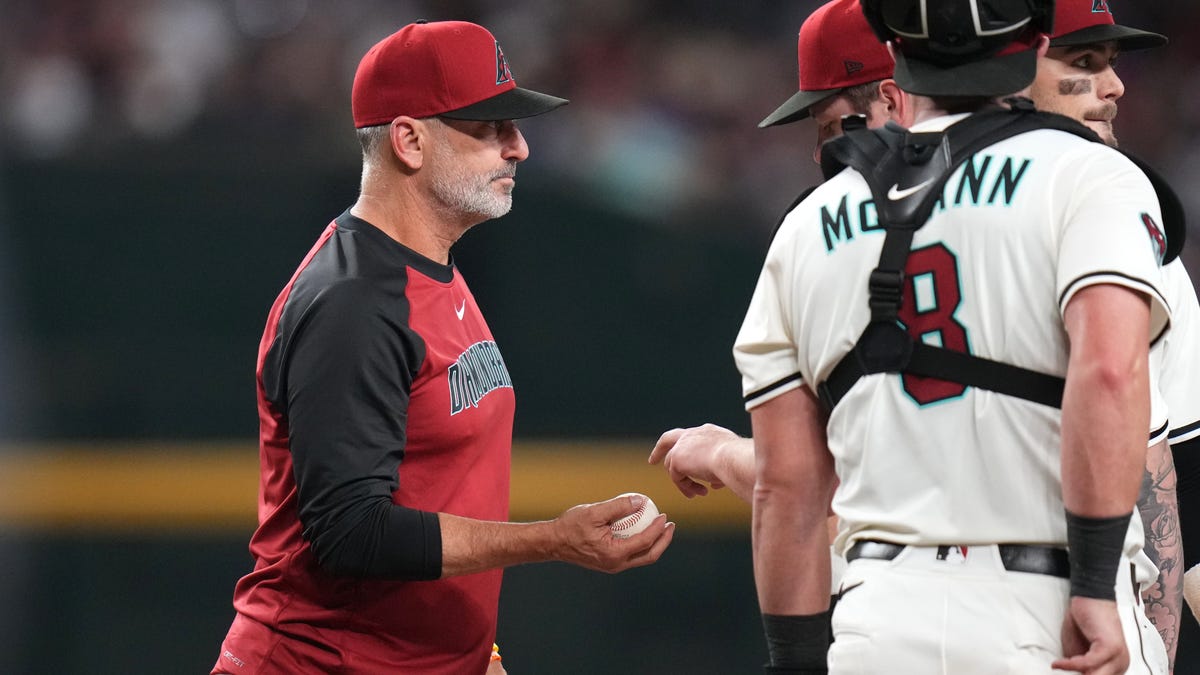


Diamondbacks’ GM Mike Hazen takes a look back on the 2025 season
After just missing the playoffs, Arizona Diamondbacks general manager Mike Hazen put his assessment of the season into words.
The Arizona Diamondbacks are overhauling their pitching development strategy after a season marked by injuries and poor performance.While the club has historically prevented major arm surgeries well, its pitchers have ranked low in velocity and other key metrics.
After a season in which injuries and opposing hitters battered their staff, the Diamondbacks are revamping their pitching development infrastructure, initiating changes they hope will lead to a deeper pipeline of major-league-caliber arms.
General manager Mike Hazen indicated a willingness to push pitchers in ways the organization has been reluctant to do in the past, though he said the club would stop well short of the levels reached by other teams that constantly lose pitchers to reconstructive elbow surgeries.
“I think there’s the caution-to-the-wind approach: Just push and push and if they break, they break,” Hazen said. “We haven’t ascribed to that philosophy. Have we trended conservatively on the whole? Probably.”
He added: “Are we in a position where we should be pushing some of this stuff and taking on more risk a little more aggressively? Yes. I do feel that way. We have spent the better part of the last month breaking that all apart here.”
Hazen said that could take the shape of more aggressive lifting, running and overall strength work. It could mean more aggressive throwing programs. It also could mean changes to the way the organization deploys pitchers in the minors when it comes to pitch counts.
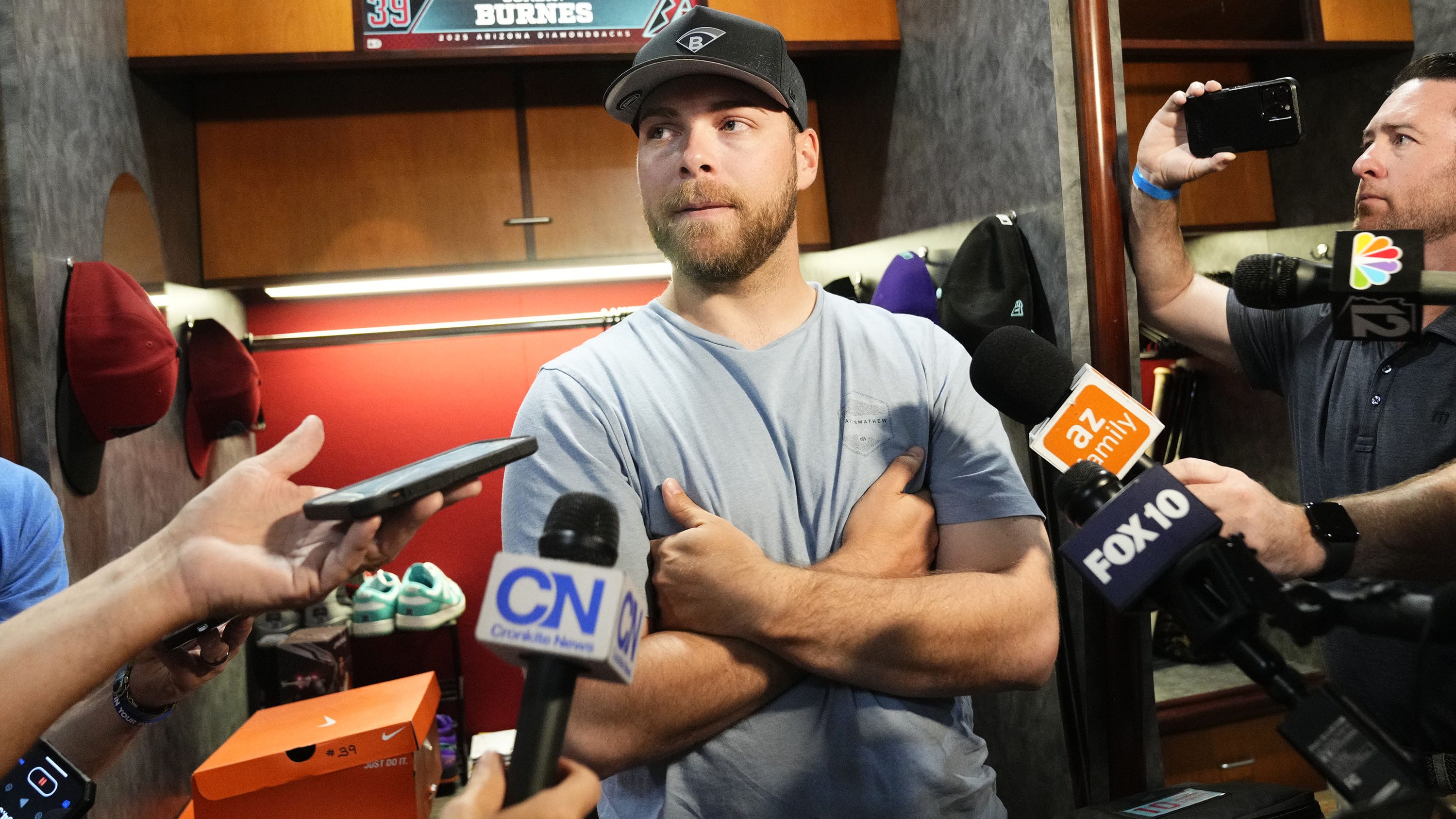
Diamondbacks’ Corbin Burnes reflects on 2025 season, injury recovery
Arizona Diamondbacks pitcher Corbin Burnes reflects on the 2025 season and the timeline for his return from Tommy John surgery.
The exact nature of the changes has yet to be determined, Hazen said, adding that the Diamondbacks are continuing to conduct internal meetings that include a variety of departments as they work to firm up the new strategy.
Though this season went poorly from a health perspective — the Diamondbacks lost high-profile pitchers such as Corbin Burnes, Justin Martinez and A.J. Puk, and depth types including Jordan Montgomery, Tommy Henry and Cristian Mena to arm injuries — the club has historically fared well when it comes to preventing injuries.
At the same time, the organization has struggled to churn out top-end pitching. The Diamondbacks have ranked in the middle of the pack over the past decade — and even worse in recent seasons — in run prevention, and they have rated poorly in categories more specific to pitch-level data.
The Diamondbacks routinely deploy one of the majors’ softer-throwing pitching staffs and often rank low in Stuff+, a metric that tries to determine how “nasty” pitches are based on their physical characteristics (velocity, movement, spin rate, et al).
The club’s pitching development has been a source of frustration for coaches, scouts and executives within the organization, many of whom trace the philosophies back to a training staff they say holds too much sway. Sources who have moved on from the Diamondbacks to other clubs point to what they say are stark differences in how much more aggressively their new teams push strength gain.
“I feel like every organization has a similar dynamic of pushing and pulling between keeping players healthy, which is what we ask of the medical team, and pushing performance, which is what we ask of the fundamental team,” Hazen said. “We need to do a better job of finding the balance of that. That’s where I think our issue is.”
The organization is in a “phase of adapting” when it comes to pushing pitchers, according to Ken Crenshaw, the Diamondbacks’ director of sports medicine and performance.
“I think we’re in an adapting type of mode,” Crenshaw said. “There are areas to push harder, for sure. I think it’s specific to each player.”
Pitcher health is a hot-button topic around the majors. As pitch velocity has risen, so, too, has stress on elbows, leading to more and more time lost to injury. Organizations have tried to combat that by scaling back pitch counts and usage, but injuries continue to mount.
Despite their rash of injuries this past season, the Diamondbacks have been able to avoid elbow surgeries about as well as any team in the game. According to Jon Roegele’s Tommy John surgery database, the Diamondbacks have had 20 such surgeries (including internal-brace procedure) over the past 10 seasons, the second-fewest in baseball behind the Colorado Rockies (18). That includes both major-league and minor-league players.
The New York Mets have had the most in baseball with 53, followed by the New York Yankees (48), San Diego Padres (43), Milwaukee Brewers (42) and Cleveland Guardians (40).
“I do believe that it is hard for a player to develop when they are on the sidelines,” Hazen said, when asked what has driven the club’s conservative approach. “It is hard for you to help a player reach their potential when you blow them out and they have Tommy John surgery early in their career.”
DBacks are not the Dodgers: Little room for error
The Diamondbacks also believe their standing in terms of spending — they generally rank in the middle to bottom third of baseball’s 30 teams in payroll — gives them less room to overcome injuries. The Los Angeles Dodgers, for example, have had a full rotation’s worth of starters on the injured list for most of the past few years but have been able to have success anyway.
“When you don’t have the money like the big-market team, those commodities are pretty precious,” Crenshaw said. “You’ve got to have at least a mind-set to protect them. I think we’ve had pretty good success at that. Last year, not so much, but that’s the way the game rolls sometimes.”
Still, for the Diamondbacks, there perhaps has been a trade-off for that health. According to sources, an internal study from 2023 showed that Diamondbacks pitching prospects lost, on average, more than 2 mph in average fastball velocity between being drafted and reaching the majors. Other organizations, the study showed, saw their pitchers add more than 2 mph in the same span.
Crenshaw said he doesn’t think there needs to be a trade-off between quality of stuff and health.
“I think you can do both,” he said. “Obviously, the game comes down to winning, not just stuff. I think ‘Haze’ has probably reiterated, too — sometimes your stuff is dependent on where you’re getting players and picking players, things like that.
“I look at it as one that can work together. How that actually evolves with our own organization is I think where we’re at. We’re trying to find better ways to improve stuff and keep guys healthy. I think it’s a good balance between the two.”
To that end, Hazen said he does not expect the Diamondbacks to suddenly show up on the other end of the injury spectrum.
“We are going to make changes and we are going to be aggressive in some of those changes, (but) I don’t want to veer all the way into the other direction,” he said. “I feel like you end up headless in that process. I want to stress-test some of the things we’re going to start doing before we dive into things wholeheartedly.”
Hazen said the one demographic with which the organization is most likely to be aggressive is with pitchers whose stuff is borderline major-league caliber.
“We’re still trying to get everyone from major league (staff) to player development to strength and conditioning to medical to high performance — all of those people into a place where it’s not a one-size-fits-all (approach),” Hazen said. “Ultimately, what’s going to come out of this is the individualization of everybody’s program. Everybody needs something different. We’ve always strived to do that from a fundamental and medical standpoint, for sure.
“But I think there are certain guys that we need to do a better job identifying that need to be pushed to be given the opportunity to develop the stuff that’s necessary to become a big-leaguer. I think that’s the biggest issue: There are guys who, at their current stuff level, if they have no chance to become a big-leaguer, I think the player is asking for that (more development help), too.”
A recent study by Baseball America showed that Diamondbacks prospects ranked 30th in all of the minor leagues in Stuff+, per Statcast data. One Diamondbacks source noted that the high elevations at Triple-A Reno (Nevada) and Double-A Amarillo (Texas) skew those numbers unfavorably for the organization, but even when those levels are removed from the study, the Diamondbacks still rank only 19th (tied with four other clubs), according to research by Baseball America’s Dylan White.
The organization has cycled through several pitching coaches over the past half-decade or so, making changes every couple of years on the major-league staff and churning through a variety of voices in pitching-coordinator roles that oversee the farm system. The constant change has made a cohesive approach hard to maintain, Hazen believes.
“When you’re changing it every other year from the major-league staff on down, it’s very hard to generate consistency,” he said. “That’s on me and (manager) Torey (Lovullo) — more so me because I’m in charge of making sure that all of that is aligned top to bottom.”
The Diamondbacks in recent years have developed a handful of effective, homegrown pitchers, including starters Ryne Nelson and Brandon Pfaadt and relievers Kevin Ginkel and Martinez. They also kept right-handers Zac Gallen and Merrill Kelly largely healthy and effective over the course of their combined 14 seasons with the team.
But their shortage of competent depth arms has hurt them the past two seasons. Though the Diamondbacks have ranked at or near the top of the league in runs scored, the issues on the pitching side have played a large part in the club missing the playoffs both years.
The DBacks’ MLB draft strategy has an impact on results
The Diamondbacks’ approach to the draft is likely a factor with the pitching pipeline. They tend to use most of their capital at the top of drafts on position players rather than pitchers. And they have done well converting those picks into productive big-leaguers or valuable trade currency.
Hazen did not sound like he expected that approach to change much, though the organization did select pitchers with three of its first four picks in this year’s draft. Identifying position players high in the draft has been an organizational strength, one he doesn’t want to shift from; he also believes pitching can be found further down, while the best hitters tend to go higher.
Rival organizations seem to more routinely find effective pitching later in the draft, often by taking pitchers who throw in the low-90s and helping them add significant velocity.
Hazen did say he would like to be more aggressive in trading young position players for young pitchers, something he did in acquiring both Gallen and Mena.
“We have a lot of good, young position players that are attractive to other teams because there are certain teams that do pitching better than we do and don’t do position players as well,” he said. “We should match up with some of those teams as we move forward.”
But, in the long run, he wants his organization to find more balance in its development process.
“Are we developing pitching at the rate that we’re developing position players? The answer to that is no,” Hazen said. “That is clear as day for us. That’s not acceptable for me. I don’t expect us to be No. 1. (But) I don’t expect us to be No. 25. I don’t.
“We put a lot of effort into development. We believe in it. We know it’s our lifeblood. It’s what we have to be good at. If you’re 25, you’re not good at it.”
Reach the reporter at nick.piecoro@arizonarepublic.com. Sign up for our free “Diamondbacks Now” newsletter. Visit https://profile.azcentral.com/newsletters/manage/ for details.