
The 2025-26 MLB free agent market is heating up across baseball, and national outlets are rolling out their annual top 50 lists, complete with projected contracts and potential landing spots. For the Minnesota Twins, those lists highlight the financial constraints they may face this winter.
After last year’s midseason sell-off, the Twins ended 2025 with a payroll well below their Opening Day estimate of around $136 million. If ownership directs the front office to cut even further (currently projected at $95 million), it could be difficult for the team to add meaningful talent from outside the organization. Instead, the Twins might once again need to get creative, much as they did in 2024 when they traded Jorge Polanco in January to clear salary and reallocate funds toward more minor free-agent signings.
This offseason could bring more of the same. With significant money tied up in Pablo López, the team could explore trading him and the $43 million owed to him over the next two seasons. Other trade possibilities could include Joe Ryan or Ryan Jeffers, as the Twins look for ways to reshape the roster without inflating payroll.
The Athletic recently released its top 50 free agents for this winter, and only two players were listed as potential fits for Minnesota. Both were ranked in the 40s and were absent from FanGraphs’s own top 50 list. Here’s a closer look at those two names and how they might fit the Twins’ plans for 2026.
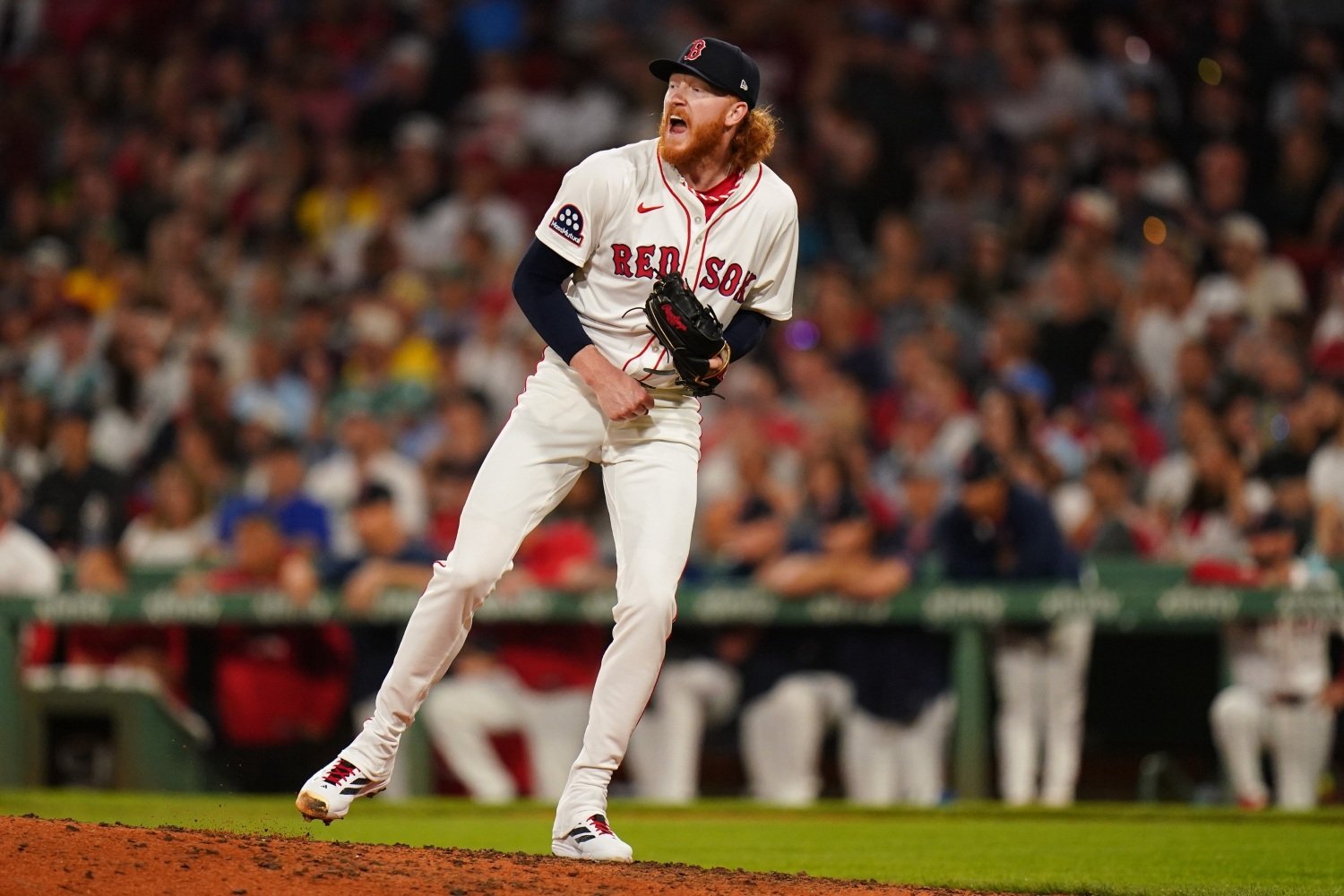
Dustin May, RHP
The Athletic Rank: 42
Projected Contract: 2 years, $26 million
May is the type of player who could intrigue the Twins front office, if the team decides to trade away established arms like López or Ryan. May’s upside has always been tantalizing, but constant interruptions have defined his career.
It has been more than six years since his major-league debut, yet May has managed only 57 career starts. The 2025 campaign marked the first time he exceeded 56 innings in a season. Injuries have come in every variety: elbow, back, and even a bizarre esophagus injury that required emergency surgery in 2024 after a piece of salad became lodged in his throat.
From 2019 to 2023, May posted a 3.10 ERA across 191 2/3 innings, flashing frontline potential whenever healthy. In 2025, he made 23 starts and recorded a 4.96 ERA, struggling after a midseason trade to Boston and eventually landing back on the injured list with right elbow neuritis.
For the Twins, May’s appeal would center on his ceiling. If he stays healthy, his stuff could rival anyone in the rotation. However, with The Athletic projecting a two-year, $26-million deal, that price tag may prove too steep for a team prioritizing financial flexibility. (That projection, of course, is not gospel.)
Rhys Hoskins, 1B
The Athletic Rank: 43
Projected Contract: 1 year, $10 million
Minnesota has recently found success with short-term, low-cost first-base signings. In 2024, the team used savings from the Polanco trade to sign Carlos Santana to a one-year, $6-million deal, and he rewarded them with elite defense that earned him a Gold Glove. Last season, Ty France joined on a one-year, $1 million non-guaranteed deal and followed in Santana’s footsteps by winning another Gold Glove. Given that pattern, it’s hard to imagine the Twins committing $10 million to Rhys Hoskins without first clearing significant payroll, possibly by trading López.
Since missing all of 2023 with a torn ACL, Hoskins hasn’t fully recaptured his pre-injury form. He lost playing time late in 2025 as Milwaukee leaned on Andrew Vaughn, and his offensive output dipped. Over the past two seasons, he’s hit 38 home runs but batted just .223 with a 102 OPS+, production that’s solid overall but underwhelming for a first baseman.
Still, Hoskins offers power potential that could lengthen Minnesota’s lineup. If he’s open to a one-year “prove-it” deal closer to the range the Twins have favored recently, he might be a realistic option.
Outlook for 2026
The Twins are facing an offseason of financial restraint. That doesn’t mean they can’t improve the roster, but it does mean they’ll need to rely on shrewd trades, bounce-back candidates, and internal development rather than headline signings.
If the front office can navigate those limitations effectively, Minnesota could remain competitive in the AL Central. But if payroll restrictions tighten even further, fans may have to brace for a quieter winter and hope that creativity and player development can make up the difference.
Do Hoskins or May fit better into Minnesota’s 2026 blueprint? Are any other top free agents a fit for the Twins? Leave a comment and start the discussion.