
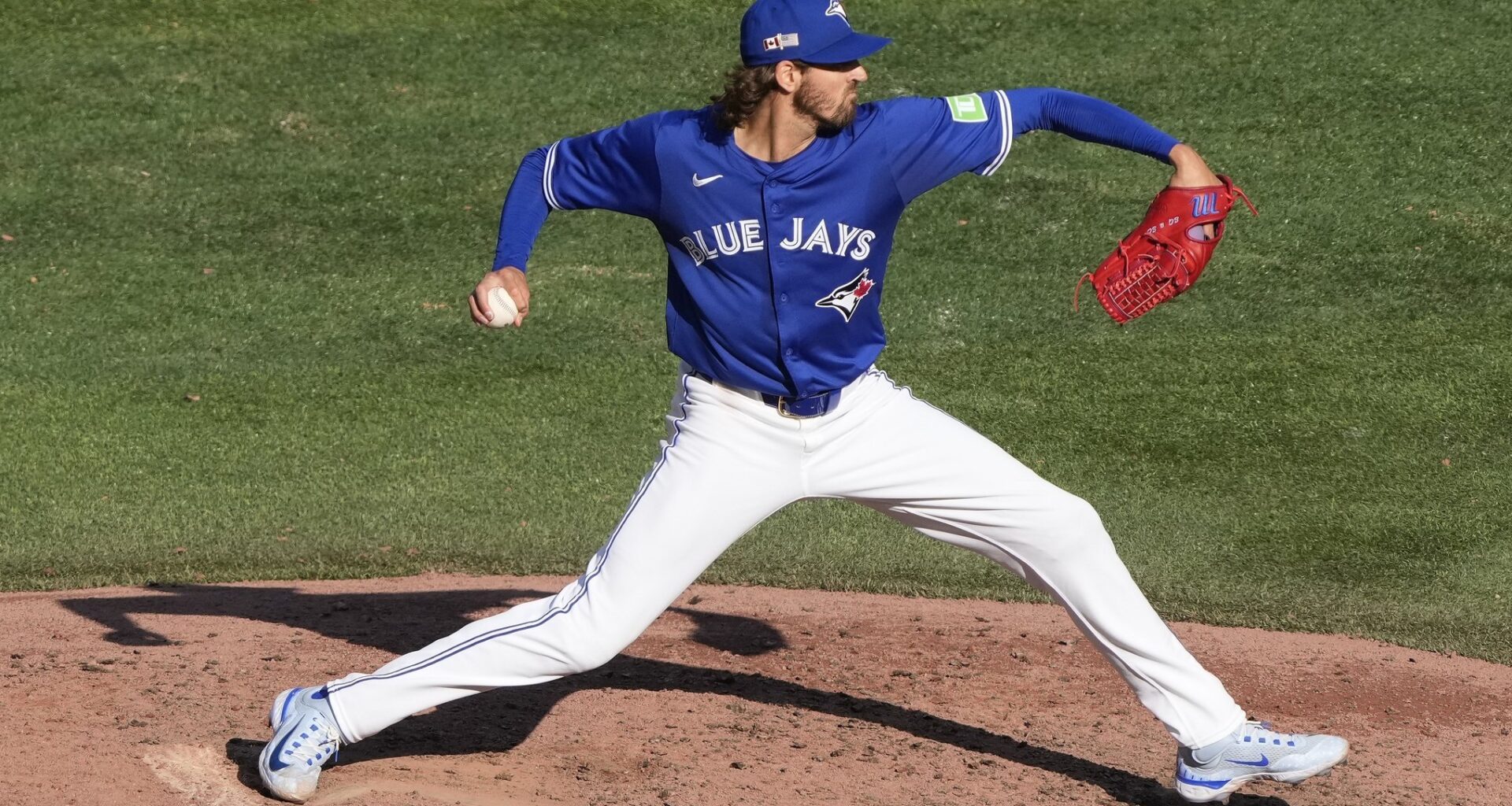
Let’s not pretend the split-finger fastball is anything new.
It’s been part of baseball’s lexicon for decades, and it’s been a talking point seemingly every postseason for years now. But 2025 was different. Thanks to two World Series juggernauts making deep runs in the playoffs, the splitter was featured more in this year’s postseason (1,047 times) than in the last four combined (1,035).
That’s bound to happen when splitter-heavy starting pitchers each make five-plus starts. Shohei Ohtani, Yoshinobu Yamamoto, Trey Yesavage, and Kevin Gausman combined to make 22 appearances on the mound, and the latter three each threw the splitter at least 25.4% of the time during the regular season. All four leaned on the pitch even more under the postseason lights.
And it’s easy to see why. A good splitter can effectively miss bats when tunneled with a high-velocity fastball, and it can produce weak contact even when tracked by the hitter. Eno Sarris of The Athletic noted in a recent article that damage was limited in this year’s playoffs even when contact was made, and advancements in the pitch’s development have been significant in 2025.
“While the slugging was up on the split-finger over the last few years, it was still only .250 for the postseason,” he said. “Our understanding of how the seams create movement took a step forward with Seam-Shifted Wake, and that’s part of why Yesavage’s splitter is so effective. So teams can create better splitters more effectively now than they could in past years.”
With that in mind, teams should look to develop better splitters or add arms that already feature the pitch, as several clubs were lacking in that department in 2025.
Minnesota Twins
There are plenty of areas where the Twins need to improve as they head into 2026. While their pitching corps isn’t their most glaring need, it could benefit them to find arms that can throw an effective splitter. They’re known for developing significant velocity within their pitching pipeline—now they need to find a way to pair that heat with a true off-speed weapon.
The best splitter on the 2025 team belonged to former closer Jhoan Duran before he was traded to the Philadelphia Phillies. Among likely returning pitchers, reliever Cole Sands owned the best version, throwing it 21.6% of the time and allowing only two extra-base hits all season. Simeon Woods Richardson added the split to his repertoire in 2025, throwing it 10% of the time and limiting opponents to a .137 batting average. He could increase its usage going forward in hopes of replacing his lackluster changeup. Joe Ryan was the team’s best overall pitcher this year, but his splitter results dipped; he threw it 11% of the time and allowed a .478 slugging percentage with a notable drop in whiff rate.
San Diego Padres
Yu Darvish will miss the 2026 season after undergoing elbow surgery this week. He was the only starting pitcher on the roster who featured a real splitter, and even he had mixed results with it. The good news is that Jeremiah Estrada and Yuki Matsui are both set to return to the bullpen, and each threw the splitter at least 23% of the time. Estrada, in particular, found great success with the pitch in 2025, holding hitters to a .127 batting average and just two extra-base hits while using it as his primary put-away offering. Matsui’s splitter was serviceable but led to four home runs and four doubles—far less effective than in his rookie season in 2024.
The Padres will surely look to bolster their pitching staff if they hope to remain in contention behind the juggernaut Dodgers. There will be intriguing splitter-heavy arms on the free-agent market, led by Shota Imanaga, who could draw interest depending on price.
Milwaukee Brewers
The team with the best record in baseball did it without a standout splitter. Shelby Miller and his splitter came over at the trade deadline but failed to make a real impact, posting a 5.59 ERA across 11 appearances with the Brewers. He’s now a free agent and set to miss the entire 2026 season while recovering from UCL surgery. Tobias Myers added a splitter entering 2025 and found success, allowing just a .108 batting average and two doubles. He could have a shot at cracking the Opening Day bullpen. Rob Zastryzny also has a splitter in his arsenal, but he didn’t use it often.
If the Brewers hope to build on their 2025 success, it would make sense for them to identify more arms capable of throwing split-finger fastballs—particularly in the starting rotation, where the club is stocked with young, high-octane pitchers.
What do you think? Is splitter usage going to continue to grow league-wide? What else should these teams do to be proactive as these trends continue? Let us know your thoughts in the comment section, and as always, stay sweet.