
Today is something of a holiday on the amateur calendar, as it marks the first day members of college baseball’s 2026 recruiting classes can put pen to paper to solidify their respective commitments.
To celebrate, Baseball America presents our initial rankings of the top 25 recruiting classes for 2026.
Below, BA subscribers can find a complete rundown of the top programs and players to know for the recruiting cycle. As always, it’s important to keep in mind that a number of the recruiting classes will be affected by the draft, even if it’s hard to project exactly how much at this point.
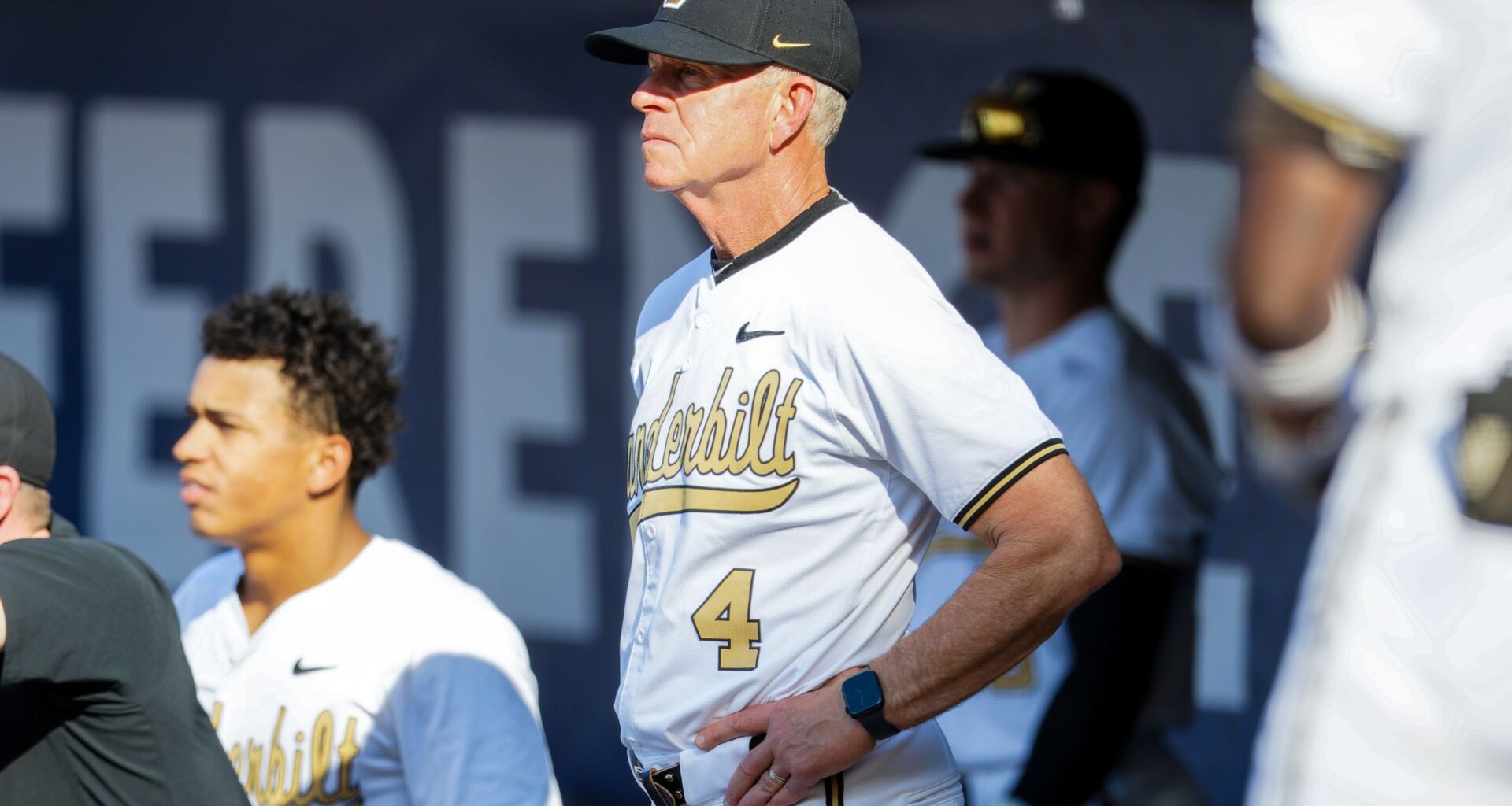
1. Vanderbilt
The Commodores boast the top recruiting class in the country led by a whopping seven players who rank inside the top 100 on our 2026 MLB Draft rankings. The top pitcher in the class is righthander Joseph Contreras, who is the son of 11-year big leaguer Jose Contreras. Listed at 6-foot-4 and 195 pounds, Joseph has exciting “now” stuff to go along with plenty of physical projection. His fastball has been up to 98 mph, and he pairs it with a low-to-mid-80s slider that flashes plus, as well as a mid-70s forkball and low-80s changeup.
On the other side of the baseball, Aiden Ruiz is the best defensive shortstop in the class. Ruiz looks the part of a professional shortstop, and on the dirt, he has quick feet with soft hands and smooth actions. He has the arm strength to handle the position and has shown a knack for making SportsCenter-esque, highlight-reel plays. At the dish, Ruiz has a line drive-oriented stroke from both sides of the plate. He has present bat speed and high-level contact skills, and his power at this point is geared more towards extra-base hits than it is home runs.
Shifting from the dirt to the grass, outfielder Noah Wilson has a pro body with present strength and some projection remaining. He possesses an enticing toolset, headlined by his combination of speed and athleticism. Wilson has shown he can drive the baseball from gap to gap, and he could eventually grow into being a 20-25 home run threat. A plus runner, Wilson’s speed translates well both on the basepaths and in the outfield.
Fellow outfielder Eric Booth Jr. is a “toolshed” in every sense of the phrase. An outstanding athlete, he has a unique swing and big-time bat speed. If he can pull the ball in the air more, Booth Jr. could eventually grow into above-average power. A true difference-maker with his legs, Booth Jr. routinely turns in double-plus run times.
Shortstop Keon Johnson stands out for his exceptional bat speed and advanced approach. He can already impact the baseball, but it’s easy to envision him getting even stronger as he continues to mature physically. He has demonstrated an advanced feel for the strike zone to go along with polished swing decisions and slightly above-average contact skills. Johnson doesn’t have an individual tool that jumps off the page, but he’s a well-rounded player.
Righthander Eli Herst is a prototypical projection arm. Listed at 6-foot-5 and 205 pounds, Herst has a fast arm with room to continue to fill out. His fastball has been up to 93 mph, but it plays up thanks to his plus extension. He rounds out his three-pitch mix with a slider and changeup, and it’s easy to envision his entire arsenal taking a sizable step forward, both in velocity and dynamism, as he continues to add strength to his frame.
Canadian southpaw Sean Duncan impressed this fall in Jupiter, and it’s easy to see why he has a chance to be selected inside the first two or three rounds. At 6-foot-3 and 180 pounds, Duncan has a lean, high-waisted frame with plenty of projection remaining. He has a loose, repeatable delivery and attacks out of a three-quarters slot with an appealing ease to his operation. Duncan’s fastball has been up to 95 mph, and plays particularly well in the top half of the zone thanks to its riding life. His moneymaker is a low-80s slider that has no-doubt plus potential. Not only is there a lot to like now with Duncan, but there’s just as much to dream on.
2. LSU
LSU is one of very few programs in the country that has it “figured out” across all facets. Coach Jay Johnson and his staff are experts at navigating the transfer portal, though they also know how to recruit and develop their homegrown talent at as high a level as anyone. Most importantly, the entire program embodies what it means to be a winner. The Tigers have captured two of the last three national championships and show no signs of slowing down.
The Tigers’ 2026 class is headlined by the one-two punch of lefthander Logan Schmidt and righthander Jensen Hirschkorn. Schmidt is a 6-foot-4 southpaw who will still be just 17 years old on draft day. He has a repeatable delivery and features a fastball that’s been up to 97 mph to go along with a slurvy high-70s-to-low-80s breaking ball. Schmidt uses it almost exclusively against righthanded hitters. His changeup is an intriguing offering with above-average upside. It sits in the mid-to-upper-80s, and it’s a pitch he throws with conviction.
Hirschkorn was a recent pickup for LSU, and his draft stock seems to improve with each passing day. This summer at the Area Code Games, Hirschkorn was flat-out untouchable and fired three perfect innings in which all nine outs came by way of the strikeout. At 6-foot-7 and 205 pounds, he has an ideal pitcher’s frame with ample projection remaining. His fastball has been up to 96 mph, and both of his breaking balls—a low-80s slider and a mid-to-upper-80s changeup—are viable swing-and-miss pitches. Hirschkorn falls into a number of positive buckets. He possesses a blend of strikes, stuff and projection, and he looks the part of a potential future first-round pick.
Not to be outdone, 6-foot-5 righthander Cooper Sides also has a lot to dream on. Sides has a whippy arm stroke and attacks out of a low three-quarters slot. His fastball this summer was up to 95 mph, and he pairs it with a low-80s slider that flashes late teeth and a mid-80s changeup.
LSU’s group of position players is headlined by outfielder Malachi Washington. Washington is one of the best pure athletes in the class, and he has a chance to be a plus defender in center field. A plus runner with a plus arm, he also has a quick first step and tons of range in all directions. In the box, Washington has above-average bat speed and some present strength below the elbows, but his hit tool could use a coat or two of polish.
3. Tennessee
The last two months have been perhaps the most eventful stretch in Tennessee baseball history thanks to the departure of Tony Vitello. However, the Volunteers, due in large part to naming former recruiting coordinator Josh Elander their next head coach, were able to keep their immensely talented 2026 class entirely intact.
The straw that stirs the drink—both within this year’s Tennessee’s class and on every team he’s a part of—is outfielder Trevor Condon. I was familiar with Condon before this year’s WWBA World Championship, but I became enamored with him after my impressive in-person look. A sparkplug in every sense of the word, Condon has an athletic frame with strength and impact—particularly to the pull side—packed into it. He is a prototypical top-of-the-order tablesetter who has an explosive and twitchy operation in the box with no-doubt plus bat speed to go along with a feel for the barrel and high-level bat-to-ball skills.
Condon’s tantalizing combination of speed and athleticism translates well to center field. He has plenty of gap-to-gap range and can really go and get the baseball. If he can shore up his routes by taking more efficient and crisp paths to the baseball, he has a chance to become an impact defender. As a nice cherry on top, Condon’s on-field makeup is outstanding. His baseball sense is advanced, and he plays the game with his hair on fire. Condon has an unbelievably high motor and does not take a single pitch off. It feels like he’s always involved in some capacity.
Texas native Cole Koeninger is one of the top two-way players in the class. At 6-foot-3 and 205 pounds, he has an athletic, pro body. In the box, he’s an aggressive hitter with present bat speed who has shown the ability to generate quality contact on a regular basis. He’s also a plus runner with a plus arm at shortstop. On the mound, Koeninger’s fastball has been up to 97 mph to go along with a sharp, low-80s curveball that he spins well.
The son of Hall of Famer Jim Thome, shortstop Landon Thome is one of the better pure hitters in the class. Landon has a loose, easy swing from the left side with—you guessed it—plus power to the pull side. His power as a whole grades out above-average. On the dirt, his defensive skillset could profile better at second or third base professionally. Thome has been a consistent performer on the summer circuit, headlined by a loud showing at the 2025 Area Code Games.
Standing at an imposing 6-foot-8 and 210 pounds, righthander Gary Morse features a fastball that sits in the mid 90s and has been up to 97 mph. It plays particularly well and generates the vast majority of its swing-and-miss when located in the top half of the zone. Morse primarily pairs his heater with a mid-80s changeup that flashes both tumble and fade. It’s rather easy to envision it evolving into an eventual plus pitch. However, Morse will need to develop a viable third pitch. He’ll flash an upper-70s curveball, though it lacks teeth and putaway traits. In what is the case with anyone his size, Morse will need to work to keep his long limbs in-sync throughout his operation.
4. Texas
The Longhorns put together the top 2025 recruiting class, and their 2026 class is not far behind. Coach Jim Schlossnagle and his staff have hit the ground running in Austin, and it feels like Texas will be dog-piling in Omaha before long.
The crown jewel of this year’s class is prized shortstop Grady Emerson. The top-ranked high school player in the country, Emerson is in the conversation to be selected first overall this July. A 6-foot-2, 180-pound lefthanded-hitting shortstop, Emerson has a well-rounded set of tools and emphatically checks almost every box. He’s an advanced pure hitter with an advanced approach and a quick, smooth swing. He doesn’t get too jumpy or trigger happy, and he’s comfortable using the entire field. Emerson already has present bat speed, and he figures to grow into more over-the-fence power as he continues to fill out. Defensively, Emerson profiles as a slam dunk to stick at shortstop long term. He’s a plus runner with sound actions, an advanced internal clock and more than enough arm strength to handle the position.
Righthander Trey Rangel is a high-level athlete with high-octane stuff. There’s some effort in his delivery, but he has no-doubt plus arm speed and features a fastball that’s been up to 98 mph with both run and ride through the zone. Rangel also features a banger slider that sits in the low 80s. Routinely eclipsing 3,000 rpms, it’s a comfortably-plus pitch that generates whiffs against both righthanded and lefthanded hitters. He completes his arsenal with a firm changeup that’s a rather distant third offering at this point. There’s some reliever risk with Rangel due to the effort in his delivery and spotty command, but his fastball-slider combination is one of the more dynamic one-two punches in the class.
Corner infielder Beau Peterson stands out for his power, and it’s a tool he doesn’t need to sell out to get to. He has a strong, physical build and has shown the ability to drive the baseball with authority to all fields. However, he’ll need to hit enough to be able to get to his power consistently on a game-to-game basis. Peterson’s defensive profile is a little bit more murky. He has an above-average arm at third base, but his actions likely translate best either at first or in a corner outfield spot professionally.
5. Florida
It’s no secret that it’s been a tumultuous last few weeks in Gainesville. On Oct. 22, it was announced that Gators coach Kevin O’Sullivan would be taking a leave of absence. A little over a week later, news broke that former associate head coach and recruiting coordinator Chuck Jeroloman would be taking the same role at Tennessee. Nonetheless, the Gators still boast a top five recruiting class heading into National Signing Day.
Outfielder Brady Harris has a number of impact tools and has shown the ability to play a premium position at a high level. He has no shortage of bat speed and raw power, though he’ll need to refine his pitch recognition skills and general hittability. There’s a lot of swing-and-miss in his game, and he’ll need to show he can put the ball in play on a consistent enough basis to generate quality contact in-game. In center field, Harris is a plus runner with a plus arm who has ample gap-to-gap range.
Fellow outfielder Kevin Roberts Jr. is one of the youngest players in the class and has a frame to dream on. With Roberts’ bat speed and physical projection, it’s easy to project on him growing into comfortably-plus raw power. However, Roberts Jr. struggles to pick up spin out of the hand and has some hit tool questions. Nonetheless, he’s a plus runner with a plus arm and at least plus raw power.
Six-foot-eight righthander Denton Lord has loads of upside, and the towering righthander has already run his fastball up to 97 mph. Lord has present arm speed, and his fastball figures to continue to tick up. He supplements his heater with a mid-to-upper-70s curveball that flashes downward bite and rounds out his arsenal with a seldom-used changeup.
6. Miami
Miami’s recruiting class fits into the “quality over quantity” bucket, and there’s no shortage of high-end talent at the top of the Hurricanes’ class.
Shortstop Jacob Lombard has long been viewed as a premier player in the class, and he’s one of the best pure athletes in this year’s draft. The 6-foot-3 Lombard is a double-plus runner who’s also flashed plus raw power, but he’ll need to shore up his hit tool to be able to tap into it regularly. There were serious swing-and-miss issues this summer, and his profile is accompanied by some concern about what the quality of his hit tool will end up being. Lombard shines at shortstop, where his elite athleticism jumps off the page. He has quick feet with more than enough arm strength to stick at the position, and he looks like a slam dunk to play there professionally. Lombard’s ceiling is sky-high, and he very well could be picked in the top half of the first round this year.
Southpaw Gio Rojas is one of the best prep pitchers in the class and could be one of the first few arms off the board this July. At 6-foot-4 and 190 pounds, Rojas has a prototypical pitcher’s frame with projection remaining, and he features an easy, repeatable delivery with tremendous arm speed. Rojas’ fastball is his go-to offering and has been up to 98 mph, and he also features a high-spin low-80s slider that has plus potential and a low-80s changeup.
To supplement Lombard on the dirt, fellow shortstop Rookie Shepard has top-five-round upside in this year’s draft. Over the last calendar year, Shepard has grown into more pullside power. It was accompanied by an uptick in swing-and-miss, but he has advanced hand-eye coordination and has shown the ability to pepper all parts of the field with line drives. Shepard has a sound defensive skillset at shortstop, but he could slide over to second base as he progresses through pro ball.
7. Wake Forest
Despite former pitching coach Corey Muscara leaving to take over as head coach at Duke, coach Tom Walter and his staff still managed to put together a top-notch recruiting class.
The class is led by lefthander Carson Bolemon, who’s one of the best prep pitchers in this year’s draft. A southpaw that fits into the “strikes and stuff” bucket, Bolemon features a fastball that’s been up to 96 mph, as well as a pair of distinct breaking balls. His upper-70s-to-low-80s curveball flashes impressive depth, while his low-80s slider flashes sharp two-plane tilt. He has an advanced feel for his entire arsenal and certainly looks the part of a potential future first-round pick.
Catcher Andrew Costello is old for the class and turns 19 in January, but he would be quite the get for the Demon Deacons should he make it to campus. Costello has a compact, physical build with a quick swing from the right side. He has plenty of strength in his wrists and forearms, his barrel accelerates through the hitting zone and his highest quality of contact comes to the pull side. Behind the plate, Costello has compact footwork with an above-average arm and advanced catch-and-throw skills. What is perhaps a separator with Costello is his mighty advanced feel for the game. He doesn’t take a pitch off, and his baseball IQ stands out.
Six-foot-two shortstop Ethan Bass is one of the more highly-regarded hitters in the Midwest. He has a smooth swing and a pull-oriented approach, and he’s shown the ability to get his barrel to higher-end velocity. Bass’ power and defense have both taken steps in the right direction, and the trend is most definitely his friend heading into the spring.
8. Mississippi State
While he is yet to officially coach a game in Starkville, Brian O’Connor has already begun to make his mark. After netting the No. 2 newcomer class, O’Connor and his staff have put together a top 10 recruiting class.
Their class received a significant boost when Will Brick announced he would be reclassifying, and he is currently the Bulldogs’ top recruit. Previously the top-ranked catcher in the 2027 class, he has the tools to be an impact player on both sides of the baseball. Brick has present bat speed and raw power, though he also has an advanced approach and can drive the baseball from gap-to-gap. Behind the dish, Brick is an advanced receiver with a plus arm and high-level catch-and-throw skills.
On the bump, 6-foot-4 righthander Wilson Andersen has plenty of arm speed and features a fastball that has been into the mid-to-upper 90s as well as a low-to-mid-80s changeup, a mid-80s slider and a high-70s-to-low-80s curveball. Andersen’s changeup plays well off his fastball, but his breaking balls are more of a work in progress. Both his slider and curveball have shown positive flashes, and it will be interesting to see if one separates itself as a viable third option. With projection remaining, Andersen is not yet a finished product, and his entire arsenal should only get more dynamic.
Speaking of 2027 players who reclassed, shortstop Rocco Maniscalco jumped into the 2026 class and won’t turn 18 until May 2027. A 6-foot-2, 185-pound switch-hitter, Maniscalco has present physicality with bat speed from both the right- and left-hand side of the plate. He defends well at shortstop, where he certainly has a chance to stick long term.
9. Stanford
As it pertains to getting its high-level recruits to campus, Stanford has the most impressive track record of any school in the country. Since 2015, the Cardinal have lost just one player—righthander Michael Mercado—to the draft.
However, that will certainly be put to the test this year, as shortstop Tyler Spangler is one of the top players in the class and could hear his name called within the first 10 picks. Spangler has a lean 6-foot-3, 195-pound frame with an advanced feel for the barrel. He has high-level bat-to-ball skills with quick hands and an easy swing that routinely yields quality contact. Between his bat speed and projection remaining, Spangler should only grow into more power as he continues to mature physically. At shortstop, Spangler moves well in either direction and boasts smooth actions and a strong arm.
Archer Horn is a real two-way player who has the ability to impact the game on either side of the baseball. At the plate, Horn has present bat speed and could eventually grow into above-average power, while on the dirt he has a plus arm that profiles well on the left side of the infield. As a pitcher, Horn’s fastball has been up to 95 mph to go along with a changeup that flashes both tumble and fade. To round out his arsenal, Horn deploys a mid-70s curveball that is a fine third offering.
Connecticut native Bryce Hill has run his fastball up to 99 mph, and the 6-foot-5 righthander has ascended up draft boards over the last several months. The command for his heater will waver, but it’s at its best when located in the top half of the zone. He will need to develop a couple of viable secondaries, though he’s shown a curveball and heavy changeup. Both are more of a work in progress right now, and he’ll lower his slot at times when delivering his curveball. Nonetheless, there are exciting traits to work with here.
10. Oklahoma
The Sooners’ class is headlined by 6-foot-8 righthander Savion Sims. Sims has serious arm strength, and he features a fastball that sits in the mid-to-upper-90s and has already topped out at 100. He has plenty of arm speed, and he supplements his heater with a mid-to-upper-80s slider that will vary in shape. While he relies heavily on his fastball-slider combination, Sims will occasionally mix in an upper-80s changeup. His command can be scattershot, and he’ll need to refine his secondaries, but he is an ultra-exciting ball of clay to mold.
Shortstop Jason Amalbert has been a steady riser in the class, and he finished up his summer with a standout performance at the Area Code Games in which he went 6-for-11. He’s a well-rounded player who flashes present thump to the pull side and a polished approach. At shortstop, Amalbert has an above-average arm, and his defensive skillset gives him a chance to stick at the position.
Six-foot-four third baseman Anthony Del Angel has a bit of a unique swing, but he has solid hand-eye coordination to go along with quickness in his hands. Del Angel has exciting power potential and is also an above-average runner with an above-average arm that profiles well at either third base or in a corner outfield spot.
11. Auburn
After a bit of a down year in 2024, Auburn coach Butch Thompson righted the ship in 2025 and led the Tigers to their second 40-win season and third super regional appearance since 2018. Thompson and his staff received key contributions from the freshman trio of Chase Fralick, Chris Rembert and Bub Terrell, and it should be an encouraging sign to recruits that their future coaching staff is not hesitant to play freshmen, should they earn the opportunity.
Righthander Coleman Borthwick is a 6-foot-6, 255-pound workhorse who boasts a fastball that’s been into the upper 90s to go along with a sharp mid-80s slider that has plus potential and a seldom-used mid-80s changeup. Borthwick moves rather well for someone of his size, and he’s a consistent strike-thrower with a repeatable delivery.
Jace Mataczynski is an outstanding athlete who generated tons of buzz after a standout showing in Jupiter. His swing is very much a work in progress, but there’s real power upside. He’s a plus runner whose glove work at shortstop has also earned high grades thanks to his plus arm and graceful actions. Mataczynski’s swing will certainly need to be ironed out, but his combination of athleticism and upside is hard to ignore.
Catcher John Stowers is young for the class and has a prototypical catcher’s frame. He has present physicality and a rather compact build, and he’s an advanced receiver who has a knack for stealing strikes. Stowers does a nice job of corralling balls in the dirt, and while his arm is average, his quick transfers help compensate a bit for his lack of a plus arm. At the plate, Stowers has a smooth lefthanded swing and takes a direct path to contact.
12. Clemson
Though Clemson is still looking to break down the door to Omaha for the first time since 2010, the Tigers in 2025 won 40-plus games for the third-straight season. Coach Erik Bakich has established himself as an excellent recruiter, and it’s a quality that’s reflected in each of Clemson’s recent classes.
The big fish in Clemson’s 2026 class is righthander Blake Bryant. Standing at 6-foot-5 with plenty of projection remaining, Bryant has plus arm speed and features a fastball that’s been up to 96 mph. He also uses a low-80s slider that has flashed at times, an upper-70s curveball and a mid-80s changeup. Bryant’s best offering is undoubtedly his heater, but his entire four-pitch mix should only get more dynamic as he continues to get more physical.
Six-foot-four outfielder Jaxon Matthews has exciting power potential from the left side, and he features thunderous bat speed with strength in both his hands and forearms. There is some effort in Matthews’ operation that leads to swing-and-miss, but his plus power potential and plus arm profile nicely in right field.
Fellow outfielder Sterling Coaxum is an excellent athlete who’s a 70-grade runner with good instincts in center field. While his arm is below-average, Coaxum’s speed, athleticism and first step help compensate for it and give him a chance to stick at the position. Coaxum has added strength which has led to an increase in bat speed, though he’ll need to reduce his swing-and-miss.
13. Virginia
Like Brian O’Connor at Mississippi State, Virginia coach Chris Pollard and his staff have also wasted no time making an immediate impact in Charlottesville.
Initially committed to Duke, shortstop Bryant James is an ultra-twitchy athlete who showed well in Jupiter. He’s a double-plus runner with an above-average arm at shortstop to go along with plenty of bat speed. There’s a little bit of crudeness to his offensive profile in that he’ll need to refine his hit tool, but James’ tools and upside make him an intriguing follow in this year’s draft cycle.
While we’re on the topic of projection and upside, lefthander Sean Loggie fits the description to a tee. A 6-foot-6 southpaw, Loggie has plenty of room to add physicality. His fastball has already been up to 93 mph with some gloveside cut, and he’ll also flash a low-to-mid-80s slider that he uses as a swing-and-miss pitch against both righthanded and lefthanded hitters. He rounds out his arsenal with a seldom-used changeup, though it doesn’t get much separation off his heater.
Infielder Deacon Nelson has a smooth stroke from the left side and has been a consistent in-game performer, while on the dirt he’s a plus runner with an average arm. Currently a shortstop, Nelson could eventually move off the position.
14. Arkansas
It’s hard to come up with a more gut-wrenching end to the season than what Arkansas experienced, but the Razorbacks head into 2026 with their sights set on a return trip to Omaha. A couple of freshmen are already on their way to impactful roles, and coach Dave Van Horn is not hesitant to play his newcomers.
The son of former NFL fullback Jorvorskie Lane Sr., Jorvorskie Lane Jr. is a big-time athlete who has explosive hand and bat speed. Lane Jr.’s swing can get long, and he’ll struggle against spin at times, but he has some of the more impressive raw power in the 2026 class. Lane is a power-over-hit profile whose arm strength projects well both behind the plate and in the outfield. However, it’s unclear where he projects long-term.
Six-foot-five outfielder Judah Ota has a frame to dream on and enticing offensive upside. He has a rhythmic swing from the left side, and while there’s swing-and-miss in his profile, Ota has cut down on some of the movement in his operation. Given his size and projection remaining, Ota has a chance to develop plus raw power.
Infielder Spencer Browning has a physical build and is a double-plus runner whose defensive skillset profiles best on the left side of the infield. Browning has present bat speed and extra-base hit power, but there are some hit-ability questions. Like Lane Jr., he’s a power-over-hit profile.
15. Georgia
Georgia coach Wes Johnson has won 86 games in his first two years at the helm, and he has the Bulldogs well-positioned for a sustained period of success. Johnson is a fan of the transfer portal, but he also has a strong knack for developing homegrown talent.
Unsurprisingly, the strength of Georgia’s 2026 class is its pitching. Righthander Landon Schutte has some effort in his delivery, but he’s a sound strike-thrower and features a fastball that’s been into the mid 90s to go along with a curveball and a slider that he spins reasonably well. Schutte’s breaking balls need refining, but his ability to spin the baseball is a solid building block.
Fellow righthander Matthew Sharman relies heavily on his fastball-changeup combination. The former has touched 94 mph with run and sink out of Sharman’s low three-quarters slot, while the latter is a no-doubt plus pitch that gets big-time separation off his heater and flashes ample fade with late tumble. It’s a pitch for which he has an advanced feel. Sharman completes his three-pitch mix with a slider that lags behind his changeup and fastball.
Southpaw Connor Langdon has some funk in his delivery and deploys a low-90s fastball that’s been up to 95 mph with natural arm side run. His slider is arguably his best pitch, and it flashes effective lateral life that helps to generate empty swings. Langdon’s changeup profiles as a solid third pitch against righthanded hitters.
16. Florida State
In what’s become the norm under coach Link Jarrett, Florida State again boasts a strong recruiting class.
Righthander Kaden Waechter is the crown jewel of the class. The 6-foot-3 righthander has an under-control delivery and an appealing blend of strikes and stuff. He’s run his fastball up to 96 mph with life through the zone, while his mid-80s slider consistently generates empty swings. Waechter’s fastball and slider are undoubtedly his best offerings, though he’s also shown a mid-80s changeup.
Fellow righthander Brayden Harris has an effortful delivery, but he consistently competes in and around the strike zone. His fastball has been up to 95 mph, but his bread-and-butter pitch is a low-80s slider that flashes some sharpness and is his most reliable swing-and-miss offering. His changeup gets solid separation off his heater.
Six-foot-six outfielder Genson Veras is trending up, and he has a litany of exciting tools to go along with his big league body.
17. Texas A&M
While 2025 was wildly disappointing, Aggies coach Michael Earley has the necessary pieces in place to right the ship. His 2026 roster is capable of making a regional and then some, but there are also a few exciting pieces who could help contribute to the future success of Texas A&M baseball.
Infielder Connor Comeau has a long, lanky frame—with particular length in his lower half—and plenty of physical projection remaining. He stands fairly tall in the box with a slightly-open front side and shoulder-high handset. He has a simple operation without a whole lot of moving parts, and he deploys a small leg lift that gives way to a normal stride. Comeau’s a bit lacking in the physicality department, but he still has solid bat speed and is able to generate quality contact on a regular basis. He has present power, but it’s not all that difficult to envision him growing into above-average or plus game power. His power upside is tantalizing, but Comeau also has a feel to hit.
Comeau’s defensive profile is somewhat murky. He’s played both corner infield spots and got some run at shortstop over the summer, but his overall defensive skillset figures to profile best in a corner outfield spot when all is said and done. His movement profile and level of athleticism likely bodes better on the grass than it does on the dirt. Comeau will still only be 17 at the draft, and he has an exciting blend of a body to dream on, present tools and plenty of upside.
Outfielder Ryan Harwood has a physical build and has been a consistent performer on the summer circuit. Harwood has an efficient swing with above-average bat speed and intriguing power upside, while his above-average arm profiles well in a corner outfield spot.
Shortstop Trey Ebel is the son of Dodgers third base coach Dino Ebel and the brother of No. 32 overall 2025 pick Brady Ebel. His strength gains over the last calendar year have led to more quality contact. Ebel’s instincts and overall defensive skillset make him a sure bet to stick on the dirt, it’s just a matter of where.
18. Ole Miss
2025 was somewhat of a “put up or shut up” season in Oxford, and coach Mike Bianco and his Rebels more than rose to the occasion. They did an outstanding job of blocking out the outside noise and collected 43 wins en route to hosting a regional. Throughout his storied career, Bianco has established an impressive track record of development that is reflected in each of his recruiting classes.
Shortstop Cole Prosek is certainly a risk to get drafted and sign, but for now, he’s one of the more advanced prep hitters in the class. He has a simple swing from the left side to go along with an advanced feel for the barrel and an all-fields approach. Prosek has present home run power, but his in-game power figures to become more prolific over time. While he’ll likely move off of shortstop professionally, Prosek’s hit-power combination is tantalizing.
Fellow infielder Christian Doty has a quick swing without much wasted movement, and he projects as a hit-over-power profile with a knack for moving the baseball. Unlike Prosek, Doty is a slightly above-average runner whose arm strength gives him a chance to stick on the left side of the field.
19. Kentucky
Kentucky coach Nick Mingione has shown that a freshman is more than capable of arriving on campus and earning a high-leverage role from the get-go. In 2025, it was Tyler Bell, while in 2026 it could be Owen Jenkins.
There’s no telling how this year’s draft will go, but shortstop Matt Ponatoski could make an immediate impact if he makes it to campus. The quarterback of his high school football team and Ohio Gatorade Player of the Year, Ponatoski is committed to play both baseball and football for the Wildcats. Ponatoski is an excellent pure athlete who has advanced hand-eye coordination with a good feel for the strike zone and polished approach. He has both bat and hand speed and routinely generates quality contact. While he’s an outstanding pure athlete, Ponatoski is a fringey runner who will likely move off of shortstop in pro ball. However, he has a comfortably double-plus arm and has also run his fastball into the mid 90s on the mound.
Outfielder Rob Czarniecki has an intriguing toolset, headlined by his power-speed combination. Czarniecki has no shortage of bat speed to go along with pullside thump. He’s also a plus runner who has a chance to stick in center field.
20. Oregon State
Outfielder Blake Bowen almost singlehandedly propelled the Beavers into the top 20, and for good reason. The 6-foot-3, 215-pound outfielder looks like an NFL free safety, and he was one of the best performers on the 2025 summer circuit. Bowen has a tantalizing combination of bat speed and raw power, and this summer his swing decisions took a step in the right direction. All Bowen did this summer was hit, and he routinely generated quality contact in-game and against all pitch types. Bowen is a physical specimen, but he moves well for his size. While he’s an above-average runner with a plus arm, he figures to rove right field in pro ball.
Not to be outdone, Julian Sabourin is an arm on which to keep close tabs. A native of Ontario, Canada, Sabourin won’t turn 18 until after the draft. He has a smooth delivery and has already been up to 92 mph with his fastball, while his low-80s slider has flashed sharpness and profiles as the most reliable swing-and-miss offering in his arsenal. Sabourin will need to develop a consistent third offering, but his changeup projects as exactly that.
21. Alabama
For the second time in as many seasons at the helm, coach Rob Vaughn guided Alabama to a regional. As everyone’s focus begins to shift towards 2026, the Crimson Tide again look like a team to be reckoned with.
Though he’s slightly undersized, righthander Shawn Sullivan has blistering arm speed to power a dynamic fastball that’s been up to 97 mph. He’s also flashed an upper-70s curveball and a mid-to-high-80s slider. The former looks like the more reliable bat-misser of the two, though Sullivan will need to add a coat of polish to both. Sullivan rounds out his arsenal with a changeup, though it’s more of a show pitch than anything else right now. There’s plenty of effort in Sullivan’s delivery and his command is erratic, which leads some to believe he may profile best as a reliever long term. Regardless, Sullivan’s pure stuff is exciting and making strides in the pitchability department would serve him well.
A 6-foot-4 righthander with a slender, high-waisted frame, Hudson DeVaughan operates exclusively out of the stretch and features an easy, under-control operation in which he attacks hitters out of a high three-quarters slot. His fastball has been up to 96 mph and is most effective up in the zone. He pairs it with an upper-70s-to-low-80s curveball that he spins reasonably well. Like Sullivan, DeVaughan’s changeup is also a show pitch. He has a more prototypical starter look than Sullivan, but DeVaughan will also need to develop into a more consistent strike-thrower.
22. Cincinnati
Cincinnati is fresh off its first tournament appearance since 2019, and 2025 looks like it will be the new standard for Bearcat baseball so long as coach Jordan Bischel is at the helm. The Bearcats appear to be well-positioned to be competitive year in and year out. Their current talent is a key reason why, but their future recruiting classes are also a factor.
As it pertains to Cincinnati’s 2026 class, outfielder Jamir Johnson has a 6-foot-3 frame to dream on. He already has above-average bat speed with pullside power, and it should only become more prolific as he fills out his high-waisted frame. Johnson has a fine feel for the strike zone, but he looks the part of a future power-over-hit profile. Defensively, he moves well on the grass with an above-average arm and will likely get the chance to prove he can stick in center field.
In addition to Johnson, infielder Dylan Fairchild was able to parlay his solid showing at East Coast Pro into a strong week in Jupiter. The “how he does it” with Fairchild is unorthodox: He drops his hands a considerable amount in his load and sits a bit deeper in his base, but he’s able to make it work. Fairchild moves well both in the box and on the dirt, and he’s a Midwest name on which to keep tabs this spring.
23. TCU
TCU has made the tournament in five of the last six full seasons—including a College World Series appearance in 2023—and the 2026 Horned Frogs have Omaha upside. It’s always dangerous to look ahead, but it’s hard to not be bullish on the future of TCU baseball.
TCU’s 2026 recruiting class is also impressive, and it’s led by righthander Logan Georges. Georges had Tommy John surgery in April 2024, but he returned last spring and looked like he hadn’t missed a beat. His fastball sits in the low 90s and has been up to 95 mph with big-time carry through the zone. He accompanies his heater with a low-80s slider that will, at times, flash effective gloveside break. Georges completes his arsenal with a changeup that projects as a true third pitch capable of generating empty swings. It flashes both tumble and fade and is most effective against lefthanded hitters.
The son of former big leaguer and Rangers manager Skip Schumaker, it’s not hard to tell that Brody Schumaker grew up around the game. He has a contact-oriented approach with a simple swing from the left side and advanced bat-to-ball skills. He peppers the entire field with line drives, and he’s also a plus runner whose defensive tools project best at second base.
Also on the dirt, Marcus Greis is a solid defender at shortstop with good hands and enough arm strength to handle the position. Offensively, Greis has a present feel to hit with some thump to his pull side, though he’s a hit-over-power profile.
24. Louisville
The centerpiece of Louisville’s 2026 class is outfielder Dominic Santarelli, who currently ranks inside the top 100 on our 2026 draft rankings. The 6-foot-2, 230-pound outfielder is plenty physical with thunderous raw power, and he has legitimate over-the-fence power to all fields. While there is some swing-and-miss to his game, he flashed a better feel for the barrel towards the end of the 2025 summer circuit. Santarelli’s power is game-changing and could be the reason he hears his name called within the first 3-5 rounds this July.
On the hill, keep an eye on Parker Van Engelenhoven. At 6-foot-5 and 220 pounds, Van Engelenhoven has a projectable build with room to continue to fill out. His fastball has been up to 93 mph, but it’s feasible to envision further velocity gains. The most valuable weapon in his arsenal is his low-80s slider. He spins the pitch well, and it routinely flashes sharp, lateral break with bat-missing traits. He pitches predominantly off of his fastball and slider, but he’ll also show a mid-80s changeup. If he makes it to campus, Van Engelenhoven will be a fun arm to watch develop.
25. Oklahoma State
For as long as coach Josh Holliday has been at the helm, Oklahoma State has consistently inked quality recruiting classes.
The Cowboys’ 2026 class is par for the course, and it’s led by Rock Arnold. Listed at 6-foot-1 and 190 pounds, Arnold has a lean, athletic frame with some length in his lower half and present strength. He has present bat and hand speed to go along with a slightly-uphill swing path that’s geared towards lifting the baseball. There’s a degree of adjustability in Arnold’s swing, and he’s shown the ability to drop his back knee to help create leverage. While there’s some swing-and-miss to his game, particularly against secondaries, he’s shown he can impact the baseball, especially to the pull side.
Arnold’s athleticism is evident both in the box and on the dirt. He has an above-average arm on the left side of the infield with solid carry across the diamond. He didn’t display the quickest first step on the play I saw him attempt to make in Jupiter, though he showed comfort attacking the baseball. When bucketing players out, Arnold fits into a handful of them: He’s an athletic, lefthanded-hitting shortstop with present power and potentially more on the way.
Jeffrey-Todd Darden is a premier athlete with an intriguing toolset. He’s a double-plus runner whose speed and athleticism give him a chance to stick in center field, while in the box he has plus bat speed and has demonstrated the ability to generate quality contact. While Darden’s offensive game lacks polish, and his contact skills will need to take a pretty substantial step forward, his athleticism jumps off the page.
Like Arnold, infielder Dylan Bowen is also old for the class, but he has some strength packed into his compact frame and runs well with solid arm strength on the left side of the infield. Bowen has quickness in his hands and looks the part of someone who will make it to campus.