
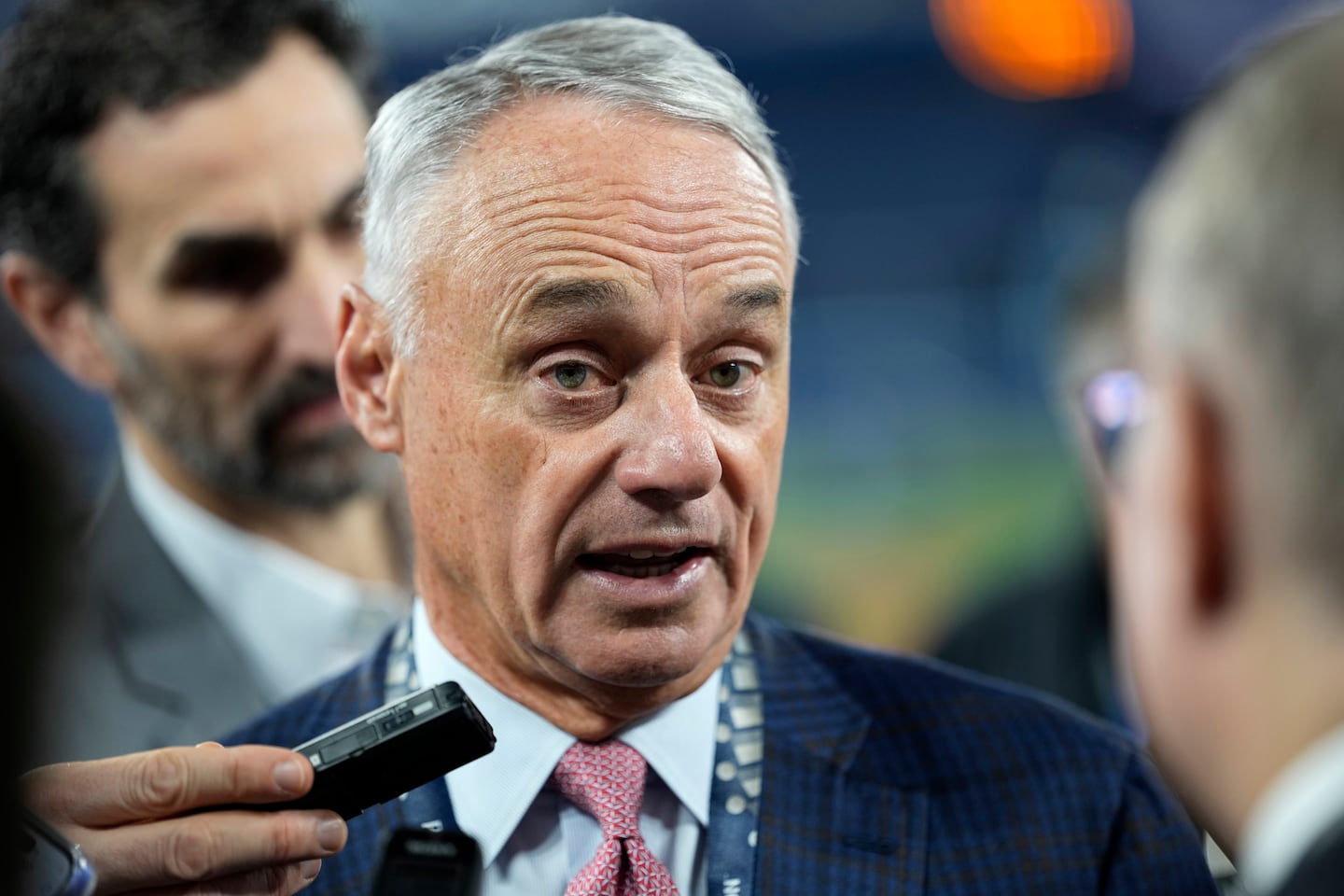
“It’s sad. It’s concerning,” said Phillies president of baseball operations Dave Dombrowski. “It’s not the first time we’ve had gambling issues in the game. But it’s very sad.”
The indictment alleges that Clase and Ortiz conspired with gamblers on “micro-prop” bets ― such as whether a specific pitch would be a ball (or hit a batter), or whether a specific pitch would be a certain velocity ― and parlays (multiple wagers bundled into one bet, resulting in larger payouts if each individual wager is won). Representatives for both pitchers have denied the charges.
For now, the reach of the allegations appears limited to the two pitchers. The Guardians issued a statement in July, when Ortiz and Clase were placed on administrative leave, that no other members of their organization were expected to be affected by the investigation. There are no other known active MLB investigations into gambling or rigging games.
The charges raise unavoidable questions about the vulnerability of sports to gambling scandals. Against that backdrop, it’s worth exploring how MLB identifies, investigates, and addresses betting irregularities, and the role of the league’s gambling partnerships in those investigations.
MLB’s Rule 21 is well known across the sport. It prohibits betting on baseball, outlining a one-year ban for betting on a game in which a bettor is not involved, and a lifetime ban for betting on a game in which the bettor is involved.
The collective bargaining agreement between the league and players further clarifies that the prohibition extends to: betting on baseball games at any level (including amateur); both game outcomes as well as individual events ― micro-props ― within a game; asking others to place bets or knowingly assisting a bettor; or “intentionally influencing or manipulating” a game or an event within it.
Rule 21 is posted in every clubhouse. Every spring, MLB and individual teams hold educational sessions to remind club personnel.
“All of the rules, we take them incredibly seriously, particularly ones around gambling and betting, to the point that we’ll read them to our players,” said Red Sox chief baseball officer Craig Breslow. ”We’ll discuss it with them. We’ll hold smaller group sessions.”
How does a potential violation of Rule 21 get flagged?
Beyond the enormous amounts of money offered by working with legal betting platforms, MLB’s partnerships with sportsbooks include data-sharing that can lead to the identification of betting irregularities.
For instance, in February 2024, MLB opened an investigation into umpire Pat Hoberg about potential improprieties after receiving a notification from a legal online sportsbook. After an investigation, Hoberg ― though not accused of betting on baseball ― was fired for compromising the integrity of the game by sharing a legal sports betting account with a friend who placed bets on baseball and for Hoberg’s role in impeding an investigation.
The league believes that once states were freed to authorize gambling in the Supreme Court’s 2018 ruling in Murphy v. NCAA, gambling partnerships became not only a lucrative revenue stream but also a needed tool to identify potential compromises to the integrity of the sport.
“Once you’re in that environment where sports betting is happening, the crucial issue is access to data,” said baseball commissioner Rob Manfred. “That means you have to have a relationship with the sportsbooks. Like most relationships, if you want something from them, you need to give something back to them, and that’s where those relationships come from.”
MLB also contracts with integrity-monitoring firms, including IC360 and Sportradar, to identify unusual betting activity.
What happens when suspicious activity is flagged?
In cases of suspicious gambling activity, MLB’s Department of Investigations ― established in 2008 in the aftermath of the Mitchell Report on the use of PEDs ― opens a case. Typically, the case will start with betting data acquired from a sportsbook while layering on any information that can be found through the work of the department (whose employees include former law enforcement officers).
In the case of Clase and Ortiz, MLB said in a statement Sunday that it contacted federal law enforcement at the beginning of its investigation. The federal government has tools that a league does not, such as the ability to subpoena bank records. As such, the league typically will keep its own investigation open so long as the federal government is amid an investigation.
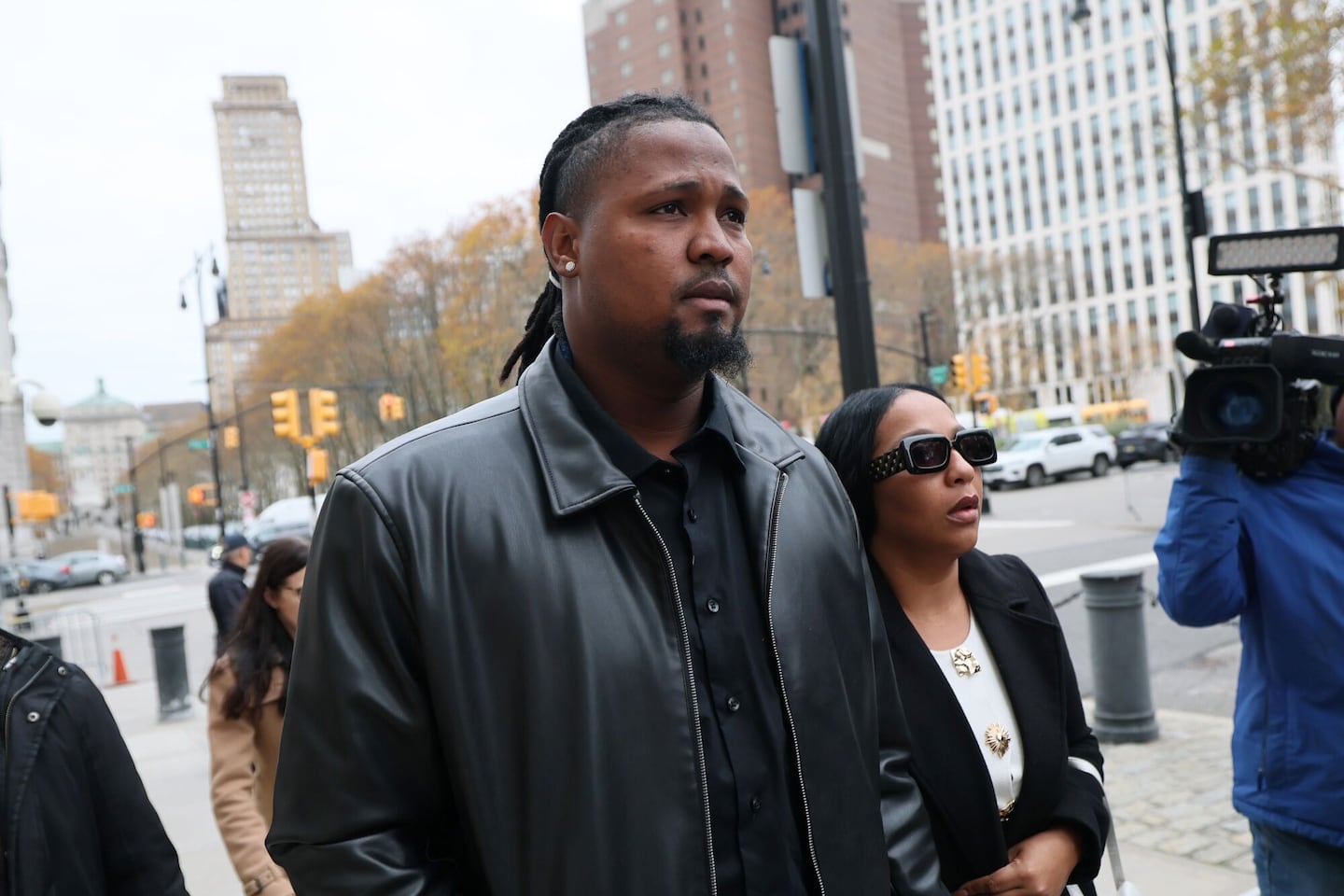 Guardians pitcher Luis Ortiz arrived for his arraignment at the US District Court for the Eastern District of New York.Michael M. Santiago/Photographer: Michael M. Santiag
The league also notifies the Players Association when an investigation is opened. Whereas the Commissioner’s Office has the unilateral ability to place a player on a seven-day paid administrative leave during investigations under the domestic violence, sexual assault, and child abuse policy, administrative leave during gambling investigations needs to be approved by the union.
The league and union define the period of the administrative leave while the matter remains under investigation. The sides typically have a shared interest in trying to protect the integrity of the game by seeing a potential issue fully investigated.
At the conclusion of an investigation, MLB issues a punishment ― up to a lifetime ban if someone in the game is found to have manipulated an outcome. In the case of Clase and Ortiz, the investigation remains open and the two remain on paid administrative leave.
If MLB determines that they did indeed work with bettors to rig pitches, they’ll likely receive lifetime bans (subject to a hearing by an arbitration panel). The federal charges in the case, meanwhile, carry the potential for up to 65 years in prison.
The MLB case and the recent arrest of NBA player (and former Celtic) Terry Rozier for allegedly offering insider information that he’d leave a 2023 game early because of injury ― allowing gamblers to make hundreds of thousands of dollars in wagers on his under-performance ― raise obvious and unavoidable questions about the integrity of sports.
In particular, both cases highlighted how prop bets ― and especially micro-prop bets, on events such as a single pitch ― are vulnerable to manipulation by individuals. In response, MLB announced on Monday the negotiation with licensed sportsbook partners of a new limit on “pitch-level” bets of $200 and the elimination of pitch-level bets from parlays.
The diminished potential payout of such bets was intended to limit the financial incentive for players and bettors to try to fix outcomes. Still, some in the sports industry would have liked to have seen MLB go further by seeking to eliminate prop bets on players.
“For players, the concern they have is the integrity. They don’t want to be questioned,” said agent Scott Boras. “A player is out on the mound now, he’s sitting there and he overthrows a pitch and it goes 55 feet, you wonder. … You have to remove those prop bets to make sure that the integrities of the players aren’t questioned.”
While it might be possible to make numerous bets on a single pitch under the $200 limit, the volume of such betting activity needed to make money would likely be flagged by sportsbooks as an irregularity that would get brought to the attention of the league.
Regardless, it’s almost impossible to imagine the new limits surrounding pitch-level micro-prop bets will result in the end of efforts by gamblers to get players to fix outcomes. Instead, those limits ― and, more significantly, the behavior that inspired them ― underscore how MLB and the rest of the sports world will inevitably continue to adapt to periodic crises in an era where the presence of the gaming industry is felt everywhere … including the current assembly of hundreds of industry members within a casino.
Alex Speier can be reached at alex.speier@globe.com. Follow him @alexspeier.